Start of Black Mold: What Homeowners Need to Know
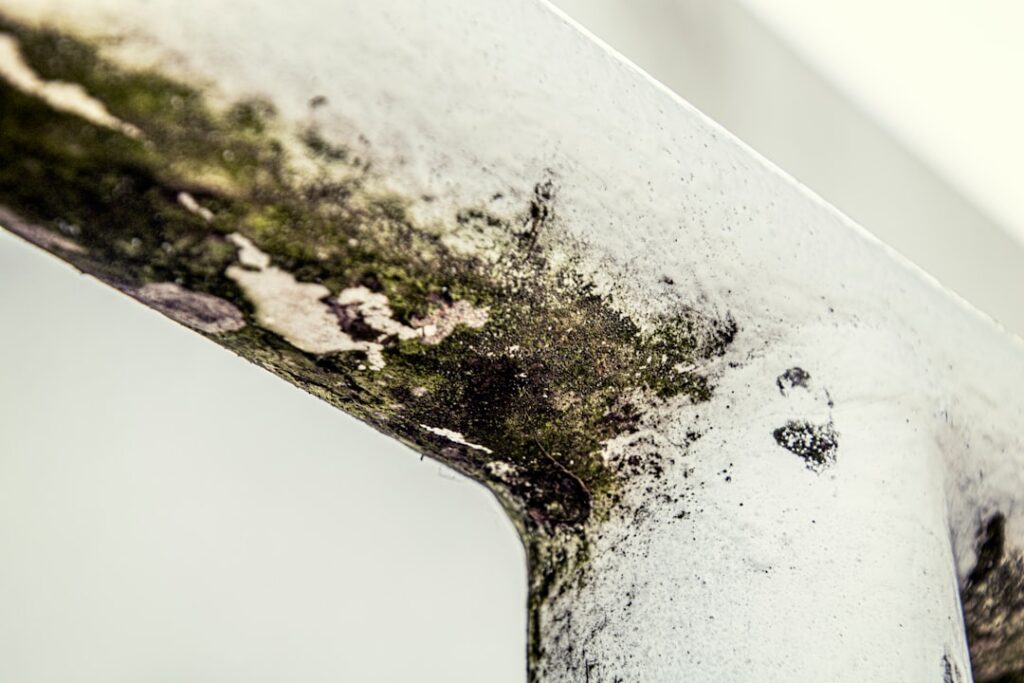
The start of black mold — that first colony forming on a previously clean surface — happens earlier and more quietly than most homeowners expect. By the time something visible appears, days have already passed during which spores activated, germinated, and produced hyphae. Understanding what triggers the very first colony, and what it looks like at initial appearance, helps homeowners catch problems before they escalate. This guide focuses on the trigger conditions and the visual signature of brand-new growth. The article summarizes EPA and CDC guidance current as of 2026; physicians answer health questions and certified inspectors answer testing decisions.
Part of our Black Mold & Your Health guide — start there for the full picture →
Is this mold, asbestos, or water damage? Get a free instant screen
Upload a clear photo of the suspect area. You'll get an instant AI screening opinion and what to do next. This is screening guidance, not a professional determination.
Screening guidance only. AI can be wrong. Confirm asbestos, mold type, or lead with lab testing or a licensed professional before acting.
What “Starts” a Mold Colony
Every visible mold colony starts as a single spore — or more often a cluster of spores — landing on a surface where conditions for germination eventually align. The spore was already there, often for weeks or months, sitting inert. Three triggers convert the inert spore into the beginning of a colony: water activity at the surface rising above roughly 0.80, organic material present at the surface, and temperature in the species’ growth range.
Of these three, water activity is the one that changes most often in homes. Substrate and temperature are usually stable. So when a mold colony starts, it almost always starts because moisture conditions changed. The story of any “start” is the story of a specific moisture event or pattern. For broader background, our mold inspection homeowner hub covers diagnostic methods.
The Initial Trigger Patterns
Five trigger patterns account for most new mold colonies in homes.
Acute Water Events
Burst pipes, washing machine supply hose failures, hot water tank ruptures, dishwasher leaks, and basement flooding deposit enough water on materials to trigger germination within 24 to 48 hours. The materials soak through, water activity rises rapidly, and conditions favor immediate colony start.
Slow Plumbing Leaks
Dripping traps, pinhole leaks in copper supply lines, failing dishwasher gaskets, and slow toilet wax-ring seeps create chronic local wetness in cabinet interiors, behind toilets, and under floor finishes. The “start” in these cases is gradual: the spores are already on the materials, and as moisture accumulates the activation threshold is eventually crossed.
Roof and Envelope Leaks
Failed flashing, cracked stucco, wind-driven rain at unsealed building joints, and ice-dam meltwater all deliver intermittent moisture loads to wall cavities, sheathing, and ceiling materials. These leaks often produce a “start” at a specific spot — under a flashing failure, at a chimney intersection, at a window head — that then expands as the leak continues.
Condensation Episodes
Cold surfaces in warm humid air collect liquid water. Single-pane windows in winter, uninsulated ductwork in summer crawl spaces, and basement walls during humid weather all develop surface moisture without any leak. The “start” of mold in these cases is often subtle because the moisture forms and dries cyclically, but repeated cycles eventually allow colony establishment.
Humidity-Only Triggers
In humid climates and over-cooled basements, indoor relative humidity above 60 percent for sustained periods raises surface water activity on porous materials enough for germination without any visible water. Closets along exterior walls, storage rooms in finished basements, and bedroom walls behind furniture are common humidity-only mold starts.
What the First Visible Colony Looks Like
A brand-new mold colony at first detection typically presents as one of three visual patterns.
Single Discrete Spot
A small dark spot — often less than a quarter inch across — appearing on a surface where the rest of the surface looks normal. The spot has fine texture, sometimes velvety, sometimes glossy depending on species and substrate. Common on bathroom caulk, window sills, and the back of cabinet interiors.
Multiple Scattered Small Spots
Several small spots in a pattern that mirrors the underlying moisture distribution. On a damp drywall surface, the spots often follow a rising-damp line. On a window sill, the spots often radiate from a condensation point at the glass-frame seal. The scatter pattern suggests multiple simultaneous activations rather than expansion of a single colony.
Thin Discoloration Stripe or Patch
A light continuous discoloration covering a few square inches, often along a moisture gradient. Less obvious than discrete spots because it can be mistaken for shadow or fading paint. Color is typically muted at first appearance and deepens over days.
Where New Mold Most Often Starts
Five locations account for the majority of homeowner reports of new mold growth.
Bathroom Caulk and Grout
The combination of intermittent moisture from showers, organic film from soap residue, and rough porous surfaces makes caulk and grout the most common “start” location in homes. Initial growth often appears as scattered small dark spots along caulk lines.
Window Sills
Condensation on cold window glass pools at sill corners and at the glass-frame seal. The first mold spots typically appear at these corners and along the sill edge during winter or early spring.
Under-Sink Cabinets
Slow drips from traps, supply stops, and disposal connections wet the cabinet floor and back wall. New growth often appears on the back of the cabinet near the trap location.
Basement Floor-Wall Corner
Moisture migration through concrete, combined with stored organic materials and slow seepage at floor-wall junctions, produces new mold on the back of any drywall or framing installed against the wall.
HVAC Components
Coil surfaces, drain pans, and the interior of flex duct see chronic wetness during cooling season. New mold typically starts as a thin film rather than discrete colonies because the moisture exposure is broad rather than localized.
How Quickly a New Colony Becomes a Problem
Under sustained moisture, a single visible spot can become a dense colony within two to three weeks. Sporulation begins within a week of initial visible growth, releasing new spores into the home’s air. Those spores settle on surrounding surfaces and wait for additional moisture events to germinate. This is why partial cleanup of new mold without addressing the moisture source often leads to expanded growth a month or two later — the cleanup removed visible material but did not eliminate the spore burden on surrounding surfaces, which then activates when conditions favor it.
The Window for Easy Response
The “start” stage offers homeowners a window for inexpensive intervention. Visible colonies under a few square inches on hard non-porous surfaces with a known and correctable moisture source can usually be addressed with detergent-and-water cleaning followed by drying and source control. EPA homeowner guidance supports this approach for visible mold under roughly 10 square feet on hard non-porous surfaces.
Acting at the start stage saves significant money compared to waiting. A single small colony cleaned at first detection often costs nothing beyond the time involved. The same colony two months later, having spread to multiple surfaces and into porous materials, may require professional remediation costing thousands.
What “Start” Doesn’t Always Mean
Three misinterpretations are common. First, finding new visible mold does not necessarily mean the problem just started — the colony has been forming for several days and the underlying moisture problem may be considerably older. Second, a single visible spot does not mean the contamination is limited to that spot — porous materials in the same area may have hidden colonization. Third, a “start” of growth in one room sometimes reflects spore deposits from earlier growth in another room that the homeowner has not yet detected.
These nuances are why professional inspection sometimes finds more contamination than the homeowner expected. For more on the inspection process, see our mold house inspection guide.
What to Do When You Spot the Start
The action sequence at start stage is straightforward. Photograph the growth and note the date and location. Look for the moisture source — usually within a few feet of the visible growth. Stop the moisture if it is correctable (fix the leak, increase ventilation, reduce humidity). Dry the affected area completely. Clean hard non-porous surfaces with detergent and water. Replace any saturated porous materials such as drywall paper, ceiling tile, or carpet pad. Monitor the area for the next 30 days; if growth returns, contact a certified remediation contractor.
Prevention Catches the Pre-Start Stage
The most cost-effective intervention happens before any mold starts. Three habits reliably prevent the trigger conditions. First, maintain indoor relative humidity between 30 and 50 percent year-round, verified with a $20 hygrometer. Second, dry any wet materials within 48 hours of water events using fans and dehumidifiers. Third, inspect high-risk zones — water heater pans, washing machine hoses, sink cabinet interiors, attic sheathing — twice a year for developing leaks.
These habits do not eliminate all mold risk, but they push the typical mold start later in the home’s lifecycle and reduce the cumulative remediation cost dramatically.
References
- EPA Mold Course Chapter 2: how mold starts and grows — U.S. Environmental Protection Agency
- CDC basic facts about mold and dampness — Centers for Disease Control and Prevention
- EPA brief guide to mold, moisture, and your home — U.S. Environmental Protection Agency
- NIEHS mold and indoor environments overview — National Institute of Environmental Health Sciences
Frequently asked questions
What triggers the start of black mold?
Three conditions must align: water activity at the surface above roughly 0.80, organic material present at the surface, and temperature in the species' growth range. Of these, water activity is the variable that changes most often in homes, which is why moisture events are the typical trigger for new mold.
What does brand-new black mold look like?
Usually a small discrete dark spot under a quarter inch across, or a thin discoloration following a moisture gradient. Color is muted at first appearance and deepens over days as sporulation accelerates. Texture is fine, sometimes velvety, sometimes glossy depending on species and substrate.
Can I prevent mold from starting after a water event?
Yes, in most cases. Drying wet materials completely within 24 to 48 hours of moisture onset typically prevents germination. Use fans, dehumidifiers, and ventilation aggressively. The faster the drying, the lower the chance of mold starting on those materials.
How long does mold take to start growing?
Germination typically begins 24 to 48 hours after sustained moisture starts. Visible growth usually appears within 72 hours under typical residential conditions. Speed varies with temperature, substrate type, and the specific species involved.
Front Range homeowners who spot the start of mold and want a vetted local inspector before deciding next steps can get in touch through our contact page.