Residential Asbestos Removal: A 2026 Homeowner Process Guide
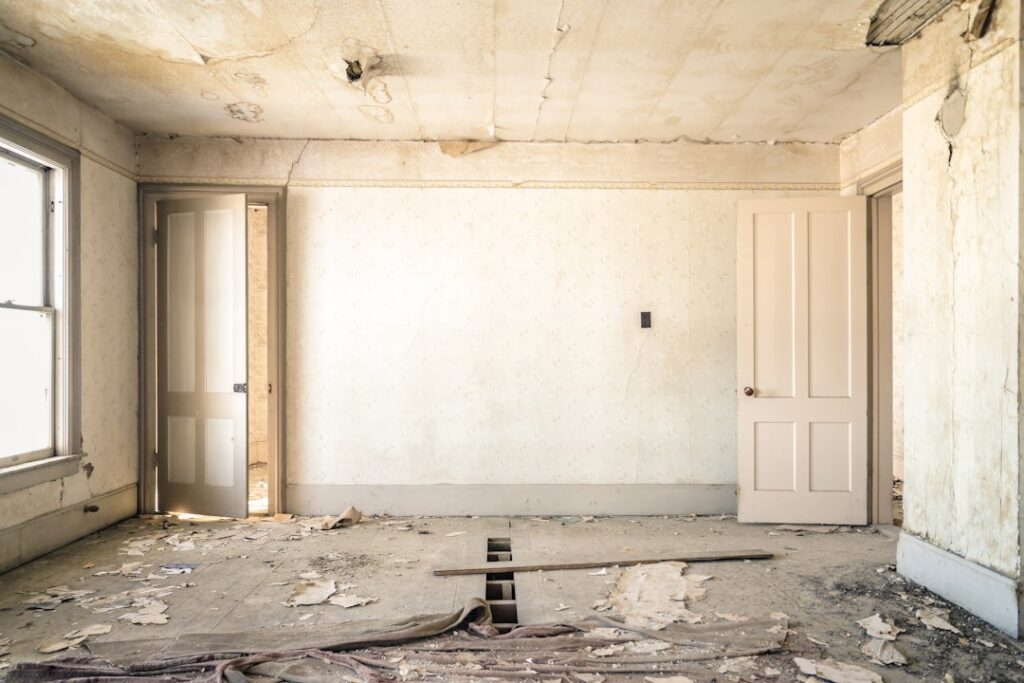
Residential asbestos removal is not a do-it-yourself project. Under the EPA’s National Emission Standards for Hazardous Air Pollutants (NESHAP) and parallel state regulations, asbestos abatement in occupied residential structures must be performed by licensed asbestos abatement contractors using engineering controls (negative-air containment, HEPA filtration), specific worker protections, and regulated waste disposal. This guide summarizes EPA, OSHA, CDC, and NIEHS guidance current as of 2026 for homeowner education only — every actual removal decision should be made with a state-licensed asbestos abatement professional and, where applicable, a separate independent asbestos consultant.
Is this mold, asbestos, or water damage? Get a free instant screen
Upload a clear photo of the suspect area. You'll get an instant AI screening opinion and what to do next. This is screening guidance, not a professional determination.
Screening guidance only. AI can be wrong. Confirm asbestos, mold type, or lead with lab testing or a licensed professional before acting.
Who Can Legally Perform Residential Asbestos Removal?
Only state-licensed asbestos abatement contractors. The licensing framework is layered. The EPA establishes minimum federal requirements through NESHAP and the AHERA (Asbestos Hazard Emergency Response Act) for schools, with state environmental and health agencies issuing operating licenses to qualifying firms. OSHA separately regulates worker exposure under 29 CFR 1926.1101 (construction) and 29 CFR 1910.1001 (general industry), with detailed requirements for medical surveillance, respiratory protection, and exposure monitoring.
A licensed abatement firm must employ workers who have completed EPA-recognized training (32 hours for abatement workers, 40 hours for supervisors), maintain current medical clearance for respirator use, follow a written compliance program, and dispose of asbestos-containing waste at permitted facilities under proper manifest. Homeowners removing asbestos-containing materials themselves face serious occupational-exposure risk, potential local-ordinance violations, and disposal challenges since most municipal waste streams will not accept friable asbestos waste from residential sources. The CDC and NIEHS document long-latency disease risks (mesothelioma, asbestosis, lung cancer) from even short-term high-concentration exposures during disturbance.
Abatement Versus Encapsulation Versus Enclosure
Three management options exist for confirmed asbestos-containing material (ACM) in a residence, and “removal” is only one of them. Abatement (full removal) physically eliminates the material from the structure. Encapsulation applies a bonding agent that seals the surface and prevents fiber release; it’s appropriate for some intact, non-friable materials and leaves the ACM in place. Enclosure constructs an airtight barrier (drywall, sealed framing) around the ACM, isolating it from the occupied space.
The right choice depends on material type, condition, location, and the homeowner’s plans. Intact, non-friable vinyl asbestos floor tile in good condition is often best left in place under new flooring (an enclosure approach) because disturbance is the primary release mechanism. Friable pipe insulation or boiler-jacket insulation in a basement is usually a candidate for full abatement because every disturbance releases fibers. Spray-applied “popcorn” ceiling textures with ACM content can be either encapsulated or abated depending on planned future work in the room. A licensed asbestos consultant or inspector — independent from the abatement contractor — should make the technical recommendation. The asbestos inspection process guide covers how the management plan gets built.
What Residential Asbestos Removal Costs
Costs vary widely by material and quantity, but typical ranges for licensed abatement work in 2026 include: popcorn-ceiling texture abatement at $5 to $15 per square foot ($1,500 to $5,000 for a typical room); vinyl asbestos floor tile and mastic removal at $5 to $15 per square foot; pipe-insulation abatement at $15 to $30 per linear foot; boiler-jacket or duct-wrap insulation abatement at $5,000 to $15,000 depending on system size; and full siding (asbestos-cement) removal at $8 to $25 per square foot. Whole-house abatement of multiple materials can run $15,000 to $50,000 or more.
These costs include the abatement contractor’s labor, engineering controls (negative-air machines, HEPA vacuums, polyethylene containment), worker PPE, waste disposal at permitted facilities, and post-abatement air clearance testing performed by an independent third party. The cost also includes the contractor’s required regulatory filings — the EPA NESHAP notification (typically 10 working days before work begins) and any state or municipal permits. Cost comparison is most useful when paired with a written scope from an independent consultant, not the abatement firm itself, so quotes are bidding on identical work. The asbestos removal quote reading guide covers how to compare bids.
The Abatement Process Step by Step
A standard residential abatement project follows a defined sequence. First, an independent licensed asbestos inspector or consultant performs bulk-sample collection (PLM analysis at $25 to $50 per sample, six to fifteen samples typical for a single material in a single room) to confirm asbestos content and quantify the scope. Second, the consultant writes a scope of work that specifies engineering controls, work-area boundary, decontamination unit location, waste-disposal route, and clearance-testing protocol.
Third, licensed abatement contractors bid the scope of work. Once a contractor is selected, the EPA NESHAP notification is filed (typically 10 working days before start). Fourth, the work area is sealed with polyethylene sheeting, a three-stage decontamination unit is installed at the entrance, and negative-air machines (HEPA-filtered exhaust fans) maintain the work area at negative pressure relative to the rest of the house. Fifth, the ACM is removed wet (water with a wetting agent) to suppress fiber release, double-bagged in labeled 6-mil polyethylene asbestos waste bags, and transported to a permitted disposal facility under manifest.
Sixth, the work area is HEPA-vacuumed and visually inspected. Seventh, an independent third-party air-clearance test is performed — typically aggressive air sampling using TEM (transmission electron microscopy) analysis or PCM (phase contrast microscopy, less sensitive but more common). Clearance results must come back below the project-defined air concentration before the containment is dismantled and the area returned to homeowner use. Total project duration ranges from two days for a small abatement to several weeks for whole-house work.
How to Hire a Residential Asbestos Removal Contractor
Three priorities. First, hire the inspector and the abatement contractor as independent parties. The same firm should not write the scope and bid the work — that creates an incentive to over-scope. State asbestos-licensing agencies publish firm and individual license-status lookups. Verify every credential before signing. Second, confirm the firm carries asbestos-specific liability insurance and pollution liability coverage; standard general liability policies typically exclude asbestos work. Third, require written documentation of NESHAP notification, waste-disposal manifests, worker training records, and air-clearance results.
Get three written bids based on the same independent scope of work. Wide bid variation (more than about 30%) usually indicates the firms are bidding on different scopes — go back to the consultant for clarification rather than accepting the lowest bid. The asbestos and lead in pre-1978 housing guide covers the broader decision framework for managing ACM in older homes.
What Homeowners Should Never Do
Three actions are specifically called out by EPA, OSHA, and CDC as high-risk. Do not sand, scrape, drill, saw, or otherwise mechanically disturb suspect asbestos-containing materials before testing. Do not perform “removal” yourself even on small quantities of confirmed ACM in occupied residential settings; the disposal alone presents a serious regulatory and waste-stream problem. Do not hire any contractor who proposes to remove ACM without filing the required NESHAP notification, using negative-air containment, or providing independent clearance testing.
Some states do allow limited homeowner removal of specific materials (intact non-friable floor tile, for example) under narrowly defined conditions — but the state environmental or health agency should be consulted directly before any disturbance, and the medical and disposal risks remain serious even where regulatorily permitted.
When Encapsulation or Enclosure Is the Right Answer
Not every ACM needs to be removed. EPA’s longstanding guidance is that intact, undisturbed asbestos-containing material does not pose an inhalation risk — the risk arises from disturbance. For asbestos-cement siding in good condition, encapsulation with appropriate paint coatings or enclosure under new cladding is often the preferred management option. For intact vinyl asbestos floor tile, leaving it in place under new flooring is often the right call. The independent consultant’s written management plan should explicitly evaluate non-removal options alongside abatement and recommend the option with the lowest disturbance risk for the homeowner’s plans.
References
- EPA Asbestos page and NESHAP regulations — U.S. Environmental Protection Agency
- OSHA asbestos worker-exposure standards — Occupational Safety and Health Administration
- CDC NIOSH asbestos worker-health information — Centers for Disease Control and Prevention
- NIEHS asbestos health effects information — National Institute of Environmental Health Sciences
- National asbestos health and legal information resources — Asbestos.com
If you’re a Front Range homeowner navigating asbestos findings in a pre-1981 home and need a connection to vetted local inspectors and licensed abatement contractors, get in touch here.
Asbestos test kits
Asbestos can only be confirmed by a lab. A mail-in kit gets you a sealed sample container and accredited analysis — never sand or disturb suspect material first.
| Product | Why | Buy |
|---|---|---|
 Asbestos Test Kit (mail-in lab) Asbestos Test Kit (mail-in lab) | Includes PPE + sealed mailer. | Amazon — $34.99 |
| Pro-Lab Asbestos Test Kit | Widely available; lab fee separate. | Amazon — $34.99 |