Homeowner Asbestos Removal: What Homeowners Need to Know

Homeowner asbestos removal is one of the most misunderstood topics in residential renovation. Search results suggest a busy DIY community, but the regulatory reality is narrower and stricter than most homeowners realize. Federal rules set a floor; state rules layer on top; and a small handful of states allow owner-occupied single-family removal with restrictions. This guide summarizes EPA, OSHA, and state-health-department guidance as of 2026 — it is not legal or medical advice. Before touching suspected asbestos, consult a state-licensed inspector and the regulatory agency in your jurisdiction. The default answer in Colorado and most other states is: licensed pros only.
Part of our Asbestos in the Home guide — start there for the full picture →
Is this mold, asbestos, or water damage? Get a free instant screen
Upload a clear photo of the suspect area. You'll get an instant AI screening opinion and what to do next. This is screening guidance, not a professional determination.
Screening guidance only. AI can be wrong. Confirm asbestos, mold type, or lead with lab testing or a licensed professional before acting.
Homeowner asbestos removal: what the rules actually say
The federal regulatory framework for asbestos in homes lives in two places. EPA enforces the National Emission Standards for Hazardous Air Pollutants (NESHAP), which governs how asbestos is handled, removed, transported, and disposed of. OSHA enforces worker-exposure rules, which apply to anyone employed to do asbestos work. Together they create a clear answer for commercial buildings and a more nuanced one for single-family homes.
Single-family owner-occupied homes fall into a regulatory gap at the federal level — NESHAP technically exempts them from some pre-renovation requirements. But that federal exemption does not give homeowners blanket permission to remove asbestos. States fill the gap with their own rules, and most of them require licensed abatement contractors regardless of who owns or occupies the building. Colorado is one of the stricter states; the federal exemption does not translate to a Colorado homeowner DIY permission.
What homeowners can do (a short list)
The list of legitimate homeowner asbestos activities is shorter than most expect. You can identify suspect materials visually (without disturbing them). You can hire a state-licensed inspector to collect samples. You can choose whether to remove the material or manage it in place. You can hire a licensed abatement contractor. You can document the work, retain manifests, and keep clearance records. You can apply encapsulant to certain non-friable, intact materials as a temporary management measure — though even encapsulation is regulated in some jurisdictions.
What you generally cannot do, even on your own property, is the physical removal of friable asbestos. You cannot sand, scrape, drill, saw, break, or wet-vacuum it. You cannot bag it for curbside disposal. You cannot drop it at a municipal transfer station that does not specifically accept manifested asbestos waste. You also cannot HEPA-vacuum, wet-wipe, or otherwise clean up after a disturbance event — the how to clean up asbestos guide explains why post-disturbance cleanup belongs to licensed crews with negative-air containment. The [can asbestos be removed guide](https://inspectandtest.net/guides/can-asbestos-be-removed/) covers the full licensed-pro process in more detail.
The handful of states that allow homeowner removal
A small number of states permit owner-occupied single-family asbestos removal under specific conditions. The conditions vary by state but commonly require: owner occupancy at the time of work, prior notification to the state air-quality program, a defined quantity threshold (often expressed in linear or square feet), the material being non-friable or rendered non-friable through wetting, written acknowledgement of risks, and proper disposal at an approved landfill with manifests.
Even in those states, the homeowner exception is narrow. It typically excludes friable materials such as pipe insulation, sprayed-on coatings, vermiculite attic insulation, and damaged textured ceilings. It typically excludes large-quantity jobs. And it does not exempt the homeowner from disposal rules — the bagged waste still needs to go to an approved Class II or Class III landfill with a manifest.
Colorado-specific homeowner rules
In Colorado, the Air Pollution Control Division at CDPHE administers asbestos rules under Regulation 8, Part B. The Colorado rule applies to single-family residential dwellings when the project exceeds defined “trigger levels.” For single-family homes, the trigger is generally 50 linear feet of pipe insulation, 32 square feet of other materials, or one 55-gallon drum equivalent. Below the trigger, owner-occupied residential work has fewer required filings — but it is still subject to disposal rules, worker-safety rules if anyone is paid, and federal NESHAP work-practice expectations.
Above the trigger, even single-family owner-occupied projects require a state-certified asbestos inspector, a state-licensed General Abatement Contractor (GAC), notification to CDPHE, and third-party clearance air sampling. The Colorado position, in short: the smaller the project, the more flexibility a homeowner has — but the safety expectations and disposal rules do not relax. CDPHE strongly recommends licensed contractors for any friable material regardless of size.
Why the default answer remains “licensed pros only”
Even in states with homeowner allowances, the practical answer for most Front Range residents is to hire a licensed abatement contractor. Three reasons stand out.
Insurance and resale exposure
Homeowner-completed asbestos work creates documentation gaps that surface during resale and insurance underwriting. A future buyer’s inspector who finds evidence of past asbestos disturbance without clearance paperwork has a transaction-stopping problem. A licensed contractor provides the manifests, notifications, and clearance reports that close that loop.
PPE and engineering controls
The protective equipment for asbestos work is not the same as for paint or drywall. Full-face P100 respirators must be fit-tested and worn correctly. Containment barriers must be sealed and pressure-tested. Negative-air machines must be sized to the work area. A homeowner who borrows a dust mask and goes in without training is generating a personal exposure record that may show up in a chest X-ray decades later.
Disposal logistics
Even small homeowner asbestos quantities cannot go in a normal trash bag, a normal dumpster, or a normal landfill. The bag must be 6-mil polyethylene, doubled, labeled, and accepted at a Class II or Class III facility with a signed manifest. Most homeowners discover during a job that the disposal logistics alone justify hiring a licensed crew that handles the manifests as part of their fee.
What to do instead of DIY
If you suspect asbestos in your home, the workflow that protects you legally, medically, and financially is straightforward.
Step 1 — Identify and document, do not touch
Take photographs from a distance. Note the material’s location, condition, and approximate age. Restrict access to the area. The broader [asbestos and lead in your home pillar](https://inspectandtest.net/asbestos-lead/) covers identification cues for the most common suspect materials.
Step 2 — Hire a state-licensed inspector
A state-certified asbestos building inspector collects bulk samples and submits them to a NVLAP- or AIHA-accredited lab. Results typically return in three to ten business days. Cost in the Denver metro typically runs $300 to $600 for a small targeted survey, $800 to $1,500 for whole-house pre-renovation.
Step 3 — Choose: manage in place or abate
If the material is intact and not in a renovation pathway, an Operations and Maintenance (O&M) plan may be the right call. If renovation, demolition, or damage is in the picture, abatement is the next step.
Step 4 — Hire a licensed abatement contractor
Verify the contractor’s state license, EPA AHERA accreditation, current insurance, and bonding. Ask for the most recent three project addresses and call those owners to verify work quality. The contractor handles NESHAP notification, work, and clearance.
How asbestos rules differ from lead-paint rules
Homeowners often conflate asbestos and lead-paint regulations because both involve pre-1978 housing hazards. The rules are different in important ways. Lead-paint disturbance in pre-1978 housing is regulated under EPA’s Renovation, Repair, and Painting (RRP) Rule, which requires certified RRP firms and trained renovators for disturbance of more than 6 square feet interior or 20 square feet exterior of lead-painted surfaces. Owner-occupied single-family homes have a narrow exemption for owner-performed work.
Asbestos work has no comparable broad owner-occupied exemption in most state programs. The federal RRP-style exemption that allows lead-paint DIY in owner-occupied homes does not translate to asbestos in Colorado or most other states. Friable asbestos work above state trigger levels requires licensed contractors regardless of ownership or occupancy. The two regulatory frameworks differ because the asbestos hazard pathway (airborne fibers traveling long distances in HVAC systems) and the latency-to-disease ratio differ from lead’s primary ingestion-and-blood-burden pathway.
The practical result for homeowners is that even households comfortable with RRP-compliant lead-paint DIY work should not extend that comfort to asbestos. The licensing, PPE, containment, and disposal infrastructure for asbestos is meaningfully different from lead-paint work, and the regulatory expectations are stricter. The broader [asbestos and lead in your home pillar](https://inspectandtest.net/asbestos-lead/) covers the distinct hazard profiles for pre-1978 housing.
OSHA worker-safety rules when anyone is paid to help
OSHA’s asbestos standards apply whenever any worker is paid to perform asbestos-related work. The standards include exposure limits (the permissible exposure limit, or PEL, is 0.1 fibers per cubic centimeter as an 8-hour time-weighted average), respirator requirements with fit testing and medical clearance, mandatory training including AHERA accreditation for many tasks, regulated areas with restricted access, and recordkeeping for worker exposure over the entire span of their employment history with the asbestos work.
A homeowner who hires a handyman, day laborer, or general contractor to “just remove the floor tile” creates direct OSHA exposure for themselves as the employer of record. If the worker is later diagnosed with an asbestos-related disease, the homeowner can be personally liable for damages traced to that work. Licensed abatement contractors carry their own OSHA programs and workers’ compensation coverage, eliminating that exposure. The decision to hire licensed pros is not just regulatory compliance — it is also legal risk transfer.
Encapsulation as a managed-in-place alternative
For homeowners weighing the choice between expensive removal and ongoing concern, encapsulation is an EPA-recognized alternative for materials in good condition. Encapsulation uses certified sealing products applied by trained installers, with documentation kept in permanent home records. It is not painting over asbestos with regular paint, and it does not eliminate the material — it stabilizes the existing material to prevent fiber release until eventual removal during demolition or major renovation.
Colorado regulates encapsulation as a form of abatement above trigger levels, requiring licensed contractors and notification just as removal does. The decision between removal and encapsulation belongs to the homeowner working with a state-licensed asbestos professional. The right answer depends on material condition, planned future renovation, the homeowner’s tolerance for ongoing management, and the cost differential — encapsulation typically runs 30-50% of removal cost but requires future removal anyway. The [asbestos treatment house guide](https://inspectandtest.net/guides/asbestos-treatment-house/) covers the full range of homeowner treatment options.
When to call a professional
Call a licensed asbestos inspector before any pre-1980 renovation, after any visible damage to suspected materials, when buying a pre-1980 home, and when planning demolition. Do not wait until a contractor is already on site asking what to do — the survey must come first, and the abatement (if needed) before the renovation work. Call before hiring any handyman or unlicensed worker to disturb a suspected asbestos material; the legal and health risk transfers to the homeowner-as-employer in that scenario.
References
- Protect Your Family From Asbestos — U.S. Environmental Protection Agency
- Asbestos NESHAP for Single-Family Homes — U.S. Environmental Protection Agency
- OSHA Asbestos Standards — Occupational Safety and Health Administration
- Colorado Regulation 8 Part B Asbestos Rules — Colorado Department of Public Health and Environment
Frequently asked questions
Can a Colorado homeowner remove asbestos themselves?
In limited cases below state trigger levels in an owner-occupied single-family home, but CDPHE strongly recommends licensed contractors for any friable material. Above trigger levels (50 linear feet of pipe insulation, 32 square feet of other materials), licensed abatement is required.
Is homeowner asbestos removal legal at the federal level?
NESHAP technically exempts owner-occupied single-family residential work from some pre-renovation requirements, but disposal rules and worker-safety rules still apply, and state laws often require licensed contractors regardless.
What is the trigger level for asbestos work in Colorado?
For single-family residences, the trigger is generally 50 linear feet of pipe insulation, 32 square feet of other materials, or one 55-gallon drum equivalent. Above trigger, state-licensed inspectors and abatement contractors are required.
What happens if a homeowner removes asbestos illegally?
Civil penalties from EPA and the state can reach $25,000 or more per violation per day. The bigger risk is personal exposure with a 20-50 year latency for asbestos-related disease, plus future resale and insurance complications from undocumented work.
Front Range homeowners weighing manage-in-place versus full abatement can reach out through our contact page to connect with a vetted local inspector.
Asbestos test kits
Asbestos can only be confirmed by a lab. A mail-in kit gets you a sealed sample container and accredited analysis — never sand or disturb suspect material first.
| Product | Why | Buy |
|---|---|---|
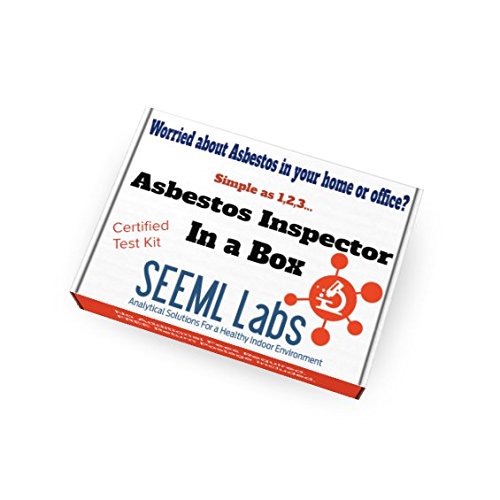 Asbestos Test Kit (mail-in lab) | Includes PPE + sealed mailer. | Amazon — $22.00 |
 Pro-Lab Asbestos Test Kit | Widely available; lab fee separate. | Amazon — $79.99 |