Asbestos Piping: What Homeowners Need to Know
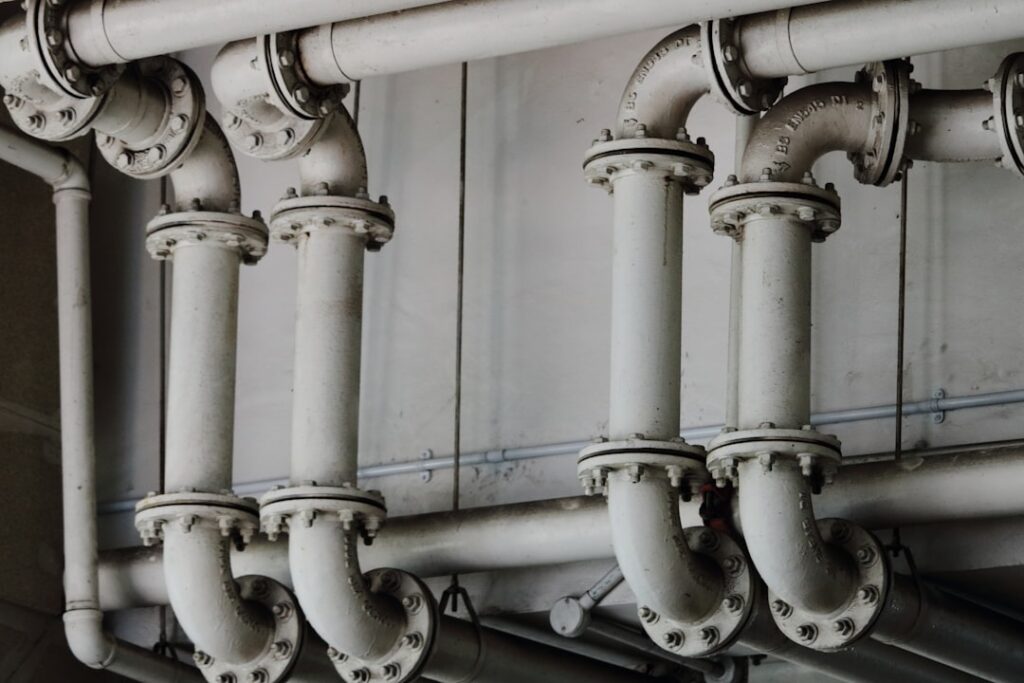
The phrase “asbestos piping” actually covers two very different things, and homeowners often conflate them. One is the insulation wrapped around metal pipes; the other is pipe made of asbestos-cement itself, used for water mains, drains, and flues. Each carries a distinct risk profile and a distinct response, and confusing the two can lead a homeowner to over-worry about a stable material or under-react to a fragile one. This guide summarizes EPA, CDC, and OSHA guidance current as of 2026 for informational purposes only; it is not a substitute for accredited laboratory testing or advice from a certified professional, and any health questions should go to your physician.
Part of our Asbestos in the Home guide — start there for the full picture →
Is this mold, asbestos, or water damage? Get a free instant screen
Upload a clear photo of the suspect area. You'll get an instant AI screening opinion and what to do next. This is screening guidance, not a professional determination.
Screening guidance only. AI can be wrong. Confirm asbestos, mold type, or lead with lab testing or a licensed professional before acting.
What Is Asbestos Piping?
Asbestos piping refers to two categories. The first is asbestos pipe insulation—the thick white or gray wrap applied around steam and hot-water lines for thermal protection, common in pre-1980s basements and crawlspaces. The second is asbestos-cement pipe, a rigid pipe manufactured by mixing asbestos fibers into cement, used for water supply lines, sewer and drain lines, and chimney flues from the early 20th century into the 1980s. The two could hardly be more different in form: one is a soft jacket wrapped around a metal pipe to keep heat in, the other is a hard structural pipe in which the asbestos is part of the wall itself.
The distinction is not academic. Insulation wrap is usually friable and sits exposed in living and utility spaces. Asbestos-cement pipe is non-friable and often buried underground or encased in walls. They look different, behave differently when disturbed, and call for different handling. Sorting which kind is present is the first step, and our related guide on asbestos pipes walks through both forms.
The confusion is understandable because both can sit in the same basement, both date to the same pre-1980 era, and both involve the same mineral. But a homeowner who learns to separate the soft, crumbly wrap that covers a metal pipe from the hard, structural cement pipe that is itself the conduit will respond correctly to each. The wrap demands caution against any contact because it sheds fibers from minor disturbance; the cement pipe demands caution only against cutting, drilling, or breaking. Recognizing which one is in front of you is the difference between an appropriate response and an over- or under-reaction.
Asbestos Pipe Insulation: The Friable Concern
Pipe insulation is the higher-risk form because it is typically friable—able to crumble under hand pressure and release fibers into the air. It was applied as corrugated paper layers, molded cement at fittings, or preformed sections, often under a canvas jacket. Decades of age leave it dry and brittle, prone to shedding fibers when bumped, torn, or water-damaged.
This is the asbestos a homeowner is most likely to disturb accidentally, by brushing against it while storing boxes or by cutting it during a heating-system upgrade. Because it is friable and sits in occupied buildings, the EPA treats damaged or deteriorating pipe insulation as a priority for professional attention. Intact, well-sealed insulation in good condition is usually managed in place. The condition of the material, more than its mere presence, drives the response, a theme detailed in our asbestos pipe wrap guide.
Asbestos-Cement Pipe: The Non-Friable Concern
Asbestos-cement pipe, sometimes called AC pipe or by brand names like Transite, is a different animal. The asbestos fibers are bound in a hard cement matrix, making the pipe non-friable. Intact, it releases essentially no fibers. It was prized for corrosion resistance, which is why water utilities and builders used it for supply mains, drain and waste lines, and chimney flues for decades.
The risk with AC pipe appears only when it is cut, drilled, broken, or weathered. Sawing through a Transite flue or cutting a buried water main with a power saw can release fibers, as can pipe that has degraded over many years. For homeowners, the most common encounters are an old flue serving a furnace or fireplace, a buried water service line, or a drain line. Left intact, these are low risk; the danger is in the disturbance, particularly power-cutting that produces fine dust.
How to Tell Which Type You Have
A few visual and contextual cues help distinguish the two, though none confirms asbestos without testing.
- Insulation wrap — soft, thick, white or gray covering over a metal pipe, often chalky or fabric-jacketed, found on heating lines.
- Asbestos-cement pipe — a hard, gray, cement-like pipe; the pipe is the structural material, not a covering. Common as flues, buried mains, and drains.
- Location — wrap appears on exposed basement and crawlspace heating pipes; AC pipe appears as flues, underground service lines, and in-wall drains.
- Age — both were common in pre-1980s construction.
Identifying the form tells a homeowner which risk applies, but only an accredited laboratory analyzing a sample can confirm asbestos content. The fibers are microscopic in both cases.
The Health Risk Across Both Forms
Both forms share the same underlying hazard: inhaling airborne asbestos fibers. The CDC links asbestos exposure to asbestosis, lung cancer, and mesothelioma, diseases that often surface decades after exposure, with no established safe exposure threshold. What differs between the two forms is how readily they release fibers.
Friable insulation releases fibers easily, even from minor disturbance, which is why it ranks among the higher-priority home asbestos materials. Non-friable cement pipe holds its fibers tightly and is dangerous chiefly when machined or broken. The practical lesson is identical for both: keep the material intact and out of the air. The difference is how much effort that requires—constant care around fragile insulation versus simply not power-cutting a cement pipe.
Asbestos-Cement Flues and Chimneys
One of the most common homeowner encounters with asbestos-cement pipe is the flue. Asbestos-cement was widely used for chimney liners and the vent pipes that carry exhaust from furnaces, water heaters, and fireplaces, often under the brand name Transite. These flues handled heat and corrosive flue gases well, which is why they lasted, and many remain in service in pre-1980s Front Range homes.
The concern with an aging flue is twofold. First, replacing or modifying a heating system frequently requires cutting or removing the old flue, which can release fibers if done with power tools. Second, decades of heat and acidic condensate can degrade the cement matrix, making the pipe more friable than when new and, in severe cases, allowing it to shed material. A homeowner upgrading a furnace or fireplace in an older home should have any suspect cement flue evaluated before it is disturbed, because the routine work of a heating replacement is exactly the activity that turns a stable flue into a fiber source.
Asbestos-Cement Water and Drain Lines
Below ground and within walls, asbestos-cement served as water supply mains, sewer and drain lines, and irrigation pipe for much of the 20th century. Water utilities installed enormous lengths of AC water main, and some still carries drinking water today. For a homeowner, the relevant encounters are usually a buried service line bringing water to the house or a drain line, both of which are non-friable and low-risk while intact and buried.
The risk surfaces during excavation and replacement. Digging up and cutting an old AC water service, or breaking into a buried drain, can release fibers, particularly if the work uses saws or grinders. Many utilities maintain specific procedures for handling AC water main precisely because of this. A homeowner planning trenching, a service-line replacement, or major landscaping near a suspected AC line should confirm what the pipe is and arrange professional handling rather than cutting into it with ordinary tools.
What to Do If You Find Asbestos Piping
The EPA’s guidance applies to both forms with the same core principle: do not disturb intact material. For pipe insulation, avoid touching, leaning on, or bumping it; keep storage and traffic away; and if it is damaged, limit access to the area. For asbestos-cement pipe, never cut, drill, or grind it with power tools, and avoid breaking buried or in-wall sections.
Do not sample friable insulation yourself, since collecting a sample can release fibers; hire a certified asbestos inspector. For AC pipe, sampling is also best left to a professional who can cut a controlled sample wet. The lab result determines whether the material is regulated and how any work must proceed. Until then, the safest posture is to leave it alone and plan around it, consistent with the approach across our asbestos and lead hazard guide.
Repair, Encapsulation, and Removal
When action is needed, the options track the material’s form and condition. Damaged pipe insulation can sometimes be repaired and sealed by a licensed professional, encapsulated with a binding sealant, or enclosed behind a barrier. Badly deteriorated insulation, or insulation in the path of major work, is removed under containment by abatement contractors using wet methods, HEPA extraction, respirators, and sealed disposal.
Asbestos-cement pipe that must be replaced—a failing flue or an old water main—is handled by professionals who avoid power-cutting, keep the material wet, and dispose of it as regulated waste. Many utilities have specific procedures for AC water mains. The common thread is that any disturbance of confirmed asbestos piping, friable or not, is professional work under OSHA standards, not a DIY task.
When to Call a Professional
The situations that call for a professional span both forms. Bring in a certified asbestos inspector before disturbing any suspect pipe insulation or asbestos-cement pipe in a pre-1980s home, before replacing an old flue or water line, before trenching near a buried main, and whenever insulation is damaged or shedding. The inspector tests, an accredited lab confirms, and a licensed abatement contractor handles repair, encapsulation, or removal under EPA and OSHA rules.
Front Range homeowners who find suspect pipe wrap in a basement or a cement flue serving an old furnace can get in touch through our contact page to connect with a vetted local inspector. Confirming what the piping is, and leaving it undisturbed until then, is what keeps a routine repair from releasing fibers into the home.
Why Power Tools Are the Real Danger With Cement Pipe
For asbestos-cement pipe, the distinction that matters most is between hand disturbance and power-tool disturbance. Because the fibers are locked in a hard cement matrix, the pipe is stable and low-risk while intact. Even a hairline crack releases little. The hazard escalates sharply when power tools enter the picture: a circular saw, angle grinder, or rotary cutter generates fine dust at high speed, fracturing the matrix and aerosolizing fibers far more aggressively than a clean break ever would.
This is why professional handling of asbestos-cement pipe centers on avoiding dry power-cutting. Where the material must be cut, it is kept thoroughly wet to suppress dust, cut with low-speed methods, and the debris is captured and disposed of as regulated waste. A homeowner tempted to quickly cut through an old Transite flue or buried main with a power saw is choosing the single most fiber-releasing approach possible. The safer reality is that any cutting of confirmed asbestos-cement belongs to professionals using wet, controlled methods, not to a weekend project with a grinder.
Insulation and Cement Pipe in the Same Home
An older home often contains both forms of asbestos piping at once, and recognizing each guides a different response. The basement may hold friable insulation wrapping the heating pipes, while a cement flue vents the furnace and a cement main brings in water. The insulation demands constant care because it crumbles easily; the cement components are stable until machined.
This combination means a single renovation can encounter both risks. Replacing a heating system might require removing friable pipe insulation and cutting an asbestos-cement flue—two distinct abatement tasks with different procedures. An inspector assessing such a home tests each material separately, because confirming asbestos in the pipe wrap says nothing about the flue, and vice versa. For the homeowner, the takeaway is to treat the whole mechanical system of a pre-1980 home as potentially containing multiple asbestos materials, each warranting its own test and its own professional handling before any work disturbs it.
References
- Learn about asbestos and common products — U.S. EPA
- Asbestos exposure and disease — CDC / NIOSH
- Asbestos worker protection standards — OSHA
Frequently asked questions
What are the two types of asbestos piping?
One is asbestos pipe insulation, the thick white or gray wrap around heating pipes, which is usually friable. The other is asbestos-cement pipe, a hard cement pipe made with asbestos fibers used for water mains, drains, and flues, which is non-friable.
Is asbestos-cement pipe dangerous?
Intact, it is non-friable and releases essentially no fibers, so it is low risk. The hazard appears when it is cut, drilled, ground, or broken, especially with power tools that create fine dust, or when it weathers badly over many years.
Which is more dangerous, pipe insulation or cement pipe?
Pipe insulation is generally higher risk because it is friable and crumbles easily, releasing fibers from minor disturbance. Cement pipe holds its fibers tightly unless machined or broken. Both share the same disease risk; they differ in how readily they release fibers.
Can I cut old asbestos-cement pipe myself?
No. Power-cutting, drilling, or grinding asbestos-cement pipe can release fibers and should be avoided. Replacement of a confirmed asbestos flue or water line is professional work that uses wet methods and regulated disposal under OSHA standards.
If you have suspect pipe insulation or an old cement flue or water line in a Front Range home, leave it undisturbed and test first. Connect with a qualified local inspector through our contact page to arrange accredited testing before any work begins.