Radon Survey: What Homeowners Need to Know in 2026
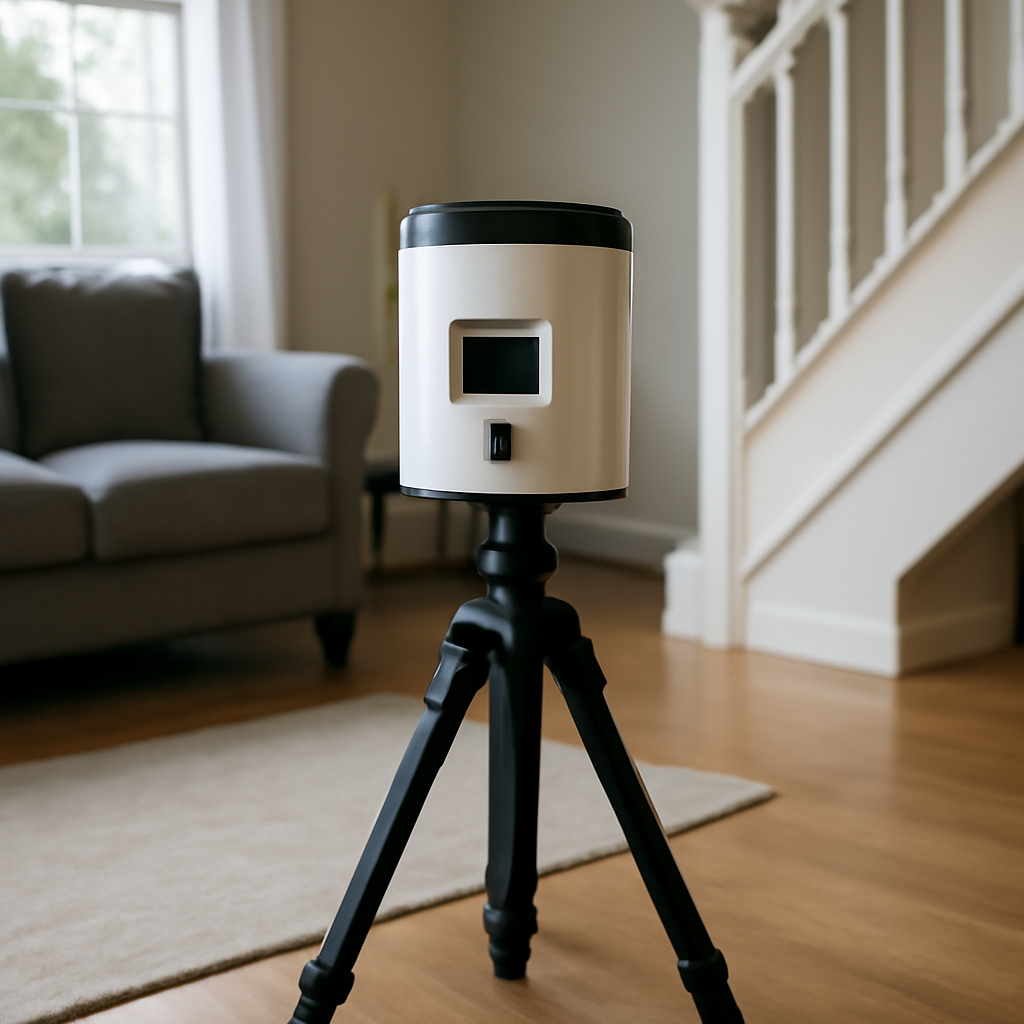
A radon survey is a structured, multi-point measurement of radon gas concentrations throughout a building, typically performed by a certified measurement professional with continuous radon monitors deployed at multiple locations. The output is a survey report that maps the vertical and spatial distribution of radon across the home, identifies the rooms or levels most affected, and recommends a mitigation strategy if elevated levels are confirmed. This guide summarizes EPA and CDC guidance on survey methodology current as of 2026 and is not a substitute for a certified provider.
Part of our Radon Levels guide — start there for the full picture →
Survey versus single-point test
A single-point test measures radon in one location — typically the lowest livable level — over a single deployment window. A survey measures radon at multiple locations (often 3 to 8 points) sometimes over multiple deployment windows. The survey provides a more complete picture but costs more and takes longer. Most homeowners do not need a survey for routine purposes; a single-point CRM test in the basement satisfies real-estate transaction needs and basic screening.
When a survey is appropriate
Large or unusual homes where a single basement test may not represent occupancy patterns elsewhere. Homes with finished basements that double as primary living space and want detailed data on basement-to-upstairs gradient. Homes scheduled for mitigation system design where the mitigation contractor needs to know the spatial distribution of source areas. Commercial or institutional buildings where the testing standard (AARST CC-1000) requires multi-point measurement. Post-mitigation verification on homes where the system was complex or where the homeowner wants confirmation across multiple zones.
Standard survey protocol
A typical residential survey deploys 3 to 8 continuous radon monitors simultaneously for 48 hours under closed-house conditions. Devices go in the lowest livable level (1-2 points), the main floor (1-2 points), and upper levels (1-2 points). For homes with finished basements, additional points in finished basement rooms map basement-to-basement variation. The deployment follows the same EPA placement rules as a single-point test, scaled to multiple devices.
What the survey report includes
The report identifies the property, the deployment dates and times, the device serial numbers and certifications, the average concentration at each measurement point with measurement uncertainty, the closed-house compliance status for the property, a map or floor plan showing point locations and results, and the certified measurement professional’s interpretation. Most reports include a recommendation: no mitigation needed, mitigation recommended with a specified strategy, or follow-up measurement needed before final decision.
Survey cost ranges
A residential radon survey typically costs $300 to $800 depending on the number of measurement points and the deployment duration. Three-point 48-hour surveys at the low end, eight-point 48-hour surveys at the high end. Commercial-grade AARST CC-1000 surveys on larger buildings cost considerably more. For comparison, a single-point CRM test for a real-estate transaction runs $125 to $200; the survey premium reflects the multiple devices and the more detailed reporting.
Why surveys matter for mitigation design
Sub-slab depressurization works by creating negative pressure under the foundation slab to pull soil gas away before it enters the home. The system design (suction-point placement, fan size, pipe routing) depends on where in the foundation the soil gas is entering most strongly. A survey that shows higher concentrations in the north basement room versus the south room informs whether one suction point is sufficient or whether two are needed. Survey data reduces the chance of an undersized or mis-routed system.
Vertical distribution in multi-story homes
Radon concentrations typically decrease with each floor up because of dilution and air mixing. A common survey result for a two-story Colorado home: basement reads 12 pCi/L, first floor reads 5 pCi/L, second floor reads 2 pCi/L. Without the survey, only the basement number would be known. The survey shows the spatial distribution and informs how much benefit a mitigation system will produce on each level. For broader testing context, see our Front Range radon testing hub.
Spatial distribution within one level
Even within a single basement, concentrations can vary substantially. A finished bedroom directly over the highest soil-gas entry point may read 15 pCi/L while a finished living room 20 feet away reads 6 pCi/L. The survey maps this within-level variation and identifies the rooms with the highest occupancy exposure. For homeowners with children’s bedrooms in the basement, the room-level distribution matters more than the basement average.
Closed-house compliance across multiple points
Closed-house conditions apply to the entire property, not to individual measurement points. Every external door and window must remain closed (except for normal entry/exit) for at least 12 hours before deployment and through the test period. HVAC operates normally. Whole-house fans, attic fans, and exhaust fans should not run continuously. A homeowner who opens a basement window during a survey invalidates all measurement points in that level, not just the one nearest the window.
Tamper-evident protocols on multi-point surveys
CRMs used in surveys log motion, temperature, and humidity continuously. A tamper event at any point (the device was moved, the room conditions changed dramatically, a window was opened) flags that point’s result as suspect. Survey-grade CRMs are calibrated and certified to AARST-NRPP standards. The tamper logs are part of the final report; results from tampered points are typically excluded or footnoted.
Survey before mitigation versus survey after
Pre-mitigation surveys inform system design and establish a baseline against which post-mitigation results are compared. Post-mitigation surveys confirm the system reduces concentrations across all measurement points, not just the basement. EPA recommends post-mitigation testing within 30 days of system commissioning; a survey-format post-mitigation test gives more confidence than a single-point follow-up test, especially in larger or more complex homes.
Survey limitations
A 48-hour survey is still a snapshot, even with multiple points. It captures conditions on those specific dates with that specific weather and HVAC operation pattern. For annual-average characterization, long-term alpha-track surveys deployed for 90+ days at multiple points give more accurate data. The trade-off is timeline: a 12-month alpha-track survey produces results a year after deployment, which is too slow for real-estate transactions but appropriate for long-term homeowner planning.
Survey for new home commissioning
New home construction with radon-resistant features (passive sub-slab venting, sealed sumps, sealed plumbing penetrations) sometimes goes through a commissioning survey to verify the passive design works. If the passive system produces concentrations above 4 pCi/L, the design is upgraded to active depressurization with a fan. The survey is part of the warranty inspection in some jurisdictions. The active versus passive radon removal guide covers this transition.
Real-estate transaction surveys
Surveys are uncommon in real-estate transactions because timing pressure usually drives buyers to single-point CRM testing during the inspection objection period. Where surveys do happen in transactions: high-value properties where buyers want detailed data on a finished basement bedroom, large or unusual homes where a single basement test is unlikely to be representative, and homes where prior testing showed elevated levels and the new buyer wants confirmation of spatial distribution before negotiating mitigation as a closing condition.
How to vet a surveyor
Confirm AARST-NRPP or NRSB certification. Ask for a sample redacted survey report from a similar-size home. Confirm the surveyor uses CRMs with current calibration certificates. Request the sample chain-of-custody and deployment protocol document. Verify any state-specific radon licensing required in the project’s jurisdiction. Get the certificate of insurance. Two to three bids is appropriate for surveys at the higher end of cost; for typical residential surveys, a single trusted provider is usually sufficient.
Documentation to retain
The survey report including all measurement points, the device serial numbers, the deployment dates, the tamper-event logs, and the certified professional’s certification number. Keep the survey with the property records permanently. Survey results can be referenced in future property-sale disclosures and may reduce the need for repeat testing if the survey is recent. The survey also informs any future mitigation system design or upgrade.
When a single-point test is sufficient
For most owner-occupant homes in Colorado: a single 48-hour CRM test in the lowest livable level satisfies EPA protocol, real-estate transaction needs, and homeowner screening. The single-point result either confirms low levels (no action needed) or triggers mitigation (with the mitigation contractor doing additional measurements as part of system design). The survey premium is best spent when single-point testing has already shown elevated levels and additional spatial data will inform a specific decision.
When to call a professional
For any radon survey work, hire a certified AARST-NRPP or NRSB measurement professional. DIY surveys with multiple consumer monitors are not equivalent because consumer devices lack the tamper-evident logs, the calibration documentation, and the certified-professional interpretation that make a survey report carry weight in transactional, mitigation-design, or disclosure contexts.
References
- EPA Radon Measurement Protocols — U.S. Environmental Protection Agency
- CDC Radon Testing Guidance — Centers for Disease Control and Prevention
- CDPHE Radon Program — Colorado Department of Public Health and Environment
- American Lung Association Radon Page — American Lung Association
Frequently asked questions
What is a radon survey?
A structured multi-point measurement of radon gas concentrations throughout a building, performed by a certified measurement professional with continuous radon monitors at multiple locations (typically 3 to 8 points). The output is a survey report that maps vertical and spatial distribution, identifies the rooms most affected, and recommends a mitigation strategy if elevated levels are confirmed.
How much does a residential radon survey cost?
$300 to $800 depending on the number of measurement points and deployment duration, with three-point 48-hour surveys at the low end and eight-point 48-hour surveys at the high end. A single-point CRM test for comparison runs $125 to $200. The survey premium reflects multiple devices and more detailed reporting.
When is a survey needed instead of a single-point test?
Large or unusual homes where one basement test may not represent occupancy patterns elsewhere, homes with finished basements used as primary living space, mitigation system design that needs spatial source-area data, post-mitigation verification across multiple zones, and commercial buildings under AARST CC-1000 protocols. Most owner-occupant homes do not need a survey.
How long does a radon survey take?
Standard short-term residential surveys run 48 hours of deployment, with same-day or next-day reporting after retrieval. Long-term alpha-track surveys can run 90 to 365 days for the most accurate annual-average data across multiple points. Real-estate transactions almost always use 48-hour CRM surveys because of timing constraints.
Front Range homeowners considering a multi-point radon survey can get in touch through our contact page for a vetted certified provider.
Test your home for radon
Radon is invisible and odorless, so a test is the only way to know your level. A short-term kit gives a first reading in days; a digital monitor tracks it over time.
| Product | Why | Buy |
|---|---|---|
 AirChek Charcoal Radon Test Kit AirChek Charcoal Radon Test Kit | Lab fee usually included; EPA short-term protocol. | Amazon — $21.95 |
 First Alert RD1 Radon Test Kit First Alert RD1 Radon Test Kit | Widely stocked; 48-hour charcoal test. | Amazon — $16.98 |
 Airthings Corentium Home Airthings Corentium Home | Digital monitor with a long-term average. | Amazon — $143.65 |