What Is Radon?: A Plain-Language Guide
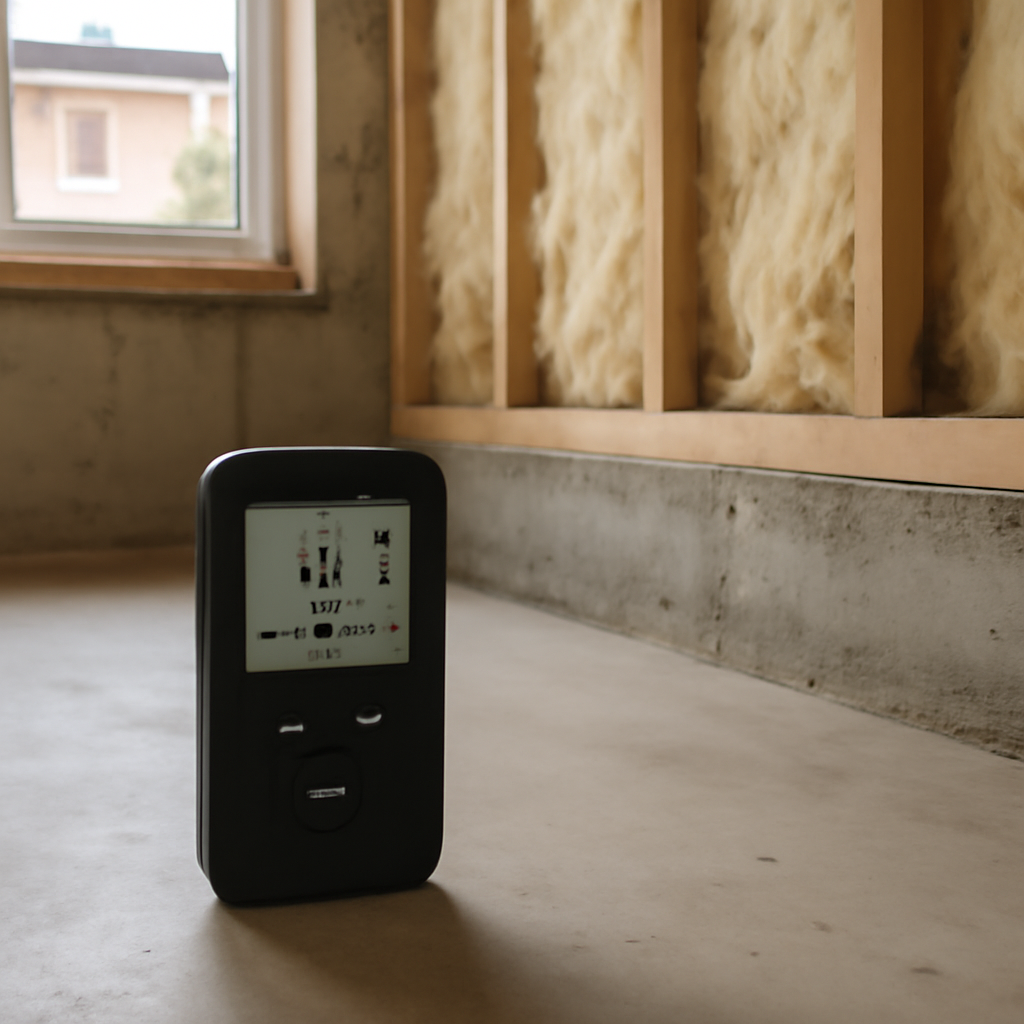
What is radon is the most fundamental question a Front Range homeowner can ask about indoor air quality. The answer is precise and worth understanding well, because radon is the second leading cause of lung cancer in the United States and Colorado sits in EPA Zone 1, the highest-risk designation in the country. This guide answers the question from the ground up: what radon is chemically, where it comes from in the earth, how it gets into homes, why it harms human health, and what the testing and mitigation framework looks like. This guide summarizes EPA and CDC guidance current as of 2026 — consult a certified radon professional for testing and your physician for any health concerns.
The Definition: Radon Is a Naturally Occurring Radioactive Noble Gas
Radon is a chemical element with atomic number 86, in Group 18 (the noble gases) of the periodic table. It is a colorless, odorless, tasteless gas that is chemically inert under normal conditions (it does not react with other substances the way oxygen or chlorine do). All naturally occurring radon is radioactive. The most common isotope encountered in homes is radon-222, which has a half-life of 3.8 days.
The EPA radon program publishes the authoritative US guidance on radon as a public-health hazard. The CDC radon information covers the health-effects side. The Colorado Department of Public Health and Environment radon program provides Colorado-specific testing and mitigation guidance.
Where Radon Comes From
Radon is produced by the radioactive decay of uranium and thorium found in most soils and rocks. The dominant decay chain that produces residential radon starts with uranium-238 (half-life 4.5 billion years) and proceeds through radium-226 (half-life 1,600 years) to radon-222. Because uranium-238 has such a long half-life, the decay chain has been operating continuously for as long as the earth has existed. Soils and rocks worldwide contain trace uranium concentrations and produce radon continuously.
Radon production rates vary based on the uranium concentration of underlying soils and rocks. Igneous rocks (granite in particular), uranium-rich sedimentary rocks (some shales, phosphate deposits), and soils derived from these parent materials produce more radon than soils derived from limestone, sandstone, or other lower-uranium rocks. The Front Range corridor sits on geology that produces relatively high radon — a primary reason Colorado is designated EPA Zone 1.
How Radon Gets Into Homes
Once radon forms in soil, it migrates through pore spaces in the soil toward the surface. When it reaches a home’s foundation, it enters through several pathways:
- Cracks in concrete slabs and foundation walls
- Construction joints where slab meets foundation wall
- Gaps around utility penetrations (water lines, sewer lines, electrical conduits)
- Floor drains and sump pits
- Crawlspace soil exposed to indoor air
- Well water for homes with private well systems (a minor pathway in most cases)
The driving force is typically pressure differential. Warm air inside a home rises (the “stack effect”) and creates a slight negative pressure at the lower levels of the home. This negative pressure pulls soil gas (including radon) into the home through any available pathway. Closed homes during winter and summer (when HVAC systems run) maintain stronger pressure differentials than open homes during shoulder seasons, which is why radon levels often peak in winter.
Why Radon Harms Human Health
Radon itself, being a noble gas, is chemically inert. The health hazard comes from its radioactive decay. As radon-222 atoms decay, they produce a series of short-lived radioactive daughter products: polonium-218, lead-214, bismuth-214, and polonium-214. These are not gases; they are solid metallic atoms that attach to dust particles in indoor air and, when breathed in, lodge in the bronchial epithelium (the lining of the airways).
Polonium-218 and polonium-214 emit alpha particles. Alpha particles are large, slow, and densely ionizing — they cannot penetrate skin from outside the body, but when emitted from inside the lung tissue, they produce concentrated DNA damage in adjacent cells. Cumulative DNA damage over years of exposure increases the risk of lung cancer.
The EPA estimates approximately 21,000 radon-related lung cancer deaths per year in the United States, making radon the second leading cause of lung cancer after smoking. The risk multiplies for smokers exposed to radon — smoker-radon synergy increases lung cancer risk roughly 10 to 25 times above radon exposure alone.
How Radon Is Measured
Radon concentration in indoor air is measured in picocuries per liter (pCi/L) in the United States or in becquerels per cubic meter (Bq/m3) internationally. One pCi/L equals approximately 37 Bq/m3. The EPA action level is 4 pCi/L (148 Bq/m3) — at or above this concentration, the EPA recommends mitigation.
Two main testing methods produce reliable measurements:
Short-Term Testing
Short-term tests run 2 to 90 days, with most homebuyers using 2- to 7-day tests. Devices include charcoal canisters (passive activated charcoal that adsorbs radon for laboratory analysis), continuous radon monitors (electronic devices that report hourly readings), and alpha-track detectors set for short-term deployment.
Long-Term Testing
Long-term tests run 90 days to one year and produce results closer to true annual average exposure. Alpha-track detectors are the most common long-term device. Long-term testing is more accurate but takes longer to produce a result.
The National Radon Proficiency Program (NRPP) and the National Radon Safety Board (NRSB) certify radon measurement professionals and mitigation contractors. Front Range buyers commissioning radon testing during a real-estate transaction typically receive a 2- to 4-day continuous-monitor test with a certified professional handling deployment and analysis.
The EPA Action Level and What It Means
The EPA action level of 4 pCi/L is not a strict safety threshold. It is the level at which EPA recommends mitigation because the lifetime lung cancer risk at sustained 4 pCi/L exposure is unacceptably high. The risk is continuous rather than threshold-based — every additional pCi/L increases lifetime cancer risk. EPA also recommends that homeowners with readings between 2 and 4 pCi/L consider mitigation.
The World Health Organization recommends an action level of 100 Bq/m3 (approximately 2.7 pCi/L), lower than the US EPA value. There is no level of radon exposure known to be completely safe.
Colorado as EPA Zone 1
The EPA Map of Radon Zones designates every US county as Zone 1, Zone 2, or Zone 3 based on predicted indoor radon levels. Zone 1 counties have predicted average indoor radon levels above 4 pCi/L; Zone 2 counties have predicted averages between 2 and 4 pCi/L; Zone 3 counties have predicted averages below 2 pCi/L. Most of Colorado is Zone 1, including all of the Front Range corridor: Denver, Douglas, Elbert, Arapahoe, Jefferson, El Paso, Adams, Boulder, and Broomfield counties.
The high Zone 1 designation does not mean every home in Colorado has elevated radon — individual home readings vary substantially based on construction, soil conditions, and HVAC operation. It does mean that Colorado homes are statistically more likely to have elevated radon than homes in lower zones, and that testing should be considered baseline practice for any Colorado home purchase.
Radon Mitigation Basics
Homes with confirmed radon at or above 4 pCi/L can be mitigated effectively. The most common approach is active soil depressurization, in which a fan continuously pulls soil gas from beneath the home’s foundation and vents it to the exterior above the roofline. A properly designed and installed mitigation system typically reduces indoor radon by 90 to 99 percent, bringing most homes from elevated readings down to 2 pCi/L or lower.
Front Range mitigation contractor pricing typically runs $1,200 to $2,500 for a standard single-family system. Mitigation systems require minimal maintenance once installed — typically a monthly check of the manometer gauge and periodic verification testing.
Common Misconceptions About What Radon Is
Several misconceptions appear frequently in homeowner research and warrant clarification.
Radon Is Not Industrial Pollution
Radon is a naturally occurring product of geological processes. It is not produced by industrial activity, agricultural chemicals, or environmental contamination in the conventional sense. Every soil on earth produces some radon. The variation between homes is driven by underlying geology and home construction, not by external pollution.
Radon Is Not Detectable Without Testing
Because radon is colorless, odorless, tasteless, and chemically inert, there is no smell, taste, visual indicator, or material-damage signal that reveals its presence. The only way to know whether a home has elevated radon is to test for it. A home that “smells funny” or has “musty air” is not exhibiting radon symptoms; those signs point to other indoor air quality issues such as mold or sewer gas.
Radon Does Not Cause Immediate Symptoms
Acute radon exposure does not produce headache, nausea, dizziness, or any other immediate symptoms. The harm is cumulative DNA damage over years of exposure. Homeowners feeling acutely unwell are experiencing something other than radon.
Radon Risk Is Not Determined by Home Age
New and old homes can both have elevated radon. New construction sometimes has higher radon because tighter building envelopes reduce natural air exchange while still permitting soil-gas entry. Older homes can have lower radon because of leakier construction and more natural ventilation. Construction year is not a useful predictor.
How Radon Was Discovered and Recognized as a Hazard
Radon was discovered by German chemist Friedrich Ernst Dorn in 1900 and was originally identified as an emanation product of radium. Its noble-gas chemistry was established over the following two decades. The link between radon and lung cancer was established gradually through studies of uranium miners in the mid-20th century — miners exposed to high radon concentrations underground showed substantially elevated lung cancer incidence. Residential radon exposure as a public-health concern came to widespread attention in the 1980s, when measurements in homes in Pennsylvania (the Stanley Watras incident, where home radon was traced back as the source of high readings at a nuclear-fuel plant) showed that ordinary homes could have radon concentrations comparable to underground mines.
The EPA established the residential radon program through the 1980s, set the 4 pCi/L action level in 1986, and has progressively expanded testing and mitigation guidance since then. The current US radon framework rests on more than three decades of regulatory experience and accumulated home measurements.
What Homeowners Should Do
- Test radon in every Colorado home, at least once for owned homes and before purchase for transactions
- Use a certified short-term test for transactions or a long-term test for owned homes
- Mitigate if readings are at or above 4 pCi/L; consider mitigation for readings 2 to 4 pCi/L
- Retest after mitigation to confirm the system is working
- Retest every two to five years even after mitigation, because conditions can change
Deeper coverage appears in the Front Range radon testing guide, with sibling articles covering common Colorado radon questions including what causes high radon levels and radon testing during a home inspection.
References
- EPA Radon program and Citizen’s Guide to Radon — US Environmental Protection Agency
- CDC Radon information — Centers for Disease Control and Prevention
- Colorado Department of Public Health and Environment radon program — CDPHE
Front Range homeowners who want to test or mitigate radon in their home can connect with a vetted local certified radon professional through our contact page.