Radon Mitigation System Crawl Space: A Clear Guide
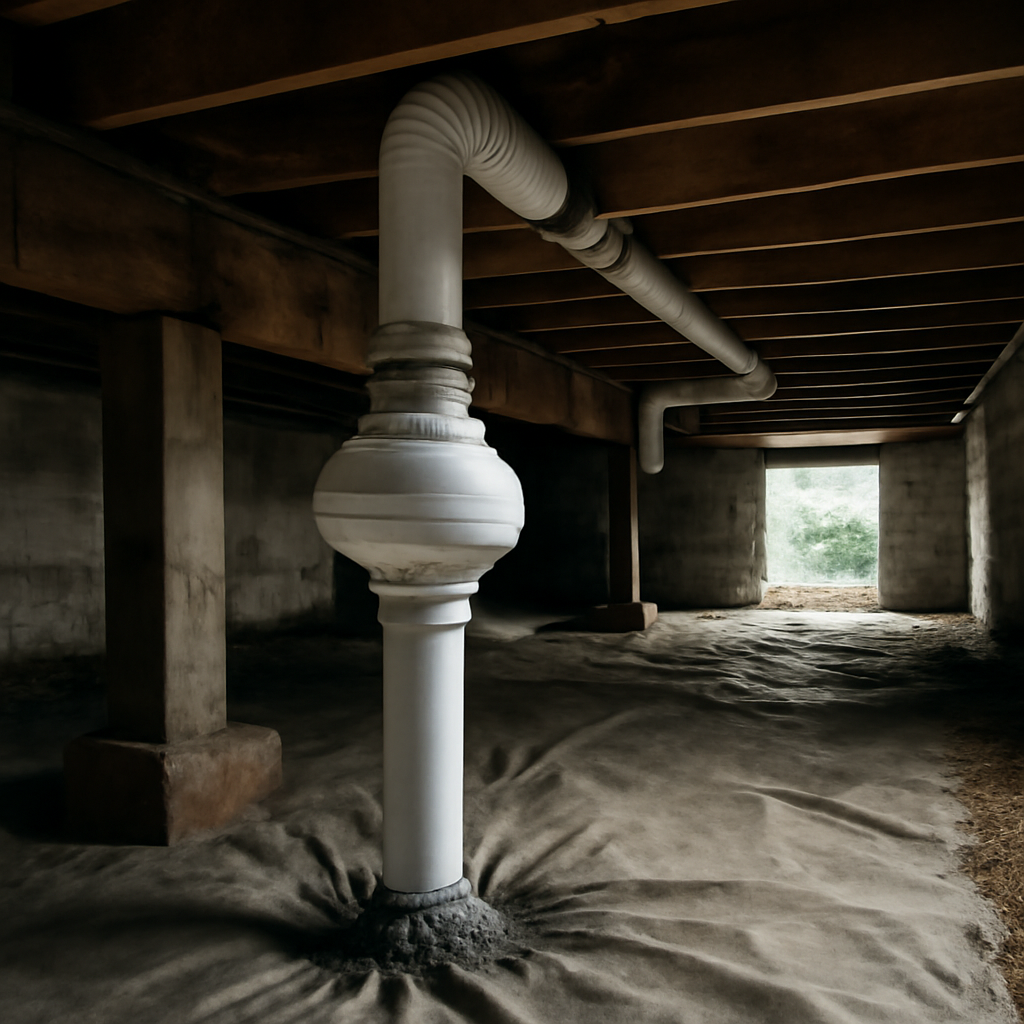
A radon mitigation system crawl space install solves a problem that a basement system cannot: how to reduce radon when there is no continuous slab to depressurize. Homes over crawl spaces, common across the Colorado Front Range and in older construction, let soil gas seep directly through exposed dirt floors, and the approach to fixing it differs from a standard sub-slab system. The standard solution is sub-membrane depressurization, which seals a barrier over the crawl-space floor and draws radon from beneath it. This guide summarizes EPA and Colorado Department of Public Health and Environment guidance current as of 2026; it is informational only, and you should rely on a certified radon professional and your physician for testing and health decisions rather than a web article.
Part of our Radon Mitigation Systems guide — start there for the full picture →
Why Crawl Spaces Need a Different Approach
In a home with a poured slab, radon mitigation creates suction directly beneath the concrete. A crawl space has no such slab; instead it typically has exposed soil or a thin, leaky vapor barrier, leaving a large surface through which radon can enter. Drawing suction on bare soil is inefficient, so the crawl-space strategy is to first create a sealed surface, then depressurize beneath it.
This is why the method, sub-membrane depressurization, focuses on the membrane as much as the fan. Without a well-sealed barrier, a fan would simply pull conditioned air through gaps rather than soil gas from the ground. The general principles of soil depressurization carry over, as explained in the guide on how radon gas mitigation works, but the execution is crawl-space-specific.
How Sub-Membrane Depressurization Works
Installing the membrane
A certified installer covers the crawl-space floor with a heavy polyethylene vapor barrier, often a reinforced membrane more durable than standard sheeting. The barrier is overlapped at seams, sealed, and run up the foundation walls and around piers and penetrations so it forms a continuous, sealed surface across the entire crawl-space floor. This sealing is the most labor-intensive and important part of the job.
Adding the suction point and fan
A perforated pipe or suction point is placed beneath the membrane, connected to PVC piping that runs to an inline radon fan mounted in an attic or exterior location. When the fan runs, it draws the soil gas trapped under the membrane and exhausts it above the roofline, away from windows and intakes. The membrane lets the fan create effective suction across the whole floor rather than fighting countless leaks.
Verifying performance
A manometer on the pipe confirms the fan maintains suction, and a post-installation radon test verifies that levels drop below the EPA action level of 4.0 picocuries per liter. The standards behind these measurements are detailed in the guide on radon testing equipment.
Sealing the Crawl Space Matters Most
The quality of the membrane seal largely determines whether the system works. Gaps at the perimeter, unsealed seams, or penetrations around plumbing and piers let the fan pull air from the crawl space instead of soil gas from the ground, wasting suction and energy. A meticulous installer spends most of the labor on a complete, durable seal.
Beyond radon, sealing the crawl-space floor brings a side benefit common to encapsulation: it controls ground moisture that can drive mold and wood rot, a frequent concern in vented crawl spaces. The dual purpose makes a quality membrane install valuable on more than one front, though radon reduction remains the primary goal. Homeowners choosing a contractor for this work should review the vetting advice in the guide on selecting radon mitigation installers.
What a Crawl Space Radon System Costs
Crawl-space systems generally cost more than a simple basement-slab install because of the labor required to seal the membrane. Industry estimates commonly place crawl-space sub-membrane depressurization in a range of roughly 1,500 to 3,500 dollars or more, depending on the crawl-space size, accessibility, the number of piers and penetrations to seal, and routing difficulty. A low, cramped, or cluttered crawl space costs more because the sealing work is slower.
Operating cost matches other active systems: the fan runs continuously and uses modest electricity. Over time the fan may need replacement every several years. Homeowners comparing crawl-space pricing against other system types can review the breakdown in the guide on the radon mitigation system price, which separates installation from ongoing expense.
Mixed Foundations and Special Cases
Many homes have a combination of a basement and a crawl space, or a slab section adjoining a crawl space. In these cases an installer may design a single system that addresses both areas, or use separate suction points tied together, to ensure the whole foundation footprint is depressurized. Skipping a crawl-space portion in a mixed-foundation home leaves an open entry path that can keep levels elevated despite a working slab system.
Open or partially open crawl spaces, and those with significant moisture, may need remediation of those conditions before or alongside the radon system. A certified installer evaluates the foundation as a whole and designs accordingly rather than treating only the most accessible area. The broader framework for testing and system design is laid out in the Front Range radon testing guide.
Maintaining a Crawl Space Radon System
Like any active system, a crawl-space system needs periodic attention. The manometer should show suction whenever the fan runs; equalized columns signal a lost seal or a failed fan. Homeowners should periodically inspect the membrane for tears, especially if the crawl space is entered for plumbing or other work, since a punctured barrier undermines the system. Re-testing radon every couple of years confirms continued protection.
Because crawl spaces are easy to overlook, scheduling a check during other home maintenance keeps the system honest. If a test shows levels creeping up, a professional can locate the cause, often a membrane breach or an aging fan, and restore performance. A properly sealed and maintained sub-membrane system reliably keeps a crawl-space home below the action level, which is why it is the EPA-recognized standard for this foundation type along the Front Range and beyond.
Choosing the Right Membrane and Materials
Not all crawl-space liners are equal, and the membrane choice influences how well the system performs and how long it lasts. Lightweight polyethylene sheeting, the kind sometimes laid loosely in vented crawl spaces, tears easily and does not hold a seal under depressurization. A radon sub-membrane system calls for a heavier, often reinforced liner, sometimes in the range of 10 to 20 mil thickness, that can withstand foot traffic during future maintenance and maintain its integrity for years.
Seams must overlap generously and be sealed with compatible tape or adhesive, and the liner must be mechanically fastened and sealed where it meets foundation walls and wraps around piers. In crawl spaces that double as occasional access for plumbing or electrical work, a more durable membrane pays off because it tolerates the inevitable foot traffic. An experienced installer selects the membrane grade to match how the crawl space is used, balancing cost against longevity, a judgment that distinguishes a quality contractor from a low bidder. The fan that drives this suction is examined in detail in the guide on radon mitigation fans.
How Crawl Space Systems Fit Colorado Homes
Crawl-space foundations are common across the Front Range, particularly in certain neighborhoods and older or rural construction, and Colorado’s uranium-bearing soils make radon a frequent companion to that foundation type. Because the state sees elevated radon in a large share of homes, crawl-space owners should not assume their foundation is somehow lower-risk; an open dirt crawl space can be a significant radon entry point, sometimes more so than a sealed slab.
The good news is that sub-membrane depressurization is a mature, well-understood solution that performs reliably when installed by a licensed professional. For Colorado homeowners, the combination of a properly sealed membrane, an appropriately sized fan, and verified post-installation testing turns a high crawl-space reading into a controlled, low-radon home. The broader context of testing, levels, and system options for the region appears in the guide on the radon mitigation system for crawl space, which connects this approach to the wider picture of radon control.
Alternatives and When They Apply
Sub-membrane depressurization is the standard for crawl-space radon, but a few alternatives exist for specific situations. In a fully sealed and conditioned crawl space, sometimes an extension of whole-house encapsulation, the approach mirrors a slab system more closely because the floor is already covered. Where a crawl space has been converted to a sealed, insulated space integrated with the home’s conditioned air, the radon strategy adapts to that configuration rather than treating the area as a vented cavity.
Crawl-space ventilation alone, simply adding vents or a fan to exchange crawl-space air, is generally not a reliable radon solution and can introduce moisture and energy problems in the process. The EPA and state radon programs favor depressurization beneath a sealed membrane because it addresses the source, soil gas entering from the ground, rather than diluting it after entry. A homeowner offered a ventilation-only fix for high crawl-space radon should be skeptical and seek a certified professional’s assessment.
For mixed foundations and unusual layouts, the right design may combine methods, and only a licensed installer evaluating the specific home can determine that. The guiding principle holds across cases: seal the entry surface, depressurize beneath it, exhaust above the roofline, and verify with a post-installation test. The evidence that these systems reliably lower radon is reviewed in the guide on whether radon mitigation systems work.
The Health Rationale and Why Testing Comes First
The effort and cost of a crawl-space radon system are justified by what radon does to health. The EPA identifies radon as the leading cause of lung cancer among people who never smoked and the second leading cause overall. Because it is a colorless, odorless radioactive gas from the natural decay of uranium in soil, occupants cannot sense it, and the risk builds quietly over years of exposure. Colorado’s uranium-bearing soils make elevated radon common across the Front Range, and an open crawl space can be a significant entry point.
That is why testing precedes any system. A radon measurement establishes whether a crawl-space home actually has a problem and how severe it is, which informs the design and provides a baseline to judge the system’s success. A short-term test gives a quick reading, while a long-term measurement better captures the year-round average that matters for cumulative exposure. Either way, a result at or above 4.0 picocuries per liter is the trigger for mitigation.
After a sub-membrane system is installed, a post-mitigation test confirms it works, and periodic re-testing every couple of years verifies continued protection. Treating radon as a serious health matter, testing first, mitigating when warranted, and verifying afterward, turns an invisible risk into a managed one. A crawl-space home with a properly sealed membrane, an appropriately sized fan, and a documented passing test is as well protected as any slab home with active mitigation. The cost of a crawl-space system is higher than a basic slab install because of the sealing labor, but it buys the same reliable protection, and the moisture control it provides is a meaningful bonus in a vented crawl space. For Front Range homeowners, the combination of widespread radon-prone geology and common crawl-space foundations makes this a routine, well-understood project rather than an exotic one.
References
- Consumer’s Guide to Radon Reduction — U.S. EPA
- Radon Mitigation Methods — Colorado Department of Public Health and Environment
- Radon and Indoor Air Quality — American Lung Association
Frequently asked questions
How is a crawl space radon system different from a basement one?
A crawl space lacks a continuous slab, so installers use sub-membrane depressurization: they seal a heavy vapor barrier over the floor and draw soil gas from beneath it with a fan. A basement system depressurizes directly under the concrete slab.
Why is sealing the membrane so important?
Gaps at seams, the perimeter, or penetrations let the fan pull crawl-space air instead of soil gas, wasting suction. A complete, durable seal is what lets the fan create effective depressurization across the whole crawl-space floor.
How much does a crawl space radon system cost?
Industry estimates commonly range from roughly 1,500 to 3,500 dollars or more, driven by crawl-space size, accessibility, the number of piers and penetrations to seal, and routing. Cramped or cluttered crawl spaces cost more because sealing is slower.
Does a crawl space radon system also help with moisture?
Yes, as a side benefit. Sealing the floor with a membrane controls ground moisture that can drive mold and wood rot in vented crawl spaces. Radon reduction remains the primary purpose, but moisture control is a meaningful bonus.
Front Range homeowners with a crawl-space home that tested high can connect with a vetted local radon professional to design and install a sub-membrane system by reaching out through our contact page.
Radon mitigation fans & parts
If a sub-slab depressurization system is the fix, the inline fan is the heart of it. Match the fan to your soil and pipe diameter — or have a certified installer size it.
| Product | Why | Buy |
|---|---|---|
 RadonAway RP145 Inline Fan RadonAway RP145 Inline Fan | Common 4-in. SSD workhorse fan. | Amazon — $152.00 |
 Fantech Rn2 Radon Fan Fantech Rn2 Radon Fan | Quiet operation; energy-efficient. | Amazon — $153.89 |
 Radon U-Tube Manometer Radon U-Tube Manometer | Confirms the system is pulling suction. | Amazon — $8.95 |