Radon Inspections in 2026: Front Range Homeowner Guide

Radon inspections are one of the cheapest and highest-leverage tests Front Range homeowners can include in a pre-purchase inspection or commission as a baseline for an existing home. The EPA classifies radon as the second leading cause of lung cancer in the United States after smoking, and the gas is invisible without instrumentation. This guide summarizes EPA, CDPHE, and CDC guidance current as of 2026 and explains how radon inspections work in practice, what they cost, and what to do with the results. Nothing here substitutes for medical advice or for a certified mitigation professional when remediation is being planned.
Part of our Radon Levels guide — start there for the full picture →
What Are Radon Inspections?
Radon inspections are measurements of indoor radon concentration in a home, performed by placing a radon test device on the lowest livable level for a defined test period and reading the result in picocuries per liter (pCi/L). The most common format is a 48-hour short-term test using a continuous radon monitor, which produces immediate results suitable for real estate transactions. Long-term tests using alpha track or electret detectors run 90 days to 1 year and produce more accurate annual averages.
The EPA recommends mitigation when the average indoor radon level meets or exceeds 4 picocuries per liter. The 4 pCi/L action level is not a safe threshold; it is the concentration at which the EPA has determined mitigation is cost-effective and recommended. Levels below 4 pCi/L still carry some long-term cancer risk, and the EPA encourages mitigation considerations starting at 2 pCi/L for households where reducing radon further makes sense.
Radon inspections produce information rather than action. The result tells the homeowner whether mitigation is warranted and provides a baseline for future testing. Below 2 pCi/L, no immediate action is typically needed. Between 2 and 4 pCi/L, mitigation is optional. At or above 4 pCi/L, mitigation is recommended.
Why Front Range Homes Need Them
Colorado is in EPA Radon Zone 1, meaning predicted average indoor radon levels in the state exceed 4 pCi/L based on geological data. Almost every Front Range county is in Zone 1, including Denver, Douglas, Elbert, Arapahoe, Jefferson, El Paso, Adams, Boulder, and Broomfield. The Colorado Department of Public Health and Environment encourages testing at every property purchase and at every existing home that has not been tested in the past two to five years.
Real-world Front Range homes commonly test between 2 and 12 pCi/L on initial short-term tests, with about half exceeding the 4 pCi/L action threshold. Higher elevations and homes built on certain bedrock formations sometimes test much higher, with results above 20 pCi/L not uncommon in Boulder, parts of Jefferson County, and certain Douglas County subdivisions. The variation is real and unpredictable from address to address.
The parent guide to radon testing in Colorado covers the broader Front Range testing framework and explains why the EPA Radon Zone 1 designation matters even for newer homes that homeowners assume are radon-resistant. The EPA radon zones explained guide walks through what the zone designations actually mean.
How a Radon Inspection Is Conducted
For a 48-hour short-term inspection, the inspector arrives at the home, places the test device on the lowest livable level on a flat surface, and starts the test. The placement is documented with photos, room location, and start timestamp. The inspector explains closed-house conditions to the occupant and confirms the test will run for the next 48 hours under normal occupancy.
After 48 hours, the inspector returns to retrieve the device. For a continuous radon monitor, the inspector reads the result on-site, downloads the hour-by-hour data to a software platform, and produces a written report. For a charcoal canister, the device is sealed and shipped to a lab, with results returned in 5 to 10 business days. For a long-term test, the inspector or homeowner places the device and retrieves it at the end of the deployment period.
For more detail on test mechanics and timing, the how-long-does-a-radon-test-take guide covers the timing and scheduling logistics. The what-does-a-radon-test-look-like guide walks through the physical appearance and placement of test devices.
Costs in 2026
On the Colorado Front Range in 2026, a radon inspection bundled with a pre-purchase home inspection typically costs $125 to $200. The bundled price reflects the inspector’s existing visit, so there is no additional trip charge for placement and retrieval. Standalone radon inspections ordered separately from a home inspection typically cost $200 to $275 because they require dedicated trips for placement and retrieval.
Charcoal canister tests cost less, often $25 to $50 per test including lab analysis, but require homeowner placement and mailing. They are appropriate for baseline testing of a property the homeowner already owns. Long-term alpha track tests cost $30 to $80 per device for a 90-day to 1-year deployment and produce more accurate annual averages.
For ongoing real-time monitoring, a personal continuous radon monitor for homeowner use runs $150 to $300 for a quality unit. AirThings, Corentium, and Ecosense are popular brands. The detailed monitor comparison is in the AirThings versus Corentium continuous radon monitor guide.
Closed-House Conditions and Why They Matter
Short-term radon inspections require closed-house conditions to produce reliable results. Closed-house conditions mean exterior windows and doors stay closed except for normal entry and exit, and HVAC systems operate as they would normally. The closed-house requirement should begin 12 hours before the test starts and continue throughout the test period.
Open windows and doors during a short-term test pull outdoor air through the home and dilute the indoor radon concentration, producing artificially low readings. A test that shows 2 pCi/L during open-window conditions might show 6 pCi/L under normal closed-house operation. The closed-house requirement is essential for getting a result that represents the home’s actual occupied conditions.
Long-term tests do not require closed-house conditions because the longer measurement period averages out short-term variation in ventilation. A 90-day alpha track detector produces a reasonable annual average regardless of whether windows are open or closed during specific portions of the deployment. For real estate transactions, however, the time pressure usually requires short-term tests with closed-house conditions.
What the Results Mean
The inspection report documents the average radon concentration during the test period in pCi/L. A defensible report includes the test device used, the placement location, the start and end timestamps, the average concentration, and a comparison to the EPA action level of 4 pCi/L. Continuous monitor reports often include an hour-by-hour graph showing variation across the test period.
Result interpretation depends on the number. Below 2 pCi/L, no immediate action is typically warranted but periodic re-testing every two to five years is sensible. Between 2 and 4 pCi/L, mitigation is optional but reasonable for households where reducing radon further makes sense. At or above 4 pCi/L, mitigation is recommended, and the cost-benefit math is favorable in nearly every Front Range scenario.
For more on what the numbers mean, the plain-language radon test explainer walks through the practical implications of different result ranges. The radon health risks guide covers the underlying epidemiology in plain language.
Health Considerations and Disclaimer
Radon is a naturally occurring radioactive gas produced by the decay of uranium in soil and rock. Long-term exposure is associated with lung cancer, and the EPA and CDC both classify radon as the second leading cause of lung cancer in the United States after smoking. The risk is dose-dependent, meaning higher concentrations and longer exposure produce greater lifetime risk. Smokers exposed to elevated radon face dramatically multiplied risk compared to non-smokers at the same exposure.
This article does not constitute medical advice. Homeowners with concerns about radon exposure should consult their physician, particularly if they have lived in a home with confirmed elevated radon for many years or if they have a smoking history. Routine medical screening for radon-related lung cancer follows the same guidelines as general lung cancer screening for at-risk individuals.
The takeaway for inspection decisions is simple: the inspection is cheap, the result is actionable, and the long-term health impact of elevated radon is well-established. Front Range homeowners in EPA Radon Zone 1 have particular reason to test and follow up on results.
What to Do With a Positive Result
A test result at or above 4 pCi/L is a clear signal that mitigation should be considered. The standard mitigation approach is active sub-slab depressurization, which uses a sealed pipe and a low-wattage fan to draw radon from beneath the foundation and vent it above the roofline. The system runs continuously and reduces indoor radon by 50 to 99 percent depending on the home’s specific characteristics.
Mitigation costs on the Front Range in 2026 typically run $1,200 to $2,500 for a standard active sub-slab system on a single-family home. More complex installations involving multiple suction points, crawl space encapsulation, or mountainous terrain can run $2,500 to $5,000. The investment is one-time, the operating cost is roughly $5 to $15 per month in electricity for the fan, and the system typically lasts 10 to 20 years before the fan needs replacement.
Always use a contractor certified by the National Radon Proficiency Program (NRPP) or the National Radon Safety Board (NRSB). For more on mitigation pricing and what to expect from contractors, the radon mitigation cost guide walks through 2026 Front Range pricing and the questions to ask when getting quotes.
Inspection in a Real Estate Transaction
In a Front Range pre-purchase scenario, the radon inspection is typically placed at the home inspection visit and read 48 hours later. The result lands inside the inspection contingency window and gives the buyer information for negotiation. Sellers and buyers commonly negotiate one of three outcomes for an elevated result: seller-paid mitigation completed before closing, a closing credit for buyer-paid mitigation, or buyer acceptance of the result without mitigation.
The buyer should request that the radon inspection be placed early in the inspection visit so the 48-hour window starts as soon as possible. This preserves time for retrieval, result interpretation, and any negotiation back to the seller before the contingency window closes. Late placement creates time pressure that can compromise the buyer’s negotiating position.
For sellers, a proactive pre-listing radon inspection can streamline the transaction. A documented test result, whether positive or negative, gives the seller cleaner disclosure and reduces the likelihood of late-stage renegotiation. Pre-listing inspections cost the same as buyer-paid inspections and produce documentation that travels with the property.
Re-Inspection After Mitigation
Post-mitigation testing is essential to confirm the system is working as designed. The EPA recommends a follow-up short-term test within 30 days of mitigation system installation. The post-mitigation test should be conducted under closed-house conditions, just like the pre-mitigation test, to allow apples-to-apples comparison. A successful mitigation typically reduces indoor radon to below 2 pCi/L, with many systems producing readings below 1 pCi/L.
If the post-mitigation test still shows elevated levels (above 2 pCi/L), the contractor should evaluate whether additional suction points are needed, whether the fan size is correct for the home, or whether sealing additional foundation cracks would improve performance. Reputable mitigation contractors include post-installation testing in the original quote and warranty subsequent adjustments.
Annual re-testing is recommended even after successful mitigation. Mitigation systems can degrade over time as fans wear out or vent stacks become partially blocked. A simple short-term test once a year confirms the system continues to work and gives early warning if performance has dropped.
Common Inspection Mistakes
Several errors recur in radon inspections. The first is failing to maintain closed-house conditions during a short-term test. The second is placing the device in the wrong location: too close to a wall, draft, or HVAC register, or above the lowest livable level. The third is testing during atypical weather conditions that produce non-representative readings.
The fourth is interpreting a single short-term test as definitive. EPA recommends confirmatory testing for any result above 4 pCi/L. The fifth is ignoring an elevated result. A homeowner who tests, gets a result above 4 pCi/L, and does nothing has wasted both the testing investment and the opportunity to reduce long-term cancer risk.
The sixth is using uncertified inspectors or labs for transactional testing. Real estate negotiations and insurance documentation often require defensible results, which means certified equipment, certified personnel, and standardized procedures. Saving $50 by using a non-certified provider can cost much more if the result is later challenged.
Long-Term Monitoring After Inspection
For ongoing monitoring beyond the initial inspection, continuous radon monitors for homeowner use have become more affordable and now run $150 to $300 for a quality unit that displays current and historical readings. Long-term monitoring catches seasonal variation, gradual changes in the home’s structure (foundation cracks, sump pump changes, basement renovations), and any decline in mitigation system performance.
Charcoal canister tests can also be used for periodic check-in monitoring at a lower per-test cost (often $25 to $50 per test). The trade-off is that each test requires a separate placement, mailing, and lab analysis cycle, whereas a continuous monitor produces ongoing data without recurring cost. Annual short-term tests via inspection or DIY are sufficient for most homeowners after the initial inspection.
Alpha track or electret long-term detectors over 90 days to 1 year produce the most accurate annual average and are useful when a homeowner wants a definitive answer about year-round exposure rather than a single-point snapshot. The choice between continuous monitor, periodic short-term, and long-term detector depends on the homeowner’s goals and budget.
Front Range Geological Context
Radon source variability across the Front Range reflects the underlying geology. Uranium-bearing rocks and soils, including certain sedimentary formations and granitic bedrock, produce more radon than others. Boulder County, parts of Jefferson County, and the foothill communities have higher background radon than parts of Adams or Arapahoe Counties built on different geological formations. None of this is predictive at the address level, which is why testing is the only reliable way to know.
Older homes with finished basements often test higher than slab-on-grade homes because the basement provides more surface area for radon entry and more low-pressure space for accumulation. Homes with sump pumps, dirt crawl spaces, or unsealed concrete floors all have higher background risk than homes with sealed basements and intact slabs. Homes that have undergone basement remodeling sometimes test higher post-renovation because the remodeling exposed new radon entry pathways.
New construction does not eliminate radon risk. Some newer Front Range homes are built with passive radon-resistant features, but the passive system needs to be activated with a fan if testing shows elevated levels. Builder marketing about “radon-ready” or “radon-resistant” construction does not guarantee low indoor radon. Testing is still essential.
How Radon Inspections Connect to Other Tests
Radon inspections are usually one of several tests bundled into a Front Range pre-purchase inspection. The most common companion add-ons are sewer scope (a camera evaluation of the main drain line) and mold sampling (air or surface sampling for mold spores). Radon, sewer scope, and mold are the three add-ons that account for the majority of post-base-fee billing on Front Range pre-purchase inspections.
Combining the radon inspection with the home inspection saves the inspector’s separate trip charge and is the standard approach. Buyers who try to save money by skipping radon at the inspection often end up paying more later for a standalone test, which typically runs $200 to $275 instead of the bundled $125 to $200. The bundling discount is real and worth taking advantage of.
Other tests sometimes included in pre-purchase scenarios include lead paint testing for pre-1978 homes, asbestos sampling for pre-1990 materials, and water quality testing for homes on private wells. None of these are part of the standard inspection scope; all are billed separately. The right combination depends on the home’s age, location, and any specific concerns flagged during the initial inspection walk-through.
Choosing the Right Inspector
For radon inspection specifically, the inspector’s certification (NRPP or NRSB), the device used (continuous monitor preferred for transactional testing), and the report format all matter. Buyers should ask the inspector during booking whether radon testing is included or available as an add-on, what device is used, and what the report includes. Inspectors who use NRPP- or NRSB-listed devices and produce reports with hour-by-hour graphs are the safer choice.
For general home inspectors who include radon as an add-on, the same vetting questions that apply to the home inspection itself apply to the radon component. ASHI or InterNACHI membership for the home inspection, NRPP or NRSB certification for the radon work, errors-and-omissions insurance, and a sample report from a comparable property all factor into the choice.
The combined cost of a quality home inspection with radon, sewer scope, and any other warranted add-ons typically lands $700 to $900 on the Front Range in 2026. That all-in number is closer to what most buyers actually pay than the bare home inspection base fee.
Documentation and Long-Term Records
The radon inspection result should be documented in writing with specific details: the test device used (make and model), the placement location (room and approximate position), the start and end timestamps, the average concentration in pCi/L, and a comparison to the EPA action level of 4 pCi/L. The inspector’s certification (NRPP or NRSB) should also appear on the report for reference.
The homeowner or buyer should keep the inspection result with permanent home records. The result becomes important context for future radon testing, mitigation planning, and any subsequent sale of the home. Many homeowners scan the result and store it in a cloud folder dedicated to home health records along with the home inspection report and any other testing documentation.
If the home is later sold, radon inspection results become disclosure documentation. Most state real estate disclosure forms ask the seller about known environmental hazards, and a documented inspection result helps the seller answer accurately. Some buyers will request copies of historical testing as part of the inspection contingency.
What Inspections Cannot Cover
A radon inspection measures indoor radon concentration during the test period in one location of the home. It does not evaluate the source of the radon, the specific entry pathways, or the home’s pressure dynamics that drive radon migration from soil into indoor air. Those evaluations are typically part of mitigation system design rather than initial inspection.
The inspection also does not predict future radon levels with perfect accuracy. Indoor radon varies with season, weather, and household activity. A current measurement establishes the present baseline; future measurements will likely differ. Periodic re-testing every two to five years for unmitigated homes, and annually after mitigation, captures meaningful changes over time.
Finally, a single inspection in one location does not represent the entire home. Multi-level homes sometimes show different radon levels on different floors. The lowest livable level is the standard placement because it usually shows the highest concentrations, but bedrooms or living areas on other floors may have meaningfully different levels worth measuring separately for households concerned about specific occupied spaces.
More Questions About Radon Inspection Services
Do radon inspections need to be repeated after buying a home?
Yes, radon inspections are worth repeating after buying a home, typically every two years, after renovations, and after changes to heating or ventilation. The pre-purchase test captures only a few days, often under a seller’s living habits. A long-term test once the new owners move in, ideally running through a winter, gives a better year-round average. Homes with mitigation systems should be retested within 30 days of installation and then periodically to confirm the system keeps working.
Can a radon inspection be done during a snowstorm or heavy rain?
A radon inspection can be done during cold weather, but EPA guidance advises against short-term tests during severe storms or unusually high winds. Heavy storms and strong winds change air pressure around a house, which can push results artificially high or low over a two-day test. Ordinary snow cover and cold temperatures are fine and often produce a conservative, higher reading. If a storm hits mid-test, the inspector may recommend rescheduling or extending the test period.
Do radon inspectors test new construction?
Yes, radon inspectors test new construction, and testing is recommended even when a home was built with radon-resistant features. Builders may install a passive vent pipe and sealed slab, but a passive system does not guarantee levels below 4 pCi/L. Testing should happen once the home is complete, with heating and cooling running and windows and doors installed. If the result is high, adding a fan to the existing passive pipe is usually a quick, inexpensive upgrade.
How many radon test devices does an inspection use?
Most single-family radon inspections use one test device on the lowest lived-in level, though some protocols call for two side-by-side passive devices. Using two devices lets the inspector average them and check precision, and some real-estate testing standards prefer this approach. Larger homes or homes with more than one foundation type, such as a basement plus a slab addition, may need a device over each area. Continuous monitors are usually deployed one per test area.
References
- EPA radon information for homeowners and homebuyers — U.S. Environmental Protection Agency
- Colorado Department of Public Health and Environment radon program — CDPHE
- CDC radon health information — Centers for Disease Control and Prevention
- American Lung Association overview of radon and lung cancer risk — American Lung Association
- InterNACHI radon resources for inspectors and homeowners — International Association of Certified Home Inspectors
Frequently asked questions
What does a radon inspection involve?
The inspector places a radon test device on the lowest livable level of the home, runs a 48-hour short-term test under closed-house conditions, and reads the result in pCi/L. The result is documented in writing with placement location, timestamps, and EPA action level reference.
How much do radon inspections cost?
On the Front Range in 2026, a radon inspection bundled with a home inspection typically costs $125 to $200. Standalone radon inspections run $200 to $275 because they require a dedicated trip.
How often should I have a radon inspection?
At every property purchase, after any significant basement renovation, and every two to five years on existing homes. After mitigation, annual short-term re-testing confirms the system continues to work.
What if my inspection shows elevated radon?
A result at or above 4 pCi/L typically warrants mitigation. Standard active sub-slab depressurization systems on the Front Range cost $1,200 to $2,500 and reduce indoor radon by 50 to 99 percent. Always use NRPP- or NRSB-certified contractors.
Are radon inspections required by law?
Colorado does not legally require radon inspections, but they are encouraged at every property purchase by CDPHE and the EPA. Many lenders and insurers also recommend or expect them in the Front Range market.
Are radon inspections done in multifamily buildings?
Yes, radon inspections are done in multifamily buildings, and national standards call for testing all ground-contact units plus a portion of upper-floor units. Results guide whether the building needs one or several mitigation systems, and each tested unit gets its own result.
Can a radon inspection be done with pets in the home?
Yes, a radon inspection can be done with pets at home. Keep pets away from the test device, since a knocked-over canister or monitor can invalidate the result, and place the device out of reach on a stable surface.
Do radon inspections check for radon in water?
Most radon inspections measure only air unless water testing is specifically requested. Homes on private wells should ask the inspector to collect a separate water sample, which is sealed without air bubbles and sent quickly to a certified lab for analysis.
Front Range homeowners working through radon inspection or mitigation planning can reach out through the InspectandTest contact page for a connection to a vetted local inspector or certified mitigation professional.
Test your home for radon
Radon is invisible and odorless, so a test is the only way to know your level. A short-term kit gives a first reading in days; a digital monitor tracks it over time.
| Product | Why | Buy |
|---|---|---|
 AirChek Charcoal Radon Test Kit | Lab fee usually included; EPA short-term protocol. | Amazon — $21.95 |
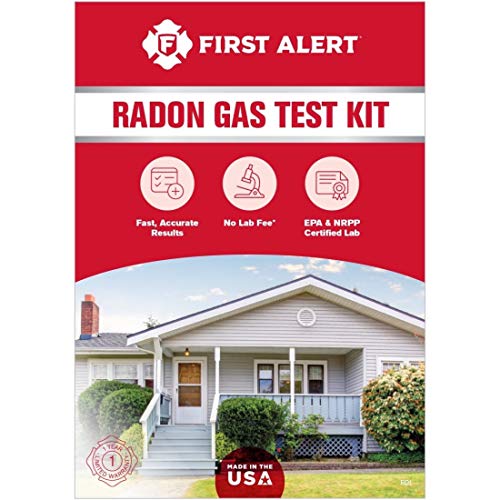 First Alert RD1 Radon Test Kit | Widely stocked; 48-hour charcoal test. | Amazon — $17.95 |
 Airthings Corentium Home | Digital monitor with a long-term average. | Amazon — $99.99 |