Radon Inspection: What Homeowners Need to Know
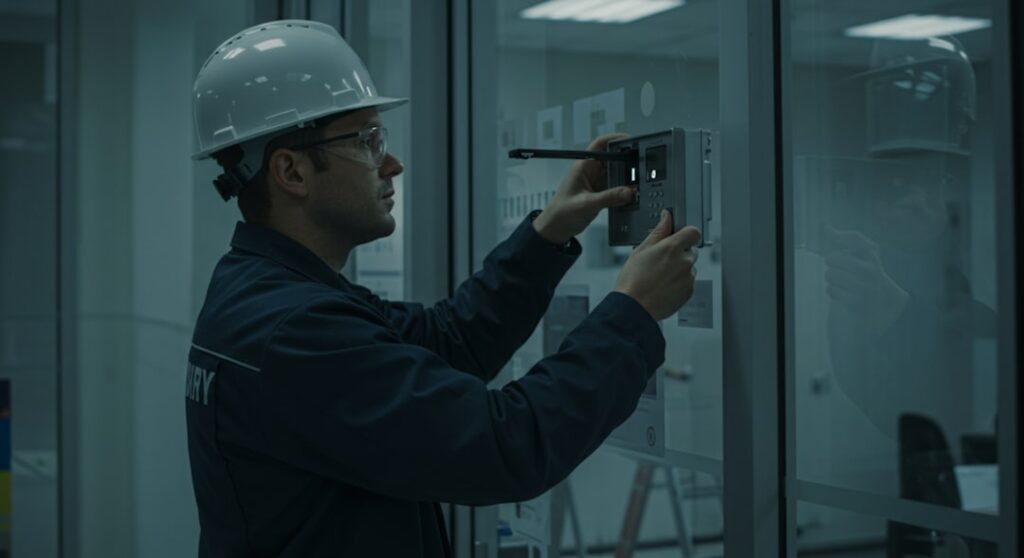
Radon is the hazard you cannot see, smell, or taste, which is exactly what makes a radon inspection worthwhile. The gas seeps up from soil and rock into homes, where it can accumulate to levels that pose a serious long-term health risk. A radon inspection, more precisely a radon measurement, is the only way to know whether your home has a problem, because no amount of visual examination reveals it. This guide summarizes EPA and CDC guidance current as of 2026 to explain how radon testing works, what the results mean, and why it matters especially for Colorado homeowners. For health questions, consult your physician; for testing decisions, consult a certified professional.
What a Radon Inspection Actually Measures
A radon inspection measures the concentration of radon gas in the air inside a home, reported in picocuries per liter, or pCi/L. Radon is a naturally occurring radioactive gas produced by the breakdown of uranium in soil and rock. It enters homes through foundation cracks, sump pits, crawl spaces, and gaps around pipes, then can build up indoors, particularly in lower levels where air exchange is limited.
The U.S. Environmental Protection Agency identifies radon as the leading cause of lung cancer among non-smokers and the second leading cause overall after smoking. That health-stakes framing is why testing exists. A radon test is not part of a standard home inspection, but it is a common and valuable add-on, especially during a home purchase. The radon testing hub for Front Range homeowners explains the regional picture in depth and why Colorado homes face elevated risk.
Why Colorado Homes Deserve Special Attention
Location matters enormously with radon, and Colorado sits in the highest-risk category. The EPA classifies most of the state, including the Denver metro and Front Range counties, as Zone 1, the designation for the highest radon potential. The Colorado geology that produces this risk means elevated indoor radon is common across Denver, Douglas, El Paso, Boulder, Jefferson, and neighboring counties.
This is not a rare-event hazard for Front Range homeowners; it is a routine one. State health data has long shown that a large share of Colorado homes test above the EPA action level. Because of that, testing is widely recommended for essentially every Front Range home, new or old, and many buyers treat it as standard during the inspection period rather than as an optional extra. The Colorado Department of Public Health and Environment provides guidance and resources specific to the state’s elevated risk, and it is a reliable reference for any Colorado homeowner weighing whether to test.
How Radon Enters and Accumulates
Understanding how radon gets into a home explains why testing is necessary and why mitigation works. Radon forms continuously as uranium in soil and rock breaks down, releasing the gas into the spaces between soil particles. Because the air pressure inside a heated home is often slightly lower than the pressure in the soil beneath it, the house effectively acts like a vacuum, drawing soil gas, and the radon it carries, upward through any available opening.
Those openings are numerous in a typical foundation: cracks in slabs and basement walls, the gaps around plumbing and utility penetrations, sump pits, floor drains, and the porous block of foundation walls. Crawl spaces with exposed soil are an especially direct path. Once inside, radon concentrates in lower levels where ventilation is limited and the home’s air does not exchange quickly with outdoor air. This stack effect grows stronger in winter, when warm indoor air rising through the house pulls replacement air, and soil gas, in from below. Knowing this mechanism makes clear why sealing alone rarely solves a radon problem and why active sub-slab systems, which reverse the pressure relationship, are so effective.
Radon Beyond Air: Water and Other Pathways
While soil gas is the dominant source, radon can also enter through well water in some areas. Radon dissolved in groundwater is released into the air when water is agitated, such as during showering, dishwashing, or laundry. For homes on private wells in radon-rich geology, waterborne radon can add to the indoor air concentration, though it is usually a smaller contributor than soil gas. Homes on municipal water that draws from surface sources rarely face this issue, since radon largely escapes before the water reaches the tap.
For most Front Range homes, the air pathway from soil is the primary concern, and a standard indoor air test captures the bulk of the risk. Homeowners on private wells who measure high indoor radon may want to investigate the water as a secondary source, since a separate water test and, if needed, water treatment can address that pathway. The key point is that radon is fundamentally a soil-and-geology phenomenon, which is why a home’s location drives its risk far more than its construction quality.
How Radon Testing Works
Radon measurement comes in two broad forms, short-term and long-term, plus a distinction between passive and active devices.
Short-Term vs Long-Term Tests
Short-term tests run from two to seven days and give a quick snapshot, which is why they dominate real estate transactions where time is limited. Long-term tests run more than ninety days and provide a more accurate picture of year-round average exposure, since radon levels fluctuate with weather, season, and how the home is operated. For a purchase decision, a short-term test is standard; for understanding your true long-term exposure, a long-term test is more reliable. Many homeowners run a short-term test first and follow up with a long-term test for a fuller picture.
Passive vs Active Devices
Passive devices, such as charcoal canisters and alpha-track detectors, collect radon without power and are sent to a lab for analysis. Active continuous radon monitors plug in and record levels hour by hour, which helps detect tampering and shows how concentrations vary through the day. Professional inspectors often use continuous monitors for real estate tests because the hourly data and tamper resistance add credibility. For a buyer, that credibility can matter when the result drives a negotiation over mitigation.
Reading the Results
Radon results are reported in pCi/L, and the EPA sets 4.0 pCi/L as the action level at which it recommends fixing the home. A result at or above 4.0 pCi/L means mitigation is recommended. Between 2.0 and 4.0 pCi/L, the EPA notes that risk still exists and homeowners may consider mitigating. Below 2.0 pCi/L is closer to typical indoor levels, though no level is entirely risk-free because radon risk is continuous rather than a sharp cutoff.
One important caveat: outdoor air averages well below indoor levels, and reaching outdoor levels indoors is generally not achievable. The 4.0 pCi/L action level is a practical decision point, not a guarantee of safety below it or imminent danger above it. For a detailed breakdown of the threshold bands and what each range means, the radon levels chart guide lays them out clearly. Health questions about exposure belong with a physician rather than a test result, since the number describes the home, not an individual’s medical risk.
Radon Testing During a Home Purchase
For buyers, the inspection period is the natural time to test. Adding a radon test to the inspection typically costs roughly 100 to 200 dollars and can reveal a hazard that affects both health and negotiation. If the test comes back elevated, buyers can negotiate for the seller to install a mitigation system or provide a credit, since a system installation is a known, bounded cost rather than an open-ended unknown.
Conditions matter for an accurate short-term test. The home should be kept under closed-house conditions, meaning windows and exterior doors stay shut except for normal entry and exit, ideally for twelve hours before and during the test. The device should sit in the lowest livable level. A reputable inspector or radon professional controls these conditions and documents them, which is part of what makes a professional test more defensible than a casual DIY one. Sellers occasionally test in advance and disclose the results, but buyers generally benefit from an independent test they can trust.
What Happens If Levels Are High
An elevated result is a manageable problem, not a reason to abandon a home. Radon is fixable. The standard solution is a sub-slab depressurization system, which uses a fan and a vent pipe to draw radon from beneath the foundation and exhaust it above the roofline before it enters the living space. These systems are reliable and reduce levels substantially when properly installed.
After mitigation, a follow-up test confirms the system brought levels down below the action threshold. Homeowners in Zone 1 areas like the Front Range should also retest periodically even after a clean result, because changes to the home, the soil, or the seasons can shift levels over time. Treating radon as a one-time check-and-forget is a mistake; it is better understood as a condition to monitor. The detailed radon remediation guide explains the fix in full for homeowners facing an elevated reading.
Why Even New Homes Should Be Tested
A common misconception is that radon affects only old houses with cracked foundations. In reality, radon depends on the geology beneath the home, not its age, so a brand-new home on radon-rich soil can test just as high as a century-old one. New construction can even concentrate radon if the home is tightly sealed for energy efficiency and lacks adequate sub-slab ventilation. Some newer Colorado homes are built with passive radon-resistant features, but those do not guarantee low levels and should still be verified by testing.
This is why the recommendation in a Zone 1 region is simply to test every home, regardless of age or apparent condition. The cost of a test is small, the hazard is invisible, and the only way to know a specific home’s level is to measure it. A new home with a passive radon system that tests above the action level can often be upgraded to an active system at modest cost, but that decision begins with a measurement.
The habit worth building is periodic retesting rather than a single lifetime check. The EPA recommends testing every few years and after any significant change to the home, such as finishing a basement, altering the foundation, or major renovations that affect how the house exchanges air. Buying or selling is another natural retest point. Because radon can drift upward over time as a foundation ages and develops new cracks, a home that tested safely years ago is not guaranteed to remain so. For Front Range homeowners in particular, treating radon testing as a recurring maintenance task, like changing furnace filters, keeps the household protected against a hazard that can change silently beneath their feet.
References
- Health Risk of Radon — U.S. Environmental Protection Agency
- About Radon and Health — Centers for Disease Control and Prevention
- Colorado Radon Program — Colorado Department of Public Health and Environment
- Consumer’s Guide to Radon Reduction — U.S. Environmental Protection Agency
Front Range homeowners and buyers can connect with a vetted local inspector through our contact page to schedule a professional radon test before closing.