Propane Regulators: Two-Stage Systems, Icing and Leaks
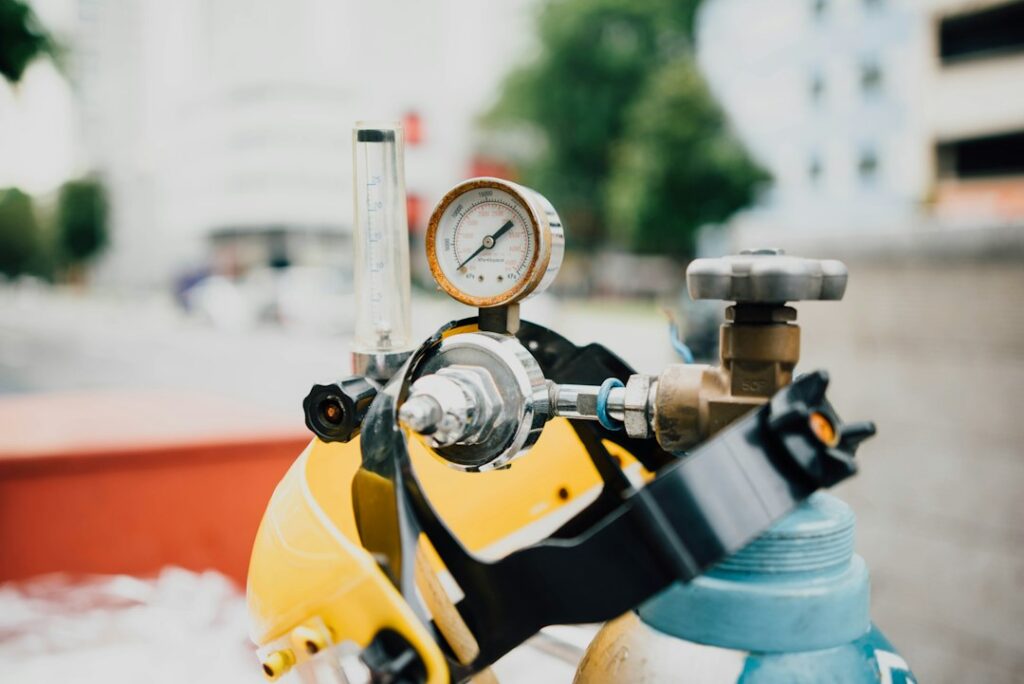
Every propane-fueled home depends on a small, often overlooked part: the propane regulator. Inside the tank, propane is stored under pressure as a liquid, and that pressure changes with the weather. Furnaces, water heaters, ranges and fireplaces, on the other hand, are designed to run on gas delivered at a low, steady pressure. The regulator is what bridges that gap. When it works, nobody thinks about it. When it fails, freezes, gets buried in snow or is installed incorrectly, the symptoms show up at the appliances: weak or yellow flames, pilots that go out, appliances that will not light, or in the worst cases, gas leaking where it should not. This guide explains what a propane regulator does, the difference between first-stage, second-stage and integral two-stage regulators, why vent orientation matters in Colorado winters, the warning signs of pressure problems, how leak checks work, and what replacement typically costs. All work on propane systems belongs with a qualified propane service technician.
Part of our Heating, Cooling & Ventilation guide — start there for the full picture →
What a Propane Regulator Does
The Department of Energy’s Alternative Fuels Data Center describes propane as a gas that is stored under pressure inside a tank as a colorless, odorless liquid; as pressure is released, the liquid vaporizes and turns into the gas that is burned. It lists home and water heating, cooking, refrigeration and clothes drying among propane’s main uses.
The vapor at the top of a residential tank is at a pressure that rises in hot weather and falls in cold weather. A regulator takes that variable tank pressure and reduces it to the much lower pressure appliances are built for. It does this with a spring-loaded diaphragm linked to a valve: as appliances draw gas and downstream pressure drops, the diaphragm opens the valve to let more gas through; as pressure builds, it closes. The result is a steady outlet pressure across a range of tank pressures and appliance demand.
Regulators also include a vent that lets the diaphragm “breathe” and, on many designs, provides relief if pressure downstream rises too high. That vent is important, and it is the part most affected by weather.
First Stage, Second Stage and Integral Two-Stage Regulators
Most residential propane systems today use two-stage regulation, meaning pressure is reduced in two steps rather than one. Industry guidance generally favors two-stage systems for homes because they deliver steadier pressure to appliances and are less prone to freeze-ups than single-stage setups. How the two stages are arranged varies.
First-stage regulator
Mounted at the tank, the first-stage regulator takes high tank pressure and drops it to an intermediate pressure, commonly in the range of about 10 pounds per square inch, though settings vary with the system design. That intermediate pressure travels through the yard line toward the house. Running the yard line at intermediate pressure lets a smaller pipe carry enough gas over a longer distance.
Second-stage regulator
Mounted near the house, usually on an exterior wall where the gas line enters, the second-stage regulator reduces the intermediate pressure to the low pressure appliances use, which is measured in inches of water column. A typical residential delivery pressure for propane appliances is often cited around 11 inches of water column, but the right figure comes from the appliance and system design, not a rule of thumb.
Integral two-stage regulator
An integral two-stage regulator combines both stages in one body, mounted at the tank. It is common where the tank sits close to the house or where the appliance load is small, such as a single fireplace or a range. Because the gas leaves the tank already at low pressure, the downstream piping must be sized for that low pressure, which limits how far it can run and how much it can carry.
Single-stage and other setups
Older homes sometimes have single-stage regulators that reduce tank pressure to appliance pressure in one step. Some systems also use a separate regulator for a high-demand appliance, an automatic changeover regulator for a pair of cylinders, or a 2-pound regulator inside the house on longer runs. Which arrangement is appropriate depends on the tank, the piping and the appliances, and that judgment belongs with the propane supplier or a licensed gas fitter.
Vent Orientation, Icing and Snow
Regulators are installed outdoors, and Front Range winters test them. Two different problems tend to get lumped together as “a frozen regulator.”
Blocked or iced vents
A regulator vent that is pointed upward or sideways can collect rain, melting snow and ice. If water gets into the vent and freezes, the diaphragm may not be able to move as designed, which can lead to pressure that is too low, too high or erratic. Manufacturers generally specify that vents point downward, and many installations use a protective hood or the tank dome to keep weather out. Insects, wasp nests, dirt and debris can block a vent too. Check the manufacturer’s installation instructions, but a regulator vent pointing up is a common inspection observation and a reason to call the supplier.
Regulator freeze-up from moisture in the gas
A separate problem occurs when moisture in the tank condenses and freezes inside the regulator as pressure drops through it. This is more common with single-stage systems, newly set tanks and very cold weather. The fix is a supplier issue, sometimes involving treating or purging the tank or replacing the regulator. Homeowners should not try to thaw a regulator with a torch, heat gun or open flame.
Snow loads, ice slides and drifting
- Roof snow and ice. A second-stage regulator under an eave can be struck by sliding snow or ice, which can damage the regulator or the piping attached to it. A protective cover or relocation may be needed.
- Buried tanks and regulators. Deep drifts can bury the tank dome and the regulator vent. Keeping a clear path to the tank and brushing snow off gently, by hand rather than with a shovel blade against the fittings, helps.
- Plowing and vehicle damage. Tanks and second-stage regulators near driveways can be hit by plows or vehicles. Bollards or relocation may be warranted.
Signs of Regulator and Pressure Problems
A failing or improperly set propane regulator usually shows itself through the appliances rather than at the regulator. Common signs include:
- Yellow, orange or lazy flames. Propane burners normally produce a mostly blue flame. Persistent yellow or orange flames, flames that lift off the burner, or sooting on cookware or appliance surfaces can point to incorrect pressure, but also to air-shutter adjustment, dirty burners or venting problems.
- Pilot outages and failed ignition. Furnaces or water heaters that lock out, pilots that go out, or burners that light weakly can trace to low delivery pressure.
- Appliances that struggle when others run. If a range flame drops when the furnace kicks on, the regulator or the piping may not be keeping up with combined demand.
- Unusually large or noisy flames. High delivery pressure can produce oversized flames or roaring burners and is a safety concern.
- Humming or whistling at the regulator. Some sound can be normal, but new or loud noise is worth reporting.
- Frost on the regulator. Frost can appear during heavy draw in cold weather, but persistent frosting or frosting with appliance problems should be checked.
Pressure problems also matter because incomplete combustion can raise carbon monoxide production. The CDC describes carbon monoxide as an odorless, colorless gas that can cause sudden illness and death, and it lists gas- and oil-burning furnaces among the household items that produce it. The CDC recommends having the heating system, water heater and any other gas, oil or coal burning appliances serviced by a qualified technician every year, and installing battery-operated or battery back-up CO detectors near every sleeping area.
Altitude and appliance setup
Along the Colorado Front Range, appliance setup for elevation is a separate issue from the regulator. Appliances are often converted from natural gas to propane with a conversion kit and may need orifice or input adjustments for high altitude according to the manufacturer. A regulator cannot compensate for an appliance that was never set up correctly for propane or for altitude, which is one reason a technician checks both.
Leak Checks, Gas Smell and Safety
The AFDC notes that propane itself is odorless and that an odorant, ethyl mercaptan, is added for leak detection. Most people describe the smell as rotten eggs or skunk-like. Regulators, their connections and the piping around them are common leak points, especially after tank swaps, refills, freeze-thaw cycles or physical damage.
If you smell gas
- Leave the building and move everyone well away from the area.
- Do not operate light switches, appliances, phones or anything else that could create a spark while inside.
- From a safe location, call the propane supplier and 911.
- Do not return until a qualified technician or the fire department says it is safe.
Propane vapor is heavier than air and can collect in low spots such as basements, crawl spaces and window wells, so a smell near the floor or outdoors near the tank deserves the same response. Our gas leak smell guide covers what to do in more detail. Odorant can also fade in some circumstances, and some people have a reduced sense of smell, which is why many households add propane gas detectors as a backup.
How leak checks are done
For portable grill cylinders, NFPA advises checking the gas tank for leaks before use, and describes a quick test with a soapy solution brushed or sprayed along the hose, regulator and burner connections with the cylinder turned on: bubbles indicate a leak, and the cylinder should be turned off immediately. A soap check like that is a reasonable owner-level step for a grill cylinder.
For a home’s fixed propane system, leak testing goes further. Technicians typically perform a pressure or leak test on the system piping after a regulator replacement, a new installation, an interruption of service or an out-of-gas event, using gauges and procedures the system and local code call for. Our gas line pressure test guide explains how those tests work and when they are required.
The standard that governs LP-gas installations is NFPA 58, the Liquefied Petroleum Gas Code, which NFPA describes as the industry benchmark for safe LP-gas storage, handling, transportation and use, intended to prevent failures, leaks and tampering that could lead to fires and explosions. State and local adoption and amendments vary, which is another reason regulator work belongs with a qualified professional.
Why homeowners should not DIY regulator work
Swapping a regulator looks like a matter of unscrewing two fittings. In practice, choosing the right regulator, setting and verifying pressure, orienting the vent, checking the piping and performing the leak test afterward all require training and instruments most homeowners do not have. Many propane suppliers also do not allow anyone else to service equipment attached to a tank they own. Leave regulator work, tank connections and appliance conversions to the supplier or a licensed gas fitter.
Simple owner checks between service visits
Homeowners cannot test regulator pressure, but they can watch for conditions worth reporting. A short seasonal walk-around, without opening anything or adjusting fittings, might include:
- Looking at the regulator vents at the tank and the house wall to confirm they face down and are not packed with snow, ice, mud or insect nests.
- Checking that the tank dome lid closes and that the regulator and piping are not bent, cracked or heavily rusted.
- Noting the tank gauge reading before cold snaps, since running out of gas means a technician will typically need to perform a leak check before service is restored.
- Watching appliance flames for color changes after a refill, a regulator replacement or a storm.
- Testing CO alarms and any propane gas detectors according to the manufacturer’s instructions.
Anything unusual goes to the supplier rather than to a wrench.
Questions to ask the propane supplier
- Who owns the tank and regulators, and who is allowed to service them?
- When were the regulators installed, and when are they due for replacement?
- Is the system two-stage, and is the second-stage regulator protected from roof snow?
- Was a leak test performed at the last service or tank set, and is there a record?
Replacement, Lifespan and Costs
Regulators wear out. Diaphragms age, springs weaken and vents get damaged. Many regulators are stamped with a manufacture date, and manufacturers and suppliers commonly recommend replacement on a schedule, with service-life guidance often cited in the range of roughly 15 to 25 years depending on the product and conditions. Replacement is also called for after flooding, physical damage, internal water or a vent that cannot be cleared.
Costs depend on the supplier, the regulator type and whether the visit includes a leak test. As a rough 2026 guide:
- Regulator part: a second-stage or integral two-stage regulator is commonly a modest parts cost, often under a couple of hundred dollars, while specialty or high-capacity units cost more.
- Service call with installation and leak test: often a few hundred dollars in total, varying with travel distance and whether the call is after hours.
- Supplier-owned tanks: some suppliers replace regulators on equipment they own at little or no charge as part of service, while others bill for labor. Ask how the lease works.
- Additional work: relocating a regulator away from a snow-shed zone, adding protection, or correcting undersized piping adds to the bill.
What a home inspector looks at
Inspectors typically note the visible tank location and condition, whether regulators are present and appear to be vented downward or protected, signs of corrosion or damage, and how appliances operate under normal controls. They do not perform pressure tests or leak tests on propane piping, and the tank itself is usually the supplier’s responsibility. A concern generally leads to a recommendation for the propane supplier or a gas fitter to evaluate. Our heating and cooling inspections section covers furnaces and other fuel-burning equipment, and the main guide to hiring a home inspector explains what to expect in an inspection.
References
- Propane Fuel Basics — U.S. Department of Energy, Alternative Fuels Data Center
- NFPA 58: Liquefied Petroleum Gas Code — National Fire Protection Association
- Grilling Safety — National Fire Protection Association
- Carbon Monoxide Poisoning Basics — Centers for Disease Control and Prevention
Frequently asked questions
What does a propane regulator do?
A propane regulator reduces the high, weather-dependent pressure in the tank to the low, steady pressure appliances need. Most homes use two-stage regulation, either separate first- and second-stage regulators or an integral two-stage unit at the tank.
Which way should a propane regulator vent face?
Manufacturers generally specify that the vent point downward or be protected by a hood or tank dome, so rain, snow and ice cannot get in. An upward-facing or blocked vent is a reason to call the propane supplier.
Can a bad regulator cause yellow flames?
It can. Incorrect gas pressure is one cause of yellow or lazy flames, though dirty burners, air-shutter settings and venting problems can cause them too. A technician should test pressure and inspect the appliance.
Can I replace a propane regulator myself?
It is not recommended. Regulator selection, pressure checks, vent orientation and a leak test afterward call for training and gauges. Many suppliers also require that only their technicians service tanks they own.
How long does a propane regulator last?
Service-life guidance from manufacturers and suppliers is often cited around 15 to 25 years, depending on the product and conditions. Damage, flooding or water inside the regulator calls for earlier replacement.
Buying a rural or foothills home that runs on propane? Contact us to connect with a Front Range inspector who looks at the tank setting, regulators and fuel-burning appliances.