Best Indoor Propane Heater (2026): 6 Indoor-Rated Picks
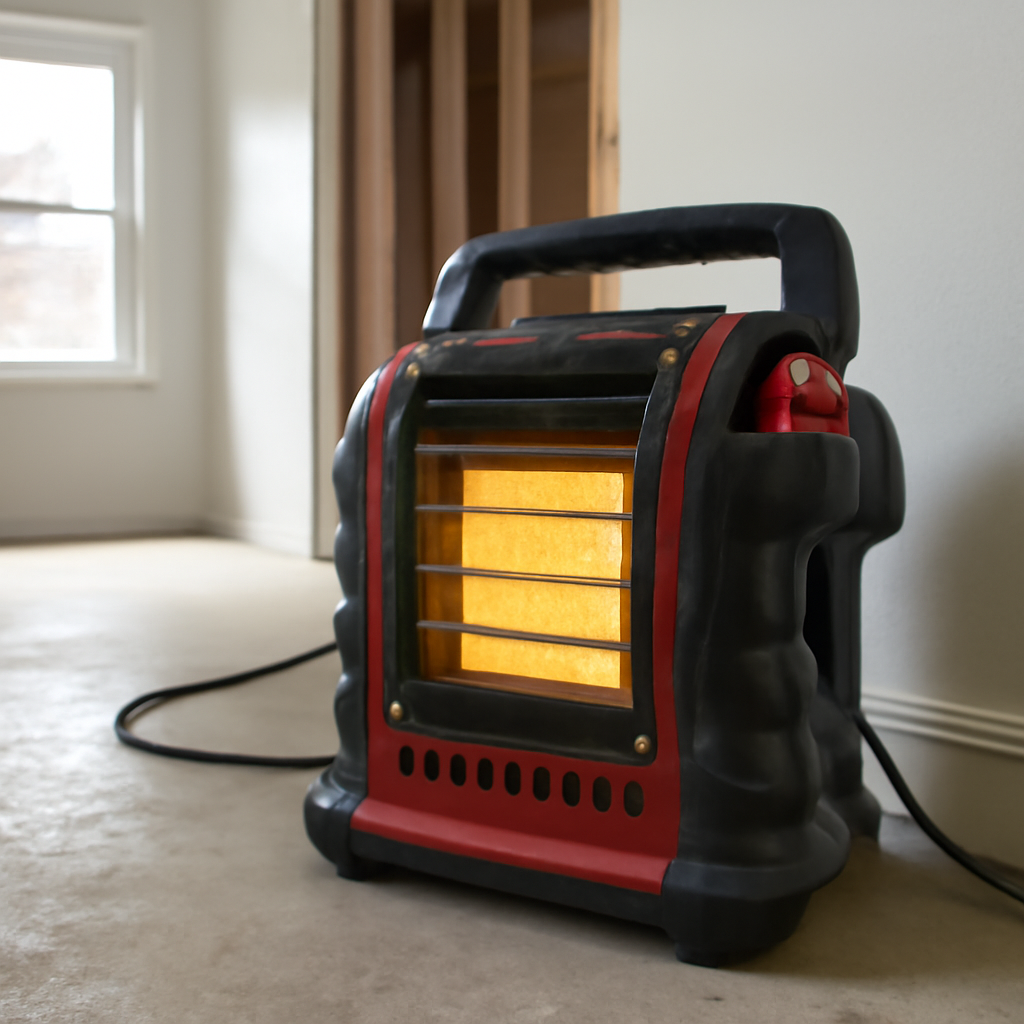
Searching for the best indoor propane heater turns up two very different kinds of product mixed together: heaters their makers rate for indoor use, and patio, cabinet and tank-top heaters meant for outdoors or “well-ventilated” spaces. Only the first group belongs inside a home, and even those carry real risk. Every propane heater on this list is unvented, which means the combustion products, including carbon monoxide and nitrogen dioxide, stay in the room you are heating. The CDC calls carbon monoxide an odorless, colorless gas that can kill without warning, and the CPSC says never to run unvented fuel-burning appliances in a room where people are sleeping. So this guide covers six heaters their listings describe as indoor-rated, compares the shut-off features those listings name, and spends as much time on safe use as on the products. For outdoor heaters, see our best patio heater roundup.
Part of our Heating, Cooling & Ventilation guide — start there for the full picture →
As an Amazon Associate we earn from qualifying purchases.
How we compared: we compared 16 current Amazon listings returned for indoor propane heaters, on what each states: whether it is designed or approved for indoor use, BTU range, low-oxygen and tip-over shut-offs, thermostat, ignition, certification and warranty. Only nine of the 16 explicitly describe indoor home use; the rest are outdoor, ice-house or “well-ventilated space” heaters, and we excluded them. We did not test or operate any heater. Safety statements about oxygen depletion sensors are the manufacturers’ own. Prices and availability change, so check the current listing before buying.
Quick picks: indoor-rated propane heaters
| Product | Best for | Key features | Price | Buy |
|---|---|---|---|---|
| Mr. Heater Buddy MH9BX | Best portable indoor-rated heater |
| $89.99as of October 18, 2026 | Buy now →Check current price |
| Mr. Heater Big Buddy MH18B | Larger rooms, lowest turn-down |
| $144.99as of October 18, 2026 | Buy now →Check current price |
| ProCom ML100TBA-B | Small vent-free wall heater |
| $165.99as of October 18, 2026 | Buy now →Check current price |
| Mr. Heater F299820 | Vent-free with thermostat |
| $179.99as of October 18, 2026 | Buy now →Check current price |
| Mr. Heater F299720 | Blue-flame room heat |
| $186.49as of October 18, 2026 | Buy now →Check current price |
| Mr. Heater MHVFDF30RTT | Propane or natural gas |
| $219.99as of October 18, 2026 | Buy now →Check current price |
Prices are Amazon’s listed prices as of the time shown and change often; check Amazon for today’s price. As an Amazon Associate we earn from qualifying purchases.
The 6 picks, compared listing by listing
1. Mr. Heater Buddy Midnight MH9BX — Best Portable Indoor-Rated Propane Heater

Portable radiant propane heater, 4,000 or 9,000 BTU, approved for indoor use with low-oxygen and tip-over shut-off.
Check price on Amazon$89.99 as of October 18, 2026 — prices change; see Amazon for current price.Why we like it
- Designed and approved for indoor and outdoor use
- Names low-oxygen, tip-over and self-extinguishing protection
- Spells out where indoor use is not approved
- 3-year limited warranty
| Specification | Details |
|---|---|
| Output / coverage | 4,000 or 9,000 BTU radiant; up to 225 sq ft |
| Fuel / runtime | 1 lb propane cylinder, up to 5.4 hours; up to 108 hours on a 20 lb cylinder with optional Buddy hose and fuel filter |
| Safety (per listing) | Self-extinguishing protection, low-oxygen shut-off, tip-over shut-down, flame-retardant materials |
| Indoor rating | Designed and approved for indoor use; not approved for indoor use in Canada or Massachusetts |
| Power | No electricity required |
| Size / warranty | About 15.2 x 8.4 x 13.4 in; 7.1 lb; 3-year limited warranty |
Mr. Heater Buddy Midnight (MH9BX) — 4,000/9,000 BTU radiant, 225 sq ft, low-O2 + tip-over shut-off, 3-yr warranty
The Only Listing That Says Where Its Indoor Approval Stops
Three portable Mr. Heater Buddy listings describe themselves as designed and approved for indoor and outdoor use. This Midnight Series version is the only one that also says where indoor use is not approved: Canada and Massachusetts. That kind of detail matters, because indoor approval for an unvented heater is not universal, and local rules can be stricter than the product’s rating.
It also gives the fullest safety list of the portable units: self-extinguishing protection, low-oxygen shut-off, tip-over shut-down and flame-retardant materials. The 4,000 BTU low setting suits a small room, and 9,000 BTU on high is rated for about 225 square feet. The original red Buddy on the same shelf (F232000) has the same output but a 1-year warranty against this model’s 3 years.
Low-oxygen shut-off is a last line of defense, not permission to run the heater in a closed room. Mr. Heater’s listing does not describe a carbon monoxide sensor, and none of these listings states an altitude rating. Use it awake, with a window cracked for fresh air, a working CO alarm nearby, and never in a room where someone is sleeping.
Pros
- Indoor approval with stated limits
- Low-oxygen and tip-over shut-off named
- No electricity needed
- 3-year limited warranty
Cons
- Unvented: combustion products stay in the room
- Short runtime on 1 lb cylinders
- Altitude rating not stated
Check Mr. Heater Buddy MH9BX price on Amazon
2. Mr. Heater Big Buddy MH18B — Best for Larger Rooms With a Low Turn-Down

Portable radiant propane heater, 4,000 to 18,000 BTU, rated for indoor use up to 450 sq ft, with low-oxygen shut-off.
Check price on Amazon$144.99 as of October 18, 2026 — prices change; see Amazon for current price.Why we like it
- Only 18,000 BTU unit that turns down to 4,000
- Designed and approved for indoor use
- Low-oxygen shut-off named in title
- 3-year limited warranty
| Specification | Details |
|---|---|
| Output / coverage | 4,000, 9,000 or 18,000 BTU radiant; up to about 450 sq ft |
| Settings | Low, medium and high |
| Safety (per listing) | Automatic low-oxygen shut-off system (ODS), per title |
| Indoor rating | Designed and approved for indoor and outdoor use |
| Fuel | Propane; cylinder details not stated in bullets |
| Size / warranty | About 12 x 16.7 x 11.2 in; 13 lb; 3-year limited warranty |
Mr. Heater Big Buddy (MH18B) — 4,000/9,000/18,000 BTU radiant, up to 450 sq ft, ODS per title, 3-yr warranty
The Only 18,000 BTU Listing That Turns Down to 4,000 BTU
Four portable or cabinet heaters on this shelf reach 18,000 BTU. Three of them, the WELLUCK, Ruasveltan and ThermoMate cabinet heaters, bottom out at 6,000 BTU and describe themselves for outdoor or well-ventilated use. The Big Buddy is the only 18,000 BTU unit that is described as approved for indoor use and turns down to 4,000 BTU, which matters because the safest indoor setting is the lowest one that keeps you comfortable.
Its 450 square foot rating suits a large room, basement workshop or attached space where the 9,000 BTU Buddy falls short. Medium at 9,000 BTU matches the smaller Buddy’s high.
The bullets are brief. The ODS appears in the title, not in the safety detail, and the listing does not mention tip-over shut-off, ignition type or cylinder runtime. At 18,000 BTU, the heater burns far more propane than the small Buddy, and the combustion products scale with it, so fresh-air ventilation and a CO alarm become more important, not less.
Pros
- Wide 4,000 to 18,000 BTU range
- Indoor approval stated
- 3-year limited warranty
Cons
- Tip-over shut-off not mentioned
- More combustion products at high output
- Sparse listing details
Check Mr. Heater Big Buddy MH18B price on Amazon
3. ProCom ML100TBA-B — Best Small Vent-Free Wall Heater

10,000 BTU vent-free blue flame propane heater with thermostat, pilot ODS and ANSI certification named.
Check price on Amazon$165.99 as of October 18, 2026 — prices change; see Amazon for current price.Why we like it
- Lowest output among the vent-free wall units
- Names ANSI certification
- High, medium and low thermostat control
- No electricity needed; push-button ignition
| Specification | Details |
|---|---|
| Output / coverage | 10,000 BTU maximum; up to 500 sq ft per listing |
| Type | Vent-free blue flame (convection), liquid propane |
| Controls | Thermostat with high, medium and low; push-button ignition |
| Safety (per listing) | Pilot oxygen depletion sensor (ODS); ANSI certified |
| Mounting | Wall mount hardware and base feet included |
| Size / weight | About 23 x 17 x 6.4 in; 15.9 lb; warranty not stated |
ProCom ML100TBA-B — 10,000 BTU vent-free blue flame LP, thermostat, pilot ODS, ANSI certified, wall or floor mount
One of Two Listings That Name ANSI Certification
Only two listings on the shelf name a certification standard for the heater itself: this ProCom blue flame model and its infrared plaque sibling, the ML100TPA-B. Both say ANSI certified. The ThermoMate names CSA, but it is a patio and garage cabinet heater. For a fixed indoor installation, a named certification is the first thing to look for.
At 10,000 BTU, it is also the smallest of the vent-free wall heaters here, against 18,000 to 30,000 BTU for the Mr. Heater and BILT HARD models. Less fuel burned means fewer combustion products, so the smallest heater that does the job is the better choice. The thermostat cycles the burner to hold a set level.
ProCom’s listing says the pilot ODS shuts the heater down if carbon monoxide or a lack of oxygen is detected. Treat that as a shut-off, not as a carbon monoxide alarm. A separate UL 2034 CO alarm is still needed, as the CPSC recommends. The 500 square foot claim is generous for 10,000 BTU in a cold climate, and the warranty is not stated.
Pros
- ANSI certification named
- Smallest vent-free wall output
- Thermostat control
Cons
- Unvented: all byproducts stay indoors
- Warranty not stated
- Coverage claim is optimistic
Check ProCom ML100TBA-B price on Amazon
4. Mr. Heater F299820 — Best Vent-Free Heater With a Thermostat

18,000 BTU vent-free radiant propane heater with built-in thermostat, electronic ignition and low-oxygen shut-off.
Check price on Amazon$179.99 as of October 18, 2026 — prices change; see Amazon for current price.Why we like it
- Only 18,000 BTU wall unit with a thermostat
- Radiant plaques warm people and surfaces
- Low-oxygen safety shut-off named
- No electricity needed
| Specification | Details |
|---|---|
| Output / coverage | 18,000 BTU per hour; up to 700 sq ft |
| Type | Vent-free radiant, liquid propane |
| Controls | Built-in thermostat; electronic ignition |
| Safety (per listing) | Low-oxygen safety shut-off; described as indoor safe |
| Options | Blower fan kit F299201 sold separately |
| Size / warranty | About 27 x 23.8 x 11.3 in; 20.7 lb; 1-year limited warranty |
Mr. Heater F299820 — 18,000 BTU vent-free radiant LP, built-in thermostat, electronic ignition, low-O2 shut-off
The Only 18,000 BTU Wall Unit With a Built-In Thermostat
The other 18,000 BTU heaters on the shelf are portables and cabinet heaters with manual knobs. The F299820 is the only one built to mount as a room heater with a thermostat, which lets the burner cycle down once the room is warm instead of running at full output.
Radiant plaques warm people and surfaces in front of them, which suits a room where you sit in one area. The 700 square foot rating and electronic ignition round out the basics, and a blower kit is optional.
“Indoor safe” in the listing means indoor-rated by its maker, not risk-free. The EPA lists unvented gas heaters among indoor sources of carbon monoxide and nitrogen dioxide and suggests a vented space heater when replacing an unvented one. The listing gives no altitude rating, and warranty is 1 year.
Pros
- Thermostat cycles the burner
- Electronic ignition
- Low-oxygen shut-off
Cons
- Unvented combustion indoors
- 1-year warranty
- Altitude rating not stated
Check Mr. Heater F299820 price on Amazon
5. Mr. Heater F299720 — Best Blue-Flame Room Heater

20,000 BTU vent-free blue flame propane heater for up to 700 sq ft with battery ignition and low-oxygen shut-off.
Check price on Amazon$186.49 as of October 18, 2026 — prices change; see Amazon for current price.Why we like it
- Blue flame convection warms the room air
- Only blue-flame unit between 10,000 and 30,000 BTU
- AAA electronic ignition, battery included
- Low-oxygen safety shut-off
| Specification | Details |
|---|---|
| Output / coverage | 20,000 BTU per hour; up to 700 sq ft |
| Type | Vent-free blue flame (convection), liquid propane |
| Ignition | Battery-operated electronic ignition, one AAA included |
| Safety (per listing) | ODS low-oxygen shut-off; described as indoor safe |
| Controls | Thermostat not mentioned in listing |
| Size / warranty | About 26.9 x 22.9 x 12.1 in; 19.6 lb; 1-year limited warranty |
Mr. Heater F299720 — 20,000 BTU vent-free blue flame LP, 700 sq ft, AAA electronic ignition, ODS shut-off
The Only Blue-Flame Heater Between 10,000 and 30,000 BTU
Blue-flame heaters warm the air by convection rather than radiating heat at people, so they suit a room where you move around. On this shelf, the blue-flame options are ProCom’s 10,000 BTU models and BILT HARD’s 30,000 BTU unit. The F299720 is the only one in between, at 20,000 BTU for up to 700 square feet.
A battery-operated electronic ignition, with the AAA battery included, avoids a piezo button that can take several tries.
The bullets do not mention a thermostat, unlike the F299820 and MHVFDF30RTT, so check the manual for the control type. Without a thermostat, a 20,000 BTU burner may run at a fixed setting longer than needed. The listing calls it “99.9% efficient,” which means nearly all the heat stays in the room because there is no vent. So do the combustion byproducts, including water vapor that can raise indoor humidity.
Pros
- Convection heat for whole-room comfort
- Battery ignition included
- ODS shut-off
Cons
- No thermostat mentioned
- Unvented combustion indoors
- 1-year warranty
Check Mr. Heater F299720 price on Amazon
6. Mr. Heater MHVFDF30RTT — Best Dual-Fuel Vent-Free Heater

30,000 BTU vent-free radiant heater for propane or natural gas, with built-in thermostat and low-oxygen shut-off.
Check price on Amazon$219.99 as of October 18, 2026 — prices change; see Amazon for current price.Why we like it
- Only listing that runs on propane or natural gas
- Built-in adjustable thermostat
- Battery spark ignition, battery included
- Low-oxygen safety shut-off
| Specification | Details |
|---|---|
| Output / coverage | 30,000 BTU per hour; up to 1,000 sq ft |
| Fuel | Propane and natural gas (dual fuel) |
| Controls | Built-in adjustable thermostat; battery-operated electronic spark ignition |
| Safety (per listing) | Low-oxygen safety shut-off; described as indoor safe |
| Options | Blower fan kit F299201 sold separately |
| Size / warranty | About 28 x 30.3 x 12.5 in; 28 lb; 1-year limited warranty |
Mr. Heater MHVFDF30RTT — 30,000 BTU vent-free radiant, propane or natural gas, thermostat, spark ignition, ODS
The Only Dual-Fuel Heater on the Shelf
Every other heater among the 16 is propane only. The MHVFDF30RTT is the only one listed for both propane and natural gas, which matters for a home that may switch fuels or for a cabin with a propane tank today and a gas line later. It pairs that with a built-in thermostat and battery spark ignition.
At 30,000 BTU and up to 1,000 square feet, it is a heater for a large space, and its output is three times the ProCom’s. That means three times the fuel burned and three times the combustion products released into the room. This is the size where a vented heater makes the most sense instead, as the EPA suggests.
A gas-line connection is installation work; follow the manual and local code and use a qualified gas installer. No altitude rating is stated, and warranty is 1 year.
Pros
- Propane or natural gas
- Thermostat and spark ignition
- High output for large spaces
Cons
- Large unvented output indoors
- Gas connection needs a qualified installer
- 1-year warranty
Check Mr. Heater MHVFDF30RTT price on Amazon
Listings we excluded, and why
Seven of the 16 listings are not suitable for indoor home use by their own descriptions. The Mr. Heater 540-degree tank-top heater says outdoor use only. The WELLUCK cabinet heater says outdoor and well-ventilated indoor use only, and the ThermoMate warns against tightly enclosed spaces. The Ruasveltan and MOZODAWN listings pitch patios, garages, camping and ice fishing. ProCom’s ice house heater is marketed for ice houses and hunting shacks, and the ProCom 25,000 BTU plaque does not describe home indoor use. A heater meant for a patio does not become indoor-safe because a listing title includes the word “indoor.” Our guide to the patio heater covers the outdoor category.
Carbon monoxide: the risk that does not go away
Propane burns cleanly when everything is right, but any fuel-burning appliance can produce carbon monoxide, and an unvented heater has nowhere to send it. The CDC describes CO as odorless and colorless, lists headache, dizziness, weakness, upset stomach, vomiting, chest pain and confusion as the most common symptoms, and warns that people who are sleeping can die before they have symptoms. Infants, older adults and people with chronic heart disease, anemia or breathing problems are more likely to get sick.
The rules from the CDC, CPSC and EPA are consistent:
- Never in a sleeping room: the CPSC says never to operate unvented fuel-burning appliances in any room where people are sleeping.
- CO alarms: install battery-operated or battery-backup CO alarms near every sleeping area and on every level; the CPSC recommends alarms meeting the current UL 2034 standard. An ODS on the heater does not replace one.
- Camp gear stays outside: the CDC says never to use a portable gas camp stove indoors. Patio and camping heaters fall in the same category.
- Prefer vented: the EPA lists unvented gas and kerosene heaters as indoor CO sources and suggests a vented space heater when replacing an unvented one.
- Know the symptoms: if anyone feels headache, dizziness or nausea while a heater runs, shut it off and get everyone outside to fresh air, then call for help.
Nitrogen dioxide is the less-known byproduct. The EPA notes that in homes with unvented gas space heaters, indoor NO2 levels often exceed outdoor levels, and recommends venting combustion sources outdoors as the most effective way to cut exposure.
How to use an indoor-rated propane heater more safely
- Read the manual first. It sets the minimum room size, clearances, fresh-air opening, maximum run time and approved cylinder connections. Listings summarize; manuals govern.
- Check altitude. None of these listings states an altitude rating. Much of the Front Range sits above 5,000 feet, so confirm in the manual whether the heater is rated for your elevation before buying.
- Crack a window. Fresh air supplies oxygen and dilutes combustion products; do not seal the room.
- Use the lowest setting that works. Less fuel burned means less CO, NO2 and water vapor.
- Stay awake and present. Turn the heater off before sleeping or leaving the room.
- Keep 3 feet clear. The USFA’s space heater clearance rule applies to fuel-burning heaters too.
- Handle cylinders carefully. Follow the manual on cylinder size and hoses, and keep spare cylinders outside, away from ignition sources.
Check with your local building department before installing a vent-free wall heater permanently; codes on unvented gas heaters vary and may limit where they can go.
Better options for regular indoor heat
An indoor-rated propane heater is a reasonable tool for a power outage, an occasional workshop session or a short-term cold snap, used awake with ventilation and CO alarms. For a room you heat every winter, a vented gas heater or an electric option is the safer long-term answer. Our guide to the ventless propane heater covers how vent-free units work and where they fall short, and our space heater guide compares electric options with no combustion at all.
If you are buying a Front Range home with an existing vent-free heater, a propane tank or a cabin-style heating setup, an inspection can check gas connections, clearances and CO alarm coverage. Our heating and cooling inspection hub explains what that evaluation includes, and you can contact us to connect with a vetted local inspector.
Frequently asked questions
Is there a propane heater that is safe for indoor use?
Some propane heaters are designed and approved by their makers for indoor use, such as the Mr. Heater Buddy series and vent-free wall heaters. Indoor-rated does not mean risk-free: they are unvented, so combustion products stay in the room. Use them awake, with fresh air, a working CO alarm and never in a sleeping room.
Can you sleep with an indoor propane heater on?
No. The CPSC says never to operate unvented fuel-burning appliances in any room where people are sleeping, and the CDC warns that sleeping people can die from carbon monoxide before they have symptoms. Turn the heater off before going to bed.
Does a low-oxygen sensor protect against carbon monoxide?
An oxygen depletion sensor shuts a heater off when oxygen drops, according to the listings, but it is not a carbon monoxide alarm. The CPSC recommends CO alarms meeting UL 2034 on every level and outside sleeping areas whenever fuel-burning appliances are used.
Do I need to open a window when using an indoor propane heater?
Yes, follow the manual's fresh-air requirement, which usually calls for a ventilation opening. Fresh air supplies oxygen and dilutes carbon monoxide, nitrogen dioxide and water vapor. The EPA recommends vented heaters where possible.
Are vent-free propane heaters legal in Colorado?
Rules on unvented gas heaters vary by jurisdiction and can depend on room type and size. Check with your local building department before installing one permanently, and confirm the heater is rated for your elevation, since many Front Range homes sit above 5,000 feet.
References
- Carbon Monoxide Poisoning Basics — Centers for Disease Control and Prevention
- Carbon Monoxide Questions and Answers — U.S. Consumer Product Safety Commission
- Carbon Monoxide’s Impact on Indoor Air Quality — U.S. Environmental Protection Agency
- Nitrogen Dioxide’s Impact on Indoor Air Quality — U.S. Environmental Protection Agency
- Heating Fire Safety — U.S. Fire Administration