Normal Radon Levels in Basement: A Clear Guide

Asking about normal radon levels in basement areas is smart, because the basement is usually where radon concentrates most in a home. Radon enters from the soil, and the basement sits closest to that source, so basement readings tend to run higher than the rest of the house. Understanding what is typical helps you judge your own results.
Part of our Radon Levels guide — start there for the full picture →
This guide explains the ranges you might see in a basement, why basements read higher, and where to test for an accurate picture. It is informational only and not medical advice. Radon measurement and thresholds follow methodology from the EPA and CDC, with Colorado-specific guidance from the Colorado Department of Public Health and Environment.
Why Basements Read Higher Than Other Rooms
Radon is produced by the natural breakdown of uranium in soil and rock. The gas seeps upward and enters a home through cracks in the foundation, gaps around pipes, sump pits, and other openings in contact with the ground. Because the basement is the part of the house most directly connected to the soil, it is the main entry point.
Once radon enters, it tends to accumulate in lower, less-ventilated spaces before diffusing upward. A basement that is closed off, has limited air exchange, and contains foundation penetrations creates ideal conditions for radon to build up. Upper floors usually read lower because the gas dilutes as it rises and mixes with more ventilated air.
This is why a basement reading is often the highest in the home and why it matters most for finished, occupied basements. If you spend time in a basement bedroom, office, or family room, the level there is the one that reflects your real exposure.
What Range Is Typical in a Basement
There is no single normal number, because radon varies widely by location, soil, and construction. That said, it helps to frame readings against the EPA action level of 4 pCi/L, the threshold at which the EPA recommends taking action to reduce radon.
- Below 2 pCi/L. On the lower end for a basement, though no level is entirely risk-free.
- 2 to 4 pCi/L. Common in many basements. The EPA suggests considering action in this range.
- At or above 4 pCi/L. At or above the action level, where mitigation is recommended after confirming the result.
It is not unusual for a basement to read several times higher than upstairs. A finding above 4 pCi/L is common enough that you should not be alarmed, only prompted to confirm and act. The key takeaway is that lower is better, and 4 pCi/L is the line that triggers a response.
Why You Should Test at the Lowest Livable Level
The EPA advises testing at the lowest level of the home that is lived in or could be lived in. For most homes, that means the basement if it is finished or could become finished living space. Testing there captures the highest realistic exposure rather than understating it.
If your basement is unfinished and never occupied, you may still want to test it to understand the entry point, but the most relevant reading is wherever people actually spend time. A finished basement used as a bedroom or living area should be tested directly, since that is where exposure occurs.
Place the test device in a spot away from drafts, exterior doors, and windows, and keep windows and doors closed during a short-term test as the protocol requires. Our radon testing guide covers placement and protocol in detail.
Factors That Change Basement Readings
Several conditions push basement radon up or down, which is why a single reading is only a snapshot. Knowing these factors helps you interpret results and decide when to retest.
- Season and weather. Radon often reads higher in winter when homes are closed and heating systems draw soil gas inward.
- Ventilation. A sealed, poorly ventilated basement traps more radon than one with active air exchange.
- Foundation condition. Cracks, gaps, and an open sump pit provide more entry routes.
- HVAC operation. Pressure differences created by furnaces and fans can pull more soil gas into the basement.
Because of this variability, confirm an elevated short-term result with a follow-up test, and consider a long-term test for the most representative average. For more on interpreting numbers, see our guide to radon levels.
What to Do About an Elevated Basement Reading
If your basement tests at or above 4 pCi/L, the situation is manageable. Confirm the result with a second test, then consult a qualified radon mitigation professional. The standard solution, sub-slab depressurization, uses a fan to draw radon from beneath the slab and vent it above the roofline before it can enter the basement.
After a system is installed, retest to confirm the level has dropped. Well-designed systems routinely bring readings well below the action level. Because Colorado falls largely within the EPA’s highest-priority radon zone, Front Range basements deserve particular attention, and the Colorado Department of Public Health and Environment encourages routine testing. Our overview of radon mitigation explains the process from start to finish.
Comparing Basement and Upstairs Readings
Homeowners are sometimes confused when a basement reads high but the main floor reads low, or vice versa. Understanding the relationship between levels on different floors clears up the confusion and guides where to act.
As a general pattern, radon is highest at the point of entry and dilutes as it rises. A basement reading several times higher than the upstairs is normal because the basement is closest to the soil and often the least ventilated. The upstairs benefits from greater air exchange and distance from the source, so it typically reads lower.
This pattern is why a single upstairs test can understate the exposure of anyone who spends time in a finished basement. If you test only the main floor and get a comfortable result, you may miss an elevated level in a basement bedroom below. The guidance to test at the lowest livable level exists precisely to avoid this blind spot.
That said, the relationship is not perfectly predictable. Construction, foundation openings, and HVAC operation can move radon around a home in ways that surprise. The reliable approach is to test the spaces people actually occupy rather than assuming one floor predicts another.
Practical Steps to Lower Basement Radon
If your basement reads elevated, a professional mitigation system is the durable solution, but a few practices can support the effort and, in some cases, modestly reduce levels. None of these replace a properly designed system when readings are at or above the action level.
- Seal entry points. Caulking foundation cracks, gaps around pipes, and sealing a sump pit reduces the routes radon uses to enter, and it improves the efficiency of a mitigation system.
- Improve ventilation. Increasing air exchange in the basement can dilute radon, though this is usually a supporting measure rather than a complete fix.
- Avoid depressurizing the basement. Exhaust fans and certain appliances can pull more soil gas inward, so balance ventilation thoughtfully.
- Install professional mitigation. For readings at or above 4 pCi/L, sub-slab depressurization is the reliable answer and the only step proven to bring high levels consistently down.
Sealing and ventilation help, but they rarely solve a significantly elevated reading on their own. When a basement tests high, treat these as complements to a professional system rather than substitutes for one, and always retest after any change to confirm the result.
When to Retest Your Basement
A single reading captures one window in time, so knowing when to retest keeps your understanding current. Radon levels shift with the seasons and with changes to the home, which means a result from years ago may no longer reflect reality.
Plan to retest every few years even if a previous result was low, since geology and construction can allow levels to drift. Retest after any major renovation, especially work that affects the foundation, the slab, or the home’s ventilation and heating systems, because these changes can alter how soil gas enters and moves. If you finish a basement or convert it into living space, test the newly occupied area directly.
Also retest after installing a mitigation system to confirm it brought levels down, and periodically afterward to verify the system keeps working as the fan ages. Because Colorado falls largely within the EPA’s highest-priority radon zone, Front Range homeowners benefit from treating basement testing as routine maintenance rather than a one-time task. Regular checks give you confidence that the space where your family spends time stays within a reasonable range.
For help testing your basement or planning mitigation, contact us through our contact page.
How Construction Affects Basement Radon
The way a home is built has a strong influence on how much radon collects in its basement. Understanding these construction factors helps explain why two nearby homes can read very differently and where sealing efforts pay off.
Foundation type matters first. A full basement in direct contact with soil offers more surface area and more potential entry points than a slab or crawl space. Cracks in the foundation walls or floor, gaps around plumbing and utility penetrations, and an open sump pit all give radon easy routes inside. The more openings between soil and basement, the higher the potential reading.
Ventilation and air sealing play a role too. A tightly sealed basement with little air exchange traps radon, while some air movement dilutes it. At the same time, the home’s heating and exhaust systems can create pressure differences that actively draw soil gas inward, especially in winter when a warm house pulls air up and in through the foundation.
Building materials and finishes can also affect readings indirectly by changing how air moves. None of these factors can be judged by appearance alone, which is why testing the specific home is essential. Where construction provides many entry routes, sealing cracks and penetrations reduces both radon entry and the workload on any mitigation system. Knowing how your basement is built turns a confusing reading into an understandable one and points toward the most effective response.
Radon and Your Family’s Daily Life
A basement reading matters most in light of how your household actually uses the space. Connecting the number to daily life helps you judge how urgently to act and where to focus.
If the basement is a finished bedroom, home office, playroom, or family room, the people using it spend many hours there, which makes the basement reading the most relevant measure of their exposure. A child’s bedroom or a home office where someone works full time represents substantial cumulative time in the part of the home where radon concentrates most.
If the basement is unfinished and rarely entered, the same reading carries less day-to-day exposure, though it still tells you about the home’s entry point and is worth knowing, especially if you might finish the space later. The action level applies to the lowest livable level, so a space that could become living space deserves attention even before it is occupied.
This is why testing the actual occupied space, and weighing the result against real usage, leads to sensible decisions. A reading at or above 4 pCi/L in a basement bedroom is a clear prompt to mitigate, while the same number in an unused cellar still warrants action if you plan to spend time there. Matching your response to how the family lives keeps the effort proportionate and focused on genuine protection.
Frequently asked questions
What is a normal radon level in a basement?
There is no single normal number, but readings are judged against the EPA action level of 4 pCi/L. Many basements fall in the 2 to 4 pCi/L range, and a reading at or above 4 pCi/L calls for action after confirmation.
Why are basement radon levels higher?
Radon enters from the soil through foundation cracks, pipe gaps, and sump pits, and the basement is closest to that source. The gas accumulates in lower, less-ventilated spaces before diffusing upward.
Where should I test for radon?
Test at the lowest level of the home that is lived in or could be lived in, which is often a finished basement. Place the device away from drafts and keep doors and windows closed during a short-term test.
What should I do about a high basement reading?
Confirm with a second test, then consult a qualified mitigation professional about a sub-slab depressurization system, and retest after installation to verify the level has dropped.
Does sealing cracks in a basement floor lower radon?
Sealing basement floor cracks may lower radon slightly but rarely brings high levels down enough on its own. The EPA does not recommend sealing as a stand-alone method. It works best combined with an active sub-slab depressurization system.
How long should a basement radon test run?
A short-term basement radon test runs at least 48 hours under closed-house conditions, while a long-term test runs 90 days or more. Long-term results better reflect the yearly average, which matters because basement radon swings with weather and season.
Does a walkout basement have lower radon?
A walkout basement may have somewhat lower radon than a fully buried basement because less of its wall area is in contact with soil, but high levels still occur. Only testing determines the actual level.
More Questions About Basement Radon Levels
Does finishing a basement change radon levels?
Finishing a basement does not lower radon levels on its own, and drywall and carpet do nothing to block soil gas. Finishing can actually make testing and mitigation harder later, because cracks and slab openings get covered.
The best approach is to test before finishing and install mitigation if needed, since running pipe through an open basement is simpler. If the basement is already finished and becomes a bedroom, office, or playroom, the EPA recommends testing there because people spend more time on that level.
Does a dehumidifier lower radon in a basement?
No, a dehumidifier does not lower radon in a basement. It removes moisture from the air but has no effect on radon gas, which seeps up from the soil through the foundation.
Dehumidifiers are still useful for preventing mold and musty odors, and keeping basement humidity below about 50 percent protects stored items. To actually lower radon, the standard approach is active sub-slab depressurization installed by a qualified contractor, along with sealing major openings such as an uncovered sump pit.
Is it safe to sleep in a basement with radon at 3 pCi/L?
A basement reading of 3 pCi/L is below the EPA action level of 4 pCi/L, but the EPA notes that no radon level is risk-free and suggests considering mitigation between 2 and 4 pCi/L, especially for a room used for sleeping.
Because people spend about a third of their time sleeping, a basement bedroom contributes heavily to total exposure. A long-term test of three months or more gives a better average. Families with smokers face higher combined lung cancer risk from radon. Health questions are best discussed with a doctor.
Should you test an unused basement for radon?
Yes, testing an unused basement is still worthwhile because radon that enters there spreads to upper floors through stairwells, ductwork, and air currents. The basement reading shows the level closest to the source.
For real estate transactions, testing the lowest level that could be used as living space is standard practice. For a homeowner’s own decision, the EPA focuses on the lowest lived-in level, so a storage-only basement result can be paired with a first-floor test. If the basement reads high, the first floor often does too.
References
- EPA on radon test results and the action level
- Colorado Department of Public Health and Environment radon resources
- CDC guidance on radon in the home
Test your home for radon
Radon is invisible and odorless, so a test is the only way to know your level. A short-term kit gives a first reading in days; a digital monitor tracks it over time.
| Product | Why | Buy |
|---|---|---|
 AirChek Charcoal Radon Test Kit | Lab fee usually included; EPA short-term protocol. | Amazon — $21.95 |
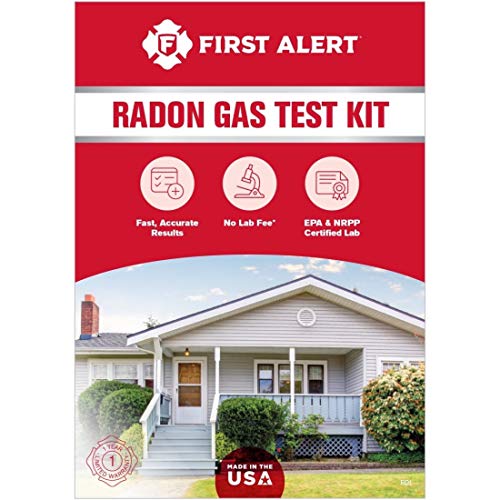 First Alert RD1 Radon Test Kit | Widely stocked; 48-hour charcoal test. | Amazon — $17.95 |
 Airthings Corentium Home | Digital monitor with a long-term average. | Amazon — $146.14 |