What Is a Normal Radon Level in a Home?

Asking what is normal radon level in a home is reasonable, but “normal” and “safe” are not the same thing, and that distinction shapes the whole answer. Radon varies widely from house to house, and what is typical nationally may be far below what is common in a high-risk region like Colorado. This guide explains average indoor and outdoor levels, the action level that matters most, and why even a “normal” reading is not zero-risk. It summarizes EPA and Colorado Department of Public Health and Environment guidance current as of 2026 and is general information, not medical advice; consult a certified professional for testing and mitigation.
Part of our Radon Levels guide — start there for the full picture →
What Is a Normal Radon Level in a Home?
There is no single normal number, because radon depends on local geology, soil, foundation type, and construction. As a national reference, the Environmental Protection Agency cites an average indoor radon level that sits below the action level, and an average outdoor level that is considerably lower still. Those averages describe what is typical, not what is acceptable for any specific home.
The figure that actually drives decisions is the 4 pCi/L action level. The EPA recommends fixing a home at or above 4 picocuries per liter. So while a “normal” indoor level might be reported as a national average, the practical question is whether your home is above or below the action level, which only a test can answer. Normal is a statistic; your number is what counts.
Indoor Versus Outdoor Averages
Comparing indoor and outdoor levels clarifies why homes accumulate radon. Outdoors, radon disperses into the open air and stays low. Indoors, the gas seeps up from the soil through foundation cracks, sump pits, and gaps around pipes, then concentrates in enclosed, lower levels of the house. That concentration is why indoor averages exceed outdoor ones, sometimes dramatically.
The outdoor average is sometimes treated as a practical floor for what indoor air might achieve. Mitigation rarely drives a home all the way to outdoor levels, but it can substantially reduce an elevated reading. Understanding this dynamic explains why basements and ground-contact rooms often test higher than upper floors, and why test placement matters. Our guide to typical radon ranges in homes expands on these comparisons.
Why Normal Does Not Mean Safe
The EPA is clear that there is no known safe level of radon. Radon is radioactive, and the risk of lung cancer rises with both concentration and years of exposure. A reading at the national average is “normal” in a statistical sense, yet it still carries some risk, which is why the agency frames the issue around reducing exposure rather than declaring any level harmless.
This is also why the EPA suggests considering mitigation even between 2 and 4 pCi/L, below the formal action level. For households with smokers, the combined risk is considerably higher, making lower levels more desirable. Treating “normal” as a green light to ignore radon misses the point; lower is always better, and the action level is where fixing the home becomes strongly recommended.
What Counts as Normal in Colorado
In Colorado, “normal” looks different than the national picture, and that matters a great deal. The EPA places many Colorado counties in Zone 1, the highest radon-potential category, and the Colorado Department of Public Health and Environment reports that a large share of tested homes register elevated levels. Front Range counties such as Denver, Douglas, Jefferson, Arapahoe, and El Paso fall within high-potential areas.
For a Colorado homeowner, an elevated reading is closer to typical than a low one, so assuming your home is “normal” without testing is risky. The state offers low-cost test kits precisely because high readings are so common. A neighbor’s result will not predict yours, because soil and construction vary house to house. For the regional picture, see our overview of radon testing along the Front Range.
How Levels Vary Within a Home
Radon is not uniform throughout a house. The lowest occupied level, often a basement or ground floor, usually tests highest because it is closest to the soil source. Upper floors generally read lower as the gas disperses. Levels also shift seasonally, frequently rising in winter when closed-up, heated homes draw more soil gas inward.
This variation is why placement and timing follow strict guidance. Place a test device in the lowest lived-in level, keep the home under closed conditions as the kit directs, and avoid drafty or humid spots. A reading taken correctly in the right location gives a far more meaningful sense of your home’s true level than a casual measurement on an upper floor.
How to Find Out Where You Stand
Testing is the only way to know your home’s level, since radon is invisible and odorless. A short-term test offers a quick screening number but can be skewed by weather and home operation. A long-term test, running more than ninety days, captures seasonal swings and yields a number closer to your true average. If a short-term result is elevated, the EPA recommends confirming it before deciding on mitigation.
Once you have a reliable number, compare it to the action level. At or above 4 pCi/L, plan for mitigation by a certified professional. Between 2 and 4, weigh mitigation against cost and risk factors. Below 2, retest periodically and after major renovations. Mitigation systems are effective and post-mitigation testing confirms they worked.
Why Build Type and Age Affect the Reading
Two homes on the same street can return very different radon numbers, and construction often explains the gap. The way a house meets the ground, the materials in its foundation, and how tightly it is sealed all shape how much soil gas enters and accumulates. This is why “normal” cannot be predicted from a neighbor’s result.
- Foundation type. Basements and slab-on-grade homes interact with soil gas differently than homes over ventilated crawl spaces.
- Cracks and openings. Settling, age, and construction quality determine how many entry points exist.
- Air sealing. Tightly sealed, energy-efficient homes can concentrate radon if soil gas gets in.
- Heating systems. Systems that depressurize the home relative to the soil can draw in more gas.
Older homes are not automatically higher in radon than newer ones; a tightly built new home over radon-bearing soil can test high if no radon-resistant features were included. Some newer construction incorporates radon-resistant techniques, such as a sub-slab vent pipe ready for a fan, which can keep levels lower from the start. Because these variables differ house to house, the only reliable way to know your home’s level is to test it directly rather than infer it from age or neighbors.
Seasonal and Daily Variation
A single reading captures one slice of a level that naturally moves, which is part of why a “normal” snapshot can mislead. Radon concentrations shift across the day and the seasons in response to weather, temperature, and how the home is operated. Recognizing this variation prevents over-reacting to one number and explains the value of longer testing.
Winter typically brings higher indoor readings, because closed-up, heated homes create the pressure differences that draw more soil gas inward, while open windows in milder weather can dilute indoor radon. Daily swings occur too, tied to temperature changes and barometric pressure. A short-term test taken during a stormy winter week might read higher than the same home’s true annual average, while a summer test with windows open might read lower. This is why the EPA points homeowners toward long-term tests or continuous monitors for the most representative figure, and why retesting over time gives a truer sense of what is “normal” for your home. Our guide to typical radon ranges in homes explores this variability in more depth.
Why One Test Is a Starting Point
Given daily and seasonal swings, a single short-term test is best treated as a screening figure rather than a final verdict. If it reads low, periodic retesting confirms the level stays low over time and across seasons. If it reads elevated, a confirming test, ideally longer-term, establishes whether the home truly exceeds the action level before you commit to mitigation. Treating the first number as the beginning of a small process, not the end, leads to better decisions.
Putting Normal in Context
“Normal” is a useful benchmark only when paired with the action level and an actual test of your home. A national average tells you what is typical across many houses; it cannot tell you whether your basement is safe. The reliable path is to test, interpret the result against the 4 pCi/L threshold, and act if the numbers warrant. With that approach, the question of normal becomes a starting point rather than a false reassurance.
For Colorado homeowners, the gap between national “normal” and local reality is especially wide, which makes direct testing all the more important. A figure that would be unusual elsewhere is fairly common across the Front Range, so anchoring your expectations to a national average can leave you underestimating your home’s likely level. The practical mindset is to treat testing as standard home maintenance rather than an exceptional step, much like checking other safety systems on a schedule. Test your own home, compare the result to the action level, confirm anything elevated, and mitigate when warranted, then retest periodically to keep the picture current. Following that routine replaces a vague sense of what is normal with concrete knowledge of your home, which is the only basis on which to judge whether your air is genuinely safe.
What to Do When Your Level Is Not Normal
If testing reveals that your home’s level is well above typical, the response follows a clear and reassuring path. An elevated reading is a common, fixable situation, especially in a high-radon region, and it does not mean the home is unsafe to live in while you address it, since radon risk accumulates over years rather than days. The goal is to confirm the reading and reduce the level promptly.
The first step for an elevated short-term result is confirmation, ideally with a longer-term test or a second measurement, to rule out a skewed reading from weather or test conditions. Once a confirmed reading meets or exceeds the 4 pCi/L action level, the next step is mitigation by a certified professional. Active soil depressurization, the standard approach, draws radon from beneath the foundation and vents it safely above the roof, typically lowering the level substantially. A post-mitigation test verifies that the system achieved the intended reduction.
Even when a level reads comfortably below typical, periodic retesting keeps your understanding current, because radon can change with renovations, foundation settling, and shifts in how the home is heated and ventilated. The EPA suggests retesting every few years and after significant changes. This ongoing attention means “normal” is not a one-time verdict but a status you confirm over time. For Colorado homeowners, where elevated readings are common, this combination of initial testing, prompt action when warranted, and periodic retesting is the practical way to keep a home’s radon level in a genuinely safe range rather than relying on a single hopeful measurement.
More Questions About Normal Radon Levels
Can radon maps by zip code tell you your home’s normal level?
No, radon maps by zip code or county show general risk, not the level in any specific home. Two houses on the same street can test very differently because of soil, foundation cracks, construction type, and how the home is ventilated.
Maps are useful for knowing whether an area tends to have higher radon, which is a good reason to test. Only a test inside the home tells you whether its level is normal or needs action.
Do new homes have normal radon levels?
New homes can have high radon, just like older ones. Radon depends on soil and how the foundation and building envelope interact with it, not on the age of the house. Tight, energy-efficient construction can sometimes trap more radon indoors.
Some new homes are built with radon-resistant features, such as a passive vent pipe and sealed slab. Even with those features, the EPA recommends testing after moving in to confirm the level.
Can radon be normal one year and high the next?
Yes, a home’s radon level can change from year to year. Foundation settling, new cracks, renovations, finishing a basement, replacing windows, or changes to heating and ventilation can all shift the level.
Weather and soil moisture also cause variation between tests. That is why the EPA recommends retesting every couple of years, and after major renovations or a mitigation system install, even if an earlier test showed a normal level.
Does opening windows bring radon back to normal?
Opening windows can temporarily lower radon by diluting it with outdoor air, but levels rise again once the windows close. It is not a reliable long-term fix, especially in winter when windows stay shut.
Windows also must be kept closed during short-term radon tests for an accurate result. If a test shows a high level, a mitigation system is the dependable way to keep radon down year-round, regardless of season or how the house is used.
References
- Radon health risk and average levels — U.S. Environmental Protection Agency
- Colorado radon program and low-cost kits — Colorado Department of Public Health and Environment
- About radon and lung cancer risk — Centers for Disease Control and Prevention
Frequently asked questions
Is there a single normal radon level for homes?
No. Radon varies with geology, soil, and construction. The EPA cites a national average indoor level below the action level and a much lower outdoor average, but those are statistics. Only a test reveals your home's actual level.
Does a normal radon reading mean my home is safe?
Not exactly. The EPA says no level is entirely risk-free because radon is radioactive. A reading at the national average still carries some risk, which is why the agency frames the issue around reducing exposure and suggests considering mitigation between 2 and 4 pCi/L.
Why is radon higher in basements?
The lowest occupied level is closest to the soil source, so it usually tests highest, while upper floors read lower as the gas disperses. Levels also rise in winter when closed, heated homes draw more soil gas inward.
What is normal for a Colorado home?
Elevated readings are common in Colorado, where many counties are EPA Zone 1 and a large share of tested homes exceed the action level. Along the Front Range, assuming a low level without testing is risky.
How often should a home with normal radon be retested?
The EPA suggests retesting a home every two years or so, even when an earlier test showed a normal radon level, and after any major renovation, foundation repair, or change in how the lowest level is used, such as finishing a basement.
Do upper-floor apartments have normal radon levels?
Upper-floor apartments usually have lower radon than ground-level units, because radon enters from the soil. Elevator shafts and utility chases can sometimes carry radon upward, so ground-floor and garden-level units are the main priority for testing.
Do granite countertops raise a home's radon level?
Most granite countertops contribute very little radon compared with the soil beneath a home. The main source of indoor radon is soil gas entering through the foundation. A household concerned about a specific countertop can test the room, but foundation-level testing matters more.
Front Range homeowners who want to find out their home’s true radon level or connect with a certified local professional can get in touch through our contact page.
Test your home for radon
Radon is invisible and odorless, so a test is the only way to know your level. A short-term kit gives a first reading in days; a digital monitor tracks it over time.
| Product | Why | Buy |
|---|---|---|
 AirChek Charcoal Radon Test Kit | Lab fee usually included; EPA short-term protocol. | Amazon — $21.95 |
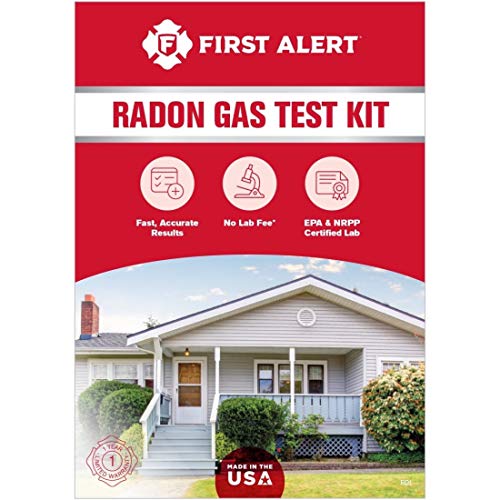 First Alert RD1 Radon Test Kit | Widely stocked; 48-hour charcoal test. | Amazon — $17.95 |
 Airthings Corentium Home | Digital monitor with a long-term average. | Amazon — $99.99 |