Mold Testing in Fort Collins, CO | InspectandTest
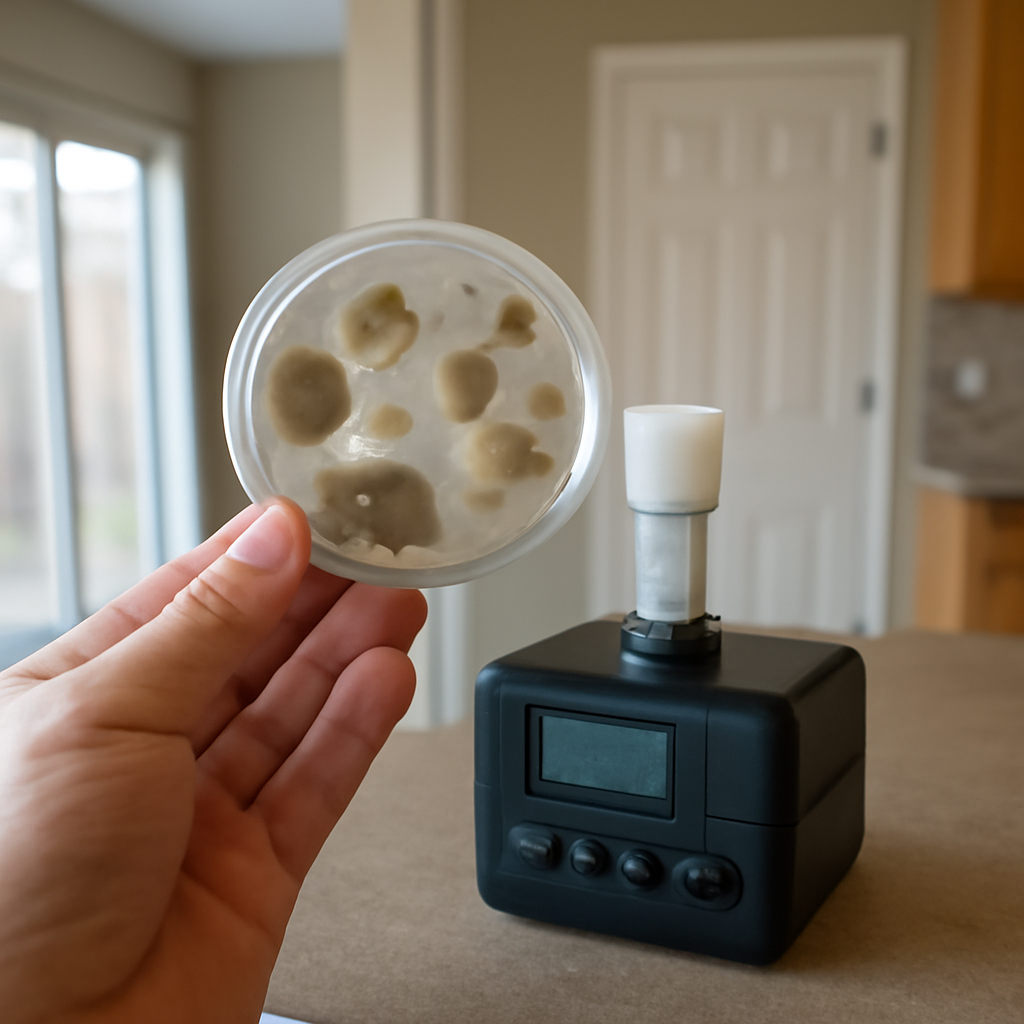
When a Fort Collins basement smells musty or a tenant in a Campus West rental keeps getting headaches, the next question is usually what kind of mold is present and how much. Mold testing in Fort Collins answers that with laboratory analysis of air or surface samples, identifying spore types and comparing indoor levels to the outdoor baseline. It is the measurement step that follows a visual inspection. This guide covers the testing methods used in Larimer County, why the Cache la Poudre snowmelt and tightly sealed new builds raise the odds of a positive result, local costs, and how to choose a credible tester. Testing is an assessment tool, not medical guidance; see a physician for symptoms and a certified professional for testing decisions.
Part of our Mold Testing & Inspection guide — start there for the full picture →
Is this mold, asbestos, or water damage? Get a free instant screen
Upload a clear photo of the suspect area. You'll get an instant AI screening opinion and what to do next. This is screening guidance, not a professional determination.
Screening guidance only. AI can be wrong. Confirm asbestos, mold type, or lead with lab testing or a licensed professional before acting.
Mold testing in Fort Collins: what to know
Mold testing quantifies what an inspection finds visually. The two common methods are air sampling, which captures spores from the air and compares an indoor reading to an outdoor control, and surface sampling, which lifts material from a suspect spot with tape or a swab. Samples go to an accredited lab that identifies genera such as Aspergillus, Penicillium, or Stachybotrys and reports concentrations.
Testing is most useful when results will drive a decision: confirming a problem before a sale, settling a landlord dispute over a CSU rental, or verifying that a cleanup worked. A clearance test after remediation, comparing post-cleanup indoor counts to outdoor levels, is one of the most valuable uses in the Fort Collins market.
It helps to separate testing from inspection. An inspection finds and describes a problem; testing measures it. Many homeowners do not need both. If you can see growth and you know where the water came from, you may be able to clean it and skip lab work entirely. Testing earns its cost when the situation is ambiguous, when money or a contract depends on the answer, or when you need objective proof rather than an opinion. In Fort Collins, the most common reasons people test are a real-estate transaction, a rental dispute, or confirming that remediation in a flood-prone or snowmelt-affected basement actually succeeded.
Air sampling versus surface sampling in Fort Collins
The two methods answer different questions. Air sampling measures how many mold spores are floating in the air of a given room and which types they are, then compares that to an outdoor control. It is the right tool when you suspect a hidden problem, want to know whether occupants are breathing elevated spore levels, or need a clearance test after cleanup. Because spore counts fluctuate, an air sample is a snapshot, which is why the outdoor control taken at the same time is essential for interpretation.
Surface sampling lifts material directly from a visible spot using tape or a swab, then a lab identifies what is growing there. It confirms whether a suspicious stain is actually mold and which species, but it does not tell you how much is in the air. In practice, a thorough Fort Collins tester often uses both: surface samples to confirm visible growth and air samples to gauge the wider picture. For a home with a finished basement near the Poudre, the combination gives a clearer read than either method alone.
Why Fort Collins conditions affect mold test results
Fort Collins is semi-arid, so outdoor spore baselines are often lower than in humid regions. That can make an elevated indoor reading stand out clearly, which is helpful for diagnosis. The catch is that local moisture sources still produce plenty of indoor growth.
Snowmelt and groundwater from the Cache la Poudre River raise basement moisture in older neighborhoods near downtown and the river. New builds along the Harmony corridor are sealed tightly for efficiency, trapping humidity from daily living and producing condensation that feeds growth behind drywall. CSU rentals near Campus West combine high occupancy, frequent showering, and closed winter windows, all of which raise indoor humidity and spore counts. A test taken in late winter, after months of sealed-up living, often reads higher than one taken in fall.
Because the same damp basements that grow mold also concentrate radon, many owners test for both at once. Our guide to radon mitigation in Fort Collins covers the radon side of the wet-basement problem.
What Fort Collins mold testing covers
A testing visit generally includes:
- Outdoor control sample, the baseline every indoor air result is compared against.
- Indoor air samples from suspect rooms, commonly basements and bathrooms.
- Surface samples from visible growth to confirm species.
- Moisture and humidity readings to tie spore counts to a water source.
- Lab report identifying genera and concentrations, with an interpretation of whether indoor levels exceed the outdoor baseline.
Numbers alone do not fix anything. The report should connect a high reading to a specific moisture source so it can be corrected. For background on the species labs commonly report in Front Range basements, see our guide to basement mold types.
Reading your Fort Collins lab results
A mold lab report lists the genera detected and their concentrations, then sets the indoor numbers against the outdoor control. The key comparison is whether indoor spore counts and the mix of species look similar to the outdoor air or noticeably different. When indoor levels are well above outdoor levels, or when species like Stachybotrys or heavy Aspergillus and Penicillium dominate indoors but not outside, that points to an indoor moisture source rather than spores that simply drifted in from outdoors.
Context matters as much as the raw count. A reading taken in late winter, after months of a sealed-up Fort Collins home, can run higher than one taken in fall with windows open, which is why a good tester records the conditions. The report should translate the numbers into plain guidance: whether the result suggests a problem, where the moisture is likely coming from, and whether remediation or further investigation is warranted. Be wary of any tester who hands over a lab sheet without interpretation, because the numbers mean little without the local and seasonal context behind them.
Mold testing cost in Fort Collins
Standalone mold testing in the Fort Collins area typically runs from about $300 to $600 for a visit with several samples, since each lab sample carries its own fee, usually $50 to $150. A simple two-sample air test costs less than a multi-room investigation. Post-remediation clearance testing falls in a similar range.
Ask up front how many samples are included and whether the lab is accredited. A cheap test with a single sample and no outdoor control produces results that are difficult to interpret and easy to dispute.
It helps to think of testing cost in terms of what the result will do for you. For a real-estate transaction, a documented test can support a repair request or price adjustment that dwarfs the testing fee. For a rental dispute, lab results that meet accredited-lab standards carry weight a verbal complaint never will. For a homeowner verifying that a remediation worked, a clearance test is the only objective proof the money spent on cleanup actually solved the problem. Spending less on a bargain test that skips the outdoor control or uses an unaccredited lab often means paying again for a defensible test later, so the cheaper option frequently costs more in the end.
Fort Collins regulations and disclosure
Colorado has no state mold testing license, so lab accreditation and tester independence matter most. Colorado does require a Seller’s Property Disclosure in residential sales, and known mold or moisture should be disclosed. For rental disputes, documented test results strengthen a tenant’s position when a landlord will not address a building defect.
In pre-1920s Old Town homes, testing and any follow-up cleanup can run into lead paint and asbestos, so disturbing old materials may trigger federal lead-disclosure rules and CDPHE Regulation 8 for asbestos. A tester who understands these overlapping older-home hazards will advise caution before anyone starts opening walls.
For a transaction, documented test results give both sides a factual basis to negotiate rather than argue over a smell or a stain. A buyer can use elevated readings to request remediation or a credit, and a seller who has already tested and resolved a problem can show the clearance result as proof the home is sound. In a college-town rental market, accredited-lab documentation similarly turns a tenant’s complaint into evidence a landlord cannot easily dismiss.
Neighborhoods and areas served
Testers serving Fort Collins commonly cover Old Town, Midtown, Campus West, the Harmony corridor, and the newer subdivisions north and east of town. Coverage usually extends to Loveland, Timnath, Wellington, and Windsor in Larimer County. Local knowledge helps with interpretation: an inspector who knows the area’s low outdoor baselines can spot an elevated indoor reading that might look unremarkable elsewhere.
Local experience also informs sampling strategy. In an Old Town home with a stone foundation, a tester knows to sample the basement air where groundwater wicks through, and to take surface samples from the base of walls where growth typically starts. In a Campus West rental, the priority is often the bathroom and any closed-off bedroom where humidity collects. In a newer subdivision build, the tester may focus on the crawlspace or the spots where tight construction traps moisture. Knowing where Fort Collins homes tend to develop problems means the samples are taken where they will actually capture an issue, rather than at random spots that produce a clean result while the real problem sits untested a few feet away.
How to choose a Fort Collins mold tester
Pick a tester who uses an accredited lab and who is independent of any remediation company, so the results are not a sales tool. Confirm they always run an outdoor control sample, since an indoor count means little without it.
Ask for a sample report to see how clearly results and recommendations are presented. A good tester ties every elevated reading to a moisture source and recommends correcting that source first. If you are weighing whether to test at all, our guide to free mold testing explains the tradeoffs of low-cost options.
It also helps to be clear with yourself about why you are testing, because that determines whether the expense is worth it. If you can already see the growth and you know where the water came from, paying for lab work may add little beyond confirmation. Testing earns its keep when the situation is genuinely uncertain, when a real-estate deal or a rental dispute hinges on the answer, or when you need objective documentation rather than an opinion. A reputable Fort Collins tester will tell you honestly when testing is not necessary, which is itself a sign of someone worth hiring. Be wary of any provider who pushes a long list of samples before they have even looked at the home, since the goal is a clear answer, not a large invoice.
References
- Mold Testing and Sampling Guidance — U.S. Environmental Protection Agency
- About Mold and Health — Centers for Disease Control and Prevention
- Indoor Air Quality Program — Colorado Department of Public Health and Environment
- Mold and Health Research — National Institute of Environmental Health Sciences
Frequently asked questions
What does mold testing tell me that an inspection does not?
An inspection finds visible growth and moisture; testing identifies the spore types and measures concentrations against an outdoor baseline. That matters for confirming a problem before a sale, settling a rental dispute, or verifying a cleanup worked through clearance testing.
Why is an outdoor control sample important in Fort Collins?
Mold is everywhere outdoors, so an indoor count only means something compared to the local baseline. Fort Collins has relatively low outdoor spore levels in its semi-arid climate, which makes a genuinely elevated indoor reading easier to spot when a control sample is taken.
How much does mold testing cost in Fort Collins?
A standalone test with several samples generally runs about $300 to $600, since each accredited lab sample costs $50 to $150. A simple two-sample air test is cheaper. Post-remediation clearance testing falls in a similar range.
When should I retest after remediation?
Run a clearance test after the area has dried and cleanup is complete, comparing indoor counts to a fresh outdoor control. If indoor levels are at or below the outdoor baseline and the moisture source is fixed, the remediation generally succeeded.
If you need mold testing in Fort Collins with accredited-lab results and a neutral interpretation, contact us here to be connected with a vetted Larimer County professional.