Mold Taxonomy: What Homeowners Need to Know
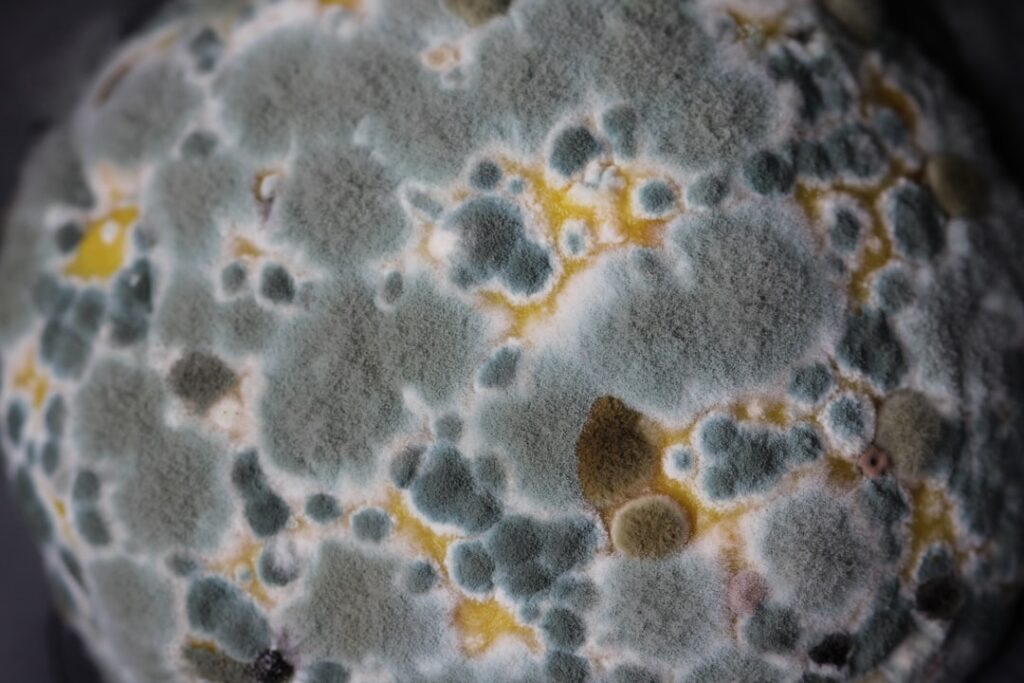
Mold is everywhere, indoors and out, yet most homeowners never think about how scientists actually organize the thousands of species into a coherent system. Understanding mold taxonomy — the way fungi are classified into kingdoms, genera, and species — helps make sense of lab reports and demystifies the alarming Latin names that show up on test results. This guide explains the classification in plain language. It summarizes EPA, CDC, and NIH guidance current as of 2026; consult your physician for health symptoms and a certified professional for testing decisions.
Is this mold, asbestos, or water damage? Get a free instant screen
Upload a clear photo of the suspect area. You'll get an instant AI screening opinion and what to do next. This is screening guidance, not a professional determination.
Screening guidance only. AI can be wrong. Confirm asbestos, mold type, or lead with lab testing or a licensed professional before acting.
What is mold taxonomy?
Taxonomy is the science of naming and classifying living things into a nested hierarchy. For mold, that hierarchy runs from the broad kingdom Fungi down through phylum, class, order, family, genus, and finally species. Molds are not a single organism but a loose label for many fungi that grow as multicellular filaments called hyphae and reproduce by spores. The word “mold” describes a growth habit, not a precise taxonomic group.
Because molds span several branches of the fungal tree, two organisms a homeowner would both call “mold” can be only distantly related, no closer than a mushroom is to a yeast.
The hierarchy itself is worth a moment, because it explains why lab reports read the way they do. Each level groups organisms more tightly than the one above it: a phylum gathers broad relatives, a genus gathers close cousins, and a species names the individual organism. A report that says Aspergillus is naming the genus, a cluster of related molds, rather than pinpointing one species, because distinguishing species often requires culturing or genetic work that adds cost without changing what a homeowner should do. Understanding that a genus name is a category, not a precise identity, takes much of the mystery out of a lab result.
Where do molds sit in the fungal kingdom?
Most household molds belong to one of two major phyla.
Ascomycota
This is the largest phylum of fungi and includes the majority of indoor molds, such as Aspergillus, Penicillium, and Cladosporium. These reproduce through spores formed in sac-like structures.
Mucoromycota (formerly Zygomycota)
This group includes fast-growing molds such as Rhizopus, the common bread mold. They tend to colonize moist surfaces quickly.
Mushrooms, by contrast, belong largely to the Basidiomycota. They are fungi too, which is why a wood-rot fungus producing a mushroom fruiting body indoors signals a serious moisture problem. Our guide on mold and mushrooms explores that overlap.
This placement explains a fact that surprises many homeowners: the kingdom Fungi is more closely related to animals than to plants. Fungi do not photosynthesize; they obtain nutrients by secreting enzymes that break down surrounding material and absorbing the result. That is why mold thrives on the cellulose in drywall paper, wood, cardboard, and natural fabrics — those materials are food. The biology behind the classification is the same biology that determines what mold eats in a home, which ties the abstract tree of life directly to the materials a homeowner is trying to protect.
Common indoor mold genera
Lab reports usually identify mold at the genus level. A few names appear repeatedly in homes:
- Cladosporium — extremely common indoors and out; often olive-green to brown.
- Penicillium — blue-green molds found on damp materials and food.
- Aspergillus — a large genus with many species, common in dust and damp building materials.
- Alternaria — often found in damp showers and around windows.
- Stachybotrys — the dark, slimy “black mold” associated with chronically wet cellulose materials.
Each of these genera contains many species, and they overlap in appearance, which is why a name on a report rarely matches what the eye assumes. Aspergillus and Penicillium in particular look so similar under low magnification that labs sometimes report them together. Cladosporium is so common in outdoor air that finding it indoors usually reflects ordinary infiltration rather than a unique indoor source. The point of naming the genus is to describe what was captured, not to rank danger. To see how scientists distinguish these microscopically, our guide on microscopic mold structure explains the features taxonomists use.
Why species rarely changes the cleanup
Homeowners often want a lab to name the exact species so they know how dangerous it is. The EPA’s position is more practical: any indoor mold growth indicates excess moisture and should be removed, regardless of type. Identifying the species does not change the core response of fixing the water problem and removing the growth. The CDC similarly states that while some molds produce allergens or irritants, the recommended action is the same. Knowing whether a sample is Penicillium or Cladosporium rarely alters what a homeowner should do next.
When taxonomy does matter
Species identification has a place in specific situations: research, certain occupational health investigations, comparing indoor air to outdoor baselines, and verifying cleanup. For a homeowner with a visible patch on a damp wall, none of those apply. The classification is interesting context, not an action item. Our broader mold inspection and testing hub explains when sampling earns its cost.
An allergist’s office is the one common setting where the specific mold genus does guide action. When a patient has allergy or asthma symptoms, identifying which molds they are sensitized to can inform avoidance strategies and treatment. Even there, the identification is part of a clinical evaluation, not a home-testing exercise, and it is the physician who decides whether the information is useful. For the building itself, the EPA’s stance holds across the board: any indoor mold growth means excess moisture and should be removed regardless of which branch of the fungal kingdom the lab assigns it to.
Why mold classification keeps changing
One reason mold taxonomy feels slippery is that it is genuinely a moving target. For most of its history, classification relied on what scientists could see — the shape of spores, the structure of fruiting bodies, the color and texture of a colony. Modern genetic sequencing has reorganized large parts of the fungal tree, which is why an older group like Zygomycota was reclassified into Mucoromycota and related groups. Names that appear in an older reference may not match a current one, and a mold once placed in one genus may have been moved. For a homeowner this churn is reassuring rather than concerning: the constant revision happens at the level of scientific organization, while the practical advice — find the moisture, remove the growth, dry the space — has not changed and does not depend on which name is current. The biology that matters for a home is stable even as the labels are refined.
How molds reproduce and spread
Across taxonomic groups, molds share a reproductive strategy: they release enormous numbers of microscopic spores that travel on air currents. Spores are present in essentially all indoor and outdoor air. They germinate when they land on a surface with enough moisture and a food source such as cellulose. This is why moisture control, not spore elimination, is the realistic goal — you cannot remove spores from the air, but you can deny them the dampness they need.
The grow-as-filaments habit that defines molds is itself a useful concept. A germinating spore extends thread-like hyphae that spread across and into a material, and a visible patch is a dense mat of these filaments topped by spore-bearing structures. On a porous material such as drywall or unsealed wood, those hyphae weave below the surface, which is precisely why a surface spray cannot reach the whole organism and why deeply colonized porous materials are removed rather than cleaned. The taxonomy and the cleanup advice connect here: the growth habit shared across these fungal groups dictates the practical response.
Mold, mildew, and yeast: where do they fit?
Everyday language blurs several fungal terms that taxonomy keeps distinct. “Mildew” is not a separate scientific group; it is a common name for certain molds, often the flat, powdery growth on bathroom surfaces or the downy growth on plants. Yeasts are fungi too, but they grow as single cells rather than the filamentous hyphae that define molds, even though some species can switch between forms. Mushrooms are the visible fruiting bodies of still other fungi. All of these belong to the kingdom Fungi, which is why a homeowner who finds “mildew” in a shower and a neighbor who finds “mold” in a basement are describing closely related organisms responding to the same trigger: moisture.
How taxonomy shapes a lab report
Understanding the classification system makes a laboratory report far less intimidating. Most reports identify mold at the genus level — Aspergillus, Penicillium, Cladosporium — because distinguishing the exact species often requires specialized culturing or genetic analysis that adds cost without changing the recommended action. A report listing spore counts by genus is describing what was captured on a sample, not diagnosing an illness. Reading it alongside an outdoor control sample, where one exists, gives context: elevated indoor counts of a genus relative to outdoors may suggest a hidden source, while counts mirroring the outdoor air usually reflect normal background. The genus names are a vocabulary, not a verdict.
Why species names sound scarier than they are
Latin binomials carry an air of menace, and marketing sometimes exploits that. Stachybotrys chartarum sounds alarming, yet the EPA advises the same response for it as for any indoor mold. The taxonomy exists to organize biological diversity, not to rank household danger. A homeowner served a report full of genus and species names should remember that the classification tells you what the organism is, while the moisture in the home tells you what to do about it. The two are separate questions, and only the second requires action.
Indoor versus outdoor: the same organisms
A point that taxonomy makes clear, and that surprises many homeowners, is that the molds growing indoors are overwhelmingly the same organisms found in outdoor air. Cladosporium, Penicillium, and Aspergillus are ubiquitous outdoors, and they drift inside through open doors and windows and on clothing as a matter of course. There is rarely a unique, exotic “indoor mold” invading from nowhere; instead, ordinary outdoor spores find an indoor surface with enough moisture to germinate. This is why a meaningful air sample compares indoor counts against an outdoor control taken the same day: the goal is to detect an indoor source amplifying a genus beyond the natural background, not to discover the mere presence of spores that are present everywhere. Understanding that the indoor and outdoor fungal communities largely overlap reframes the homeowner’s task. The objective is not to sterilize the air of spores, which is impossible, but to deny the ever-present spores the indoor moisture they need to settle and grow. The taxonomy and the moisture-control advice converge on the same conclusion from a different angle.
What this means for your home
The taxonomy lesson for homeowners is reassuring in its simplicity. The fungal kingdom is vast and the names are intimidating, but the response to indoor growth does not hinge on which branch a mold occupies. Find the moisture, remove the growth, dry the space, and keep indoor humidity below about 50 percent. That holds true whether the lab reports Aspergillus, Cladosporium, or anything else. The elaborate hierarchy of phylum, class, order, family, genus, and species is genuinely fascinating biology, and it can make a lab report readable, but it functions as background knowledge rather than a decision tree. The decision a homeowner faces is about moisture, and that decision is the same across the entire fungal family tree. Understanding the taxonomy is worthwhile mainly for the calm it brings: a lab report full of Latin names stops being a source of alarm once a homeowner sees the names as a vocabulary describing common organisms rather than a ranking of household threats. With that perspective, the report becomes a tool for understanding the home rather than a reason to fear it, and the real work — controlling moisture — comes back into focus.
References
- About Mold and Health — Centers for Disease Control and Prevention
- A Brief Guide to Mold, Moisture and Your Home — U.S. Environmental Protection Agency
- Mold and Your Health — National Institute of Environmental Health Sciences
If a lab report has left you unsure what your results mean for your Front Range home, get in touch through our contact page to connect with a qualified inspector who can put the findings in context.