Mold Removal in Charlotte, NC: What Homeowners Pay

Charlotte’s warm, humid Piedmont climate keeps mold removal a steady concern for North Carolina homeowners, from speckled bathroom ceilings to growth creeping up crawlspace framing. Knowing when a patch is small enough to handle yourself, when it warrants a professional crew, and what the work should cost helps Charlotte residents respond without overpaying or under-treating the problem. This guide summarizes EPA and CDC guidance current as of 2026 and is educational only — consult a certified professional for assessment and your physician for any health symptoms.
Part of our Mold Removal & Remediation guide — start there for the full picture →
Is this mold, asbestos, or water damage? Get a free instant screen
Upload a clear photo of the suspect area. You'll get an instant AI screening opinion and what to do next. This is screening guidance, not a professional determination.
Screening guidance only. AI can be wrong. Confirm asbestos, mold type, or lead with lab testing or a licensed professional before acting.
When can you remove mold yourself in Charlotte?
The deciding factor is size and source, not location. The EPA’s practical guideline is that roughly 10 square feet of contiguous growth — about a bath-towel’s worth — is a do-it-yourself ceiling for a careful homeowner with proper protection. Below that, on a non-porous surface, the right cleaner and method usually suffice.
Several situations push removal past DIY regardless of size: mold from sewage or floodwater, growth inside the HVAC system, mold that keeps returning despite cleaning, soft or rotted structural materials, hidden growth behind walls, and any case where an occupant has asthma, allergies, or a weakened immune system. In Charlotte’s humid climate, recurring growth is especially common because the ambient air keeps feeding moisture, so a patch that returns after cleaning often signals a humidity or crawlspace source rather than a one-time event. For DIY-eligible jobs, protect yourself with an N-95 respirator, gloves, and goggles, mist the surface first so spores stay grounded, clean or remove the material, and dry the area completely. The product-to-surface matching is covered in choosing a spray to kill mold, and the overall approach in the mold inspection and testing hub.
How the Charlotte climate shapes mold removal
Charlotte’s humid subtropical weather — hot, muggy summers and rain throughout the year — means mold pressure that a drier region does not face. Mold germinates when relative humidity at a surface stays above roughly 60 percent, and Piedmont indoor air can linger there for months without active dehumidification.
This climate changes the removal calculus in two ways. First, recurrence is more likely, so any removal that ignores the moisture source tends to fail; the humidity simply regrows the colony. Second, crawlspaces — common in the region — trap ground moisture and are a frequent hidden source that surface cleaning never reaches. Effective removal in Charlotte therefore pairs the physical cleanup with humidity control: dehumidification, crawlspace sealing, and drainage improvements. Without that, a homeowner can scrub the same wall every few months. The crawlspace dimension is detailed in the guide on crawlspace mold remediation, and the full remediation-plus-rebuild picture in mold remediation and restoration.
What mold removal costs in Charlotte, NC
Costs track the size of the affected area, the materials involved, access difficulty, and how far moisture has spread, so figures are ranges, not quotes. Industry estimates commonly place small, contained professional jobs — a closet or a section of bathroom wall — in the lower hundreds to roughly a thousand dollars. Full-room jobs involving drywall demolition and drying often reach the low thousands, and severe cases tied to flooding, crawlspace contamination, or structural moisture run higher.
In Charlotte’s humid market, expect line items that drier-climate homeowners skip: crawlspace encapsulation, supplemental dehumidification, and drainage work, all of which reduce the chance of paying twice. Removal quotes also typically exclude the rebuild — new drywall, paint, flooring — so a cleanup-only price will look cheaper than an all-in bid. Confirm scope before comparing. The national cost breakdown is detailed in the guide on mold removal costs. Collecting two or three written estimates and reading them for scope, not just price, is the most reliable way to compare local companies fairly.
Is the mold a health concern?
Mold exposure affects people differently. The CDC associates indoor mold with nasal congestion, throat and eye irritation, coughing, and worsened symptoms in those with asthma or mold allergies. People with weakened immune systems or chronic lung conditions face higher risk and should avoid disturbing growth themselves.
Charlotte’s persistent humidity can keep indoor spore levels elevated even between visible outbreaks, which is one reason local removal emphasizes ongoing moisture control over a single cleanup. A musty odor with no visible source warrants investigation, since it often points to growth inside a wall, under flooring, or in a crawlspace. The color of the mold does not reliably indicate hazard; the response is the same regardless — remove it and dry the space.
The mold removal process, step by step
Whether handled by a homeowner on a small patch or a crew on a larger one, removal follows the same controlled sequence, and Charlotte’s climate stretches one phase in particular. The job begins with finding the growth and its moisture source — visible mold is the easy part; the meter and, for professionals, a thermal camera find the hidden dampness that in the Piedmont often traces to a crawlspace or the humid air itself.
Next comes isolation: closing off the area, covering vents, and shutting down the HVAC so spores do not ride the ductwork to clean rooms; professionals add plastic containment and negative-air HEPA filtration. The growth is then addressed — non-porous surfaces cleaned, porous materials like saturated drywall and carpet removed and bagged. Drying is the phase the humid climate prolongs: fans and dehumidifiers must bring materials to a verified-dry moisture reading, which takes longer when the surrounding air is moist, and rushing it seals dampness inside. Finally, the moisture source is corrected. In Charlotte that correction usually means ongoing humidity control — a crawlspace seal, a dehumidifier, drainage work — rather than a one-time leak repair, because the climate keeps pushing moisture back in. Removal that stops at the visible cleanup and skips this last step is the version that fails within a season.
DIY versus hiring out in a humid climate
The decision to clean mold yourself or hire a Charlotte professional weighs scope, safety, and the odds of a durable result — and the humid climate tilts that balance more toward hiring out than a dry region would. For a small, non-porous patch under the 10-square-foot guideline, a careful homeowner can clean it for the price of a respirator, gloves, and a cleaner, provided the moisture is addressed afterward.
But Charlotte’s recurring-growth problem changes the math. A patch that returns after cleaning is the climate telling you the source — often a crawlspace or whole-house humidity issue — was never fixed, and that source is frequently beyond a homeowner’s reach. Larger areas, porous materials, crawlspace contamination, HVAC involvement, and any flood-related growth all demand the containment, negative air, and moisture diagnostics that household tools cannot provide. There is also a health line: occupants with asthma, allergies, or weakened immune systems should not do mold work themselves. The honest read for Charlotte homeowners is that the DIY ceiling is real but lower in practice than the 10-square-foot rule suggests, because the humid climate so often makes the true problem a hidden moisture source rather than the visible patch. When the growth keeps coming back, paying a professional to find and fix the source usually costs less than scrubbing the same wall every few months.
Charlotte’s problem zones: crawlspaces, basements, and HVAC
Certain parts of a Charlotte home draw mold repeatedly, and they deserve specific attention during any removal. Crawlspaces are the regional headliner: a vented crawlspace in a humid climate pulls moist outdoor air against cool surfaces, where it condenses and feeds mold on the floor framing and subfloor above. Encapsulation — sealing the crawlspace with a vapor barrier and conditioning it — is often the durable fix, addressing a source that surface cleaning in the living space never reaches.
Basements, where present, collect moisture through foundation walls and from warm humid air condensing on their cooler surfaces, and a properly sized dehumidifier is frequently part of the answer. The HVAC system is a quieter culprit: condensation forms on cooling coils and in ducts, and a clogged condensate drain or an oversized unit that short-cycles without dehumidifying can grow mold the system then distributes throughout the house. A musty smell that strengthens when the air conditioning runs points straight there. The common thread across all three zones is that Charlotte mold often originates in a part of the home the occupant rarely sees, which is why effective removal looks beyond the visible patch to the crawlspace, the basement, and the air handler. Treating only the symptom upstairs while ignoring these source zones is the most frequent reason removal has to be repeated in the Piedmont.
Choosing a Charlotte removal company and preventing recurrence
For jobs beyond DIY, look for a company that assesses the moisture source before quoting, uses containment and HEPA filtration, documents moisture readings, and provides a written scope and clearance check. Confirm liability and pollution insurance. Treat warning signs seriously: a price quoted before any inspection, promises to make a home “100 percent mold-free,” high-pressure same-day demolition, and a refusal to identify the moisture source all signal a company to avoid.
Prevention is where humid-climate homeowners save money long term. Keep indoor relative humidity below 60 percent with air conditioning and supplemental dehumidifiers, verify with a hygrometer, run bathroom and kitchen exhaust fans, encapsulate or condition crawlspaces, improve foundation drainage, fix leaks immediately, and dry any storm water within 24 to 48 hours. In Charlotte, the weather constantly tests these measures, so treating the moisture source rather than just the stain is what makes removal last. The cleanup is the easy part; controlling the dampness that grew the mold is the part that keeps it from coming back.
What removal costs cover and what they don’t
Charlotte homeowners comparing removal quotes need to know what is and is not inside a typical price, because scope differences masquerade as price differences. A standard mold removal quote generally covers the assessment, containment, removal of mold-affected materials, cleaning of remaining surfaces, and drying. That is the core remediation work.
What it frequently excludes is just as important. The rebuild — new drywall, paint, flooring, trim — is often a separate cost or a separate trade, so a removal-only price will look cheaper than an all-in bid that includes restoration. The moisture-source repair, such as fixing a leak, sealing a crawlspace, or installing a dehumidifier, may also be billed separately, yet it is the step that determines whether the removal lasts. Post-removal clearance testing, if performed by an independent party, can be another line item. In Charlotte’s humid market, the crawlspace and dehumidification work that prevents recurrence is precisely the part most likely to sit outside a bare-bones quote, which is why the cheapest bid can be the most expensive choice if it omits the moisture control the climate requires. Reading each quote for exactly which of these elements it includes, and confirming the moisture fix is in the scope rather than assumed, is the only way to compare local companies fairly and avoid paying twice.
Preventing recurrence in a humid climate
Because Charlotte’s climate constantly works to regrow mold, prevention is not a one-time task but an ongoing practice, and it is where homeowners protect the money they spent on removal. The foundation is humidity control: keep indoor relative humidity below 60 percent, ideally in the 30-to-50-percent range, and verify it with an inexpensive hygrometer rather than guessing. Air conditioning helps, and supplemental dehumidifiers may be needed in basements and crawlspaces.
Beyond humidity, the practical levers are familiar but matter more in the Piedmont than in a dry region. Run bathroom and kitchen exhaust fans, encapsulate or condition crawlspaces to stop ground moisture from rising, improve foundation drainage and gutters so water moves away from the house, service the HVAC system to prevent condensate problems, and address any leak immediately. After summer storms, dry wet materials within 24 to 48 hours before mold can establish. Each measure removes a path by which the humid climate feeds mold, and together they let a home resist the conditions that made removal necessary. The cleanup ends the immediate problem; this sustained moisture management is what keeps Charlotte’s weather from reintroducing it. Homeowners who treat prevention as a permanent habit rather than a finished chore are the ones who do not find themselves calling a removal company again the following year.
References
- Mold Cleanup in Your Home — U.S. Environmental Protection Agency
- About Mold and Your Home — Centers for Disease Control and Prevention
- A Brief Guide to Mold, Moisture and Your Home — U.S. Environmental Protection Agency
Frequently asked questions
Can I remove mold myself in Charlotte?
For roughly 10 square feet or less of contiguous growth on a non-porous surface, a careful homeowner usually can, with an N-95 respirator, gloves, and goggles. Larger areas, flooding, HVAC contamination, recurring growth, or an at-risk occupant call for a professional, especially given the humid climate.
How much does mold removal cost in Charlotte, NC?
It varies with size and materials. Small contained jobs often run from the low hundreds to about a thousand dollars, full-room jobs reach the low thousands, and severe cases run higher. Humid-climate jobs often add crawlspace and dehumidification costs, and rebuild is usually billed separately.
Why does mold keep coming back in Charlotte homes?
The humid subtropical climate keeps feeding moisture, so any removal that ignores the source tends to fail. Crawlspaces commonly trap ground moisture that surface cleaning never reaches. Lasting removal pairs cleanup with humidity control, crawlspace sealing, and drainage fixes.
How do I choose a mold removal company in Charlotte?
Pick one that assesses the moisture source before quoting, uses containment and HEPA filtration, documents moisture readings, and carries insurance. Avoid companies that quote before inspecting, promise a '100 percent mold-free' home, or refuse to identify the moisture source.
Front Range homeowners researching mold removal for a property in Charlotte or elsewhere can get in touch through our contact page to talk through testing and next steps with a qualified inspector.
Mold removal & cleanup picks
For a small, contained patch (under ~10 sq ft) these EPA-friendly removers handle surface mold. Larger or recurring growth warrants a professional assessment first.
| Product | Why | Buy |
|---|---|---|
 RMR-86 Instant Mold Stain Remover | Fast-acting on stains; ventilate and wear PPE. | Amazon — $29.99 |
 Concrobium Mold Control | No-bleach formula that also helps prevent regrowth. | Amazon — $11.26 |
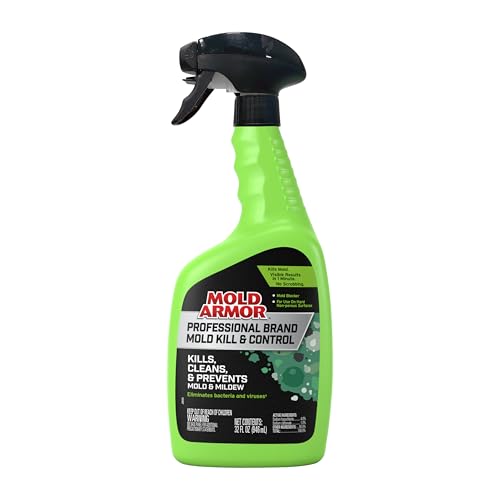 Mold Armor Mold & Mildew Remover | Widely stocked bathroom/surface remover. | Amazon — $22.98 |