Mold Inspection in Castle Pines, Colorado
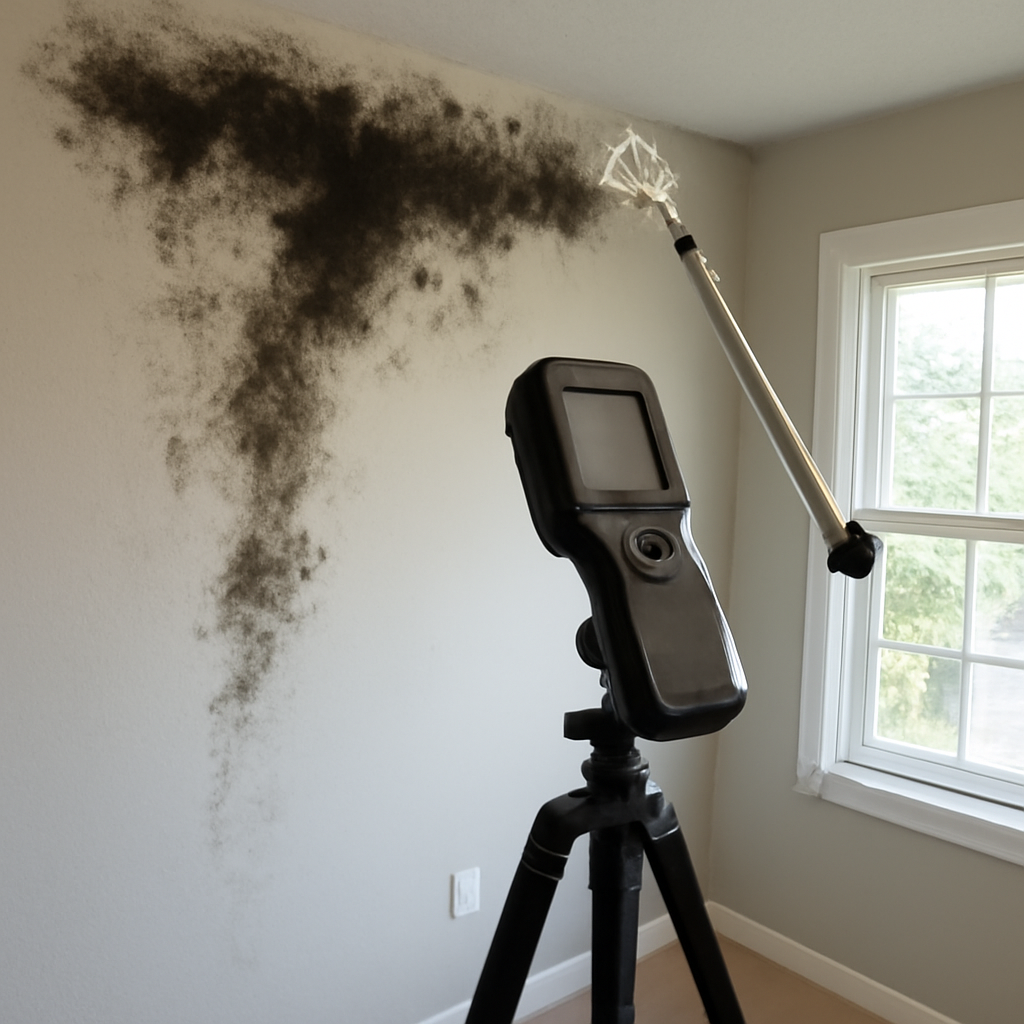
Castle Pines sits on a forested ridge in Douglas County at roughly 6,400 feet, a community of large custom homes tucked among ponderosa pines between Castle Rock and Lone Tree. The combination of mature tree shade, walkout and finished basements, and homes that stay sealed tight through long Front Range winters creates moisture conditions worth understanding. A mold inspection castle pines residents schedule looks for the hidden water intrusion and humidity buildup that this setting can produce. This page summarizes EPA and CDC guidance current as of 2026; consult a certified professional for testing decisions and your physician for health symptoms.
Part of our Mold Testing & Inspection guide — start there for the full picture →
Is this mold, asbestos, or water damage? Get a free instant screen
Upload a clear photo of the suspect area. You'll get an instant AI screening opinion and what to do next. This is screening guidance, not a professional determination.
Screening guidance only. AI can be wrong. Confirm asbestos, mold type, or lead with lab testing or a licensed professional before acting.
Mold inspection in Castle Pines: what to know
A mold inspection is a visual and moisture-driven assessment of a home that identifies active growth, the water source feeding it, and the conditions letting it spread. In Castle Pines, that work centers on the basements and lower levels where most of the city’s homes place finished living space, and on the roof and exterior areas shaded by the surrounding pine canopy.
An inspector walks the home with a moisture meter and often a thermal camera, checking foundation walls, window wells, mechanical rooms, and the spaces behind finished basement walls. The goal is to find the source first. Mold is a symptom; standing water, a slow plumbing leak, or chronic condensation is the disease. For the underlying science of how mold colonies form and spread, our plain-language mold inspection and testing hub walks through the fundamentals every homeowner should know.
Castle Pines homes are newer than most of the metro, overwhelmingly built from the 1990s through the 2020s, which changes the inspection picture. These are tightly constructed, energy-efficient houses with sealed envelopes that hold heat well but also trap interior humidity when ventilation falls short. A bathroom exhaust fan that vents into an attic instead of outdoors, a humidifier run too aggressively in winter, or a finished basement with no dehumidification can all push indoor moisture high enough to feed mold even in a relatively young home.
Why Castle Pines homes need mold inspection
The local drivers here are specific. The city occupies a heavily wooded ridge, and the ponderosa-pine forest that gives Castle Pines its name also casts deep shade across north-facing roofs, decks, and foundations. Shaded surfaces dry slowly after snow, and snowmelt that lingers against a foundation or pools in a window well finds its way toward basement walls. The same tree cover that residents prize for privacy and beauty keeps moisture in contact with the building longer than an open lot would.
Walkout and garden-level basements are the second driver. Many homes in The Village at Castle Pines, Castle Pines North, and Hidden Pointe are built into the ridge’s slope with walkout lower levels, where one wall sits below grade and another opens to a hillside. Grading and drainage matter enormously on these lots; water moving downhill toward a walkout wall, or a downspout discharging too close to the foundation, can saturate the soil against finished basement living space.
Winter sealing compounds it. At 6,400 feet, Castle Pines homes stay closed up for months, and the dry outdoor air masks the fact that interior moisture from cooking, showering, and humidifiers has nowhere to go. The EPA notes that controlling indoor humidity below roughly 50 percent is the single most effective way to limit mold growth. In a sealed, finished-basement home, hitting that target takes mechanical help, and an inspection often reveals humidity quietly running high in lower levels where families spend the most time.
What a Castle Pines mold inspection covers
A thorough inspection moves from the outside in. The inspector evaluates grading, downspout discharge, window wells, and the roof and gutter condition, paying attention to the shaded, tree-covered sides of the home where drying is slowest. Inside, the focus shifts to basements, mechanical rooms, bathrooms, and any area with a history of leaks or water staining.
Moisture mapping and visual assessment
Using a moisture meter and infrared camera, the inspector maps elevated readings behind drywall and under flooring that the eye cannot see. A cool, damp patch on a finished basement wall, invisible during a casual walkthrough, shows clearly on thermal imaging. This matters in Castle Pines homes where finished lower levels conceal foundation walls behind drywall and framing.
Sampling when it is warranted
If visible growth or a musty odor suggests a hidden problem, the inspector may collect air or surface samples for lab analysis. Sampling is not always necessary; when growth is visible and the source is obvious, the priority is fixing the water problem and removing the material. Homeowners weighing whether to sample can read our companion page on mold testing in Castle Pines, which explains when lab analysis adds value and when it does not.
Mold inspection cost in Castle Pines
A visual mold inspection of a Castle Pines home typically runs about $300 to $600, depending on the size of the property and whether the inspector includes thermal imaging. Given that many homes here are large custom builds with multiple finished levels, expect the upper end of that range for a full walkthrough of a sizable house.
Adding laboratory air or surface samples increases the cost, generally $100 to $300 per sample once lab fees are included. A simple two-sample comparison, one indoor and one outdoor baseline, is common when an inspector wants to confirm whether indoor spore counts are elevated relative to the surrounding pine-forest air.
Weigh that cost against what an undetected leak can do to a finished basement. Replacing water-damaged drywall, flooring, and built-ins in a high-end Castle Pines lower level runs into the thousands, and a mold problem that spreads behind walls before anyone notices multiplies the bill. A few hundred dollars spent finding the source early is modest insurance for a home of this value. For a homeowner who suspects a problem after a snowmelt season or a plumbing leak, the inspection pays for itself by catching the issue while the repair is still small.
Colorado regulations and disclosure
Colorado does not license or certify mold inspectors or remediation contractors, so the burden falls on the homeowner to vet credentials. Look for inspectors who hold recognized national certifications and who follow EPA mold remediation guidance rather than relying on a state license that does not exist. Colorado’s Seller’s Property Disclosure form asks sellers to report known water damage and mold, which makes a documented inspection valuable on both sides of a transaction.
For a Castle Pines home sale, a clean inspection report reassures buyers, while an undisclosed history of basement water intrusion can derail a deal during the inspection contingency. Sellers who have addressed a past leak are generally better served by documenting the repair than by hoping it goes unnoticed, since the moisture meter often tells the story regardless.
What drives mold inspection cost in Castle Pines
The fee for a Castle Pines mold inspection moves with a handful of concrete factors, and understanding them helps a homeowner budget before booking. Square footage is the first lever: the city’s homes are large by metro standards, and a multi-level house with a finished walkout takes longer to walk than a modest single-story, which is why a sizable custom home lands at the upper end of the typical range.
The number of finished levels matters as much as total size. A home where the basement, main floor, and upper level are all finished hides more foundation wall and framing behind drywall, so the inspector spends more time mapping moisture behind surfaces that cannot be seen directly. An unfinished mechanical room is quick to assess; a finished theater room or lower-level guest suite in soil contact takes careful thermal scanning to clear.
Lab sampling is the other major driver. A purely visual inspection sits at the base price, while each air or surface sample sent to a laboratory adds to the total once collection and lab fees are counted. A homeowner who only needs the source-finding walkthrough pays less than one who wants an indoor-outdoor air comparison documented for a sale. Access also factors in: a crawl space, a tightly packed storage area, or a finished wall that must be opened to confirm a suspected leak can extend the visit. Finally, travel into the gated communities or the more remote forested parcels near Sedalia occasionally adds a modest trip component, though most providers fold that into a flat regional rate.
Castle Pines mold inspection by neighborhood
While the ridge-top profile is consistent citywide, each Castle Pines neighborhood presents the inspector with slightly different moisture conditions. In The Village at Castle Pines, the gated estates around the golf course tend to be the largest homes with the most extensive finished walkout levels, multiple wet bars, and irrigation-heavy landscaping pressed close to the foundation; here the inspection focuses on drainage management around expansive lower levels and the long downspout runs that big roofs demand.
Castle Pines North, the older and more densely platted side of the city, holds the earliest homes in the area, some now decades into their service life with original windows and roofing that have had time to develop the worn flashing and seal failures that admit water. An inspection in this neighborhood weighs age-related leak points more heavily than in the newest construction. Hidden Pointe sits on some of the steepest forested terrain, so walkout basements built deep into the slope make grading and hillside runoff the dominant concern, and north-facing foundations under dense pine shade dry slowest of all.
Lagae Ranch and the newer development on the city’s edge bring the tightest, most energy-efficient envelopes, which shifts the inspector’s attention from exterior intrusion toward trapped interior humidity, bath fans venting into attics, aggressive winter humidifier use, and finished basements without dehumidification. Recognizing which neighborhood pattern a home fits lets the inspector target the most likely moisture source rather than treating every house identically.
Neighborhoods and areas served
Mold inspection work spans Castle Pines from the gated estates of The Village at Castle Pines to the family neighborhoods of Castle Pines North, Hidden Pointe, and the newer development around Lagae Ranch. The shared traits, ridge-top siting, pine-forest shade, and finished walkout basements, mean the same moisture drivers apply across the city even as home styles vary.
Service typically extends to adjacent Castle Rock, Lone Tree, Highlands Ranch, and Sedalia, all within the same Douglas County footprint. Homeowners researching the broader regional picture can consult our Douglas County mold inspection overview, which sets Castle Pines in the context of the county’s forested, high-elevation communities and their shared building patterns.
How to choose a Castle Pines mold inspection provider
Ask whether the provider carries a moisture meter and thermal camera and whether they prioritize finding the water source rather than simply confirming mold is present. A good inspector explains the conditions feeding any growth and outlines the repair, not just the removal. Beware of any company that inspects and remediates under the same roof without disclosure, since that arrangement creates an incentive to find problems.
For a home purchase, bundling a mold assessment into a broader inspection is efficient. A buyer evaluating a forested-lot home can coordinate mold, moisture, and structural review in one visit, and a competent inspector will flag the grading and drainage issues that drive basement moisture on Castle Pines’s sloped lots. Straight guidance about whether sampling is even necessary is the mark of a provider worth hiring, since not every musty smell warrants a lab bill.
References
- Mold and moisture control guidance — U.S. Environmental Protection Agency
- Mold and your health — Centers for Disease Control and Prevention
- Standards for mold inspection — International Association of Certified Home Inspectors
Frequently asked questions
Why do Castle Pines homes get mold despite being newer?
Newer homes are sealed tightly for energy efficiency, which traps interior humidity from showers, cooking, and humidifiers. Combined with finished walkout basements and pine-forest shade that slows drying, that moisture can feed mold even in a 2000s-era home.
How much does a mold inspection cost in Castle Pines?
A visual inspection typically runs $300 to $600 depending on home size and whether thermal imaging is included. Laboratory air or surface samples add roughly $100 to $300 each.
Does the pine forest around Castle Pines affect mold risk?
Yes. Heavy tree shade keeps north-facing roofs, decks, and foundations damp longer after snow, and lingering snowmelt against a foundation or in a window well can drive moisture toward basement walls.
Is mold inspection required when selling a home in Castle Pines?
It is not legally required, but Colorado's Seller's Property Disclosure asks sellers to report known water damage and mold. A documented inspection helps both buyers and sellers during the transaction.
What should I look for in a Castle Pines mold inspector?
Choose an inspector who uses a moisture meter and thermal camera, focuses on finding the water source, and follows EPA remediation guidance. Be cautious of firms that both inspect and remediate without disclosing the conflict.
If you own a forested-lot home in Castle Pines and suspect basement moisture or notice a musty lower level, an early inspection keeps a small problem small. To connect with a vetted Front Range inspector, reach out through our contact page.