Moisture Meter Lowes: What to Evaluate Before You Buy
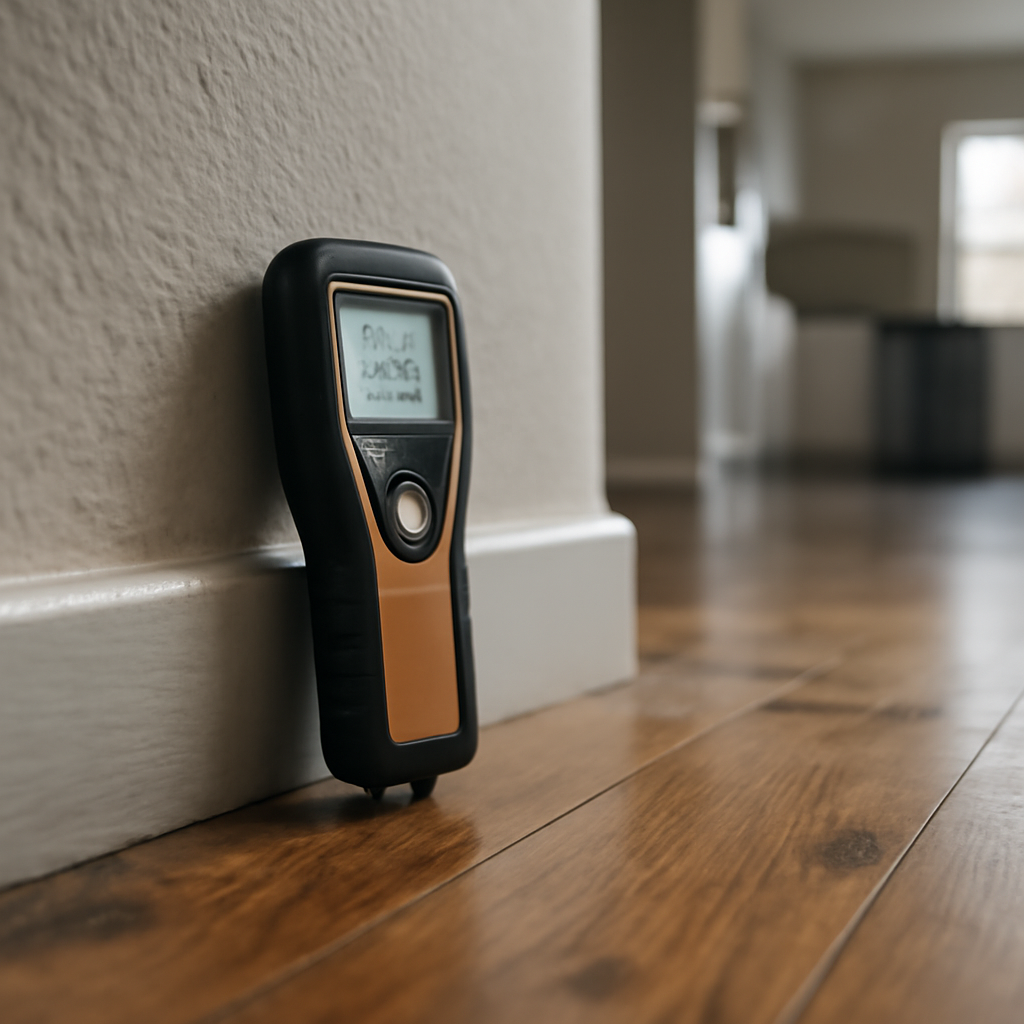
Searching for a moisture meter Lowes stocks usually means you have a damp spot, a flooring project, or a pre-purchase worry and want a tool you can pick up locally today. Big-box retailers carry a useful range, from $25 pin meters to professional pinless units, but the labels rarely explain which one fits your job. This guide covers the types you will find, the specifications that actually matter, realistic prices, and how to evaluate a meter before it goes in your cart — using trade-association guidance rather than retailer copy.
Buying a Moisture Meter at Lowes: The Quick Orientation
Retailers like Lowes typically shelve moisture meters in two areas: alongside flooring tools and in the general tool aisle. The selection spans three broad categories — pin meters, pinless meters, and combination units — plus pocket “two-pin” testers aimed at firewood and houseplants. For checking drywall after a leak, evaluating a subfloor before laying flooring, or spot-checking framing, a general-purpose meter rated for building materials is what you want, not a soil or firewood tester calibrated for different materials.
The practical buying question is what you intend to measure and how often. An occasional homeowner check is well served by an inexpensive meter; recurring renovation work or a home-inspection use justifies a mid-tier or professional model. Both InterNACHI and ASHI treat moisture measurement as a core part of identifying water intrusion, which is why a meter that reads building materials reliably matters more than one with the longest feature list. A cheap meter that confirms “wet versus dry” can still be useful — the danger is assuming a basic tool delivers laboratory precision.
Why a Moisture Meter Belongs in a Home Toolkit
Water is the root cause behind a striking share of home problems — mold, rot, failed flooring, ruined drywall — and most of it stays hidden until the damage is visible. A moisture meter is the inexpensive tool that lets a homeowner see moisture before it becomes a repair bill. After a storm, a meter tells you whether water reached the framing or only wet the surface. Before laying flooring, it confirms the subfloor is dry enough to build on. When a stain appears, it distinguishes an old, dry mark from active intrusion.
Trade bodies treat moisture measurement as a basic part of evaluating a building’s condition, which is why even modest meters earn their place in a toolkit. The point is not laboratory precision; it is the ability to answer “is this wet?” with a number instead of a guess. That single capability turns vague worry into a clear decision about whether to act, and it is available for the price of a few hardware-store items.
Pin Versus Pinless: The First Decision
Pin Meters
Pin meters drive two electrodes into the material and measure electrical resistance between them; wetter material conducts better. They give a localized reading at the pin depth and are good at pinpointing exactly where moisture sits and how deep it goes. The downsides: they leave small holes, and surface salts or finishes can skew resistance readings. Pin meters often display in percentage moisture content for wood, calibrated to a species scale.
Pinless Meters
Pinless meters use a sensor pad that reads moisture non-destructively to a depth of roughly 3/4 inch to 1 inch via electromagnetic or capacitance technology. They scan large areas quickly without leaving marks, making them ideal for mapping a damp wall to find its boundaries. They cannot isolate the exact depth of moisture and can be fooled by metal — nails, pipes, or foil-backed insulation behind the surface.
Combination Meters
Combination units offer both modes — scan pinless to find a wet area, then switch to pins to confirm and localize. They cost more but cover the widest range of tasks, which is why many professionals carry one. For a deeper comparison of the two technologies, our guide on pin versus pinless moisture meters walks through where each shines.
Specifications That Matter
Look past the marketing to a few concrete numbers. Measurement range and material settings: a good building meter offers calibrated scales for wood species and a reference scale for non-wood materials like drywall and masonry. Accuracy: quality meters cite a tolerance such as ±1% on the wood scale; budget meters may not state accuracy at all, which is itself a useful signal about what you are buying.
Sensing depth on pinless units (commonly up to about 3/4 inch) determines whether you read just the surface or the material behind it. A clear display with a numeric value plus a color or audible alert helps interpret readings at a glance in awkward positions. Calibration-check features — a built-in reference block or a self-test — let you confirm the meter is reading true rather than drifting. Our plain-language guide on how to read a moisture meter explains what those numbers mean in practice and how to interpret a reading against a dry reference.
Price Tiers and What They Buy
Entry-level pin meters and pocket testers run roughly $20 to $40. They confirm “wet versus dry” adequately for a quick homeowner check but offer limited accuracy and few material settings. Mid-range meters, around $50 to $150, add pinless scanning or combination modes, calibrated scales, and stated accuracy — the sweet spot for serious DIYers and renovators who need repeatable readings.
Professional meters favored by inspectors and restoration contractors range from about $150 to $400 and beyond, with reliable calibration, durable build, and trusted brand support such as the well-known Protimeter line. For a curated look at models across these tiers, our moisture meter reviews compare features and value, and the broader home inspection tools guide shows where a meter fits among the other instruments a thorough inspection uses. Spending more buys accuracy and durability, not magic — the technique still matters more than the price tag.
How It Compares to Named Alternatives
Against a pocket firewood or soil tester, a building-rated meter is the right pick for home moisture problems — the cheap pocket units are calibrated for different materials and mislead on drywall and framing, reading high or low depending on the material. Against a thermal camera, a moisture meter is complementary, not competing: a thermal camera shows a cool, possibly damp area on a wall, but only a moisture meter confirms whether that area actually holds elevated moisture. Many inspectors use the camera to find suspect spots fast and the meter to verify them before writing a finding.
Among brands a retailer might stock, General Tools and Klein offer solid value in the mid-range, while Protimeter (including the Surveymaster) sits at the professional end with proven reliability across thousands of inspections. Choosing among them comes down to whether you need occasional checks or repeatable, defensible readings for client reports.
What to Evaluate in the Store or Cart
Confirm the meter is rated for building materials, not just wood or soil. Check that it states an accuracy figure and offers calibrated scales for the materials you care about. For pinless models, verify the sensing depth meets your need. Look for a calibration-check feature, a readable display, and replaceable pins on pin models so you are not buying a disposable tool. Read the return policy — a meter that cannot be checked against a reference is hard to trust on the first use.
Match the tool to the task: a single damp-spot check does not require a $300 instrument, while flooring installation or recurring inspection work rewards a meter with verified accuracy. Whatever you buy, the calibration habit matters more than the price — verify against a reference block periodically, since a meter reading the wrong number confidently is worse than no meter at all. Used well, even a modest meter turns a guess about a damp wall into a measurement you can act on.
How to Use the Meter Once You Get It Home
A meter only helps if you read it in context. The single most useful habit is to establish a dry reference: take a reading on the same material in a known-dry area of the home, then compare your suspect spot against it. A drywall reading that is much higher than a dry wall a few rooms away signals elevated moisture even if you do not know the exact percentage, because the relative difference is what matters most for finding water intrusion.
With a pinless meter, scan slowly across the area in a grid to map where moisture is highest and where it tapers off, which reveals the boundary of a wet zone behind intact drywall. With a pin meter, take several readings at different depths and spots to confirm a high spot is real and not a surface artifact. Keep metal, foil-backed insulation, and embedded pipes in mind, since they can spike a pinless reading. Our plain-language guide on how to read a moisture meter walks through interpreting the scales and the difference between a wood percentage reading and a relative reference scale for non-wood materials.
Buying In-Store vs Online
Picking up a meter at a local retailer has clear advantages: you get it the same day, you can handle the unit and judge the build quality, and returns are simple if it does not suit the job. The tradeoff is a narrower selection than online, often skewed toward consumer and mid-range models rather than the full professional lineup. For an urgent damp-spot check or a weekend flooring project, in-store availability usually wins.
Online sellers carry the broadest range, including professional instruments and the full Protimeter catalog, often with detailed specifications and user reviews that the shelf tag omits. If you need a specific accuracy figure, a particular sensing depth, or a model trusted in the trade, online research helps you buy deliberately rather than settling for what is in stock. Many homeowners do both: research the specs online to know what they want, then check whether a local store carries an equivalent for same-day pickup. Either way, the decision should rest on the specifications, not the price tag alone.
Matching the Meter to Common Projects
The right meter depends on the work in front of you. For checking drywall after a roof or plumbing leak, a pinless or combination meter lets you scan the wall without leaving holes and map how far the moisture spread. For a flooring project — confirming a subfloor or concrete slab is dry enough before laying hardwood, laminate, or tile — a meter rated for those materials, and ideally one that handles concrete, prevents the costly mistake of installing over a damp substrate.
For firewood or a houseplant, a cheap pocket two-pin tester is genuinely the correct tool, since it is calibrated for those materials and a building meter would be overkill. For a homebuyer doing a walkthrough, a compact combination meter offers the most flexibility to spot-check suspicious areas around windows, under sinks, and along basement walls. Buying the meter that fits your actual project, rather than the most or least expensive option on the shelf, is what turns the purchase into a tool you trust rather than a drawer ornament.
Caring for and Verifying a Moisture Meter
A moisture meter is only trustworthy if it reads true, so periodic verification matters more than most homeowners realize. Many quality meters include a calibration-check feature — a built-in reference or a self-test — that confirms the electronics are reading correctly; use it before an important measurement. Replace pin electrodes when they bend or corrode, since damaged pins skew resistance readings, and keep the sensor pad on a pinless unit clean and undamaged.
Store the meter dry and at moderate temperature, and let it acclimate to room conditions before a critical reading, much as you would a thermal camera. Replace the battery when readings become erratic, a frequent and easily overlooked cause of bad numbers. None of this is demanding, but it is the difference between a meter you can act on and one that confidently reports the wrong thing. A tool that gives a falsely low reading on a wet wall is worse than no tool at all, because it talks you out of finding a real problem.
References
- Standards of Practice — International Association of Certified Home Inspectors (InterNACHI)
- Standard of Practice — American Society of Home Inspectors (ASHI)
- Moisture Control for Homes — U.S. Department of Energy
Moisture meters for home inspection
Pin meters read deep but leave marks; pinless meters scan surfaces non-destructively. Many inspectors carry both.
| Product | Why | Buy |
|---|---|---|
 Klein Tools ET140 Pinless Klein Tools ET140 Pinless | Non-destructive scanning; affordable. | Amazon — $49.97 |
 General Tools MMD4E General Tools MMD4E | Best-selling pin meter for drywall/wood. | Amazon — $39.98 |
 Lignomat Mini-Ligno Lignomat Mini-Ligno | Trusted by woodworkers; species-calibrated. | Amazon — $99.00 |