Lowes Borescope: 2026 Inspection Camera Buyer Guide
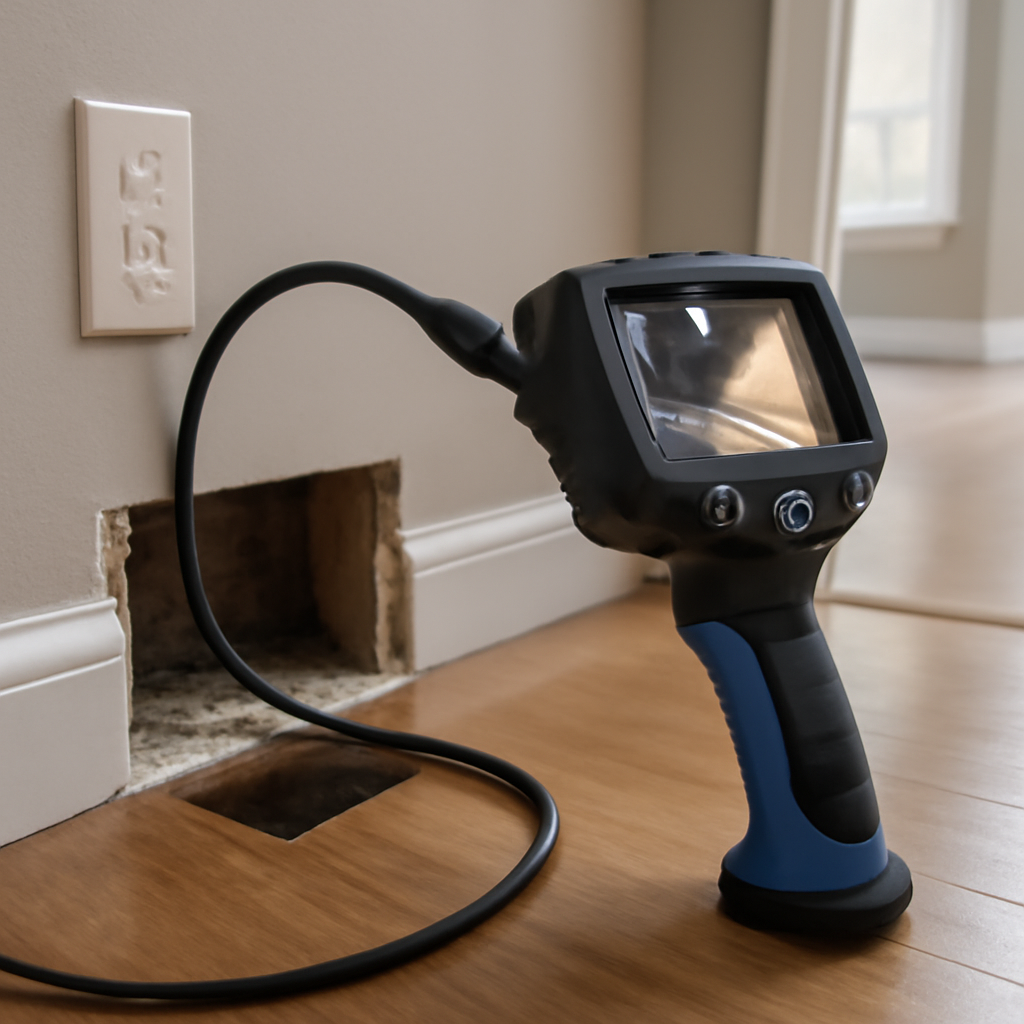
A Lowes borescope, sometimes called an inspection camera or endoscope, is a low-cost diagnostic tool that lets a homeowner peek into walls, drains, ducts, and engine compartments without cutting access holes. Lowe’s stocks a range of borescopes from $30 disposable-quality units up to $200 dual-camera models that handle most homeowner inspection tasks. This guide covers what Lowe’s actually carries, what to look for in a usable borescope, the difference between consumer and professional-grade units, and when to step up to a FLIR VS70 or Klein-grade tool for serious inspection work.
What you find on a Lowes borescope shelf in 2026
Lowe’s stocks borescopes from Depstech, Bestrise, RIDGID, Milwaukee, and a few private-label options. The typical price band is $30 to $200, with most homeowners landing in the $60 to $100 range. Common specifications include 1080p camera resolution, 5- to 33-foot semi-rigid cables, IP67 waterproof rating, and a built-in display or WiFi connection to a smartphone. The cheapest Lowes borescope is functionally a webcam on a flexible cable. The most expensive consumer-tier unit includes a 4.3-inch color display, dual front and side cameras, and SD-card video recording. None of these compete with the $400 to $1,500 professional borescopes from FLIR (VS70), Klein Tools (ET17), or Inspection Camera (RIDGID SeeSnake micro).
Budget tier: Depstech and Bestrise at $30 to $80
The budget tier covers the most common homeowner uses. A Depstech WF010 at $50 connects via WiFi to a phone app and provides a 1080p image with adjustable LED ring lights. Bestrise offers similar specs at slightly lower prices. These cameras work for inspecting inside drain pipes, looking behind a washing machine, checking the interior of a wall cavity through a thermostat hole, or examining a vehicle’s engine bay. The cable is typically semi-rigid, which lets it snake around obstacles but limits the reach to roughly five to ten feet.
Mid-tier with built-in display: $100 to $200
Stepping up to the $100 to $200 band buys a built-in color display, dual-lens (front and side viewing), and often a magnetic accessory kit for picking up dropped screws. RIDGID’s SeeSnake micro is the most recognized mid-tier brand and is regularly stocked at Lowe’s. The display is the key upgrade because a homeowner inspecting a ceiling cavity does not have to hold a phone in one hand and the camera in the other.
What a Lowes borescope can and cannot do
The practical applications are real and varied. Inspecting inside wall cavities for plumbing leaks, electrical splices, or pest damage. Looking down a drain or vent to identify clogs or cracks. Checking the interior of HVAC ductwork between cleanings. Examining engine cylinders through spark-plug holes. Looking inside firearm barrels. Inspecting the underside of crawlspace beams and joists. ASHRAE and InterNACHI guidance both reference visual inspection cameras as standard tools in the home-inspection workflow alongside moisture meters and thermal cameras.
What a Lowes borescope cannot do is read temperatures, measure moisture content, or document defects in a format that supports insurance claims. The image is purely visual. The cable cannot navigate tight 180-degree bends without articulating tips that consumer-tier cameras do not have. The lighting is limited to the ring LEDs at the camera tip, which struggle in larger open cavities. For these limitations, a homeowner often pairs a borescope with a thermal camera attachment for the phone, since both tools answer different questions.
Lowes borescope vs Home Depot and Amazon borescopes
The borescope market is essentially a commodity, and the same Depstech, Bestrise, and Teslong models appear at Lowe’s, Home Depot, Amazon, and Walmart at near-identical pricing. Lowe’s advantage is in-store availability for buyers who want to inspect the cable stiffness and display quality before purchase. Home Depot stocks roughly the same range with slightly more RIDGID brand presence. Amazon offers wider selection but at the cost of needing to verify reviews carefully on the cheaper imported brands. Pro-grade FLIR VS70 and Klein ET17 units are not stocked at retail Lowe’s; they ship through specialty test-equipment distributors.
When to step up to a professional borescope
Four scenarios justify stepping up from a $100 Lowes borescope to a $400 to $1,500 professional unit. First, inspectors building a paid service need articulating camera tips so the operator can scan an entire wall cavity from a single access hole rather than poking new holes for every viewing angle. Second, longer cable runs (30 feet or more) require professional-grade flexibility and stiffness control. Third, documentation-grade image resolution and white balance support insurance-recognized reports. Fourth, dual-channel or fiber-optic borescopes with interchangeable probes serve specialized industrial applications that a homeowner rarely encounters. For the comparison against consumer thermal tools, see our home inspection tools 2026 buyer’s guide.
Specifications that matter on a Lowes borescope
Camera resolution: 720p is the floor; 1080p is the practical target; 2K and 4K are marketing-driven and rarely useful given the lighting and lens-quality constraints. Cable length: five to ten feet covers most homeowner uses; 16- to 33-foot cables are useful for drain inspections and longer runs. Cable diameter: 5.5 mm is the most common size; 8 mm has more lighting but does not fit through small access holes; 3.9 mm fits tight spaces but sacrifices image quality. Camera tip: front-only is standard; dual front-and-side adds inspection flexibility. Waterproof rating: IP67 is the minimum for any borescope expected to enter wet drain pipes.
Pairing a borescope with thermal imaging
The most useful diagnostic workflow for a homeowner combines a thermal camera (to identify anomalies through wall and ceiling surfaces) with a borescope (to inspect inside cavities once a suspect zone is found). A FLIR One phone attach plus a Depstech borescope, together about $300, covers most diagnostic needs a homeowner will encounter. The thermal camera narrows the search; the borescope confirms the finding without cutting drywall. The thermographic camera manufacturers overview covers the thermal half of the toolkit pairing.
Buying tips and common mistakes
Three common mistakes when buying a Lowes borescope. First, buyers fixate on camera resolution and ignore cable stiffness, which is what actually determines whether the camera can navigate to where it needs to go. Second, buyers buy cables that are too long, which makes the camera difficult to control over short reaches. Third, buyers underestimate lighting limitations and end up disappointed with the image quality in dark cavities. Sit with the cable in-store, flex it, and confirm the display image quality with the LED ring at low and high brightness before paying.
What to Look for in a Home-Inspection Borescope
The buyer-side question gets clearer once a homeowner separates the specifications that actually matter from the marketing details that do not. Borescopes are commodity products at the consumer tier, and the differences between a usable tool and a frustrating one come down to a handful of practical specs that retailer product pages tend to bury.
Probe diameter. For routine home-inspection use — wall cavities through a thermostat hole, behind electrical outlets, into drain stacks from a cleanout access — a probe diameter of 5 to 8 millimeters is the sweet spot. The 5.5-millimeter diameter that most consumer borescopes ship with passes through a standard 7/8-inch (22-millimeter) thermostat-mounting hole with room for camera-tip articulation. Probes below 4 millimeters fit tighter spaces but sacrifice image quality because the camera and LED ring are smaller. Probes above 8 millimeters carry better lighting and resolution but cannot enter many of the common home-inspection access points without enlarging the hole.
Probe length. Three to ten feet covers most homeowner use cases. Three- to five-foot cables are right for wall-cavity inspection, electrical-panel work, and engine-bay use. Ten-foot cables reach down longer drain runs and into deeper ductwork. Anything longer than ten feet — the 16- and 33-foot models — is targeted at sewer inspection and adds difficulty in control on shorter runs. For the typical home-inspection toolkit, a five- or eight-foot cable is the right default.
Articulating tip. Articulating-tip borescopes allow the operator to steer the camera tip with a thumbwheel or joystick on the handle, which means a single access hole can survey an entire wall cavity instead of poking new holes for every viewing angle. Articulating tips are rare below the $300 price point and routine above $400. For a homeowner who will use the tool occasionally, the fixed-tip $50 to $150 cameras are adequate. For an inspector building a paid service, articulating is the upgrade that pays for itself in saved drywall repair.
Lighting. All consumer borescopes include LED ring lights at the camera tip. The differences come in adjustable brightness, beam pattern, and the ability to switch on side-lights for dual-camera models. Inspecting a dark wall cavity with weak lighting produces unreadable images regardless of camera resolution. Confirm the brightness control before purchase and verify the image quality with the LED at low setting (the high setting will look fine on any camera at close range; the low setting reveals lighting weaknesses).
Camera resolution. 1080p is the practical target. 720p is acceptable for the cheapest tier. 2K and 4K marketing claims are typically driven by interpolation rather than sensor capability and do not produce meaningfully better images at the lens-and-lighting limits of consumer borescopes.
Common Home-Inspection Applications
Beyond the general descriptions in the sections above, the borescope earns its place in the home-inspection toolkit through a defined set of applications that recur across pre-purchase inspections, troubleshooting calls, and renovation planning. InterNACHI and ASHI standards-of-practice resources reference visual inspection cameras as standard equipment for the moisture, plumbing, and HVAC sections of a residential inspection report.
Wall-cavity inspection. Through a thermostat or electrical-outlet access hole, the borescope confirms the presence or absence of insulation in a stud bay, identifies plumbing or electrical penetrations the homeowner did not know existed, and reveals water staining or active leaks that have not yet telegraphed to the visible wall surface. This is often the highest-yield application of the tool and the reason most inspectors carry one alongside a thermal camera.
Pipe interiors. Inspecting the inside of a cast-iron drain stack, a galvanized supply line, or a PVC vent for cracks, corrosion, scaling, or partial obstructions. Roof-vent terminations and condensate drain lines are accessible from the building exterior; cleanout access points handle the interior. ICC and plumbing-code resources reference visual inspection as an acceptable method for confirming pipe condition.
HVAC ducts. Through a register opening or a service-panel access, the borescope confirms duct cleanliness, identifies disconnected sections, finds debris or pest evidence, and documents condition before and after duct-cleaning service. Energy.gov home-performance guidance treats duct visual inspection as one component of a complete energy audit.
Behind built-ins and inaccessible cabinets. Kitchen cabinetry over plumbing walls, vanities, built-in bookcases over electrical panels, and pantry cabinetry on exterior walls all benefit from borescope access when investigating leaks or moisture without removing the cabinet. A 5.5-millimeter probe enters through a 3/16-inch (5-millimeter) pilot hole that can be patched with a dab of caulk after the inspection.
Foundation cracks. Inspecting the depth and extent of a foundation crack from inside the wall cavity, or examining the back side of a foundation wall through a small pilot hole, helps the inspector distinguish a superficial cosmetic crack from a structural issue that warrants engineer involvement. ICC building-code resources reference the visual-inspection method as appropriate for preliminary structural assessment, with engineer involvement triggered by specific finding criteria.
References
- InterNACHI infrared thermography and inspection tools — International Association of Certified Home Inspectors
- ASHI standards of practice — American Society of Home Inspectors
- ICC building codes and standards — International Code Council
- DOE home energy audits and diagnostic tools — U.S. Department of Energy
Borescopes & inspection cameras
A borescope lets you see inside walls, ducts, drains, and crawlspaces without opening anything up.
| Product | Why | Buy |
|---|---|---|
 DEPSTECH Wireless Borescope DEPSTECH Wireless Borescope | Wi-Fi to your phone; semi-rigid cable. | Amazon — $48.99 |
 Teslong Dual-Lens Borescope Teslong Dual-Lens Borescope | Side + front view; good for ducts. | Amazon — $159.99 |
 Ridgid micro CA-150 Ridgid micro CA-150 | Rugged handheld with screen. | Amazon — $295.05 |