Leach Field Repair: Failure Signs, Options and Costs
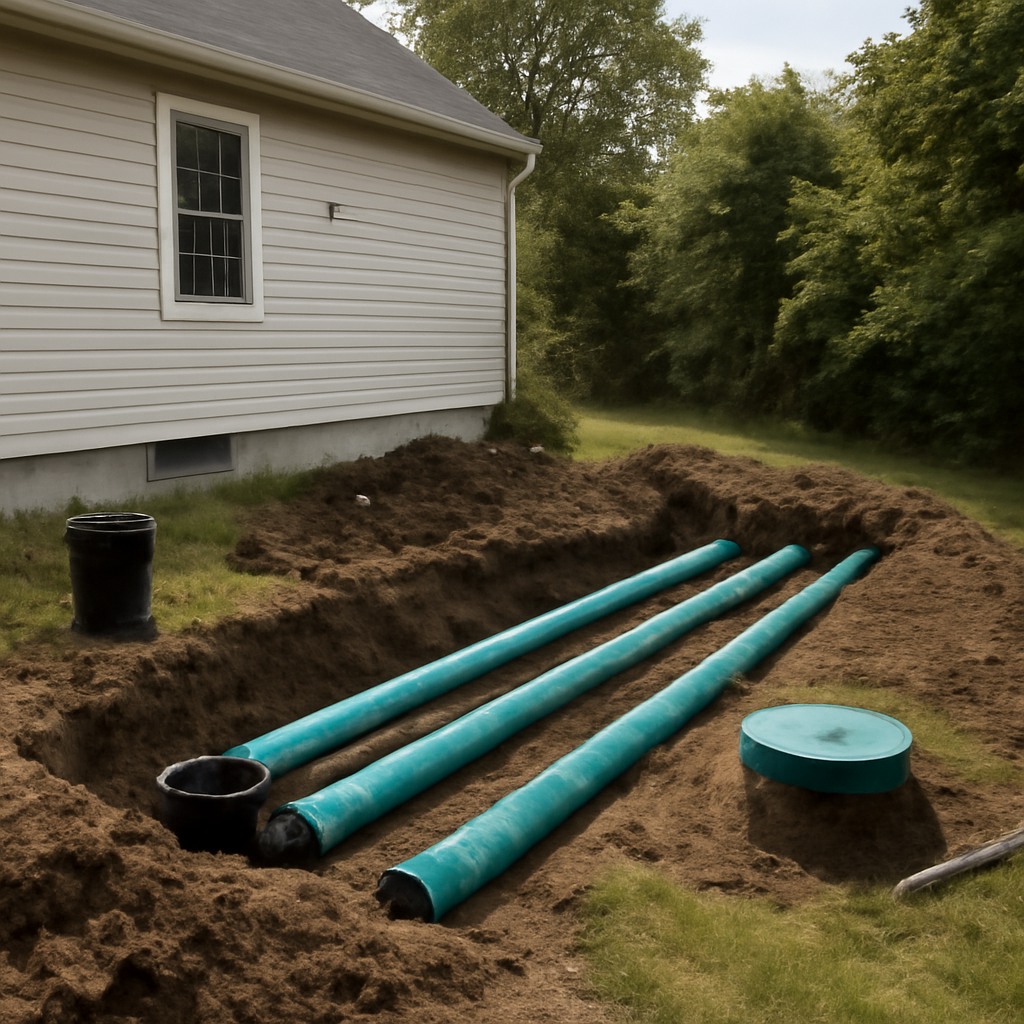
Most septic owners never think about the leach field until the lawn over it turns soggy or a drain starts gurgling. By then, the field may have been struggling for months. The leach field, also called the drain field or soil absorption field, is the part of a septic system that disperses treated wastewater into the soil, and it is often the most expensive component to fix. This guide explains what the field does, the warning signs of failure, common causes, how professionals diagnose the problem, leach field repair options from resting the field to full replacement, how Colorado county permitting works, and what it all tends to cost. It also covers prevention, since many failures trace back to habits that can be changed. Cost figures are rough 2026 estimates that vary with soil, site, system type and county requirements.
Part of our Plumbing & Water guide — start there for the full picture →
What a Leach Field Does and When It Needs Repair
A conventional septic system has two main parts. The tank holds household wastewater long enough for solids to settle and grease to float. The liquid, called effluent, then flows to the leach field. According to the EPA’s description of how septic systems work, the drainfield is a shallow, covered excavation in unsaturated soil where pretreated wastewater is discharged through piping onto porous surfaces, and the soil accepts, treats and disperses it as it percolates down. The EPA also notes that an overloaded drainfield can flood, sending sewage to the ground surface or causing backups in toilets and sinks.
A leach field needs repair when it can no longer accept effluent as fast as the house produces it. That usually shows up as standing water, odors, slow drains or backups. Some problems, such as a crushed pipe or a clogged distribution box, can be fixed with targeted repairs. Others, such as soil that has become sealed by a thick biological layer or solids, may require resting, rejuvenation or a new field.
Signs of a Failing Leach Field
Warning signs often appear gradually, and several are easy to misread as ordinary lawn or plumbing issues.
- Soggy ground or standing water over or near the field, especially when it has not rained.
- Unusually green, lush grass in strips over the trenches, even in dry weather.
- Sewage odors outdoors near the tank or field, or indoors near drains.
- Slow drains throughout the house, rather than in one fixture.
- Gurgling sounds in pipes or toilets.
- Sewage backups into the lowest drains, such as basement floor drains or tubs.
- Surfacing effluent, meaning gray or black liquid on the ground surface.
- High liquid level in the tank found during pumping, with effluent flowing back from the outlet.
- Bacteria or nitrate problems in a nearby well, which can point to inadequate treatment.
Some of these overlap with other issues. Standing water can come from poor grading or downspouts; our guide to yard drainage problems helps separate the two. A single slow drain is more likely to be a local clog. Surfacing sewage, though, is a health concern, and people and pets should stay away from the area until it is evaluated.
Common Causes of Leach Field Failure
Hydraulic overload
Sending more water to the system than it was designed to handle is one of the most common causes. Running several loads of laundry back to back, leaky toilets, a household larger than the system was designed for, or roof drains and sump pumps discharging near the field can all saturate the soil. The EPA’s septic care guidance notes that a single leaky or running toilet can add as much as 200 gallons of water per day. Spreading out laundry loads helps, and our guide to washing machine drain problems covers related laundry plumbing.
Skipped pumping
When a tank is not pumped often enough, sludge and scum can build up until solids pass into the field and clog the soil and pipes. The EPA says household septic tanks are typically pumped every three to five years, with inspections at least every three years. Our guide to septic tank pumping cost covers how often to pump and what it costs.
Roots
Tree and shrub roots seek out moisture and nutrients in the field and can invade pipes and trenches. The EPA advises planting trees an appropriate distance from the drainfield, with a septic professional advising on that distance.
Compaction and physical damage
Driving or parking on the field compacts the soil and can crush pipes. The EPA’s guidance is direct: do not park or drive on your drainfield. Building sheds, patios, sport courts or hot tubs over the field causes similar problems.
Grease, solids and chemicals
Fats, oils, grease, wipes, coffee grounds and excessive garbage disposal use add material the tank cannot fully digest. Harsh chemicals can disrupt the bacteria that treat wastewater.
Age and biomat
Over time, a biological layer called the biomat forms where effluent meets the soil. Some biomat is normal and helps treatment, but it can thicken until the soil can no longer absorb liquid fast enough. Fields eventually reach the end of their service life, which varies widely with soil, design and use.
Site and design problems
Fields in tight clay, shallow bedrock or high groundwater, or fields undersized for the house, may fail early. Colorado’s mix of clay soils on the plains and shallow, rocky soils in the foothills can make design especially important.
How a Failing Leach Field Is Diagnosed
Diagnosis usually starts with the tank and works outward.
- Septic inspection. A professional opens the tank, checks liquid levels, sludge and scum, baffles and filters, and looks for backflow from the field. Our guide to septic tank inspection walks through what that visit includes.
- Distribution box check. A tilted or clogged distribution box can send all effluent to one trench while others stay dry.
- Camera inspection. A sewer camera run through the outlet line and laterals can reveal crushed pipe, roots, separated joints or solids.
- Probing and observation ports. Probing the trenches or checking inspection ports shows whether effluent is ponding in the field.
- Hydraulic load test. Some inspectors introduce a measured volume of water and observe how the system responds. Methods and usefulness vary, and results depend on recent use and weather.
- Soil evaluation. If replacement is likely, a soil professional or engineer evaluates soil type and percolation to design a new field.
Septic evaluation is usually a separate specialist service. The ASHI Standard of Practice lists septic and other sewage disposal systems among the items a home inspector is not required to inspect, so buyers relying on a standard inspection should schedule a septic inspection as well. Our page on specialty inspections explains how to add one.
What to Do Right Away if the Leach Field Is Failing
A struggling field rarely fixes itself, but a few immediate steps can limit damage and health risks while a professional is scheduled.
- Cut water use sharply. Postpone laundry, run the dishwasher only when full, shorten showers and fix any running toilet. Less water entering the system gives the field less to absorb.
- Keep people and pets away from wet or surfacing areas. Effluent can carry pathogens. Avoid mowing over saturated ground.
- Do not drive equipment over the field while waiting for a diagnosis, since saturated soil compacts more easily.
- Redirect surface water. Point downspouts and sump discharge away from the tank and field if they currently drain toward them.
- Skip additives as a cure. Products marketed to restore a field are not a substitute for diagnosing the cause, and some counties restrict certain chemical additives.
- Call a septic professional to inspect and, if appropriate, pump the tank. Pumping can provide temporary relief by creating storage, though it does not fix the field.
If sewage is backing up into the house, avoid contact with the water, keep children and pets out of affected rooms and stop using plumbing until the system is evaluated. Water-damaged materials that were soaked with sewage generally need professional cleanup rather than a quick wipe-down.
On a well-and-septic property, consider testing the well water if there is any chance effluent has reached the surface or the well area. Bacteria testing is relatively inexpensive and provides useful information while repairs are planned.
Leach Field Repair Options
The right fix depends on the cause, the soil and how far the failure has progressed. A septic professional can explain which options make sense for a given site.
Reduce water use and fix the source
If hydraulic overload is the problem, fixing running toilets, spreading out laundry, installing efficient fixtures and redirecting roof drains and sump pumps can give the field a chance to recover. The EPA advises keeping roof drains, sump pumps and other rainwater drainage away from the drainfield.
Pump the tank and repair components
Pumping removes solids that might otherwise move into the field. Repairs to baffles, effluent filters, a distribution box or a crushed pipe section can restore flow when the soil itself is still in decent condition.
Rest the field or use alternating fields
Some systems have two fields with a diversion valve so one can rest while the other is in use. Resting a field for an extended period can let the biomat break down and the soil recover. Adding a second field to enable alternation is sometimes an option, subject to permits and space.
Jetting and cleaning laterals
High-pressure jetting can clear solids, roots and biological growth from perforated pipes. It does not fix sealed soil, but it can help when pipes are the bottleneck.
Soil treatment and rejuvenation
Some contractors offer soil fracturing or aeration treatments intended to restore absorption. Results vary, and approaches may require county approval. Ask for evidence of results in similar soils and get any guarantee in writing.
Conversion to advanced treatment
Adding an aerobic treatment unit or other advanced treatment can reduce the load on a struggling field. The EPA describes aerobic treatment units as injecting oxygen to increase bacterial activity and notes they can work on smaller lots, with inadequate soil or high water tables, but require regular lifetime maintenance.
Replacement
When the soil is exhausted or the field is badly damaged, a new field, often in a different location on the property, is the long-term fix. Depending on site conditions, the replacement may be a conventional trench system, a chamber system, a mound or another engineered design.
Colorado Permits for Leach Field Repair
In Colorado, onsite wastewater treatment systems (OWTS) are regulated under state rules and administered locally by county or district public health agencies. Requirements differ from county to county, so the local health department is the first call. Repairs beyond routine maintenance, such as replacing a field, adding a field or installing advanced treatment, generally require a permit, a design by a qualified professional and inspections during installation.
Some counties also require a septic inspection or a use permit when a property with an OWTS is sold. Requirements in Jefferson, Douglas, Elbert, El Paso, Boulder and mountain counties are not identical, and rules change. Buyers should ask the listing agent and check the county health department’s website early in the transaction.
Site conditions shape what the county will approve. Expansive clay soils common on parts of the eastern plains can absorb effluent slowly, while thin soils over granite in the foothills may leave little depth for treatment. Steep slopes, nearby wells, streams and property lines all affect where a replacement field can go. On small or constrained mountain lots, the approved design may be an engineered system rather than a conventional trench field, which affects both cost and maintenance obligations. Ask the designer early how much of the property meets setback requirements, since that answer often decides which repair options are realistic.
Leach Field Repair Costs
Costs swing widely by site and the scope of the work. Rough 2026 ranges:
- Diagnostic inspection with camera: often a few hundred dollars, more if excavation is needed to access lines.
- Distribution box or pipe section repair: commonly around $500 to $3,000 depending on access and depth.
- Lateral jetting: often in the hundreds of dollars to around $1,500.
- Soil rejuvenation treatments: frequently quoted in the low thousands, with variable results.
- Aerobic treatment unit addition: often several thousand to $15,000 or more, plus ongoing service contracts.
- Full leach field replacement: commonly $5,000 to $20,000 or more, and engineered systems such as mounds can exceed that.
Design fees, permits, soil tests and landscaping restoration add to the total. Mountain sites with rock, steep slopes or limited access often land at the high end. These figures are estimates, not quotes; get at least two written bids.
Preventing Leach Field Problems
The EPA’s SepticSmart program and septic care guidance emphasize a short list of habits:
- Inspect and pump on schedule. Inspection at least every three years and pumping every three to five years for typical household tanks, per EPA guidance, adjusted for household size and tank size.
- Use water efficiently. Fix leaks, spread out laundry and use efficient fixtures.
- Dispose of waste properly. Keep grease, wipes, coffee grounds, chemicals and medications out of drains.
- Protect the drainfield. Do not park or drive on it, plant trees at a proper distance and keep rainwater drainage away.
- Keep records. Track pumping dates, sludge levels and repairs.
An effluent filter on the tank outlet, if the system does not have one, can help keep solids out of the field. Ask your septic professional whether one is appropriate.
Buying a Home With a Septic System
For buyers, a failing leach field can be one of the largest surprise costs in a rural or mountain purchase. Schedule a septic inspection during the inspection period, ask for pumping and repair records, confirm the location of the tank and field, and check county transfer requirements. If a problem is found, the inspection report gives a basis for negotiating repairs or credits. Our home inspector hiring guide explains how to coordinate a general inspection with septic and other specialist evaluations.
References
- How Your Septic System Works — U.S. Environmental Protection Agency
- How to Care for Your Septic System — U.S. Environmental Protection Agency
- Types of Septic Systems — U.S. Environmental Protection Agency
- Septic Systems (Onsite/Decentralized Systems) — U.S. Environmental Protection Agency
- ASHI Standard of Practice for Home Inspections — American Society of Home Inspectors
Frequently asked questions
Can a failing leach field be repaired, or does it need replacement?
It depends on the cause. Crushed pipes, clogged distribution boxes, root intrusion and hydraulic overload can often be addressed with targeted repairs, jetting or reduced water use. When the soil itself is sealed or the field is badly damaged, replacement is usually the long-term fix.
How long does a leach field last?
Service life varies widely with soil, design, household water use and maintenance. Regular pumping, water efficiency and protecting the field from vehicles and roots help it last longer. A septic professional can assess the condition of a specific field.
Does a home inspection include the leach field?
Usually not. Under the ASHI Standard of Practice, septic and other sewage disposal systems are not required to be inspected, so buyers typically hire a separate septic inspector.
Do I need a permit to repair a leach field in Colorado?
Repairs beyond routine maintenance, such as replacing or adding a field, generally require a permit from the county or district health agency that administers onsite wastewater rules. Requirements vary by county, so check locally before starting work.
How much does leach field repair cost?
Small repairs may run a few hundred to a few thousand dollars, while full replacement commonly ranges from about $5,000 to $20,000 or more. Engineered systems and difficult mountain sites can cost more. These are rough 2026 estimates.
Looking at a rural or mountain property on a septic system? Get in touch and we can help connect you with a Front Range inspector and septic specialists before you commit.