Kitchen Lighting: Layers, Circuits and Fixture Safety
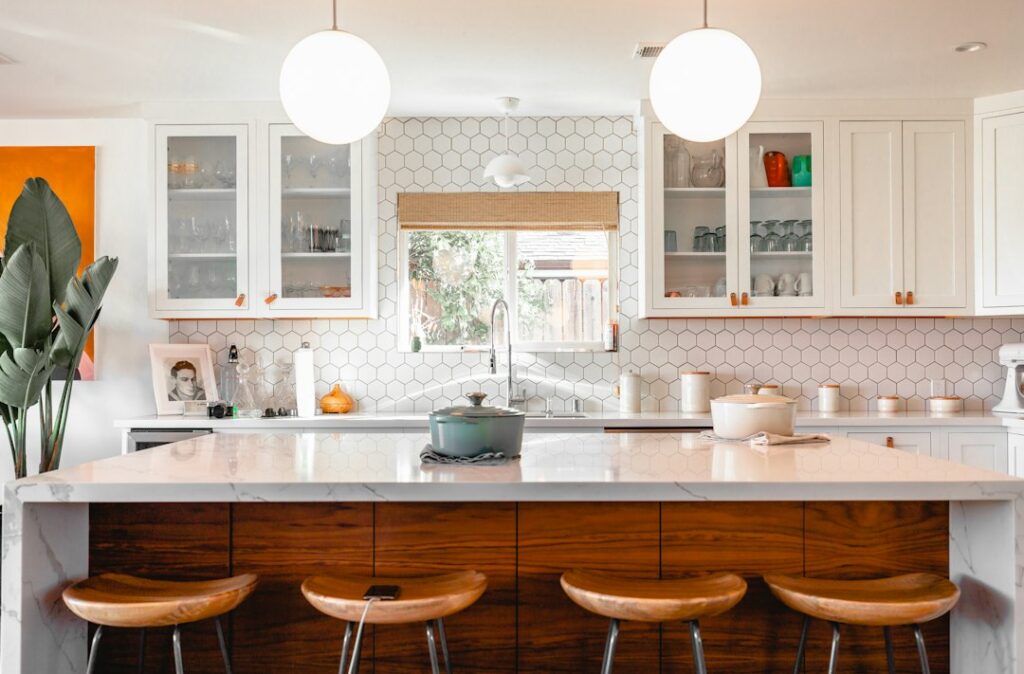
A kitchen can have beautiful cabinets and still feel awkward to cook in if the light falls in the wrong places. A single ceiling fixture in the middle of the room often leaves the counters in shadow, because the cook’s own head and shoulders block the light. Good kitchen lighting solves that with layers: general light for the room, focused light on work surfaces and a little accent light for atmosphere. Behind the design choices sit practical questions about circuits, fixture ratings, insulation contact, dimmer compatibility and the wiring that feeds it all. This guide covers the three lighting layers, under-cabinet lights, recessed cans and IC ratings, pendants and electrical boxes, LED and dimmer pairing, how ground-fault and arc-fault protection may come into play, what ENERGY STAR currently certifies, fire safety basics and broad cost ranges for Front Range homeowners and buyers.
Part of our Home Electrical guide — start there for the full picture →
The Three Layers of Kitchen Lighting
Lighting designers usually think about a kitchen in three layers. Each does a different job, and most well-lit kitchens use all three, controlled separately so they can be mixed for cooking, cleaning or entertaining.
Ambient lighting
Ambient light is the general, even illumination that lets people move through the room safely. In modern kitchens it often comes from a grid of recessed downlights, a few surface-mounted fixtures or a large central fixture. Skylights and windows contribute during the day. The goal is to avoid dark corners and harsh contrasts, not to light the countertops in detail.
Task lighting
Task lighting targets the places where food is prepared: counters, the sink, the cooktop and the island. Under-cabinet fixtures, pendants over an island, a light over the sink and the range hood’s built-in lamps are the usual sources. Task lights are positioned so they shine in front of the person working rather than behind them, which eliminates the shadow problem a single ceiling fixture creates.
Accent lighting
Accent lighting adds depth and atmosphere. Lights inside glass-front cabinets, strips above wall cabinets, toe-kick lights and small spotlights on artwork or open shelving fall into this category. Accent layers are optional, but they make an evening kitchen feel less like a workspace and can double as a soft night light.
Color temperature and brightness
LED products are labeled by color temperature in Kelvin. ENERGY STAR describes lower numbers, roughly 2200 to 3000K, as warmer, yellowish light similar to incandescent bulbs, with 3500 to 4100K reading whiter and 5000 to 6500K appearing bluer. Many kitchens use a consistent color temperature across fixtures so counters and cabinets do not look mismatched. Brightness is measured in lumens rather than watts, and task areas generally benefit from more light than surrounding floor space.
Planning a Kitchen Lighting Layout
A lighting plan is easiest to get right before cabinets go in and ceilings are closed. Sketching the kitchen to scale and marking where people actually stand to chop, wash, cook and gather shows where light is needed most.
A few planning habits tend to produce better results:
- Light the counters, not the floor. Recessed lights placed over the front edge of the counters, rather than in the middle of the walkway, reduce the shadow cast by the person working.
- Avoid glare. Glossy countertops, polished backsplash tile and dark glass reflect bright point sources. Diffused lenses, deeper trims and fixtures aimed slightly away from shiny surfaces help.
- Separate the controls. Putting ambient, under-cabinet, island and accent lights on separate switches or dimmers makes the room usable for different tasks and times of day.
- Plan switch locations. Switches at each entrance, plus convenient controls near the island, prevent walking across a dark kitchen to turn lights on.
- Think about color rendering. Fixtures with good color rendering make food, wood and paint look natural; manufacturers commonly list a color rendering index (CRI) on product specifications.
- Coordinate with other trades. Range hoods, upper cabinets, ceiling joists, ductwork and plumbing vents all compete for the same ceiling and wall space.
Open-plan kitchens add another layer of planning, because kitchen fixtures are visible from the living and dining areas. Matching color temperature and trim finishes across adjoining spaces keeps the whole area from looking patchy. For older Front Range homes with plaster ceilings or limited attic access, surface-mounted fixtures or track lighting may deliver good light with far less ceiling demolition than a full recessed grid.
Under-Cabinet Lighting
Under-cabinet lights are the most effective single upgrade for most kitchens because they put light directly on the counter in front of the cook. Options include LED tape or strip lights in aluminum channels, slim LED bar fixtures and small puck lights.
- Placement: Mounting fixtures toward the front edge of the cabinet bottom spreads light across the counter and reduces glare off glossy backsplashes.
- Hardwired vs plug-in: Hardwired systems run from a wall switch and hide the wiring, while plug-in kits are easier to retrofit but leave cords and transformers to manage.
- Low-voltage drivers: Many strip systems use a separate driver or transformer that must be accessible and rated for the load.
- Heat and grease: Fixtures near the cooktop should be rated for that location and kept clean.
The under-cabinet lighting guide goes deeper into fixture types, wiring routes and common installation mistakes.
Recessed Lights, IC Ratings and Airtight Housings
Recessed downlights, often called cans, are the most common ambient light in remodeled kitchens. They also create the most hidden questions, because they sit in the ceiling cavity next to framing, insulation and sometimes an attic.
IC-rated vs non-IC fixtures
Recessed fixtures carry a rating that says whether insulation may touch them. ENERGY STAR advises that if insulation will contact a new downlight, the fixture should be rated Type IC (insulation contact), and that non-IC models usually require at least 3 inches of clearance from insulation to maintain proper operating temperature. Older non-IC cans buried in insulation are a recurring finding in attics and are worth noting, particularly where older incandescent lamps are still in use.
Airtight housings
Older recessed cans often leak warm, humid indoor air into the attic, which wastes energy and, in cold climates, can contribute to frost and moisture in the attic. ENERGY STAR suggests choosing models rated Type AT (airtight) when downlights will sit below an unconditioned attic. That is especially relevant on the Front Range, where many single-story ranch homes and top-floor kitchens have attics directly above.
Retrofit kits and canless fixtures
Many homeowners now replace old incandescent cans with LED retrofit trims that screw into the existing socket and clip into the housing, or with thin canless wafer fixtures that mount in a hole in the drywall with a small junction box. Both should be listed for the specific use and installed according to the manufacturer’s instructions, including compatibility with the existing housing.
Pendants, Fixture Weight and Electrical Boxes
Pendants over an island or peninsula combine task lighting with a strong design statement. The practical concerns are height, spacing and support.
- Hanging height: Pendants are usually set high enough to keep sightlines clear across the island and low enough to light the surface. Manufacturers and designers offer typical ranges, adjusted for ceiling height and fixture size.
- Box rating: Every fixture mounts to an electrical box, and that box has to be rated to support the fixture’s weight. Heavy chandeliers and oversized glass pendants can exceed what a standard box is designed to hold. Boxes for ceiling fans are a separate, specifically rated category, which the ceiling fan installation guide explains.
- Sloped and high ceilings: Vaulted kitchens may need sloped-ceiling adapters and longer downrods or cords.
- Box location: Moving or adding island pendants usually means new boxes in the ceiling and new wiring, which is easier during a remodel when ceilings are open.
Swapping one fixture for another on an existing box is a common homeowner project, and the light fixture installation guide covers shutting off power, verifying the circuit is dead and checking the box before hanging the new fixture.
Dimmers and LED Compatibility
Dimmers let a kitchen shift from bright task light to softer evening light. With LEDs, compatibility matters more than it did with incandescent bulbs. ENERGY STAR notes that not every LED light works well with every dimmer switch, that certified products maintain lists of compatible dimmers, and that buyers installing new downlights on an existing dimmer should check which lights the dimmer maker recommends.
Symptoms of a mismatch include flicker, buzzing, a limited dimming range, lights that will not turn fully off or fixtures that shut off abruptly at the low end. Older incandescent-era dimmers often have minimum load requirements that a few LEDs may not meet. Replacing the dimmer with an LED-rated model, choosing dimmable fixtures and staying within the dimmer’s stated LED load are the usual remedies. The dimmer switch guide discusses dimmer types and installation.
Smart switches and wireless controls add scene settings and app control. They have their own compatibility lists, and many require a neutral wire in the switch box, which some older homes lack.
Circuits, GFCI and AFCI Considerations
Kitchen lighting is usually on general lighting circuits that are separate from the dedicated countertop receptacle circuits, though older homes may combine them in ways a modern remodel would not. Requirements for ground-fault circuit interrupter (GFCI) and arc-fault circuit interrupter (AFCI) protection in kitchens have expanded across code cycles, and the exact rules depend on which edition of the electrical code the local jurisdiction has adopted and what work is being done.
In general terms, kitchen countertop receptacles have long required GFCI protection, and newer code editions have extended both GFCI and AFCI requirements to more kitchen circuits and outlets. Lighting circuits may need AFCI protection when they are added or extended during a remodel, depending on local adoption. Under-cabinet systems that plug into countertop receptacles inherit whatever protection those receptacles have. Because these rules vary by city and county along the Front Range, the local building department and a licensed electrician are the right sources for any specific project, and permits are commonly required for new circuits and fixture additions.
Electrical Fire Safety in the Kitchen
The U.S. Fire Administration estimates that 24,200 residential building electrical fires were reported to fire departments in 2021, causing about 295 deaths, 900 injuries and more than $1.2 billion in property loss. Its home safety guidance includes keeping anything that can burn away from lamps, light fixtures and bulbs, and using bulbs that match the recommended wattage on the fixture.
Kitchen-specific warning signs worth attention include fixtures or switches that feel warm, scorch marks on trim or ceilings around a fixture, a burning smell, lights that flicker when an appliance starts, and breakers that trip repeatedly. Old cloth-insulated wiring at fixture boxes can become brittle from years of heat. Any of these deserves a look from a qualified electrician rather than a quick bulb swap.
Energy Use and ENERGY STAR Labels
LEDs have largely replaced incandescent and compact fluorescent lamps in kitchens. ENERGY STAR states that certified downlight fixtures use 90 percent less energy than traditional models using incandescent bulbs and come with a manufacturer-backed warranty of at least three years.
The label itself has changed, though. ENERGY STAR explains that efficient LED bulbs have become the standard and that EPA has ended the program for the most common light fixtures; only high-performing recessed downlights may continue to earn the label. Products with the older logo may still appear while manufacturers sell through remaining stock. For pendants, under-cabinet bars and decorative fixtures, buyers now rely more on manufacturer specifications such as lumens, color temperature, color rendering and dimming compatibility.
What a Home Inspection Covers
The ASHI Standard of Practice calls for inspecting a representative number of installed lighting fixtures, switches and receptacles, along with ground-fault and arc-fault circuit interrupters. In a kitchen, that usually means operating switches, noting fixtures that do not work, testing accessible GFCI receptacles and noting obvious hazards such as missing covers, open splices or improper fixtures. Inspectors typically cannot determine whether a box is rated for a particular fixture’s weight or trace every circuit. An attic inspection may reveal non-IC cans buried in insulation or unsealed housings. The electrical inspection hub and the broader home inspector hiring guide describe how inspectors evaluate electrical systems and what is outside a standard inspection.
Kitchen Lighting Costs
These broad 2026 estimates are for planning only. Actual prices depend on fixture selection, ceiling access, wiring changes and local electrician rates.
- LED retrofit trims for existing cans: often around $15 to $60 each, plus modest labor if an electrician installs them.
- New recessed or canless lights: commonly about $150 to $400 or more per fixture installed, more where attic access is poor or wiring is difficult.
- Under-cabinet lighting: plug-in kits can cost under $100, while hardwired systems commonly run several hundred to $1,500 or more installed.
- Pendants: fixtures range from inexpensive to several hundred dollars each, with installation on new boxes often adding a few hundred dollars per location.
- Dimmers and smart controls: typically tens of dollars to a couple hundred per switch, plus labor.
- Circuit upgrades: new circuits, panel work or AFCI and GFCI upgrades can add several hundred to a few thousand dollars.
Lighting is often bundled into a larger project; the kitchen remodel cost guide shows how it fits overall budgets.
When to Call a Licensed Electrician
Changing a bulb or swapping a fixture on an existing, properly rated box is within reach for many homeowners who follow safety steps. New circuits, added recessed lights, relocated boxes, panel work, aluminum or cloth-insulated wiring, and any sign of overheating are jobs for a licensed electrician, usually with a permit and inspection. That keeps the work aligned with the locally adopted code and protects resale.
References
- Light Fixtures (Downlights) — ENERGY STAR, U.S. Environmental Protection Agency
- Appliance and Electrical Fire Safety — U.S. Fire Administration
- ASHI Standard of Practice for Home Inspections — American Society of Home Inspectors
Frequently asked questions
What is the best lighting for a kitchen?
Most kitchens work best with layered lighting: ambient light such as recessed downlights, task light under cabinets and over the island and sink, and optional accent light. Separate switches or dimmers for each layer make the room more flexible.
Do recessed kitchen lights need to be IC-rated?
If insulation will touch the fixture, it should be rated Type IC for insulation contact. ENERGY STAR notes that non-IC fixtures usually need at least 3 inches of clearance from insulation, and airtight AT-rated models help limit air leakage into an attic.
Why do my LED kitchen lights flicker on a dimmer?
Flicker usually signals a mismatch between the LED fixtures and the dimmer, especially with older dimmers designed for incandescent loads. Checking the manufacturer's compatible-dimmer list and installing an LED-rated dimmer often resolves it.
Do kitchen lights need GFCI or AFCI protection?
It depends on the code edition adopted locally and the scope of work. Countertop receptacles have long required GFCI protection, and newer editions extend GFCI and AFCI rules to more kitchen circuits, so a licensed electrician and the local building department should confirm requirements.
How much does new kitchen lighting cost?
General 2026 estimates put new recessed or canless lights at roughly $150 to $400 or more per fixture installed, with hardwired under-cabinet systems often several hundred to $1,500 or more. Pendants, dimmers and circuit upgrades add to the total.
Buying a home with a freshly remodeled kitchen and wondering whether the lighting work was permitted and done right? Send us a note and we can help you connect with a local inspector who will check the switches, fixtures and visible wiring before closing.