Vanity Lights: Bathroom Fixture Ratings, Height and Wiring
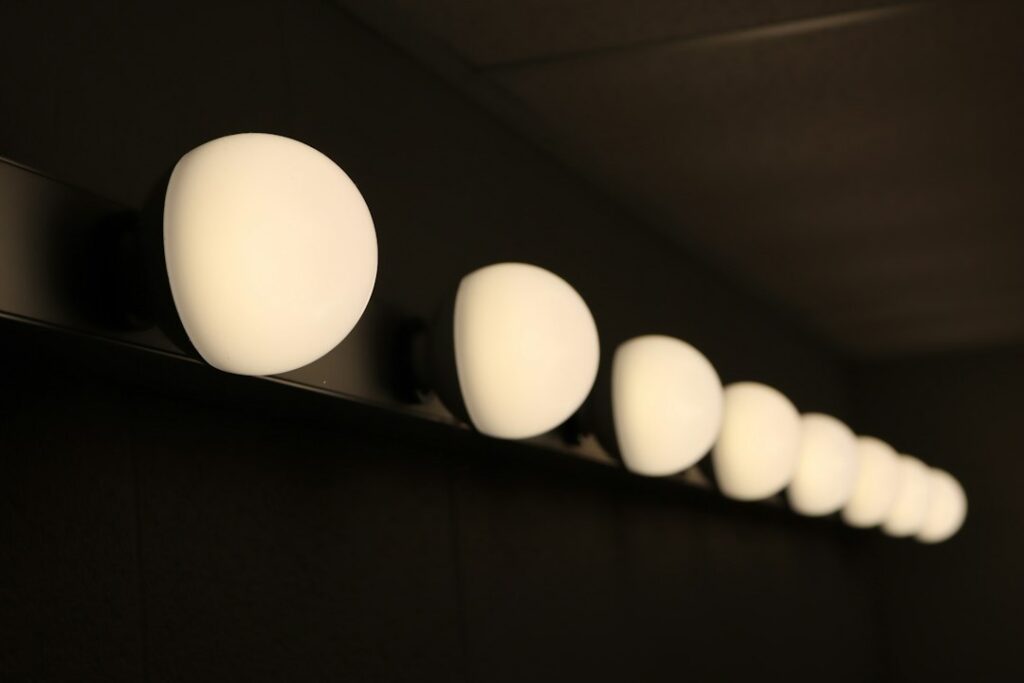
The light over or beside a bathroom mirror does more work than almost any other fixture in the house. It has to light a face evenly for shaving and makeup, survive daily bursts of steam, and connect safely to a circuit in one of the wettest rooms in the home. A poorly chosen vanity light casts shadows under the eyes, shows skin tones in odd colors, flickers on a mismatched dimmer or corrodes within a few years. A poorly installed one can hang from an unsupported box with loose splices behind the canopy. This guide covers what homeowners and buyers should know: damp and wet ratings, mounting height and side lighting conventions, color temperature and color rendering, ground-fault protection for bathroom circuits, box support, dimmers, efficiency and typical costs. It is general guidance. Electrical work should be done by a licensed electrician, and most Front Range jurisdictions require permits for new circuits and many fixture changes.
Part of our Home Electrical guide — start there for the full picture →
What Makes a Good Vanity Light
A vanity light is any fixture intended to illuminate the area in front of a bathroom or dressing mirror. The category includes horizontal bar fixtures above the mirror, pairs of wall sconces on either side, lighted mirrors with integrated LEDs and pendants hung beside the glass. The best choice depends on the size of the mirror, the layout of the room and how the space is used.
Four qualities separate a good fixture from a frustrating one:
- Location rating. The fixture must be listed for the conditions where it will be installed, which in a bathroom usually means at least damp-rated.
- Placement. Light that reaches the face from the front and sides reduces shadows. Light from directly overhead creates them.
- Light quality. Color temperature and color rendering affect how skin, hair and makeup look.
- Safe installation. A supported, accessible box, sound connections and an appropriate circuit.
The rest of this guide takes those in turn.
Damp-Rated and Wet-Rated Bathroom Fixtures
Light fixtures are listed by testing laboratories for specific environments. The common categories are dry, damp and wet locations. A dry-rated fixture is intended for spaces that do not normally see moisture. A damp-rated fixture is built to tolerate humidity and condensation, the conditions found in most of a bathroom. A wet-rated fixture can withstand direct water exposure, such as a shower spray or rain.
For a typical vanity away from the tub or shower, a damp-rated fixture is the usual choice, and many products sold as bathroom vanity lights are labeled accordingly. The rating should appear on the packaging, the specification sheet or a label on the fixture itself. Fixtures installed near a tub or shower are subject to additional code restrictions. The electrical code limits certain types of fixtures, such as hanging and cord-connected fixtures, within a defined zone above and around a tub or shower, and fixtures in that area may need to be listed for damp or wet locations. Local amendments vary, so the electrician and building department have the final word for a specific layout.
Using a dry-rated decorative fixture in a steamy bathroom can lead to corroded sockets, rusted finishes and failed internal drivers over time. Finishes matter too. Plated finishes over steel may rust where steam condenses, while solid brass, stainless and well-sealed powder coats generally hold up better.
Pendants and sconces beside the mirror
Pendant lights hung on each side of a mirror have become a popular alternative to wall sconces. They look appealing, but they are hanging fixtures, which brings the tub-and-shower zone rules into play if the vanity is close to a bathing area. The guide to pendant lights covers support, height and box requirements in more detail.
Mounting Height and Side Lighting Conventions
No single height is right for every bathroom, but designers and manufacturers tend to rely on a few rules of thumb. Treat these as starting points to be adjusted for the household, the mirror and the fixture’s own instructions.
Above the mirror
A horizontal bar fixture above the mirror is the most common arrangement. Rule-of-thumb guidance often places the fixture roughly 75 to 80 inches above the finished floor, or a few inches above the top of the mirror, so the light reaches the face without glaring into the eyes. Width is commonly chosen so the fixture is somewhat narrower than the mirror, often about two-thirds to three-quarters of the mirror’s width. In bathrooms with low ceilings or a tall mirror, these proportions may need adjusting.
Beside the mirror
Lighting from the sides at roughly face height is often recommended for grooming because it lights the face evenly and minimizes shadows under the eyes, nose and chin. Side sconces are commonly mounted with the light source somewhere around 60 to 66 inches above the floor, with spacing of roughly three feet apart or the width of the mirror. A single overhead fixture is easier to wire, but it tends to produce the shadowing that makes shaving and makeup harder.
Layering with other light
Vanity lighting works best as one layer among several. Recessed fixtures over the shower and the center of the room provide general light, while the vanity fixture provides task light at the mirror. The guide to recessed lighting covers can ratings and placement. A night light or low-level LED strip is a useful third layer for nighttime trips.
Lighted mirrors as an alternative
Mirrors with integrated LED panels around the perimeter or behind frosted bands put light directly in front of the face, which can be very even. Many include anti-fog heaters, touch switches and selectable color temperature. They come with their own considerations. A hardwired lighted mirror needs a box positioned behind the mirror where the manufacturer specifies, with connections made in the mirror’s wiring compartment or the box itself. Plug-in models need a nearby receptacle and a plan for hiding the cord. Because the light source is built in, a failed driver or LED strip can mean replacing the entire mirror, so warranty terms and the availability of replacement drivers are worth checking before purchase. Lighted mirrors also tend to be heavy, so the mounting cleat or bracket should be anchored to framing rather than drywall alone.
Color Temperature and Color Rendering
Two specifications determine whether a vanity light makes skin and clothing look natural.
Color temperature, measured in Kelvin (K), describes how warm or cool the light appears. ENERGY STAR’s lighting guidance explains that lower Kelvin numbers look more yellow or warm, while higher numbers look whiter or bluer. It describes products made to match the color of incandescent bulbs at 2200 to 3000K, whiter light at 3500 to 4100K, and bluer white light at 5000 to 6500K. For bathrooms, many people prefer something in the warm-to-neutral range, often around 2700K to 3500K, though preferences vary. Some fixtures offer selectable color temperature with a switch, which is useful for testing what looks best in a given room.
Color rendering index (CRI) describes how accurately a light source shows colors compared with a reference source, on a scale up to 100. Higher values generally mean more natural-looking skin tones and more reliable color matching for makeup. Lighting designers often recommend a CRI of 90 or higher for vanity lighting. The CRI should be listed on the fixture’s specification sheet.
Brightness is measured in lumens, not watts. A vanity that feels dim with one fixture may need a higher-lumen model or a second source of light, such as side sconces.
GFCI Protection and Bathroom Circuits
Bathrooms combine water, grounded plumbing fixtures and electrical devices, which is why the electrical code requires ground-fault circuit interrupter protection for bathroom receptacles. A GFCI monitors the current on a circuit and trips when it detects current leaking to ground, such as through a person.
Whether the vanity light itself must be GFCI-protected depends on where it is located and on the code edition and local amendments in effect. Lighting near tubs and showers may have specific requirements, and some fixture manufacturers require GFCI protection in their installation instructions. In practice, many bathroom lights end up on a circuit that is protected anyway. If the bathroom receptacle has stopped working, a tripped GFCI elsewhere on the circuit is a frequent cause. The guide to a GFCI outlet not working covers troubleshooting.
Bathroom circuits also have capacity requirements. Code generally requires at least one dedicated 20-amp circuit for bathroom receptacles, and hair dryers and curling irons can draw a significant share of that. Lighting is often on a separate circuit. An electrician can confirm whether an existing bathroom’s circuits meet current expectations, which is a common question in older Denver-area homes that have been updated piecemeal over the decades.
Box Support and Wiring
Every vanity light connects to an electrical box in the wall. The box contains the splices, supports the fixture’s mounting bracket and keeps any arcing or heat away from the wall framing. Common problems include:
- No box at all. Older or amateur installations sometimes have cables coming straight out of the drywall with splices tucked behind the canopy.
- Loose or unsupported boxes. Old-work boxes held only by drywall tabs can pull loose under a heavier fixture.
- Off-center boxes. A box that is not centered over the mirror leads to awkward fixture placement or an extra hole when the fixture is moved.
- Overcrowded boxes. Too many conductors and splices in a small box can damage insulation.
The guide to junction boxes explains box fill, accessibility and support. For the replacement process itself, including turning off the circuit, verifying it is de-energized and making connections, see the guide to how to install a light fixture.
Converting a single fixture over the mirror into two side sconces usually requires two new boxes and running cable to each, which means opening drywall. That work is easiest during a remodel. When a medicine cabinet sits in the same wall, the cabinet and the light boxes have to be planned together. The guide to choosing a medicine cabinet covers what else is often inside that wall.
The U.S. Fire Administration’s appliance and electrical safety messages include keeping anything that can burn away from light fixtures and bulbs, and using bulbs that match the recommended wattage on the fixture. That advice applies to vanity fixtures that take replaceable bulbs. An oversized bulb in an enclosed glass shade can overheat the socket and wiring.
Dimmers and LED Compatibility
A dimmer lets a vanity light serve two roles: bright task lighting in the morning and softer light at night. LEDs complicate dimming. ENERGY STAR notes that not every LED light works well with every dimmer switch, and that certified products maintain lists of compatible dimmers. A mismatched dimmer can cause flickering, buzzing, a limited dimming range or lights that will not turn fully off.
Before buying a fixture for an existing dimmer, check the fixture’s specification sheet for dimmer compatibility, and check the dimmer manufacturer’s list of tested lamps and fixtures. Integrated LED fixtures specify a dimming method, and the dimmer must match it. Some fixtures are not dimmable at all. The guide to dimmer switches explains the main types and the compatibility issues that cause most callbacks.
ENERGY STAR and LED Efficiency
For years, ENERGY STAR certification was a shortcut for identifying efficient bathroom fixtures. That has changed. ENERGY STAR explains that because it is no longer possible to purchase inefficient light bulbs for most household applications, EPA has ended the ENERGY STAR program for the most common light fixtures, and only high-performing recessed downlights may continue to earn the label. Shoppers may still see older packaging with the logo as stock sells through.
LED technology itself remains the efficient choice. ENERGY STAR’s LED guidance states that LED lighting products produce light up to 90 percent more efficiently than incandescent bulbs. It also explains that LEDs typically do not burn out abruptly. Instead, their brightness declines gradually, and an LED’s rated lifetime is based on when light output falls by 30 percent. Heat management is described as the most important factor in LED life, which is one reason to avoid trapping integrated LED fixtures inside enclosed spaces or using them outside their rated conditions.
Integrated LED vanity fixtures have one practical drawback: when the LED module or driver fails, the whole fixture may need replacement. Fixtures that take standard replaceable LED bulbs avoid that problem, at some cost in compact design.
What Inspectors Check and What It Costs
The ASHI Standard of Practice requires home inspectors to inspect a representative number of installed lighting fixtures, switches and receptacles, as well as ground-fault and arc-fault circuit interrupters. During an inspection, a vanity light is typically turned on and off and observed. Common findings include inoperable fixtures, loose fixtures, missing globes, signs of overheating, receptacles without ground-fault protection and exhaust fans that are missing or not working. Inspectors do not take fixtures apart to look into the box, so hidden splices may not be discovered. The electrical inspection hub covers what inspectors evaluate in more depth, and the broader home inspector hiring guide explains how to choose an inspector.
Costs depend on the fixture, the wall and local labor rates. The following are general 2026 ranges for planning, not quotes:
- Fixture. Basic damp-rated bar lights can be quite inexpensive. Mid-range fixtures with better finishes and high-CRI LEDs often cost from around a hundred dollars to a few hundred. Designer sconce pairs and lighted mirrors can cost considerably more.
- Like-for-like replacement. Swapping a fixture on an existing, properly supported box is often a modest labor charge, sometimes billed as a minimum service call.
- New box locations. Moving the box, adding side sconces or centering a box over a new mirror requires opening walls, running cable and patching, which adds labor and finishing costs.
- Circuit upgrades. Adding ground-fault protection, a new circuit or a dimmer adds to the bill.
When the vanity light is part of a larger remodel, opening walls once for the light, medicine cabinet and receptacles is usually the most cost-effective approach.
References
- Light Fixtures (Downlights) — ENERGY STAR
- Learn About LED Lighting — ENERGY STAR
- Appliance and Electrical Fire Safety — U.S. Fire Administration
- ASHI Standard of Practice — American Society of Home Inspectors
Frequently asked questions
Does a bathroom vanity light need to be damp-rated?
In most bathrooms, yes. A damp-rated fixture is built to tolerate humidity and condensation. Fixtures near a tub or shower face additional code limits and may need a damp or wet rating, so check with an electrician.
How high should a vanity light be mounted?
A common rule of thumb places a bar light roughly 75 to 80 inches above the floor, a few inches above the mirror. Side sconces are often placed around face height, roughly 60 to 66 inches. Adjust for the household and the fixture's instructions.
What color temperature is best for a bathroom vanity?
Many people prefer warm to neutral light, often around 2700K to 3500K, with a CRI of 90 or higher for natural skin tones. Selectable-color fixtures make it easy to test options in the actual room.
Why does my LED vanity light flicker on a dimmer?
The dimmer and the LED fixture are probably not compatible. ENERGY STAR notes that not every LED works with every dimmer. Check both manufacturers' compatibility lists and replace the dimmer or fixture if needed.
Are vanity lights still ENERGY STAR certified?
Generally no. EPA ended the ENERGY STAR program for most common light fixtures, keeping only high-performing recessed downlights. LED vanity fixtures are still far more efficient than incandescent options.
Want a second set of eyes on bathroom wiring before closing on a home? Get in touch here and we can connect you with a vetted Front Range inspector.