How to Test Radon in Home: A Plain-Language Guide

Radon is a colorless, odorless radioactive gas that seeps from soil into the lowest livable level of a home, and Colorado sits inside EPA Zone 1 — the highest-risk zone in the country. The Colorado Department of Public Health and Environment (CDPHE) reports that roughly half of homes tested statewide read above the EPA action level of 4 pCi/L. This guide explains how to test radon in home conditions using a homeowner-friendly procedural walkthrough: pick a kit, place it, wait, ship the canister to a lab, and read your result. The information summarizes EPA and CDPHE guidance current as of 2026 — consult a certified mitigation professional for elevated results and your physician for any symptoms.
Part of our Radon Levels guide — start there for the full picture →
How to Test Radon in Home: The Short Procedural Answer
The fastest path for a homeowner is a short-term charcoal canister test. Buy a kit at a hardware store or order one from a state-approved supplier. Most kits cost $15 to $30 and include the lab analysis fee. Open the canister in the lowest livable level of the home — usually a finished basement — at least 20 inches above the floor and 12 inches from an exterior wall. Leave it undisturbed for 48 to 72 hours under closed-house conditions, then seal it and mail it overnight to the lab. Results arrive by email within 5 to 10 business days. If the reading lands at or above 4 pCi/L, the EPA recommends mitigation; readings between 2 and 4 pCi/L warrant consideration.
Choosing a Test Kit
Two consumer formats dominate the Front Range market. Charcoal canisters absorb radon decay products over 48 to 96 hours and produce a single short-term snapshot. Alpha-track detectors use a thin polymer film that records alpha particle hits across 90 days or longer, yielding a more representative long-term reading. CDPHE and the National Radon Program Services sell long-term kits at low cost; short-term kits are also stocked at most Front Range hardware retailers.
If a result is needed quickly for a real-estate transaction, short-term testing is the standard. Homeowners who want to characterize the home across changing seasons should use an alpha-track kit. A continuous radon monitor (CRM) is a third option for households that want ongoing visibility, though entry-price consumer CRMs run $150 to $250.
Where to Place the Test
Placement is the single biggest source of testing error. The EPA recommends placing the detector in the lowest level used regularly — a finished basement counts, but an unfinished crawl space does not. Pick a room used at least eight to ten hours a week. The detector should sit 20 inches above the floor, 12 inches from any exterior wall, four inches from other objects, and out of direct sunlight or drafts. Bathrooms, kitchens, laundry rooms, and closets do not qualify because humidity and airflow patterns skew results.
Front Range homes with walk-out basements often produce wildly different readings between the lowest finished bedroom and the upstairs living room. Test the level that is occupied — not the level that is convenient.
Closed-House Conditions Explained
Short-term tests require closed-house conditions for at least 12 hours before the test begins and throughout the test window. That means windows and exterior doors stay shut except for normal entry and exit. Whole-house fans and window fans are off. HVAC systems run normally because central heating and cooling are part of the home’s standard operating pattern.
Sub-slab radon enters through floor cracks, the slab-wall joint, sump pits, and plumbing penetrations. Open windows dilute that signal and produce artificially low readings — useless for deciding whether to mitigate. The closed-house requirement creates a worst-case scenario the EPA can compare against the 4 pCi/L action level.
Step-by-Step Test Procedure
Day Zero: Close the House
Twelve hours before opening the kit, close windows and exterior doors and turn off whole-house fans. Run HVAC normally. Note the start time you intend to deploy.
Day One: Deploy the Canister
Wear clean hands. Open the foil pouch, remove the canister, and place it on a flat surface in the lowest livable room. Record the deployment date, time, address, and test location on the chain-of-custody form included with the kit. Avoid touching the open face of the canister.
Days Two and Three: Leave It Alone
Do not move the canister. Continue closed-house conditions. Pets and children should be kept from disturbing the unit. Severe storms can affect readings, so the EPA recommends avoiding tests during predicted high winds. Front Range chinook events can change indoor pressure differentials enough to matter.
Day Three or Four: Close and Ship
At the end of the test window — typically 48 or 72 hours, exactly as the manufacturer specifies — close the canister, seal it inside the prepaid lab envelope, complete the form, and drop it at the post office the same day. Radon-222 has a 3.8-day half-life, so delays in shipping reduce signal and bias the result low.
Reading the Lab Result
Most labs return a single number in picocuries per liter (pCi/L). The EPA action level is 4 pCi/L. Readings at or above that level call for mitigation. Readings between 2 and 4 pCi/L are the “consideration” range where homeowners may reasonably choose to mitigate, especially in Colorado where bedrock uranium concentrations push baseline radon high. Readings below 2 pCi/L are generally considered acceptable, though the EPA notes no level of indoor radon is risk-free.
One short-term test is not the final word. EPA recommends a confirmatory second test if the first reading is elevated. If two short-term tests average above 4 pCi/L, or a long-term test exceeds 4 pCi/L, the home should be mitigated. The pillar guide on radon testing in Colorado covers how the state regulates licensed mitigators.
Common Errors to Avoid
Several homeowner mistakes routinely invalidate test results. Placing the kit in a bathroom or laundry room voids the test because of humidity. Opening windows during the test dilutes the radon and produces falsely low numbers. Running a whole-house fan does the same. Letting a kit expire on a shelf before deployment biases the result low because the detection medium degrades. Mailing the canister days after the test ends loses signal because of decay.
Another frequent error is testing the wrong floor. A reading from the upstairs guest bedroom is not actionable if the family lives on a basement-level walkout. Test where the family actually sleeps and spends time. For deeper context on basement testing logic, see choosing the right test location.
When to Hire a Professional Instead
Real-estate transactions in Colorado typically use a professional radon measurement specialist. Licensed pros deploy continuous radon monitors that log hourly readings for 48 to 96 hours, then generate a tamper-evident report meeting EPA Protocols for Real Estate Transactions. Pro tests cost $135 to $200 on the Front Range and are usually required by lenders or buyers’ agents. Compare DIY versus pro decision logic at the DIY radon testing framework guide and review the in-batch home radon inspection overview for service-style testing.
What to Do With a High Result
A result at or above 4 pCi/L is a call to action, not a panic signal. The standard mitigation system in Colorado is active sub-slab depressurization: a 4-inch PVC pipe drawn from beneath the slab, vented above the roofline, with an inline fan pulling soil gas out before it can enter the home. Front Range installation costs typically run $1,200 to $2,500. Post-mitigation testing should verify the system brought levels below 4 pCi/L. Licensed Colorado mitigators are listed at cdphe.colorado.gov.
Between confirming the elevated result and starting the mitigation install, basic interim steps reduce exposure marginally. Keep basement bedrooms ventilated where possible. Use the lower-level rooms less for sustained sleeping. Avoid running combustion appliances that create indoor negative pressure — wood stoves, gas-fueled fireplaces with no outdoor combustion air supply — because they amplify soil-gas inflow. These are short-term harm-reduction measures, not a substitute for mitigation.
Seasonal Re-Testing on the Front Range
Colorado winter readings often run two to three times higher than summer readings in the same home. The stack effect pulls more soil gas through the slab when the home is warm and the outdoors is cold. A homeowner whose July test reads 3.5 pCi/L should not assume the home is fine — a January re-test could read 7 to 9 pCi/L. CDPHE recommends winter-season testing whenever the goal is to characterize worst-case exposure.
For households torn between mitigating and waiting, a second short-term test in the opposite season produces useful data. Two seasonal short-term tests averaging above 4 pCi/L satisfies the EPA’s two-test confirmation standard and supports a mitigation decision.
What the Lab Report Includes
A standard charcoal-canister lab report shows the test date, deployment time, retrieval time, lab receipt date, kit serial number, reported pCi/L, and the lab’s measurement uncertainty band. Reputable labs include a ±10 to ±25 percent uncertainty figure at the action level. A reading of 4.2 pCi/L with ±20 percent uncertainty spans 3.4 to 5.0 pCi/L — straddling the action threshold and warranting a confirmatory test.
Save the PDF and the original kit packaging. If the result later becomes part of a real-estate disclosure or a mitigation contractor’s pre-install reference, the documentation matters.
More Questions About Radon Tests at Home
How much does a radon test cost?
A DIY radon test kit typically costs about $15 to $50, often including the lab fee, while a professional radon test typically costs about $150 to $300, according to industry estimates.
Continuous monitors for home use cost more but can be reused. Some state programs offer free or discounted kits. Professional testing is common for real estate transactions because certified testers use calibrated continuous monitors with tamper detection. For most homeowners, a low-cost kit from a hardware store or the state radon program is the sensible first step, followed by a second test if the result is near the action level.
Are home radon detectors worth buying?
Home radon detectors can be worth buying for long-term monitoring, tracking seasonal changes, and confirming a mitigation system keeps working, but a lab-analyzed test is still preferred for major decisions.
Consumer detectors need time to stabilize and are most useful for averages over weeks. They help homeowners spot rising levels between formal tests and confirm that a mitigation fan keeps working. A detector is less useful as a one-time screening tool, since a lab-analyzed kit costs far less and gives a certified result. Households planning to test repeatedly, or living in high-radon areas, get the most value from owning one.
Can radon levels be high in summer?
Yes, radon levels can be high in summer, especially in homes with air conditioning running and windows closed, though many homes see their highest levels in winter.
Weather, soil moisture, and HVAC use all affect radon. A long-term test averages these changes. Short-term summer tests still provide useful screening, but a low summer reading is worth confirming with a winter test or a long-term test, since many homes read higher once the heating season starts and the stack effect increases. Testing in both seasons gives a fuller picture of year-round exposure.
Should the HVAC be off during a radon test?
No, the HVAC system can usually run normally during a radon test, but fans that bring in outside air, such as whole-house fans and window fans, should be turned off.
Heat recovery ventilators may need special handling depending on test protocols. Normal heating and cooling help represent typical conditions. Follow the kit instructions. Avoid running fireplaces heavily or opening windows for ventilation during the test. Dehumidifiers, air conditioners in recirculation mode, and furnaces are fine. Note on the test form anything unusual, such as a long power outage or a window left open, so the result can be judged fairly.
References
- A Citizen’s Guide to Radon — U.S. Environmental Protection Agency
- Colorado Radon Program — Colorado Department of Public Health and Environment
- Radon and Lung Cancer Risk — American Lung Association
- About Radon — Centers for Disease Control and Prevention
Frequently asked questions
How long does a short-term radon test take?
A standard charcoal-canister short-term test runs 48 to 72 hours under closed-house conditions. Some kits allow up to 96 hours. Ship the canister to the lab the same day the test ends because radon-222 decays with a 3.8-day half-life.
Where in the home should the test be placed?
Place the detector in the lowest level used regularly, 20 inches above the floor, 12 inches from any exterior wall, and four inches from other objects. Avoid bathrooms, kitchens, laundry rooms, and closets. The room should be used at least eight hours a week.
What does a 4 pCi/L reading mean?
The EPA considers 4 pCi/L an action level — mitigation is strongly recommended at or above that number. Readings between 2 and 4 pCi/L fall into a consideration range where many Colorado homeowners choose to mitigate because bedrock uranium pushes baseline radon levels high.
Can I test radon myself or do I need a professional?
DIY testing with a $15 to $30 kit is appropriate for first-time screening and post-mitigation verification. Real-estate transactions usually require a licensed measurement specialist running a continuous radon monitor. CDPHE maintains a list of certified professionals.
Is radon testing required by law?
Radon testing is not federally required for most homes, but some states require testing in certain settings, such as schools, child care centers, or real estate transactions, and many require disclosure of known results. Checking state rules before selling or renting helps.
Can you test radon in a condo?
Yes, condo owners can test for radon, especially in ground-floor units. Upper-floor condos usually have lower levels. Mitigation in condos may require building management involvement and approval from the homeowners association, since systems can affect common areas.
Does a radon test detect other gases?
No, a radon test measures only radon. Other gases, such as carbon monoxide or natural gas, require separate detectors. Every home with fuel-burning appliances or an attached garage should have carbon monoxide alarms on every level and near sleeping areas.
Front Range homeowners who want a connection to a qualified local radon measurement professional can get in touch through our contact page.
Test your home for radon
Radon is invisible and odorless, so a test is the only way to know your level. A short-term kit gives a first reading in days; a digital monitor tracks it over time.
| Product | Why | Buy |
|---|---|---|
 AirChek Charcoal Radon Test Kit | Lab fee usually included; EPA short-term protocol. | Amazon — $21.95 |
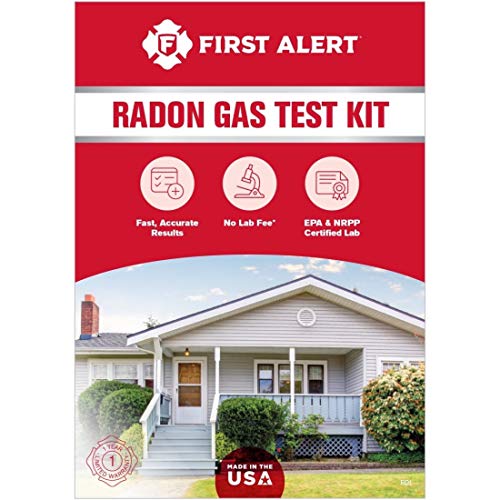 First Alert RD1 Radon Test Kit | Widely stocked; 48-hour charcoal test. | Amazon — $17.95 |
 Airthings Corentium Home | Digital monitor with a long-term average. | Amazon — $99.99 |