How to Test for Radon in House: Whole-Home Strategy Guide

The straightforward EPA-recommended approach to testing radon in a house is to place a single device on the lowest occupied level, follow closed-house conditions, and run a 48-hour short-term test. That single-level approach answers the basic question — is the home above or below EPA’s 4 pCi/L action level — and produces the data needed for a mitigation decision. But a fuller whole-house testing strategy adds value for larger or multi-story homes where exposure varies floor by floor and where a single test does not capture the variability. This guide covers both approaches, when each is appropriate, and how to deploy a multi-level test correctly. This guide summarizes EPA and CDPHE guidance current as of 2026 — consult a certified radon measurement professional for any test that will support a real-estate or remediation decision.
Part of our Radon Levels guide — start there for the full picture →
How to Test for Radon in House: The Lowest-Occupied-Level Approach
The standard EPA protocol calls for testing the lowest occupied level of the home. In a home with a finished basement used as living space, the basement is the test location. In a slab-on-grade home, the main floor is the test location. In a home with a crawl space and main floor only, the main floor is the test location. The lowest occupied level is the conservative measurement — it captures the highest typical reading in the home and produces the worst-case data for mitigation decisions.
This single-level approach is sufficient for most real-estate transactions and most homeowner self-testing. Front Range buyers running a 48-hour test during the home-inspection objection window get a lowest-occupied-level result that is directly comparable to the EPA action threshold. If the test reads above 4 pCi/L, mitigation is warranted; if below, no immediate mitigation is needed though long-term follow-up may still be worthwhile in the 2-4 pCi/L borderline range. The EPA radon measurement protocols detail the single-level approach.
When Whole-House Testing Is Worthwhile
A multi-level whole-house test deploys radon detectors on every occupied level simultaneously — basement, first floor, second floor — and analyzes them together. This approach is valuable in three scenarios. First, large multi-story homes where exposure may vary substantially between levels and where occupants spend significant time on upper floors (bedrooms typically). Second, homes with unusual floor plans, such as split-level designs common in older Front Range suburbs, where standard EPA placement guidance is less obvious. Third, homes where the lowest occupied level is rarely used and the actual occupied space is one or two floors above.
The data from a multi-level test reveals how radon distributes through the home. A typical Front Range two-story result might show 12 pCi/L in the basement, 6 pCi/L on the first floor, and 3 pCi/L on the second floor. The basement reading triggers mitigation; the multi-level data confirms that mitigation will benefit every occupied level in the home.
Multi-Level Test Deployment
Each level gets its own EPA-compliant placement — at least 20 inches above the floor, 12 inches from exterior walls, and 4 feet from windows, exterior doors, and HVAC vents. All devices are deployed at the same time and retrieved at the same time so the readings represent identical environmental conditions. The closed-house protocol applies to the entire home, not just the test rooms; windows and exterior doors remain closed except for normal entry and exit throughout the test window.
For accurate cross-level comparison, the same device type should be used on every level. Mixing alpha-track on one level with CRM on another introduces analytical-method variation that complicates interpretation. Most Colorado measurement contractors deploy CRMs because the hourly data trace lets the inspector identify any anomalies during the test.
Why Upper Floors Read Lower
Upper floors typically register lower radon than the basement for two reasons. First, distance from the soil-gas source — radon decays with a half-life of 3.8 days, so concentration drops as gas migrates upward through the structure and diffuses with interior air. Second, air mixing — upper floors typically experience more air exchange through window operation and HVAC duct distribution than basements, which dilutes the radon that does reach them.
The pattern is consistent enough that some homeowners are tempted to test only on upper floors to produce a more favorable result. EPA’s protocol explicitly rejects this approach because it understates the worst-case exposure. The basement reading is the conservative metric, and mitigation should be sized to bring that reading below the action level.
Closed-House Conditions Across the Whole Home
The closed-house requirement extends to every level being tested. Windows and exterior doors closed except for normal entry and exit, HVAC operating normally, and the test starting at least 12 hours after closed-house conditions are established. For a multi-level test in a large home, the occupants must commit to maintaining closed-house conditions on every floor for the full 48-hour test window.
Tampering or accidental open-window events during the test will show up clearly on CRM hourly traces — a sudden drop in concentration corresponds to ventilation, a sudden rise corresponds to barometric pressure changes or other natural events. A certified inspector reviews the hourly data for anomalies and either flags or invalidates the test result if tampering is evident.
Single-Family vs Townhome vs Condo Testing
Single-Family Detached Homes
Standard EPA protocol applies — test the lowest occupied level. Multi-level testing is optional for larger or multi-story homes.
Attached Townhomes
Townhomes share foundation walls with adjacent units, but each unit has its own slab-soil contact area. Test the lowest occupied level of the unit using the same protocol as a single-family home. Soil-gas mitigation in attached townhomes may need to account for shared foundation conditions.
Condominiums Above the First Floor
Condos above the first floor have minimal direct radon entry from soil, though radon can still migrate up through shared building stacks and elevator shafts. EPA still recommends testing because actual concentrations vary by building. Place the device in the unit’s main living area at standard placement height.
Short-Term vs Long-Term Whole-House Testing
The 48-hour short-term test is the standard for whole-house data collection in a transaction context. For non-transaction monitoring, long-term alpha-track detectors deployed on each level for 90 to 365 days produce more representative annual-average data. The longer duration smooths out seasonal variation and weather-event spikes that dominate snapshot results. The long-term radon testing guide covers the multi-month options in detail.
Many Front Range homeowners use both approaches in sequence. A 48-hour multi-level test during home inspection produces immediate decision data. After move-in, alpha-track detectors deployed for 6 to 12 months on each level produce refined annual-average estimates that confirm or refine the initial result.
Colorado-Specific Whole-House Considerations
EPA Radon Zone 1 status means Colorado homes routinely test above the action level on initial deployment. Multi-level testing in older Front Range homes — particularly in Capitol Hill, Park Hill, Wash Park, and similar pre-WWII neighborhoods — frequently reveals strong gradients from basement to upper floors because of stack-effect-driven entry and limited air-exchange ventilation in older construction. Modern construction with tight building envelopes and balanced mechanical ventilation often shows flatter gradients.
The pillar guide on radon testing for Colorado homeowners covers the regional context, and the CDPHE radon program publishes county-by-county testing data showing the local prevalence patterns.
What the Test Result Tells You
A whole-house test produces multiple data points that together describe the home’s radon profile. The highest reading (typically the basement) drives the mitigation decision. The distribution across levels confirms that mitigation will benefit the occupied living areas. The hourly traces from CRMs reveal any test-period anomalies that should be flagged or excluded.
EPA’s recommendation is mitigation whenever any occupied level reads above 4 pCi/L, with consideration of mitigation in the 2-4 pCi/L range when reasonable. A successful active sub-slab depressurization mitigation typically drops every level of the home well below the action level, with basement readings often falling to under 2 pCi/L.
Post-Mitigation Whole-House Verification
If a mitigation system is installed, post-install verification testing should follow the same multi-level protocol as the pre-mitigation test. Each occupied level gets its own test device, all deployed simultaneously under closed-house conditions, with results compared to confirm uniform reduction across the home. EPA recommends the post-install verification within 24 hours of system commissioning and again at 30 days to confirm sustained performance.
Long-term monitoring after move-in, using alpha-track or continuous monitors, catches any future degradation of the mitigation system or development of new soil-gas pathways. American Lung Association radon resources recommend periodic re-testing as part of routine home health maintenance.
DIY Testing vs Certified Professional Testing
Homeowners running radon tests for personal monitoring rather than real-estate decisions can use EPA-recognized consumer kits without involving a certified measurement professional. Mail-in charcoal canister kits run $15 to $40 including lab analysis and produce defensible results suitable for personal decision-making. Consumer-grade continuous radon monitors from Airthings, Ecosense, and similar brands run $150 to $400 and provide ongoing real-time visibility.
For real-estate transactions, certified professional testing is generally preferred because the test result feeds into a contractual decision and any future dispute may benefit from professional chain-of-custody. The professional also handles device placement, closed-house compliance, and post-test report generation. The fee differential — $30 for a DIY kit versus $200 for a professional test — buys procedural reliability and documented compliance with EPA measurement protocols.
How Often Should the Home Be Tested?
EPA recommends initial testing on every home, with re-testing every 24 months in mitigated homes and after any significant remodel or foundation work. Colorado homes in Zone 1 warrant more frequent monitoring than national norms because of the higher baseline soil-gas potential. Many Front Range homeowners deploy alpha-track detectors annually in addition to short-term tests every two years, producing a continuous documented record of radon levels throughout occupancy.
New homeowners moving into a previously occupied home should test in the first 30 to 90 days of occupancy regardless of any seller-provided test results. The seller’s test may be old, may have been conducted under different conditions, or may have been performed on a different floor than the new owner’s typical occupied space. Independent confirmation establishes a baseline owned by the new resident.
What to Do If a House-Wide Test Shows Elevated Readings
If the whole-house test reveals readings above 4 pCi/L on any occupied level, the standard EPA recommendation is to install an active mitigation system designed to address the highest reading. The mitigation contractor designs the system based on the basement (or lowest-level) reading and verifies post-install reduction across all occupied levels. Pre-mitigation readings of 12-20 pCi/L commonly drop to under 2 pCi/L after a correctly designed active system goes into operation.
If the test reveals borderline readings (2-4 pCi/L), the decision is judgment-based rather than mandatory. EPA recommends consideration of mitigation in this range when achievable through reasonable measures, particularly for homes with children, pregnant residents, or smokers. Long-term follow-up testing often clarifies the decision by producing annual-average data that resolves the borderline question.
References
- EPA Radon Measurement Protocols — U.S. Environmental Protection Agency
- CDPHE Radon Program — Colorado Department of Public Health and Environment
- American Lung Association Radon Resources — American Lung Association
- CDC Radon Information — Centers for Disease Control and Prevention
Frequently asked questions
Do I need to test every floor?
For most homes, testing the lowest occupied level is sufficient — that location captures the highest typical reading and produces the data needed for mitigation decisions. Multi-level whole-house testing adds value for large multi-story homes or unusual floor plans.
Why do upper floors usually have lower readings?
Radon decays with a 3.8-day half-life, so concentration drops as gas migrates upward through the structure. Upper floors also typically experience more air exchange through windows and HVAC distribution, which further dilutes the radon that reaches them.
Does my condo need radon testing?
Yes — even units above the first floor can show elevated radon depending on building design. The unit's lowest occupied space (the main living area) is the test location. Concentrations vary significantly by building.
What if my test results vary widely between floors?
That pattern is normal in larger homes with strong stack effect. The highest reading drives the mitigation decision. A correctly designed sub-slab depressurization system typically reduces radon uniformly across all occupied levels.
Front Range buyers and homeowners planning whole-house radon testing can get in touch through our contact page for a connection to a vetted Colorado measurement professional.
Test your home for radon
Radon is invisible and odorless, so a test is the only way to know your level. A short-term kit gives a first reading in days; a digital monitor tracks it over time.
| Product | Why | Buy |
|---|---|---|
 AirChek Charcoal Radon Test Kit | Lab fee usually included; EPA short-term protocol. | Amazon — $21.95 |
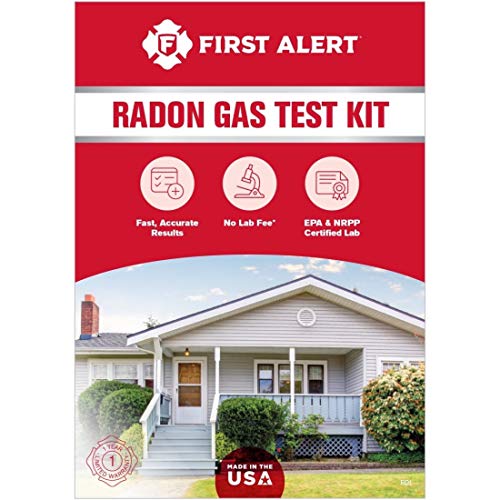 First Alert RD1 Radon Test Kit | Widely stocked; 48-hour charcoal test. | Amazon — $17.95 |
 Airthings Corentium Home | Digital monitor with a long-term average. | Amazon — $142.99 |