How Long Do Fire Extinguishers Last? Lifespan and Checks
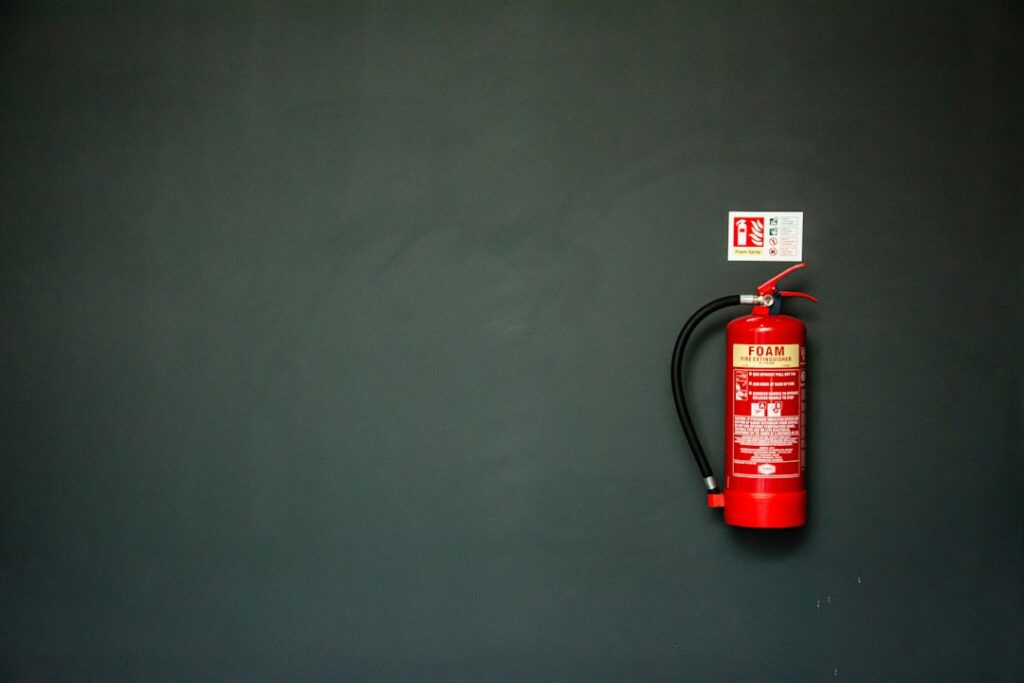
Most household fire extinguishers do not carry a hard expiration date, but disposable models are commonly replaced about 12 years after the manufacture date, while rechargeable models with metal valves can stay in service much longer as long as they pass regular inspections, are recharged after any use and are hydrostatically tested at the intervals the regulations set. Either type should be replaced or serviced right away if the gauge reads outside the green zone, the pin or seal is missing, or the cylinder is dented, rusted or recalled. This guide explains how to tell which type you own, how to read the gauge and date, what inspection and testing intervals apply, and when replacing makes more sense than servicing. It summarizes guidance from the U.S. Fire Administration (USFA), the National Fire Protection Association (NFPA) and federal OSHA rules current as of 2026; the label and manual on your specific extinguisher always take priority.
Part of our Specialty Home Inspections guide — start there for the full picture →
The Quick Answer by Extinguisher Type
How long an extinguisher lasts depends mostly on whether it was designed to be refilled. The table below gives the commonly cited service life for each category. These are typical figures drawn from manufacturer practice and the testing intervals discussed later, not guarantees for any particular unit.
| Type | How to recognize it | Typical service life | After use |
|---|---|---|---|
| Disposable (non-rechargeable) dry chemical | Plastic valve head, often labeled “non-rechargeable” or “discard after use” | Commonly replaced about 12 years from the manufacture date, sooner if the gauge drops | Replace |
| Rechargeable stored-pressure dry chemical | Metal valve head and handle, service tag or collar from a fire equipment company | Can remain in service for decades with annual maintenance, 6-year maintenance and 12-year hydrostatic tests | Recharge by a service company |
| CO2 (carbon dioxide) | Heavy cylinder, horn-shaped nozzle, no pressure gauge | Long-lived with a hydrostatic test every 5 years and weight checks | Recharge |
| Water or foam | Usually larger, stainless steel shell | Long-lived with a hydrostatic test every 5 years | Recharge |
| Aerosol-can style “fire extinguishing spray” | Looks like a spray can, no gauge | Check the expiration date printed on the can | Replace |
The USFA sums up the variation well: some extinguishers need to be shaken monthly, others need to be pressure tested every few years, and while some can be recharged, others will need to be replaced if the pressure is too low. Knowing which kind you have is the first step.
Why Extinguishers Wear Out Even When Unused
An extinguisher sitting quietly under a sink can still lose its ability to work. Several things happen over the years.
- Pressure loss. Stored-pressure units are charged with a gas, usually nitrogen, that pushes the agent out. Seals and valve O-rings can slowly let that pressure escape, and a unit without enough pressure may sputter or fail entirely.
- Powder compaction. Dry chemical agent can settle and pack at the bottom of the cylinder, especially in a vehicle or near a vibrating appliance. Many manufacturers recommend periodically inverting or shaking the unit for that reason.
- Seal and hose aging. Plastic and rubber parts harden, crack or become brittle, particularly in hot garages or cold outbuildings.
- Corrosion and physical damage. Rust, dents and damaged threads weaken the pressure vessel. Federal rules treat corrosion that causes pitting as a reason a cylinder cannot simply be retested and returned to service.
- Partial discharge. Squeezing the handle even briefly can release enough agent and pressure that the remaining charge is unreliable. Any use counts as use.
None of this is visible from across the room. That is why the monthly visual check matters more than the age on the label.
Best Fire Extinguisher for Home: our top 3 picks
| Product | Best for | Key features | Price | Buy |
|---|---|---|---|---|
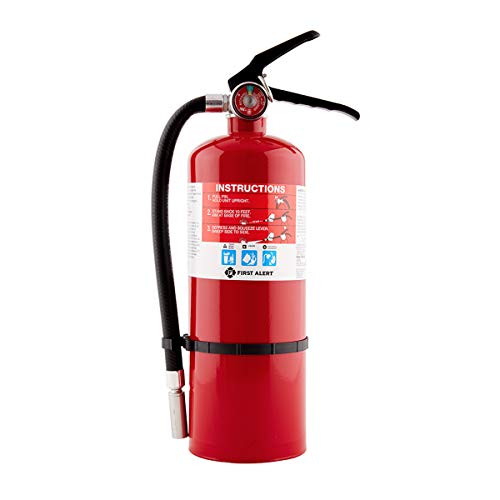
| First Alert HOME2PRO | Main level, garage and workshop |
| $42.98as of Oct 20, 2026 10:32 pm GMT+0000 | Buy now →Check current price |
| Kidde 711A Kitchen + Home Set | Kitchen grease plus whole home |
| $39.97as of Oct 21, 2026 2:46 pm GMT+0000 | Buy now →Check current price |
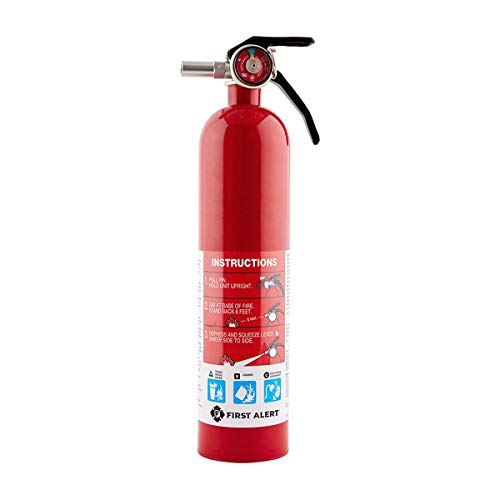
| First Alert HOME1 | Compact rechargeable unit |
| $19.98as of Oct 21, 2026 2:46 pm GMT+0000 | Buy now →Check current price |

Prices are Amazon’s listed prices as of the time shown and change often; check Amazon for today’s price. As an Amazon Associate we earn from qualifying purchases.
How to Check Your Extinguisher in Two Minutes
The USFA recommends checking extinguishers for easy access, the recommended pressure level, working parts and cleanliness. A practical monthly routine looks like this:
- Access. Confirm nothing blocks the extinguisher and that everyone in the household knows where it is. A unit buried behind cleaning supplies will not get used.
- Gauge. On models with a pressure gauge, the needle should sit in the green zone. A needle in the red on the left side means undercharged; a needle in the red on the right side means overcharged. Either one means the unit needs service or replacement.
- Pin and tamper seal. The safety pin should be in place, held by an intact plastic tamper seal. A missing seal can mean someone squeezed the handle.
- Body and hose. Look for dents, rust, cracks, chemical crusting around the nozzle, and a hose that is split or clogged. The USFA specifically advises making sure the can, hoses and nozzles are not damaged, dented or rusted.
- Label. The operating instructions and class rating should be readable.
- Shake if the manual says to. For dry chemical units, follow the manufacturer’s guidance on inverting or shaking to keep the powder loose.
CO2 extinguishers have no gauge. Their charge is checked by weight, which is a job for a fire equipment service company rather than a bathroom scale.
Finding the manufacture date
Most extinguishers carry a manufacture date stamped into the bottom of the cylinder or printed on the label, often as a two-digit or four-digit year. Rechargeable units may also carry a hydrostatic test date stamped on the cylinder and a service tag from the last maintenance visit. If you cannot find any date at all on an older disposable unit, that alone is a reasonable signal to replace it.
Inspection and Testing Intervals as Cited by Federal Rules
The detailed requirements for portable extinguishers come from NFPA 10, the national standard used by fire departments and service companies. For workplaces, OSHA’s portable extinguisher rule at 29 CFR 1910.157 sets enforceable intervals that are a useful public reference point for homeowners, even though the rule itself applies to employers rather than private homes.
| Requirement (OSHA 1910.157) | Interval | Applies to |
|---|---|---|
| Visual inspection | Monthly | All portable extinguishers |
| Maintenance check | Annual | All portable extinguishers; stored-pressure units do not require an internal examination |
| Empty and maintain | Every 6 years | Stored-pressure dry chemical units that require a 12-year hydrostatic test; disposable units are exempt |
| Hydrostatic test | Every 5 years | Water, foam, carbon dioxide and dry chemical units with stainless steel shells |
| Hydrostatic test | Every 12 years | Stored-pressure dry chemical units with mild steel, brazed brass or aluminum shells |
OSHA also notes that when recharging or hydrostatic testing is performed, the 6-year clock restarts from that date. A hydrostatic test pressurizes the empty cylinder with water to confirm it can safely hold pressure. A cylinder that has been repaired by welding or soldering, has damaged threads or shows corrosion pitting should not simply be retested and put back into service.
The 12-year hydrostatic interval for typical dry chemical cylinders is also why disposable units are commonly retired around the 12-year mark. A disposable extinguisher is not designed to be emptied, tested and refilled, so rather than paying for a test it was never built to receive, owners replace it.
Rechargeable Versus Disposable: Which Lasts Longer in Practice?
On paper, a rechargeable extinguisher wins easily. A well-maintained metal-valve unit can be refilled after a fire, tested every 12 years and kept on the wall for a very long time. In practice, the answer depends on whether anyone actually services it.
When a rechargeable unit makes sense
- Larger extinguishers, such as a 5-pound or 10-pound ABC unit for a garage, workshop or rural property
- Homeowners who are willing to schedule annual service with a local fire equipment company
- Properties such as rentals, short-term rentals or small offices where service tags help document maintenance
When disposable is the practical choice
- Small kitchen or bedroom units where recharging can cost about as much as a new extinguisher
- Households that are unlikely to arrange professional service but will check the gauge monthly
- Vehicle and RV units that are replaced on a schedule anyway
Typical costs illustrate the trade-off. A small disposable household unit is generally an inexpensive purchase, while a professional recharge or hydrostatic test usually carries a service fee that varies by extinguisher size, agent type and local shop rates. For larger rechargeable units, servicing usually costs well under replacement; for small units it often does not. When you decide to replace, see our picks in the best fire extinguisher for home roundup, which compares multipurpose ABC, clean agent and kitchen-focused models.
What Happens During Professional Service
Homeowners who have never had an extinguisher serviced are often unsure what they are paying for. A typical visit from a fire equipment company covers several steps, though the details vary by shop and extinguisher type.
- External examination. The technician checks the cylinder, label, hose, nozzle, pin, seal and mounting bracket for damage, corrosion and readability.
- Pressure or weight check. Gauged units are checked for proper pressure; CO2 units are weighed against the full weight stamped on the valve.
- Agent condition. On rechargeable dry chemical units at the 6-year interval, the agent is emptied, the valve and internal parts are inspected, and the unit is refilled and repressurized.
- Hydrostatic test. At the 5-year or 12-year interval, the empty cylinder is pressure tested with water and stamped or labeled with the test date.
- Tagging. A dated service tag is attached, which shows the next owner or a property manager when the unit was last maintained.
If the cylinder fails any of these checks, the shop will usually condemn it rather than refill it. That is a normal outcome for older units and a good reason to ask about the replacement price before authorizing work.
A worked example: setting a replacement schedule
Consider a household with three extinguishers: a small disposable ABC unit in the kitchen manufactured in 2017, a 5-pound rechargeable ABC unit in the garage with a 2019 manufacture date, and an inherited unit in the basement with no readable date. Using the commonly cited figures above, a sensible plan looks like this:
- Kitchen unit: keep checking the gauge monthly and budget to replace it around 2029, or sooner if the needle leaves the green.
- Garage unit: schedule annual maintenance, note that the 6-year empty-and-maintain service came due around 2025 and should be booked now, and expect a hydrostatic test around 2031.
- Basement unit: replace it now, because an extinguisher with no date, no tag and an unknown history cannot be relied on.
Writing the dates on a strip of masking tape inside a cabinet door, or in the same calendar reminder used for smoke alarm tests, keeps the schedule from slipping.
Signs You Should Replace an Extinguisher Now
Regardless of age, replace or have a disposable or rechargeable extinguisher serviced if any of these apply:
- The gauge needle is in the red, or a CO2 unit has not been weighed in years
- The pin is missing, the tamper seal is broken, or you suspect someone squeezed the handle
- It has been used at all, even for a second
- The cylinder is dented, rusted, cracked or swollen
- The hose or nozzle is cracked, missing or clogged with powder
- The label is unreadable or no class rating is shown
- A disposable unit is roughly 12 years past its manufacture date, or the manufacturer’s stated life has passed
- The model appears in a recall notice
Recalls are worth checking. The U.S. Consumer Product Safety Commission has announced extinguisher recalls in the past involving defects that could keep a unit from discharging. Searching the CPSC recall database by brand and model number takes a minute and is especially worth doing for units bought secondhand or inherited with a house.
Disposing of an old extinguisher
Do not put a pressurized extinguisher in household trash, and never puncture or burn one. Many fire departments, fire equipment dealers and county household hazardous waste programs along the Front Range can advise on safe disposal. Some recommend fully discharging a dry chemical unit outdoors first so the cylinder can be recycled as scrap metal; follow the guidance of your local program.
Front Range Storage Conditions That Shorten Extinguisher Life
Where an extinguisher lives affects how long it stays reliable. Every extinguisher label lists an operating temperature range, and many Colorado homes test the edges of it.
- Unheated garages and sheds. Winter nights along the Front Range regularly drop well below freezing, and some water-based extinguishers are not rated for freezing temperatures. Dry chemical and CO2 units generally tolerate cold better, but check the label.
- Hot vehicles and attics. Summer sun at altitude can push car interiors and attic spaces far above room temperature, which stresses seals and can raise internal pressure.
- Dry, dusty conditions. Dust can clog nozzles and hide damage. Wiping the unit during the monthly check, as the USFA recommends, keeps it ready.
- Wildfire-season planning. Foothill and wildland-urban interface homes in Jefferson, Boulder, Douglas and El Paso counties often keep extra extinguishers in garages and outbuildings. Those units need the same monthly checks as the one in the kitchen.
Mount extinguishers on the brackets they came with, near an exit path, and away from heat sources such as the range, furnace or water heater. The NFPA recommends installing extinguishers close to an exit and keeping your back to a clear exit when using one.
How Extinguishers Fit Into a Complete Home Fire Plan
An extinguisher only matters for a small fire that someone catches early. The NFPA emphasizes that portable extinguishers have limitations and that the first priority for residents is to get out safely; extinguishers are one element of a fire response plan, but the primary element is safe escape with working smoke alarms and a home escape plan.
A practical plan pairs a few well-maintained extinguishers with interconnected smoke alarms on every level and a fire blanket in the kitchen for small pan fires. Smoke alarms have their own replacement schedule, which is often overlooked when an extinguisher gets replaced. If the alarms in your home are aging, see our picks in the best smoke detector roundup, and for small stovetop fires see the best fire blanket picks.
Buyers sometimes inherit extinguishers that came with the house. Treat those as unknowns: check the date, the gauge and the recall status before relying on them.
When a Professional Check Makes Sense
A fire equipment service company is the right call for recharging, hydrostatic testing, weighing CO2 units and annual maintenance tags. They can also advise whether an older rechargeable unit is worth keeping.
A home inspection takes a broader view. Inspectors commonly note missing or obviously expired extinguishers, missing smoke and carbon monoxide alarms, blocked egress and other fire-safety concerns as part of a visual review, and some buyers add targeted evaluations through the specialty inspections route. Our guide to the home inspector hiring process explains what to ask before booking. Front Range homeowners and buyers who want a connection to a qualified local inspector can get in touch here.
References
- Choosing and Using Fire Extinguishers — U.S. Fire Administration
- Fire Extinguishers — National Fire Protection Association
- 29 CFR 1910.157, Portable Fire Extinguishers — Occupational Safety and Health Administration
- Recalls — U.S. Consumer Product Safety Commission
Frequently asked questions
Do fire extinguishers expire?
Most do not carry a single expiration date, but they do wear out. Disposable units are commonly replaced about 12 years after manufacture, and any unit should be serviced or replaced if the gauge is out of the green, the seal is broken or the cylinder is damaged.
How do you know if a fire extinguisher is still good?
Check that the gauge needle is in the green, the pin and tamper seal are intact, and the cylinder, hose and nozzle are free of dents, rust and cracks. Also find the manufacture date on the cylinder or label and check the model against recall notices.
How often should a fire extinguisher be inspected?
A quick visual check every month is the common benchmark, and federal workplace rules also require annual maintenance. Rechargeable dry chemical units have additional 6-year maintenance and 12-year hydrostatic testing intervals.
Can you recharge a disposable fire extinguisher?
No. Units with plastic valve heads labeled non-rechargeable are designed to be replaced after any use or when pressure drops. Rechargeable units have metal valves and can be refilled by a fire equipment service company.
Does cold weather damage a fire extinguisher?
It can. Every label lists an operating temperature range, and some water-based extinguishers are not rated for freezing. In unheated Front Range garages, choose a unit rated for the expected low temperatures and check it monthly.
Want a qualified inspector to look over the fire-safety basics in a home you are buying or selling? Reach out through our contact page to connect with an inspector in the Denver metro or along the Front Range.