Harbor Freight Borescope: A Budget Buyer’s Guide
Searching for a Harbor Freight borescope usually means one thing: you want to look inside something, a wall, a drain, an engine, without spending much. That instinct is sound, because for a one-time peek a budget borescope often does the job. The useful questions are what a cheap inspection camera gets right, where it falls short on image quality and durability, and when the limits of a low-cost unit start to cost you more than they save. This guide frames what to expect from any budget borescope without endorsing a particular retailer or model, so you can decide whether a cheap unit fits your needs or whether a step up is warranted.
Part of our Home Inspection Tools guide — start there for the full picture →
What does a budget borescope do?
A borescope is essentially a small camera with a ring of LEDs on the end of a long, flexible cable, connected to a screen, a handheld display, a phone, or a computer. You feed the probe into a confined or dark space and watch the live image, inspecting a place you cannot reach without taking something apart. A budget unit does exactly this, just with simpler hardware than a professional tool. The optical idea is identical to a thousand-dollar industrial scope; what you give up at the budget end is articulation, sealing, image quality, and durability, not the basic ability to see inside a hidden space.
Around a home, that covers the familiar jobs: looking inside a wall cavity for a leak source, checking a drain for a clog, retrieving a dropped object, inspecting behind an appliance, or peering into an engine bay. For these occasional tasks, a budget borescope is often all the tool a homeowner needs. Our plain-language borescope guide covers the basic concept these cheap units share with their pricier cousins.
How a borescope connects and displays
Budget borescopes come in a few display styles, and the connection method shapes the experience as much as the image quality does.
Phone-connected units
The cheapest borescopes plug into a phone or connect over Wi-Fi and use a companion app as the screen. Wired versions give a steadier image; Wi-Fi versions free you from a cable but can lag. The upside of phone connection is that you already own the screen and can record stills and video to share with a contractor. Our guide on the phone borescope covers this style in detail.
Handheld-screen units
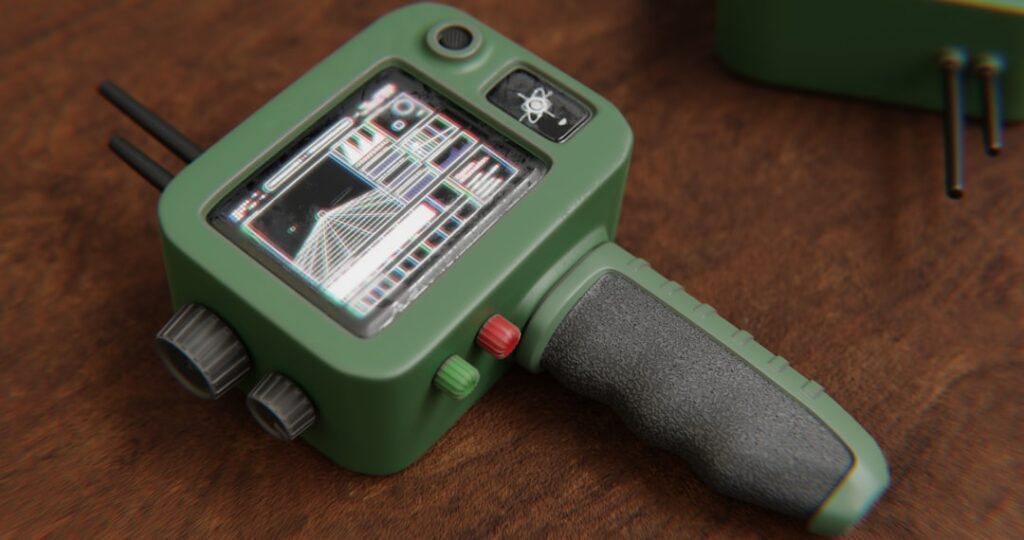
Slightly pricier budget borescopes include their own small built-in screen on the handle. These are more convenient for quick jobs because there is nothing to pair or plug in, and the screen is right where you hold the tool. The tradeoff is a small, often low-resolution display and limited ability to save or share what you see.
What this means for your choice
For occasional use where you might want to keep a record, a phone-connected unit makes sense. For grab-and-go simplicity, a self-contained screen is handier. Neither is clearly better; the right pick depends on whether documentation or convenience matters more for your jobs.
What you actually get at the budget end
Cheap borescopes make predictable tradeoffs, and knowing them ahead of time prevents the disappointment of expecting professional results from a budget price. Each tradeoff is acceptable for occasional use and limiting for hard use.
Image quality
Budget units usually carry a basic sensor, often around 720p to 1080p, which is fine for spotting a clog or a stain but soft on fine detail. The wide-angle lens common on cheap probes distorts straight lines and offers no depth perception, so a small crack and a large one can look alike until you have practiced. Lighting is fixed or barely adjustable, which means close subjects can wash out and distant ones stay dark. Be wary of headline megapixel claims, too; a high number on the box does not help when the real limit is a tiny sensor, a cheap lens, and poor lighting in a dark cavity.
Cable and articulation
The cable on a budget borescope is typically a fixed-view, non-steerable type, sometimes semi-rigid so it holds a shape. There is no articulating tip to aim around corners, so you steer by twisting the whole cable, which is fiddly. For straight-in looks this is fine; for inspecting the side of a cavity it is frustrating, and it is the single biggest practical gap between a budget unit and a professional one with a joystick-controlled tip.
Durability and sealing
Lower-cost probes carry modest water and dust resistance and thinner construction. Many are splash-resistant rather than fully waterproof, so check the rating before feeding one into a drain. Connectors and cables are the usual failure points under repeated hard use, and a budget unit fed into drains or run through engine grime repeatedly will often fail far sooner than a sealed industrial tool would. For a few occasional jobs that is fine; for daily abuse it is a recipe for buying another one.
Where a cheap borescope is genuinely enough
For occasional, low-stakes inspection, a budget borescope punches above its price. Finding a clog in the first few feet of a drain, locating a leak’s entry point inside a wall after drilling a small hole, retrieving a dropped ring, checking insulation in a cavity, or inspecting behind a washing machine, none of these demand a professional tool. The image only has to be good enough to answer a yes-or-no question, and a cheap unit clears that bar comfortably, which is exactly why these tools have become a common item in homeowner toolboxes rather than a specialist’s preserve.
Pair it with a moisture meter and a budget borescope becomes a capable little screening kit: the meter points you to the wet area, and the borescope lets you look at what is going on in the cavity. Our moisture meter guide covers that companion tool and how the two work together.
The value of a cheap borescope is mostly about avoiding unnecessary destruction. Before the tool, finding a leak or a clog often meant opening a wall or pulling an appliance on a hunch. A ten- or twenty-dollar camera lets you confirm what is actually there through a tiny hole or an existing opening first, so you only cut or dismantle when you know you need to. That alone justifies the modest cost for many homeowners, even if the unit eventually wears out.
Common household uses for a cheap borescope
It helps to picture exactly where a budget unit earns its small price around an actual home.
Plumbing and drains
Feed a waterproof-rated probe a short way into a drain to find a clog, spot a dropped object, or check for root intrusion near the opening. It will not replace a professional sewer camera on a long reel, but for the first few feet it answers most clog questions and can save a service call.
Walls and cavities
After drilling a small, patchable hole, a borescope lets you look inside a wall for a leak source, check insulation, or trace a wire, far less destructive than opening the whole wall. Paired with a moisture meter that tells you where to drill, it turns a guess into a targeted look.
Appliances and vehicles
Behind a dishwasher or washing machine, inside an engine bay, or under a vehicle, the flexible cable reaches around obstacles to show why something leaks or rattles without dragging the appliance out or dismantling the assembly. These are exactly the occasional, low-stakes jobs a budget unit was made for.
Where the limits start to cost you
A budget borescope shows you a spot, not a diagnosis, and the fisheye distortion plus lack of scale means it is easy to misjudge what you are seeing. The absence of an articulating tip makes it hard to inspect anything you cannot point straight at, so side walls, joints, and the far side of an obstacle stay out of view. And the modest durability means a unit used hard, fed into drains repeatedly or run through engine oil, often fails before long.
The deeper limit is interpretation. A clear image of a stained stud or a cracked pipe means one thing to an experienced inspector and another to a first-time user. The tool democratizes the view; it does not supply the judgment to read it. For comparison shopping, our breakdown of endoscope versus borescope sorts out the terminology, and the industrial inspection camera guide explains what the durable, steerable units add.
There is also a false-economy trap worth naming. A very cheap borescope that fails after a few hard uses, or whose image is too poor to trust, can cost more in repeat purchases and wasted effort than a slightly better unit would have. The sweet spot for occasional home use is not the absolute cheapest tool but a modestly priced one with a decent sensor, a semi-rigid cable, and a waterproof rating that matches the jobs you actually do. Spending a little above rock bottom often buys a tool that lasts long enough to pay for itself.
How to buy a budget borescope without regret
Match the spec to the job. Choose a probe diameter that fits where you need to go, commonly 8 mm for drains and wall cavities, smaller for tight spots. Confirm the waterproof rating if drains are on the list. Favor a semi-rigid cable that holds a shape over a floppy one that is hard to steer, and pick the shortest length that reaches, because more cable is harder to control. If you expect to keep a record of what you find, a phone-connected unit lets you save and share images, which is worth weighing against the grab-and-go convenience of a built-in screen.
Set expectations honestly. A budget borescope is a screening tool for occasional jobs, not a professional instrument. When it reveals water staining, active growth, or structural cracking, treat that as a signal to call someone who can interpret the cavity in context, not as the final word. The home inspection tools guide shows where a borescope fits among the rest of an inspector’s kit, and when the step up to professional help is worth it.
Getting the most from a budget borescope
A few habits stretch the usefulness of a cheap unit. Light the scene well but not too brightly; on a close subject, a too-bright LED washes out detail, so back off if the image glares. Move the probe slowly, because the wide-angle lens disorients on a fast pan and makes it hard to judge what you are seeing. Keep the lens clean, since a smudge or water droplet ruins the picture.
When scale matters, place a small object of known size in the frame as a reference, because the fisheye view gives no sense of how big anything is. Coil the cable loosely for storage rather than kinking it, as a sharp bend can damage the wiring and degrade the image for good. And always match the waterproof rating to the job before dunking the probe. These small disciplines turn a frustrating gadget into a genuinely handy tool for the occasional look-inside a home needs.
When to step up or hire it out
Recognize the point where a budget unit stops being the right tool. If you find yourself needing to inspect around corners, examine the side walls of cavities, or run the tool hard and often, a steerable, better-sealed unit, or a rental of one, will serve you far better. And for a real diagnostic question, a suspected hidden leak, structural concern, or mold problem, the cheap image only tells you something is there; a professional pairs a document-ready camera with moisture and thermal tools and the experience to interpret the whole picture. Knowing where the budget tool’s job ends is what keeps it useful rather than misleading.
References
- Standards of Practice for Home Inspections — InterNACHI
- A Brief Guide to Mold, Moisture and Your Home — U.S. Environmental Protection Agency
- ENERGY STAR: Seal and Insulate — U.S. Environmental Protection Agency (ENERGY STAR)
- Building Inspection Resources — International Code Council
Frequently asked questions
Is a budget borescope good enough for home use?
For occasional, low-stakes jobs like finding a drain clog, locating a leak's entry point, or retrieving a dropped object, yes. The image only has to answer a yes-or-no question, which a cheap unit handles. It is a screening tool, not a professional instrument.
What image quality do cheap borescopes have?
Usually a basic 720p to 1080p sensor that is fine for spotting clogs or stains but soft on fine detail. The wide-angle lens distorts straight lines and gives no depth perception, so a small crack and a large one can look alike until you have practiced.
Are budget borescopes waterproof?
Many are splash-resistant rather than fully waterproof, so check the rating before feeding one into a drain. Connectors and cables are the usual failure points under repeated hard use, which is where the durability gap with professional units shows.
When is a cheap borescope not enough?
When you need to inspect around corners, since budget units rarely have a steerable tip, or when the tool will be used hard and often. It also shows a spot, not a diagnosis, so water staining or cracking it reveals is a signal to call a professional.
Borescopes & inspection cameras
A borescope lets you see inside walls, ducts, drains, and crawlspaces without opening anything up.
| Product | Why | Buy |
|---|---|---|
 DEPSTECH Wireless Borescope DEPSTECH Wireless Borescope | Wi-Fi to your phone; semi-rigid cable. | Amazon — $39.99 |
 Teslong Dual-Lens Borescope Teslong Dual-Lens Borescope | Side + front view; good for ducts. | Amazon — $149.99 |
 Ridgid micro CA-150 Ridgid micro CA-150 | Rugged handheld with screen. | Amazon — $288.27 |