FLIR Company: What FLIR Makes for Home Inspection Use
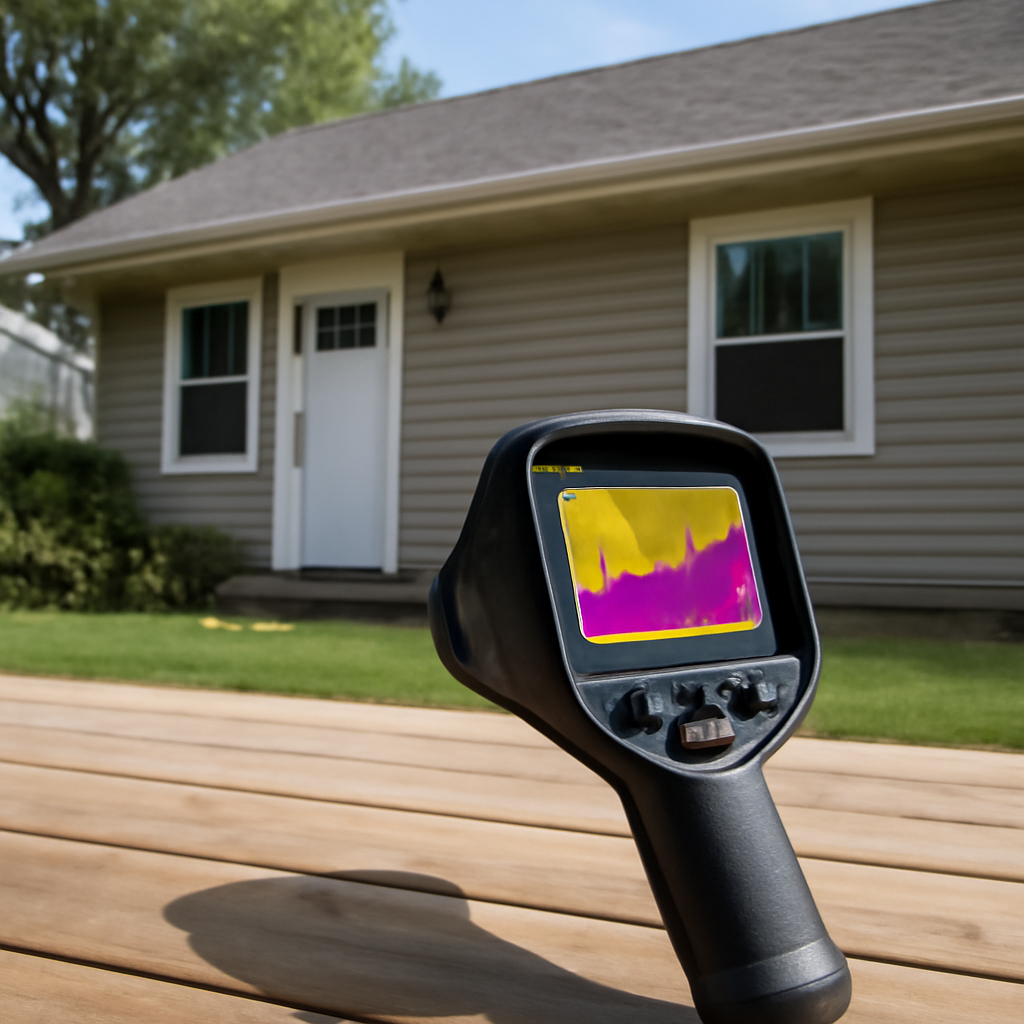
Homeowners researching the FLIR company usually arrive with a practical question: what does FLIR actually make, and which model fits a residential inspection use case. This guide skips the corporate history and focuses on the product lineup that matters for finding air leaks, hidden water, missing insulation, and overheating electrical components in a typical American home. The FLIR portfolio spans roughly $200 phone attaches to $40,000 commercial research cameras, and the practical question is where on that ladder a homeowner or small-property landlord lands.
What the FLIR company makes for residential use
FLIR’s residential-applicable lineup splits into five tiers. The FLIR One Gen 3 and FLIR One Pro are phone-attach modules that turn an iPhone or Android into a thermal camera at the $200 to $400 price point. The C-series (C3-X, C5) is a pocket-sized standalone camera at roughly $500 to $700. The E-series entry (E4, E5, E6, E8) is a pistol-grip handheld with detectors from 80×60 to 320×240 at $1,000 to $4,000. The E-series advanced (E54, E76, E86, E96) and T-series step into prosumer and commercial territory. Each tier is designed around the same underlying microbolometer detector technology and MSX visible-light fusion. Department of Energy thermography guidance for home energy audits maps to specific detector tiers, which is the practical lens for buyer decisions.
FLIR One phone attaches
The FLIR One Gen 3 is the entry point and carries a 80×60 detector with 70 mK NETD, while the FLIR One Pro doubles resolution to 160×120 with 70 mK. Both plug into a phone’s USB-C or Lightning port and use a smartphone app for capture and basic radiometric measurements. The form factor makes them ideal for a one-time winter air-leak scan or a quick check of an attic hatch or rim joist.
C-series pocket cameras
The C-series adds a built-in display so the user does not need a phone in-hand. The C5 carries a 160×120 detector at 70 mK and offers WiFi cloud upload through FLIR Ignite. It is the most popular pick for landlords doing seasonal walkthroughs and inspectors who want a backup camera that lives in a tool belt.
E-series and T-series handhelds
The E-series and T-series are the workhorses for paid inspection work. E-series entry models still serve homeowner-tier users, while E54 and up enter the prosumer band with 320×240 detectors. T-series commercial cameras step into 640×480 with 30 to 40 mK NETD and interchangeable lenses. For working inspectors generating insurance-recognized reports, the E76, E86, or T530 is the typical landing zone.
What FLIR cameras detect in residential inspection
The four most common residential applications of a FLIR camera are air leakage in the building envelope, hidden water from roof leaks or plumbing failures, missing or compressed insulation in walls and attics, and overheating in electrical panels. Each shows up as a distinct thermal pattern. Air leaks appear as streaks or pools of cold air infiltrating warm space (or vice versa in summer). Water shows up as cool zones with characteristic edge patterns. Missing insulation reveals the stud-bay grid in exterior walls. Electrical hotspots appear as bright spots on breakers or lugs. ASHRAE guidance describes thermography as a qualitative screening tool that narrows the search; physical confirmation with a moisture meter, borescope, or licensed electrician is the next step. The FLIR thermal camera images interpretation guide walks through what these patterns look like.
Choosing a FLIR model for residential use
The decision tree is shorter than the product matrix suggests. A homeowner doing one or two seasonal walkthroughs is well served by a FLIR One Gen 3 at $200 or a FLIR One Pro at $400. A landlord with multiple properties or a homeowner planning annual maintenance benefits from a C5 at roughly $700 because of the standalone display and WiFi upload. A working inspector should plan on at least an E54 at $2,500 and probably an E76 or T530 if reports will be submitted to insurance carriers. Cross-shop the broader market in our thermographic camera manufacturers overview.
FLIR-specific features worth understanding
Three FLIR-specific technologies show up across the lineup. MSX image fusion overlays a visible-light edge map onto the thermal frame, which makes documentation easier to interpret weeks or months later. Radiometric file storage embeds full per-pixel temperature data for downstream re-analysis. UltraMax and image-enhancement processing produce effective resolution above the raw detector count on some E-series and T-series models. None of these are required for homeowner use, but all three matter for inspectors building paid services.
FLIR pricing across the residential-applicable lineup
Phone attaches: $200 to $400. C-series pocket cameras: $500 to $750. E-series entry: $1,000 to $4,000. E-series advanced: $4,000 to $10,000. T-series: $5,000 to $15,000. Pricing is consistent across FLIR retail channels and authorized distributors. Used and refurbished E-series cameras occasionally appear at 30 to 50 percent off through B-stock channels. For a deeper price breakdown, see the thermal imaging camera cost guide.
FLIR software ecosystem
FLIR Thermal Studio is the desktop analysis software for radiometric files and is the primary value-add that justifies FLIR pricing over off-brand competitors. Thermal Studio Standard is free; Pro is licensed and supports advanced report templates, batch processing, and certified thermography workflows. FLIR Ignite is the cloud companion for upload, sharing, and team collaboration. The FLIR app for phone attaches handles the FLIR One workflow on iOS and Android. The software ecosystem is sticky enough that inspectors rarely switch brands once their report templates and image libraries are built in Thermal Studio.
Where FLIR fits in a complete home inspection toolkit
A thermal camera is one tool inside a broader inspection toolkit. Moisture meters confirm what the camera identifies; borescopes inspect inside walls and ducts; manometers measure pressure differentials during blower-door testing; combustion analyzers check appliances. FLIR makes some of these adjacent tools (the FLIR MR series moisture meters, for example), but most inspectors mix brands rather than buying everything from FLIR. The home inspection tools 2026 buyer’s guide covers the complete toolkit logic.
Home-Inspection Use Cases for FLIR Cameras
To make the model-selection question concrete, here are five home-inspection application categories with the FLIR models that match each. The point is to map a specific task to a specific spec band, so a buyer can avoid both under-buying (a camera that cannot resolve the target signal) and over-buying (a research-tier camera for routine homeowner work).
Winter air-leak surveys around the building envelope. The temperature differential between inside and outside in a Front Range January is large — often 50 degrees Fahrenheit or more — which means even a modest detector can resolve infiltration around windows, exterior doors, attic hatches, electrical outlets on exterior walls, and rim joists. A FLIR One Gen 3 at 80×60 detector resolution is sufficient for this task on a typical home. The FLIR One Pro at 160×120 is a comfortable upgrade. Department of Energy home-energy-audit guidance treats this differential range as the easy case for thermography.
Summer water-leak tracing in ceilings and behind tile. Water leaks in summer present a smaller thermal differential because indoor and outdoor temperatures are closer, so detector resolution matters more. A 160×120 detector struggles to resolve subtle wet patterns on a 75-degree day. The FLIR C5 at 160×120 with cloud upload is the practical floor; the E54 at 320×240 is a comfortable margin for inspector work. ASHRAE building-diagnostic guidance and InterNACHI moisture-investigation materials both reference 320×240 as the resolution baseline for confident water-pattern interpretation.
Year-round electrical-panel and circuit screening. Hot breakers, loose lugs, and unbalanced circuits produce strong thermal signatures even at modest detector resolutions because the temperature differential between an overheating component and its neighbors is typically large. A FLIR One Pro or C5 will catch most consequential findings; the E54 adds the radiometric file the inspector can attach to a report. NFPA-aligned electrical preventive-maintenance documentation references this application as a screening-tool use case.
Spring and fall envelope checks for missing or compressed insulation. The mild-weather shoulder seasons produce thermal differentials in the 15- to 30-degree range, which is enough to map stud bays and identify missing batts but not always enough for fine detail. A FLIR C5 at 160×120 will show the stud-bay grid pattern; the E76 at 320×240 will resolve individual compression points and edge details. The qualitative-screening approach in ASHRAE building diagnostics aligns with this resolution tier.
Insurance and post-event documentation. Hail-damage roof scans, post-leak ceiling documentation, and forensic moisture investigations following a covered loss require radiometric file capture and certified-thermographer-level resolution. The FLIR T530, T540, or T865 in the commercial line is the appropriate match. InterNACHI’s thermography certification pathway describes this tier as the equipment baseline for insurance-recognized work.
Refurbished and Used FLIR Considerations
FLIR cameras hold their value reasonably well and a used or refurbished market is active enough that buyers should understand the options. The FLIR Certified Refurbished program processes returned and trade-in cameras through factory inspection, recalibration, and recertification, then resells them with a limited warranty — typically 90 days to one year depending on the model and program at the time of purchase. Pricing on certified refurbished E-series and C-series cameras typically runs 20 to 35 percent below new, which is a meaningful discount on a $3,000 to $10,000 camera.
Warranty differences between new and refurbished are the first thing to verify. New cameras carry FLIR’s standard two-year warranty (often extendable to ten years on some lines with registration). Certified refurbished units carry a shorter program-specific warranty, and the operator should confirm exactly what is covered before purchase. Used cameras sold through eBay, used-equipment dealers, or auction channels typically carry no factory warranty at all, and any calibration documentation depends on the seller’s records.
What to verify on any used or refurbished FLIR camera: calibration certificate date and traceability (an out-of-calibration camera produces unreliable radiometric output), detector pixel health (some used cameras show dead pixels that affect specific applications), battery health and remaining cycle life, lens condition (the germanium lens elements are expensive to replace if damaged), included accessories (chargers, cases, software licenses), and software-license transferability where applicable. For inspector buyers in particular, confirming that Thermal Studio Pro licenses transfer with the camera matters — some seat licenses are tied to the original purchaser and require re-registration. ASHI standards-of-practice resources and InterNACHI continuing-education materials reference calibration currency as a baseline requirement for thermography reports submitted to clients.
References
- DOE home energy audits and thermography — U.S. Department of Energy
- InterNACHI infrared thermography guide — International Association of Certified Home Inspectors
- ASHRAE standards and guidelines — American Society of Heating, Refrigerating and Air-Conditioning Engineers
- ASHI standards of practice — American Society of Home Inspectors
Thermal imaging cameras
Infrared cameras reveal hidden moisture, missing insulation, and air leaks. Phone-attachment models are the budget entry point; standalone units have higher resolution.
| Product | Why | Buy |
|---|---|---|
 FLIR ONE Pro (phone) FLIR ONE Pro (phone) | Plugs into iPhone/Android; inspector favorite. | Amazon — $349.00 |
 Topdon TC001 Topdon TC001 | High-res phone module at a low price. | Amazon — $199.99 |
 FLIR C5 Compact FLIR C5 Compact | Standalone pocket camera with Wi-Fi. | Amazon — $449.00 |