Mold Company Near Me: The Multi-Company Vetting Process
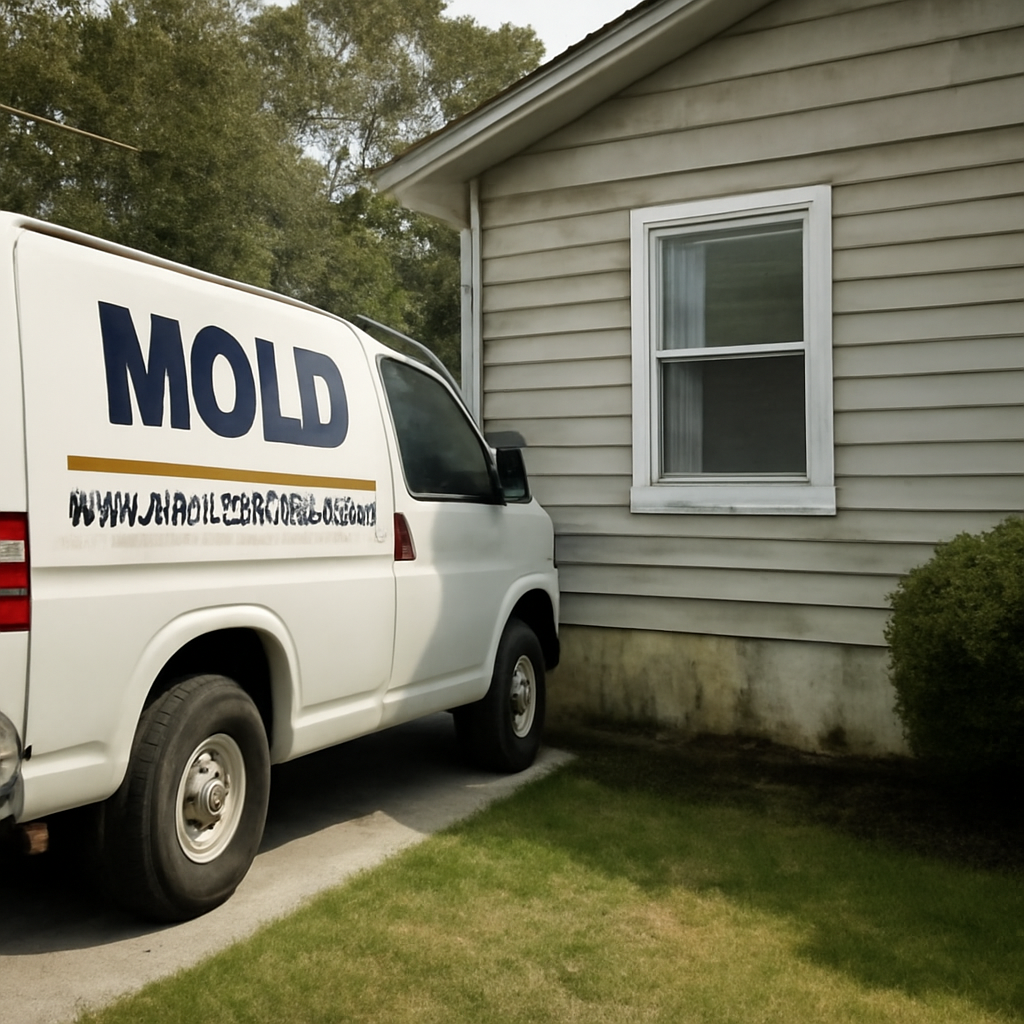
The phrase “mold company near me” returns dozens of results in any populated metro area, and the listings sort more by ad spend than by quality. Choosing among them requires a vetting process rather than a single decision, and the best practice is to evaluate at least three companies on a consistent rubric before signing. This guide describes the multi-company vetting process Front Range homeowners can apply: how to source candidates, what documents to request, what questions to ask, and how to read sample reports for quality signals. The framework here summarizes IICRC training standards and EPA guidance current as of 2026 and does not substitute for site-specific assessment by a certified industrial hygienist.
Part of our Types of Mold guide — start there for the full picture →
Is this mold, asbestos, or water damage? Get a free instant screen
Upload a clear photo of the suspect area. You'll get an instant AI screening opinion and what to do next. This is screening guidance, not a professional determination.
Screening guidance only. AI can be wrong. Confirm asbestos, mold type, or lead with lab testing or a licensed professional before acting.
Why three quotes is the right number
One quote gives you no comparison. Two quotes can both be wrong. Three quotes from different structural tiers reveal both the market price for your scope and the scope itself. A sole-prop quote, an LLC quote, and a franchise quote on the same physical job will differ by 30 to 80 percent. The spread is informative on its own, and the line-item differences between quotes often surface scope items one company included and another missed.
Four or five quotes is better than three but reaches diminishing returns. Each quote takes a homeowner roughly 90 minutes (scheduling, on-site walk-through, follow-up questions, document review). Five quotes consume a full day. Three is the practical sweet spot for residential jobs under $10,000. Above that, four to five quotes becomes justified by the total dollar exposure.
Sourcing candidates
Start with the Better Business Bureau’s accredited business directory for your state. BBB accreditation is not a quality guarantee, but it filters out fly-by-night operators who could not pass the BBB’s basic vetting. Cross-reference with InterNACHI’s certified-member directory and the IICRC firm-level certification directory. Firms appearing in all three directories are typically established operators.
Local home-inspector associations are a useful secondary source. Many home inspectors maintain informal relationships with remediation firms they trust to refer to clients, and inspectors have no financial incentive to refer poor performers because the referral reflects on them. Ask the inspector who did your purchase inspection (or any inspector you know) which remediation firms they have referred to and which they would use themselves.
Avoid sole reliance on Google search rankings, which reflect ad spend and SEO investment more than quality. Avoid sole reliance on online review platforms, which can be manipulated. Use them as a tertiary check rather than a primary filter. Cross-referencing multiple companies on the same scope is the most reliable filter.
The document request
Each candidate firm should be able to produce the following document package within 48 hours of request: Colorado Secretary of State business registration printout showing entity type and registration date; certificate of insurance with mold endorsement or contractor’s pollution liability, naming a generic project address for the COI test; IICRC AMRT certification number for the crew supervisor, verifiable on the IICRC public registry; municipal contractor license if applicable in your jurisdiction; three reference letters or contact details on comparable jobs completed in the past 12 months; sample work plan from a prior similar job, redacted for client identification.
A firm that produces this package promptly and completely is operating professionally. A firm that delays, partially produces, or refuses elements of the package is signaling something is missing. The package request is a free filter that eliminates non-serious operators before you invest the time in walk-throughs and detailed quote comparisons.
The on-site walk-through
Each candidate firm should perform an on-site walk-through before quoting, not just a phone-based estimate. The walk-through is where the firm characterizes the actual contamination, measures moisture content of substrates, identifies the moisture source, and scopes the work. A firm willing to quote without a walk-through is selling a template scope rather than an engineered solution.
During the walk-through, observe what the inspector does. A professional brings a moisture meter (pin or pinless, depending on substrate), a flashlight, a thermohygrometer for ambient conditions, and a camera. A professional asks about the history of the property: prior leaks, prior renovations, occupant symptoms, age of HVAC equipment. A professional examines areas not just where visible mold appears but where moisture intrusion would logically have occurred (basement corners, plumbing penetrations, window frames, HVAC condensate drains).
What questions the inspector asks tells you what they will look for
An inspector who asks about prior plumbing repairs is thinking about hidden cavity contamination. An inspector who asks about basement humidity in summer is thinking about chronic conditions. An inspector who only asks where the visible patch is and skips environmental history is performing a template inspection and will likely deliver a template scope that may miss hidden contamination.
The quote comparison rubric
After all three walk-throughs, compare quotes on a scope checklist. Pre-remediation assessment: included or excluded, who performs it, what samples. Containment: type (limited, full, critical), area dimensions, HEPA air machine specifications. Source removal: which materials removed, which cleaned in place. Cleanup: HEPA vacuuming scope, antimicrobial product, application method. Post-remediation verification: who performs it, what samples taken, criteria for passing. Reconstruction: included, excluded, or available as add-on. Warranty: duration, conditions, exclusions.
Map each quote to the same checklist. Differences often surface scope items that one firm included and another missed. The apparent low-price quote often turns out to exclude items the higher-priced quote includes. A rigorous comparison can shift the decision from price-driven to scope-driven, which is generally the correct framing.
Reference checks that actually work
Calling references is more useful than reading online reviews because the references answer your specific questions rather than generic ones. Useful questions to ask the references: did the project come in on the original quote or run over; were the post-remediation lab results clean; how was communication during the work; did the firm clean up after themselves at the end of each day; was the warranty honored if any issue arose later; would the reference hire the same firm again.
Two or three of those questions will surface the operational character of the firm faster than online reviews. References given by the firm are typically positive on average (firms do not provide bad references), but the texture of even positive references reveals operating style. A reference who hesitates on “would you hire them again” is signaling something even if the overall review is positive. A complete framework for mold inspection and remediation places reference verification in the broader vetting context.
Sample report review
A sample remediation report from a prior job reveals more about a firm than its marketing material. Look for these elements: clear scope statement at the top; assessment findings with moisture measurements and substrate categorization; daily site logs showing what was done each day; photographs of containment construction and demolition progress; HEPA air machine model and runtime documented; antimicrobial product used, with manufacturer specification sheet attached or cited; post-remediation air sampling lab report from an accredited laboratory; clearance criteria explicitly stated; final completion certificate with the supervisor’s signature.
A sample report missing several of these elements indicates the firm operates at a less rigorous standard. The pre-job glossy quote may look identical to a more rigorous firm’s quote, but the post-job deliverable will be thinner. The sample report is the most reliable preview of what your post-job documentation will actually contain.
Insurance verification specifics
Mold is excluded from standard commercial general liability by default. A mold company working only under a base CGL is functionally uninsured for the work they are performing. The verification you want is one of two things: a CGL policy with a specific mold endorsement that buys back the pollution exclusion for mold; or a separate contractor’s pollution liability (CPL) policy covering mold. Either is acceptable.
Confirm by reading the COI rather than accepting the firm’s verbal assertion. Mold endorsements are listed by endorsement number on the COI. If the COI shows only “CGL: $1,000,000 each occurrence” without a mold endorsement reference, the policy excludes mold. Call the agent listed on the COI to verify, and ask specifically whether the named mold endorsement is on the policy. Five minutes of agent verification eliminates the bulk of insurance-related disputes.
ASHI and IICRC verification
ASHI (American Society of Home Inspectors) is a credential primarily for home inspectors rather than remediators, but some firms cross-credential. The relevant ASHI credential is the ASHI Certified Inspector with a mold-specific specialty add-on. IICRC is the more relevant credential for remediators specifically. Verify both on the public registries.
Membership status is renewed annually. A lapsed credential on a marketing page is a flag that the firm is not maintaining its professional standing. A firm carrying current credentials with multiple personnel rather than just one is a stronger signal than a firm with a single credentialed staffer. The credential depth across staff reflects organizational investment in training rather than individual qualification of one employee.
Red flags during the vetting process
Several patterns recur and reliably indicate trouble. Requests for full payment upfront before work begins (legitimate firms request a deposit of 25 to 50 percent, with balance on completion). Refusal to provide a COI for verification. Reluctance to provide references. Quotes that look dramatically lower than the others without a clear scope explanation. Promises of same-day or 24-hour completion on jobs that legitimately take 3 to 7 days. Pressure tactics around “this price is only good today.” Door-to-door solicitation after a regional storm event.
Any one of these is reason for additional scrutiny. Two or more together is reason to drop the firm from the vetting set. The legitimate firms tend to look similar: professional in communication, transparent on documentation, willing to answer questions, and consistent on pricing structure even if dollar amounts vary by firm.
Negotiation leverage with three quotes in hand
Three quotes from different structural tiers gives homeowners meaningful negotiation leverage with the firm they prefer. The leverage works best when applied honestly: share the price spread (without naming the other firms) and ask the preferred firm whether they can match a specific scope component or adjust pricing. Reputable firms typically respond by either confirming their price and explaining the scope difference, or adjusting their quote modestly to be competitive.
Avoid using the quotes as raw price weapons. A firm that drops its price 30 percent under pressure is signaling that the original quote had unjustified margin, which is informative but not reassuring. Better firms hold their price and articulate the scope-and-quality difference that justifies it. A 5 to 10 percent adjustment for a long-term customer relationship is normal; a 30 percent drop on the same scope is a flag that the original number was inflated.
The negotiation also extends to non-price terms. Warranty length, payment schedule, scope of post-remediation verification, and start date are all negotiable. A firm willing to extend the warranty from 1 year to 2 years for the same price is offering real value. A firm willing to perform additional sampling rounds without raising the price is similarly valuable.
Online review interpretation
Online reviews on Google, Yelp, BBB, and other platforms are noisy data sources but contain useful signal when read carefully. Pure star ratings are less informative than the text content of reviews. Look for reviewers who describe specific scope details, name specific personnel, and recount how problems were handled when they arose. Detailed reviews are more reliable than five-word “great service” reviews.
Pay attention to the firm’s responses to negative reviews. A firm that responds professionally to criticism, addresses specifics, and offers to make things right is operating with adult business discipline. A firm that responds defensively, blames the customer, or fails to respond at all is signaling how they will handle disputes with you.
Review platform manipulation is real. Patterns of suspiciously short five-star reviews posted within days of each other suggest review-buying. Patterns of detailed one-star reviews with substantive complaints are usually genuine. Use the review platforms as one input among several rather than as the primary filter, and weight the BBB complaint history more than the star ratings on heavily-manipulated platforms.
Timing the vetting process
The vetting process takes time, which matters when the underlying mold problem is urgent. Spring snowmelt season in the Front Range creates a surge in mold remediation demand from late March through May. Fall after summer storms creates a smaller secondary surge. During these peak periods, the better remediators have wait lists of 1 to 3 weeks, while marginal operators are often available immediately.
For an urgent active water-loss event, prioritize getting the water cleanup and drying started immediately while running the quote process for the remediation phase in parallel. The drying phase typically takes 3 to 7 days, which gives time to vet three remediators properly before the remediation work itself starts. Hiring the cheapest immediately-available remediator is rarely the right call even under urgency pressure.
DIY threshold reminder
EPA’s residential mold guide draws the DIY ceiling at 10 square feet of visible contamination on non-porous surfaces. Below that, the multi-company vetting process is unnecessary because homeowner cleanup is acceptable. Above it, the vetting process is the right investment of time. The cost of running three rigorous quote processes (roughly 6 to 9 hours of homeowner time) is small relative to a multi-thousand-dollar remediation contract.
References
- EPA Mold Cleanup in Your Home — U.S. Environmental Protection Agency
- CDC Mold Cleanup and Remediation — Centers for Disease Control and Prevention
- InterNACHI Mold Inspection — International Association of Certified Home Inspectors
- ASHI Standards of Practice — American Society of Home Inspectors
Frequently asked questions
How many quotes should I get for mold remediation?
Three quotes from different structural tiers (sole prop, LLC, franchise) is the practical sweet spot for residential jobs under $10,000. The spread reveals market pricing and the line-item differences reveal scope variations between firms. Above $10,000, four to five quotes is justified by total dollar exposure.
What documents should a mold company provide before signing?
Colorado SOS business registration, certificate of insurance with mold endorsement, IICRC AMRT certification number for the supervisor, municipal contractor license if applicable, three references on comparable recent jobs, and a sample work plan from a prior project. A firm should produce this package within 48 hours.
How do I verify a mold company is properly insured?
Read the COI for a specific mold endorsement on the CGL, or for a separate contractor's pollution liability policy. Mold is excluded from standard CGL by default. Call the agent listed on the COI to verify the mold endorsement is current. Five minutes of verification catches most insurance issues.
What are red flags during mold company vetting?
Full payment upfront, refusal to provide insurance or references, dramatically low quotes without scope explanation, same-day completion promises on multi-day jobs, high-pressure sales tactics, and door-to-door solicitation after storm events. One flag warrants extra scrutiny; two or more means drop the firm.
Front Range homeowners running a multi-company mold vetting process can reach a vetted independent inspector through our contact page to support the scope comparison before signing.