Mold Remediation Companies Near Me: 2026 Vetting Guide
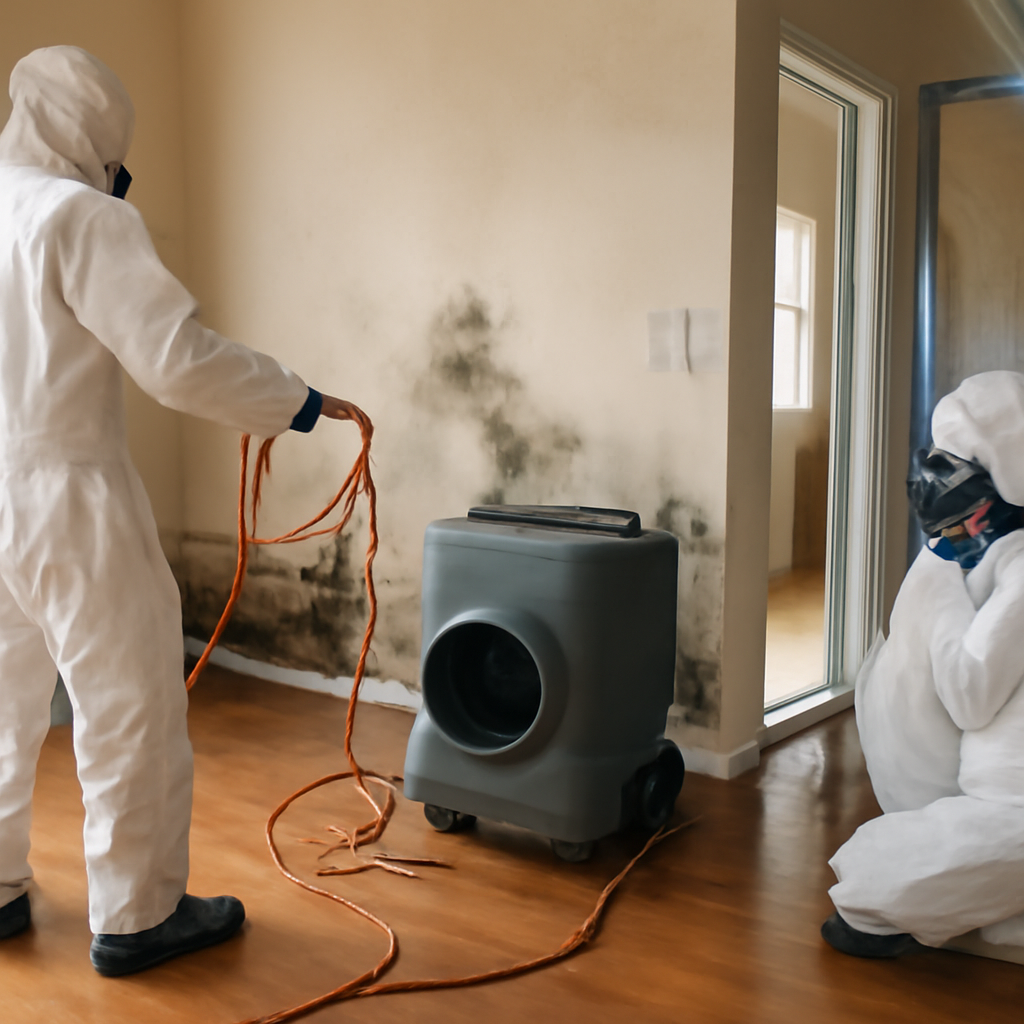
Searching for mold remediation companies near me usually happens after a leak, a musty basement smell, or a real-estate inspection report flags visible growth. The map results look reassuring, but the contractor industry has wide quality gaps. A homeowner in Arvada can field five quotes that range from $1,500 to $9,000 for what looks like the same scope. This guide summarizes EPA, CDC, and IICRC guidance current as of 2026 to help you evaluate companies on credentials, scope, and contract terms — not just price. Consult your physician for symptoms and use this as a commercial-service evaluation framework, not medical advice.
Part of our Mold Removal & Remediation guide — start there for the full picture →
Is this mold, asbestos, or water damage? Get a free instant screen
Upload a clear photo of the suspect area. You'll get an instant AI screening opinion and what to do next. This is screening guidance, not a professional determination.
Screening guidance only. AI can be wrong. Confirm asbestos, mold type, or lead with lab testing or a licensed professional before acting.
What credentials separate a legitimate mold remediation company from a handyman
The single most important credential is IICRC S520 certification. The Institute of Inspection, Cleaning and Restoration Certification publishes S520, the consensus standard for professional mold remediation. Technicians can earn an Applied Microbial Remediation Technician (AMRT) credential after passing the exam. A company that lists IICRC S520-trained staff and follows the standard is operating to the same baseline most insurance adjusters and assessors recognize.
Beyond IICRC, look for state contractor licensing where required, general liability insurance with a pollution liability rider (mold is often excluded from standard CGL policies), and workers’ compensation coverage. Colorado does not currently issue a separate mold remediation license, but reputable Front Range firms still maintain pollution liability coverage of $1 million per occurrence. A contractor who cannot produce a certificate of insurance naming the homeowner as additional insured for the job is a contractor to skip.
How much does mold remediation cost in 2026
Typical residential mold remediation in the United States runs $1,500 to $6,000 according to industry surveys, with national averages clustering around $2,500 to $3,500 for a single contained area. Front Range pricing trends slightly above that midpoint because of higher labor rates in Denver, Boulder, and Colorado Springs. Costs scale with three variables: square footage of affected material, accessibility (crawl spaces and attics cost more than open basement walls), and whether structural drying or demolition is bundled in.
Smaller jobs — a 4-foot section of drywall in a laundry room — often land at $800 to $1,800. Whole-basement remediation after a sewer backup can exceed $10,000 once content cleaning, HVAC source-control, and post-remediation verification testing are added. Get itemized scopes that separate containment setup, removal labor, HEPA cleaning, disposal fees, and clearance testing. A single round number on a one-page proposal is a yellow flag.
Questions to ask before signing a contract
Stack three to five companies side by side and ask each the same questions. Did they perform a pre-remediation assessment with moisture mapping? Will they use a containment barrier with negative air pressure for any job over the EPA’s 10 square foot threshold? Do they provide a written scope referencing IICRC S520? What is the warranty on regrowth, and what voids it? Will they perform post-remediation verification (PRV) themselves or use an independent third-party assessor?
The right answer to the last question is usually a third-party assessor. A company that grades its own work has a conflict of interest. Independent industrial hygienists or mold inspectors typically charge $300 to $700 for post-remediation clearance sampling, and that line item is one of the highest-value pieces of the project for buyer protection.
Red flags that should knock a company off your list
High-pressure sales tactics during the inspection visit are a classic warning sign. So is a refusal to itemize. Door-to-door solicitation after a regional weather event — hailstorms and basement flooding both attract them — is another common pattern in Denver and the northern Front Range. Watch for unfamiliar “patented” treatments marketed as miracle solutions; the EPA and CDC are explicit that no biocide spray substitutes for source-control and physical removal of contaminated materials.
Source control matters more than the cleanup itself
Mold is a symptom. Moisture is the disease. Any remediator who quotes a cleanup without identifying the moisture source — roof leak, plumbing failure, foundation seepage, condensation from an under-insulated wall — is selling a temporary outcome. Front Range homes deal with three common moisture problems: monsoon-season basement seepage in July and August, ice-dam leaks at roof eaves in January and February, and condensation behind cold-side vapor barriers in older mountain cabins.
Ask the contractor what moisture source they identified, what they will document about it, and which trade (roofer, plumber, foundation contractor) needs to follow up. The remediator may be able to handle minor source-control work in-house, but most reputable firms will refer you to a specialist for major structural repairs and stage their work accordingly.
Reading a remediation scope of work
A proper scope identifies the affected area in square feet, the materials to be removed (specify drywall, insulation, subfloor, baseboards), the containment method, the air filtration plan (number of HEPA-equipped negative air machines and the resulting air changes per hour), the cleaning protocol for contents and adjacent surfaces, the disposal method for contaminated materials, and the clearance criteria. The scope should reference IICRC S520 specifically.
If the scope says “treat affected areas” without numbers, push back. If it bundles structural drying for an active water loss with mold remediation, ensure the drying timeline (typically 3 to 5 days with moisture meters tracking progress) is documented separately. Drying and remediation overlap procedurally but bill differently, and insurance carriers want the line items split.
Insurance coverage for mold work
Most standard homeowner policies in Colorado exclude or sharply limit mold coverage. A typical endorsement might cap mold-related claims at $5,000 or $10,000 even when the underlying water loss is covered. Sudden and accidental water events — a burst supply line, a tub overflow caught the same day — often trigger coverage for both the water damage and the resulting microbial growth if remediation begins promptly. Slow leaks discovered months later usually do not.
If you are filing a claim, get the moisture source documented in writing, photograph everything before any demolition, and ask whether your carrier has a preferred-vendor program. The trade-off with preferred vendors is faster payment but sometimes narrower scopes. You retain the right to choose your own contractor in most states, Colorado included.
How to compare quotes apples to apples
Once you have three written scopes, build a one-page comparison. List affected square footage, materials to be removed, containment description, number and CFM rating of air scrubbers, cleaning protocol, disposal method, who performs clearance, warranty terms, and total price. The cheapest quote that omits clearance testing or containment is almost always more expensive in the long run, because regrowth or a failed real-estate transaction costs more than the savings.
Our broader guide to mold inspection and testing for homeowners walks through how third-party assessors fit into the remediation workflow, and the cluster article on emergency mold removal turnaround expectations covers the timing pressure that often forces hasty contractor selection.
Post-remediation verification and clearance
Verification is the final quality gate. A qualified third-party assessor performs a visual inspection, moisture readings, and air or surface sampling to confirm the remediated area has returned to background condition. The EPA’s framing in its mold remediation guidance for schools and commercial buildings — which residential pros also follow — is straightforward: visual cleanliness and dryness are the primary clearance criteria, with sampling as a confirmation step.
If the post-remediation sampling fails, the contractor should re-clean at no additional cost under a reasonable warranty. Get the re-cleaning trigger and process in writing before signing. A 12-month workmanship warranty conditional on the homeowner repairing the underlying moisture source is standard.
Front Range-specific considerations
Colorado’s semi-arid climate often surprises homeowners who assume mold is a Gulf Coast problem. The Front Range has its own patterns: spring snowmelt flooding finished basements, monsoon thunderstorms overwhelming gutters, ice dams in foothill communities like Evergreen and Conifer, and humidity issues in tightly-sealed new builds in master-planned communities. Sites like cdphe.colorado.gov publish indoor air quality resources tailored to Colorado housing stock.
Front Range remediation pricing per square foot tends to land slightly higher than national averages because of higher labor costs, but disposal fees are lower than coastal markets. Expect $10 to $25 per square foot of affected area for standard residential work, with crawl space and attic work pushing toward the upper end.
When to hire vs DIY
The EPA’s residential mold guidance allows DIY cleanup for visible growth under 10 square feet on hard surfaces using detergent and water, provided the homeowner has no immune issues and uses appropriate respiratory protection. Larger areas, porous materials like drywall and insulation, HVAC contamination, and any sewage-related water loss should be professionally remediated.
If you are unsure where your situation lands, a $400 to $700 third-party mold inspection from an independent assessor (not a remediator) will give you a written scope and let you shop quotes intelligently. This is one of the higher-leverage spends in the whole process.
Timing and project duration
A typical single-room mold remediation runs 2 to 5 working days from start to clearance. Setup of containment and air filtration takes a full day. Demolition of contaminated materials and bagging for disposal typically fills a day for moderate scopes. HEPA cleaning of surfaces and contents takes another day. Post-remediation drying and verification rounds out the project. Larger losses span 1 to 3 weeks; whole-house contamination scopes can run a month or more.
Real-estate-driven projects often face artificial deadlines from buyer-seller contracts. Reputable remediators can usually accelerate work with overtime or additional crew, but rushing the drying and verification phases compromises outcomes. If your closing date is tight, communicate it to the contractor upfront and budget for either a contract extension or a slightly compressed scope rather than skipped verification steps.
Containment and air filtration details
Containment barriers separate the work area from clean areas of the home. Six-mil polyethylene sheeting attached to ceilings, walls, and floors with painter’s tape and zipper doors creates the basic enclosure. For larger projects, a more rigid containment using telescoping poles and reusable barrier systems handles the same function. The barrier prevents spore migration into living areas during demolition.
Negative air machines pull air from inside the containment, filter it through HEPA media, and exhaust it outside. The CFM (cubic feet per minute) capacity should produce at least 4 to 6 air changes per hour inside the containment for typical residential scopes. A 200-square-foot containment with 8-foot ceilings has 1,600 cubic feet of volume; achieving 6 air changes per hour requires a 160-CFM machine running continuously, though most contractors use larger 500-CFM units for margin.
What happens to removed materials
Mold-contaminated building materials are double-bagged in 6-mil polyethylene bags, sealed, HEPA-wiped on the exterior, and transported through containment exits to a covered truck. Disposal is at a regular construction-and-demolition waste facility — moldy household materials are not classified as hazardous waste in Colorado or most other states. Disposal fees typically run $0.50 to $2 per square foot of materials, depending on facility tipping fees in your area.
The contractor should provide chain-of-custody documentation if the project involves insurance or litigation. For routine residential work, a simple disposal manifest is adequate. Reputable firms include disposal fees in the itemized scope rather than billing them as a surprise add-on later.
Working with HVAC during remediation
Most projects require shutting down the HVAC system during active demolition to prevent spore migration through ductwork. The HVAC handler and return registers in the containment area are sealed with plastic. Whole-house HVAC restart happens only after clearance verification. For homes with central forced-air heating during winter or cooling during summer, this can be a comfort issue — most contractors plan around mild-weather timing where possible.
If the remediation involves suspected duct contamination, a NADCA-certified duct cleaning contractor needs to coordinate with the mold remediator. Some firms hold both credentials. Otherwise, the two trades sequence: mold remediation first, duct cleaning second, then post-cleaning verification.
References
- EPA: A Brief Guide to Mold, Moisture, and Your Home — U.S. Environmental Protection Agency
- CDC: Mold Cleanup and Remediation — Centers for Disease Control and Prevention
- InterNACHI: Mold Inspection and Cleaning Guide — International Association of Certified Home Inspectors
- CDPHE: Indoor Air Quality Resources — Colorado Department of Public Health and Environment
Frequently asked questions
How much do mold remediation companies near me typically charge?
Most U.S. residential remediation jobs run $1,500 to $6,000, with the national average near $2,500 to $3,500 for a single contained area. Front Range pricing trends slightly above that midpoint due to labor costs. Always get itemized quotes that separate containment, removal, cleaning, disposal, and clearance testing.
What certification should I look for in a remediation company?
IICRC S520 is the consensus industry standard, and technicians holding the Applied Microbial Remediation Technician (AMRT) credential have passed a formal exam. Combine that with state licensing where applicable, general liability with a pollution rider, and workers' compensation coverage.
Should the same company do remediation and clearance testing?
No. Best practice is independent third-party post-remediation verification by an industrial hygienist or qualified mold inspector. A company grading its own work has a built-in conflict of interest. Third-party clearance typically costs $300 to $700 and protects you at the most important step.
Does homeowner insurance cover mold remediation?
Coverage is usually capped and limited to sudden, accidental water events. Slow leaks discovered later are typically excluded. Policies often endorse mold coverage at $5,000 to $10,000 even when the underlying water loss is covered.
If you are in the Denver metro or anywhere along the Front Range and want to talk to a vetted local inspector or third-party assessor before committing to a remediation contract, reach out through our contact page.