Fieldpiece Manometer: What Homeowners Should Know
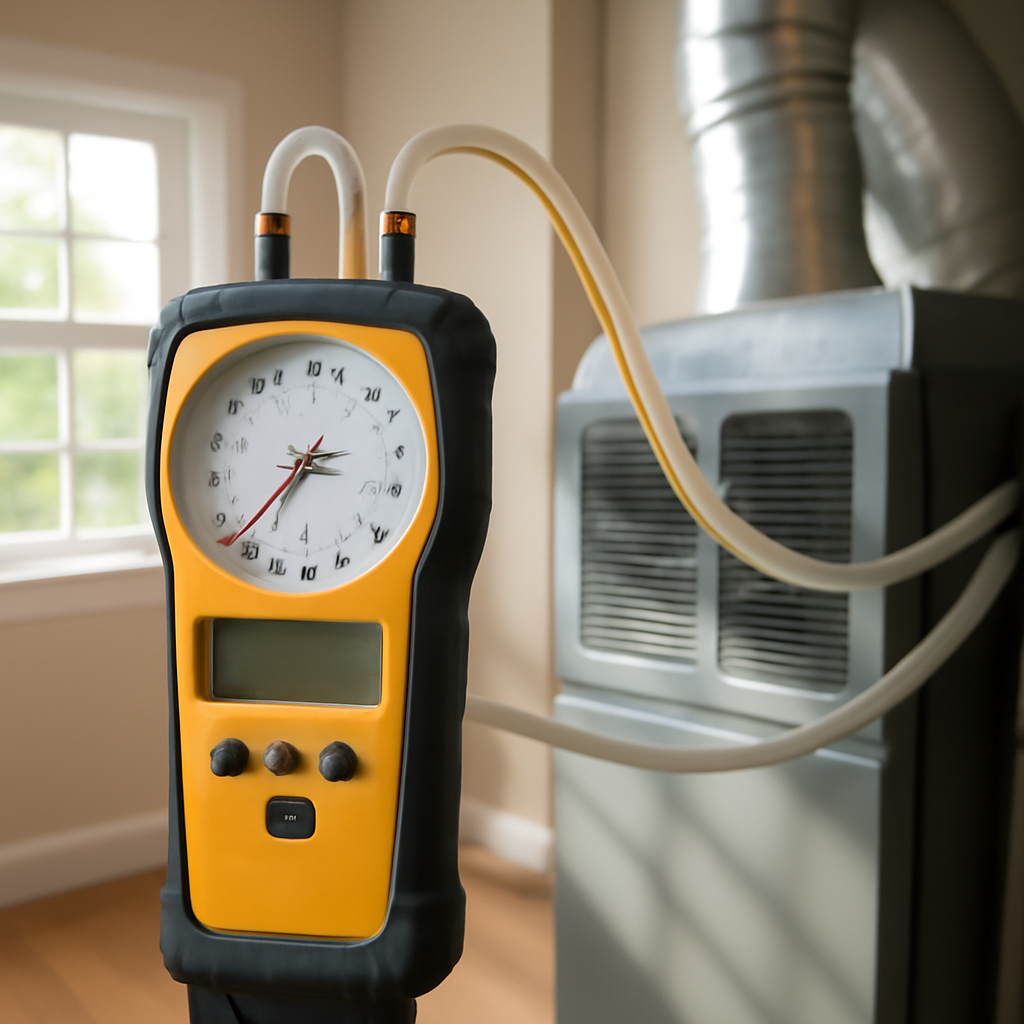
When an HVAC technician kneels beside a furnace and connects a small digital tool to the gas valve, there is a good chance it is a Fieldpiece manometer. The brand is a fixture in the trade, known for rugged digital instruments built for daily field use. A fieldpiece manometer measures pressure, gas pressure feeding an appliance, static pressure in a duct, draft in a flue, and turns invisible forces into numbers a technician can act on. Homeowners rarely operate one themselves, but understanding what it does demystifies a service call and explains why pressure readings sit at the heart of safe, efficient heating and cooling.
What a Fieldpiece manometer is
A Fieldpiece manometer is a digital instrument that measures pressure, most often the low pressures found in residential and commercial HVAC and gas systems. Fieldpiece is a manufacturer of HVAC and electrical test instruments, and its manometers are popular among technicians for their durability, clear displays, and field-ready design. The tool typically reads pressure in inches of water column, the unit used for the gentle pressures in gas lines, ducts, and combustion appliances.
A digital manometer like Fieldpiece’s measures pressure through internal sensors and shows the result instantly on a screen, often with the ability to display positive, negative, or differential pressure between two points. Compared with a classic liquid-column manometer, the digital version reads faster, handles tiny pressure differences more precisely, and removes the skill of interpreting a liquid meniscus. The underlying purpose, however, is the same one shared by every device in the broader manometer gauge family.
What a manometer measures in HVAC work
Pressure measurement runs through nearly every part of a heating and cooling system, and a manometer is the tool that captures it.
Gas pressure
Furnaces, water heaters, and gas stoves require the correct gas pressure to burn fuel safely and efficiently. A technician connects the manometer to test ports on the gas valve to measure inlet and manifold pressure, confirming the appliance receives the pressure the manufacturer specifies. Incorrect gas pressure causes poor combustion, wasted fuel, and in the worst case, unsafe operation.
Static pressure in ductwork
Static pressure is the resistance air encounters moving through a duct system. Measuring it across the air handler and filters tells a technician whether ducts are undersized, filters are clogged, or airflow is restricted, all of which strain the system and raise energy bills. High static pressure is a common, often overlooked cause of poor performance.
Draft and combustion pressure
Measuring draft at a flue confirms that combustion gases leave the home rather than spilling back inside, a direct safety check tied to carbon monoxide risk. These low-pressure measurements are exactly what a sensitive digital manometer handles well.
Why accurate pressure readings matter
Pressure is not an abstract number; it connects directly to safety, efficiency, and equipment life. Correct gas pressure ensures clean combustion, which means full fuel value and minimal production of carbon monoxide. A furnace running on improper gas pressure can short-cycle, overheat, or produce dangerous exhaust.
On the airflow side, proper static pressure keeps a system delivering its rated heating and cooling without overworking the blower. A system fighting high static pressure runs longer, costs more to operate, and wears out sooner. For Front Range homeowners facing both cold winters and warm summers, a system tuned with accurate pressure readings simply works better and lasts longer. The pressure data also overlaps with airflow diagnostics; technicians often pair manometer readings with what an anemometer reveals about air velocity to get the full picture of a duct system’s performance.
Fieldpiece features technicians value
The reason a brand like Fieldpiece earns loyalty comes down to practical field features rather than marketing.
Durability tops the list. Field instruments take abuse, dropped, jostled in a truck, used in attics and crawl spaces, and rugged housings survive that life. Differential measurement lets a technician read the pressure difference between two points directly, essential for static-pressure work across a filter or coil.
Many Fieldpiece units offer features like data hold, zeroing, multiple pressure units, and connectivity to the company’s app ecosystem for logging and reporting. Some integrate with a broader system of wireless probes a technician can deploy around a system at once. A backlit display and intuitive controls speed up work in dim spaces. These conveniences matter less to a homeowner than to a pro doing dozens of measurements a week, but they explain why the tool shows up on so many service calls. The digital approach contrasts with simpler permanent-mount units, as compared in this overview of the digital manometer for home use.
Do homeowners need a Fieldpiece manometer?
For most homeowners, the honest answer is no. A professional-grade Fieldpiece manometer is built for technicians who measure gas and duct pressure constantly, and its cost and feature set reflect that. Gas-pressure measurement in particular is not a do-it-yourself task; it involves opening gas-valve test ports and interpreting readings against manufacturer specs, with real safety stakes if done wrong.
A homeowner curious about their HVAC system is better served by simpler tools, a basic hygrometer for humidity, an inexpensive anemometer for checking register airflow, or an IR thermometer for temperature splits. The manometer belongs in the technician’s kit. Knowing what it does, however, helps a homeowner ask informed questions during a service visit and understand why a technician is testing pressure rather than guessing.
What to expect during a service call
When a technician uses a manometer during a furnace tune-up or diagnostic, the process is quick. They connect the instrument to the appropriate test port, take a reading, and compare it against the appliance’s rated specification. For gas pressure, they may adjust the valve to bring it within spec. For static pressure, a high reading prompts a look at filters, duct sizing, and airflow restrictions.
A thorough technician explains what the readings mean, whether gas pressure is correct, whether static pressure points to a restriction, rather than just reciting numbers. If you are present, asking what each measurement indicates is a reasonable way to understand your system’s health. These pressure checks are part of the routine maintenance that keeps combustion appliances safe and efficient.
Understanding inches of water column
The unit a manometer reads, inches of water column, often puzzles homeowners, so it is worth unpacking. One inch of water column is the pressure exerted by a column of water one inch tall, a very small pressure compared with the pounds per square inch used for tires or municipal water. Residential natural gas appliances typically operate on manifold pressures in the range of a few inches of water column, which is why the gentle, precise scale of a manometer suits the job where a coarse pressure gauge would be useless.
This fine resolution is exactly what makes static-pressure work possible. The pressure differences across a furnace filter or an air-handler coil are fractions of an inch of water column, far too small for ordinary gauges to register meaningfully. A digital manometer reads these tiny differences clearly and can show the difference between two points directly, which is why technicians rely on it to diagnose airflow restrictions that would otherwise be invisible. Understanding the unit helps a homeowner appreciate why a seemingly small number, a static pressure a few tenths too high, can signal a real performance problem.
How manometer readings connect to comfort and bills
The numbers a technician pulls from a manometer translate directly into how a home feels and what it costs to heat and cool. When gas pressure is set correctly, a furnace burns its fuel completely, extracting full heat value and minimizing waste and harmful byproducts. Pressure that is too low starves the burner and reduces output; too high wastes fuel and stresses components. A quick manometer check during a tune-up confirms the appliance is dialed in.
Static pressure tells a parallel story for airflow. A system fighting high static pressure, from undersized ducts, a clogged filter, or a crushed return, moves less air than it should, leaving some rooms uncomfortable while the blower works harder and longer. That extra runtime shows up on the utility bill and shortens equipment life. By measuring static pressure, a technician can pinpoint whether a comfort complaint stems from the equipment or the ductwork, then recommend a targeted fix. For a Front Range homeowner facing both heating and cooling seasons, these measurements are the difference between a system that merely runs and one that runs well.
Altitude gives these readings extra weight in Colorado. Thinner air at Front Range elevations changes how a furnace burns fuel, and many appliances installed here require derating or a high-altitude adjustment to the gas pressure so combustion stays clean. A manometer is how a technician confirms that adjustment was made correctly rather than left at a sea-level default that would run rich, waste fuel, and raise carbon monoxide output. The same thin air also means a blower moves a given mass of air at a slightly different pressure than it would at sea level, so the static-pressure targets a technician works toward account for elevation. These are precisely the subtleties a homeowner cannot eyeball and a calibrated instrument in trained hands resolves in minutes.
A manometer also serves as a diagnostic tie-breaker when a comfort complaint has no obvious cause. A homeowner reporting that one room never warms could be facing undersized ducts, a clogged filter, a failing blower, or simply a closed damper, and guessing leads to replacing the wrong component. Measuring static pressure across the system points directly at whether the restriction lives in the equipment or the ductwork, while gas-pressure and draft checks confirm the furnace itself is firing correctly. By turning a vague symptom into measured numbers, the instrument lets a technician recommend the targeted fix, sealing a duct, swapping a filter, opening a damper, rather than an expensive shotgun approach. That precision is why a brief manometer check during a tune-up often saves a homeowner far more than the visit costs.
Single-port versus dual-port manometers
Fieldpiece and similar makers offer manometers with one pressure port or two, and the difference governs what a technician can measure. A single-port unit reads gauge pressure, the pressure at one point relative to the surrounding atmosphere, which suffices for checking gas-valve inlet and manifold pressure or measuring draft at a flue. For many furnace tune-ups, a single port covers the essential gas-side checks.
A dual-port manometer reads the difference between two points at once, which is what static-pressure diagnosis demands. To measure the pressure drop across a furnace filter or an evaporator coil, a technician connects one port upstream and the other downstream, and the instrument reports the difference directly rather than requiring two separate readings and mental subtraction. That differential capability is why dual-port units dominate airflow troubleshooting, where the meaningful number is how much resistance a component adds. Some Fieldpiece units also tie into the company’s wireless probe ecosystem, letting a technician place sensors at several points around a system and read them together on one screen or phone, a workflow that speeds up balancing a complex duct system. For a homeowner, the takeaway is simply that the tool’s port count signals what kind of diagnosis the technician is set up to perform.
When to call a professional
Any task that requires a manometer, gas-pressure testing, static-pressure diagnosis, draft and combustion checks, is professional work. These measurements involve gas systems and combustion safety where errors carry serious consequences, including carbon monoxide risk. A licensed HVAC technician has the calibrated instruments, training, and judgment to take and interpret these readings correctly.
For Front Range homeowners, scheduling annual heating-system maintenance, during which a technician checks gas pressure and combustion, is the practical way to benefit from manometer measurements without owning or operating the tool. The instrument makes the invisible measurable; the professional is who turns those measurements into a safe, efficient, properly tuned system.
References
- Home Heating Systems — U.S. Department of Energy
- Carbon Monoxide Poisoning Prevention — Centers for Disease Control and Prevention
- Standards of Practice for Home Inspectors — InterNACHI