What Is a Manometer: A Plain-Language Guide
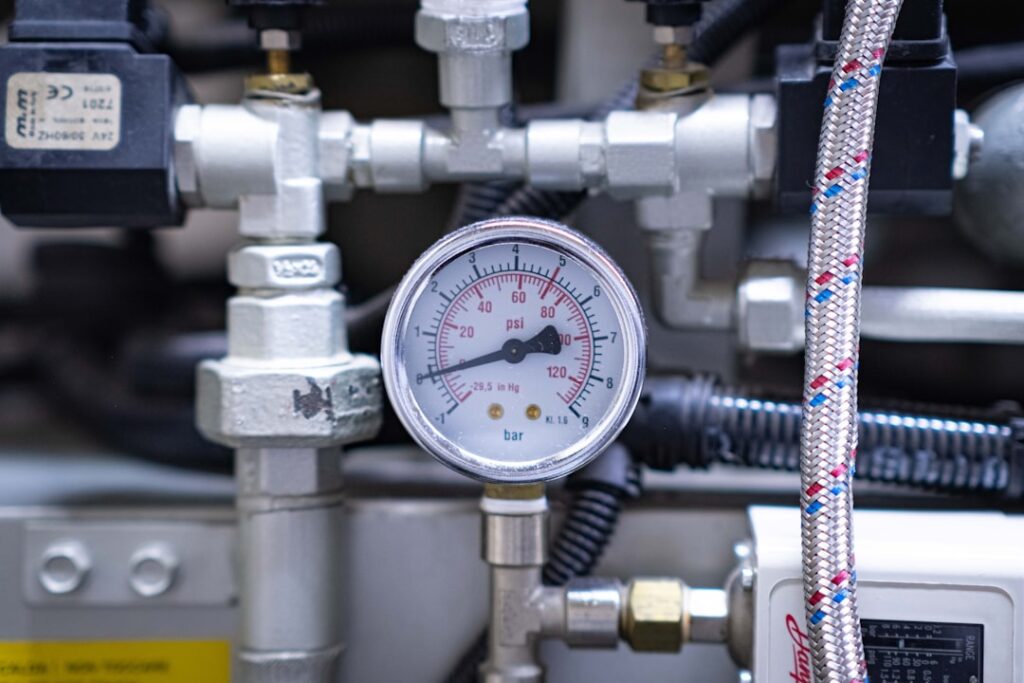
A manometer is one of the quietest workhorses in a home inspector’s bag, yet most homeowners have never heard the word until a report mentions it. The short version: it measures pressure, usually of a gas or air, by comparing it against a reference. So what is a manometer doing in a house inspection? It confirms that furnaces, water heaters, and gas lines are running at the pressures their manufacturers specify, and it flags leaks or draft problems that the eye cannot catch. This guide walks through the instrument in plain language, the common types, how the readings work, and where the tool fits into a Colorado Front Range inspection.
Part of our Home Inspection Tools guide — start there for the full picture →
What Is a Manometer in Simple Terms?
A manometer is a device that measures the pressure of a fluid, which in building work almost always means a gas such as natural gas, propane, or plain air. It reports that pressure as a difference between two points rather than as a single absolute number. Think of it as a very precise scale for “push.” When a technician connects a manometer to a furnace gas valve, the gauge shows how hard the gas is pushing through the line, and that figure tells the technician whether the appliance is starved, over-pressured, or set correctly.
The classic version is a clear U-shaped tube partly filled with liquid. Apply pressure to one side and the liquid climbs the other side. The height difference between the two columns is the reading. Most field tools today are digital and use an electronic pressure sensor instead of liquid, but the principle is identical: two pressures, one comparison, one number. Pressure in this trade is usually reported in inches of water column, written as “in. w.c.” or “WC,” because the unit traces directly back to that liquid-filled tube.
How Does a Manometer Work?
The working idea rests on balance. In a liquid-column manometer, gas pressure on one side pushes the liquid down; gravity and the weight of the displaced liquid push back. When the two forces settle, the liquid stops moving, and the vertical gap between the two surfaces equals the pressure being measured. A reading of “3.5 inches of water column” means the gas could lift a column of water three and a half inches high.
Digital manometers replace the tube with a transducer, a small chip that converts pressure into an electrical signal. The display then shows the value instantly, often to two decimal places, and many models log readings or show a high-low range over time. That sensitivity matters because gas appliances operate at surprisingly low pressures. A residential natural-gas furnace typically runs near 3.5 inches of water column at the manifold, while the incoming line might sit around 7 inches. Those numbers are tiny compared with, say, a car tire, which is why an ordinary pressure gauge would be useless here.
Differential, Gauge, and Absolute Readings
Manometers can report three kinds of pressure. A gauge reading compares against the surrounding air, so zero means “same as the room.” A differential reading compares two separate points, which is how technicians check the pressure drop across a furnace filter or heat exchanger. An absolute reading compares against a vacuum and is rare in residential work. For most home inspection tasks, the gauge and differential modes do all the heavy lifting.
Types of Manometers Used in Homes
Several designs show up in residential and light-commercial work, each with strengths.
U-tube manometers are the simplest. A glass or plastic tube bent into a U holds water or a colored gauge oil, and you read the column difference against a printed scale. They need no batteries, never drift out of calibration, and cost very little. The trade-off is that they are bulky, can spill, and are slower to read. Many trainers still keep one on the bench because it makes the physics visible.
Inclined manometers tilt the tube at a shallow angle so a small pressure change moves the liquid a longer distance along the scale. That stretch makes very low pressures, such as duct static pressure in an HVAC system, easier to read accurately.
Digital manometers dominate the field today. A handheld unit such as a Fieldpiece or Testo model reads to 0.01 inches of water column, holds peak values, and often pairs with a phone app. They are fast, compact, and easy to read in a dim mechanical room, though they depend on batteries and need periodic calibration. Homeowners curious about a specific model can read more in our guide to the Fieldpiece manometer, and the older liquid design is covered in the U-tube manometer overview.
What Inspectors Measure With a Manometer
During a home inspection, a manometer earns its place in a handful of checks. The most common is gas pressure at appliances. By tapping a test port on a furnace or water-heater gas valve, the inspector or HVAC technician confirms the manifold pressure matches the rating plate. A reading that runs low can mean a clogged regulator, an undersized line, or a leak somewhere upstream; a high reading can overheat the burner and shorten the appliance’s life.
A second common use is draft and static pressure. In forced-air systems, a manometer measures the pressure inside ductwork to confirm the blower is moving air the way the design intended. Excessive static pressure points to crushed ducts, a dirty filter, or undersized returns, all of which strain the equipment. Inspectors also use the tool to check combustion-air and venting conditions, since a backdrafting furnace or water heater can spill carbon monoxide into living space.
Pressure testing of gas piping is a third role. Before a new gas line is buried or covered, code generally requires a pressure test, and a manometer or a higher-range gauge holds and reads that test pressure over a set period. If the needle or display drops, the line is leaking. These checks tie directly into broader safety work, which is why a thorough review of home inspection tools almost always includes a pressure instrument of some kind.
Reading and Interpreting the Numbers
A manometer number means nothing without a reference. The reference is the appliance’s rating plate or the relevant code. For a typical Front Range home on natural gas, manifold pressure near 3.5 inches of water column is normal for a single-stage furnace, while propane appliances run higher, often around 10 to 11 inches. The technician compares the live reading to that target and adjusts the regulator only when the manufacturer’s instructions allow.
Differential readings tell a different story. The pressure drop across a clean furnace filter should be small; a large drop signals restriction. For duct static pressure, many residential systems are designed for roughly 0.5 inches of water column total external static, and a reading well above that warns of airflow problems. Altitude adds a wrinkle along the Front Range. Denver sits near a mile high, and thinner air changes combustion behavior, so equipment is often de-rated and adjusted for elevation. A reading that looks fine at sea level may need a second look in Douglas or El Paso County.
A Closer Look at How Inspectors Run the Test
The mechanics of a real manometer check are more deliberate than simply plugging in a gauge. On a forced-air furnace, the technician first locates the manifold pressure tap, a small port on the gas valve usually sealed by a set screw. After shutting the gas at the appliance valve, the screw is loosened a turn or two and a hose from the manometer is connected. Only then is the gas restored and the burner fired, so the live manifold pressure can be read while the appliance runs through its normal cycle. The reading is taken at steady state, not during the brief ignition spike, because the steady-state value is what the rating plate references.
Sequencing matters for accuracy too. A single-stage furnace shows one manifold pressure, but a two-stage unit must be read in both low-fire and high-fire modes, each with its own target. Modulating furnaces complicate things further, since their pressure varies continuously with demand. A technician who reads only one stage on a multi-stage unit can miss a problem hiding in the other. The same care applies to water heaters, where the manifold pressure should match the data plate, and to gas ranges, which run at low pressures that a coarse gauge would never resolve. After testing, the hose comes off, the set screw is retorqued, and the joint is leak-checked with soap solution before the appliance is left in service.
Duct static pressure follows a different routine. The technician drills small test holes upstream and downstream of the air handler, inserts static-pressure tips, and connects them to the manometer in differential mode. The total external static pressure that results is compared against the blower’s rated maximum. A reading that exceeds the rating points to restriction, undersized return ducts, a clogged filter, or a coil packed with debris, each of which forces the blower to work harder and shortens its life. These holes are sealed afterward with approved plugs.
Common Manometer Mistakes and How to Avoid Them
Even a simple instrument can mislead when used carelessly. The most frequent error is failing to zero the gauge before use; a digital manometer left with a residual offset will report every reading high or low by that amount. Zeroing in still, open air takes a second and prevents a cascade of bad conclusions. A liquid-column manometer must also sit perfectly level and be read at eye level to avoid a parallax error that distorts the column height.
Another mistake is reacting to the ignition spike rather than the steady-state pressure. Gas pressure jumps briefly when a burner lights, and a reading snatched during that moment will look high. Waiting for the value to settle gives the number that actually matters. Temperature and altitude add further traps. Liquid-filled manometers use a specific gauge fluid with a known density; substituting plain water or the wrong oil throws the scale off. At Front Range elevations, combustion equipment is de-rated for thin air, so a manifold pressure that seems correct may still leave an appliance over- or under-fired if the elevation adjustment was skipped. Finally, a manometer that has not been calibrated in a long time can drift; professional shops check their instruments against a reference periodically so a slow drift does not masquerade as an appliance fault.
Manometer Safety and When to Call a Pro
A manometer is harmless on its own, but the systems it measures are not. Working on live gas lines carries real risk: a loosened test-port screw can leak gas, and an incorrectly adjusted regulator can cause incomplete combustion that produces carbon monoxide. For that reason, gas-pressure testing and adjustment belong to licensed HVAC technicians, plumbers, or qualified inspectors, not to weekend DIY work.
Homeowners can safely buy and use a basic digital manometer for non-gas tasks, such as checking the static pressure of a clean-air filter slot or curiosity about duct airflow, provided they never open a gas valve. Anything involving the gas supply, the burner, or the vent should be handed to a credentialed professional. Trade associations such as InterNACHI and ASHI train inspectors to use these instruments correctly and to know the limits of a visual inspection. If a reading is off or a furnace smells of gas, the right next step is to shut the appliance down and call a licensed contractor rather than to keep testing.
For Colorado homeowners preparing for a sale or worried about an aging furnace, a manometer check is a small but meaningful part of a full mechanical evaluation. It rarely shows up as a line item, yet the safety it confirms is exactly what a good inspection is supposed to protect.
References
- Workplace gas and pressure safety guidance — OSHA
- Heating Safety (gas and fuel-burning equipment) — National Fire Protection Association
- Home inspection standards of practice — InterNACHI
Frequently asked questions
What is a manometer used for in a home?
It measures the pressure of gas or air, most often to confirm that a furnace or water heater is running at the manifold pressure the manufacturer specifies. Inspectors also use it to check duct static pressure and to pressure-test gas piping for leaks.
What unit does a manometer use?
Residential gas and air work is usually reported in inches of water column, written as 'in. w.c.' or 'WC.' The unit comes from the liquid-filled tube of the original design, where pressure is read as the height of a water column.
Can a homeowner use a manometer safely?
A basic digital manometer is safe for non-gas tasks like checking filter or duct pressure. Anything that involves opening a gas valve, the burner, or the vent should be left to a licensed HVAC technician, plumber, or qualified inspector.