Exterior Shutters: Mounting, Rot and Siding Damage
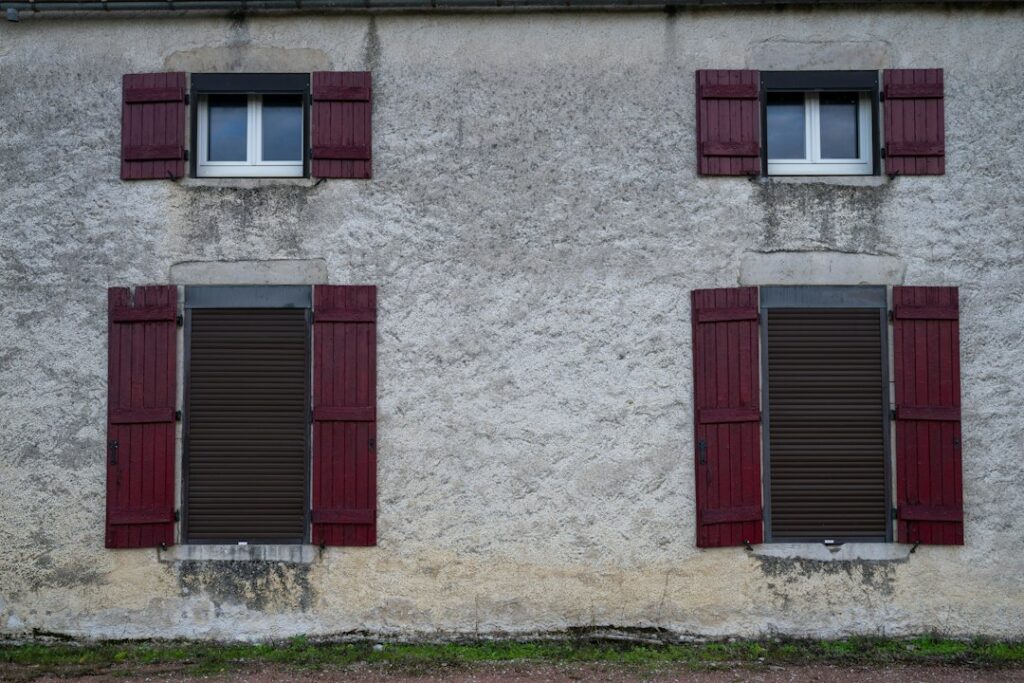
Shutters are one of the fastest ways to change how a house looks from the street, which is why they show up on everything from 1920s Denver bungalows to new-build two-stories in Castle Rock. Most modern exterior shutters are purely decorative, screwed flat to the siding beside a window, and that is where the trouble usually starts. A shutter that never moves can hold water against the wall, hide rot in the trim behind it, crack vinyl siding at the fasteners and work loose in a Front Range chinook wind. Older wood shutters may also carry layers of lead-based paint. This guide explains the difference between decorative and functional shutters, how they should be fastened, what moisture and wind do to them, what home inspectors typically note, lead-safe work rules for older homes, and hedged cost ranges for replacing or removing them.
Part of our Structure & Exterior guide — start there for the full picture →
Decorative vs. Functional Exterior Shutters
The first question is what kind of shutter is on the house, because the problems and fixes differ.
Functional shutters are hung on hinges and can close over the window. Historically they offered privacy, ventilation, light control and some protection from storms. They are mounted on the window casing or wall with hinges and pintles, sized to cover half the window opening each, and held open with shutter dogs or tiebacks. Functional shutters are still common on historic homes and are available new in wood, composite and some metals.
Decorative shutters are fixed panels fastened to the wall beside the window. They do not close and often are not sized to cover the opening. Most are molded vinyl, composite or fiberglass, though decorative wood panels are also sold. They are attached with screws, specialty plastic spikes or concealed brackets.
A quick way to tell: functional shutters have hinges and hardware, and each one is about half the width of the window. Decorative shutters typically sit flat against the siding with no hinges, and they are frequently narrower than half the window width.
Common materials
- Wood. Traditional, repairable and paintable, but vulnerable to rot where water sits. Older wood shutters are the ones most likely to carry lead paint.
- Vinyl. Inexpensive and low maintenance; can fade, become brittle and crack with UV exposure and cold.
- Composite and PVC. Moisture resistant and paintable; often used where the look of wood is wanted without the rot risk.
- Fiberglass and aluminum. Durable and used for both decorative and functional applications, including some storm shutters.
How Shutters Should Be Fastened
Fastening is the detail that decides whether a shutter is harmless or a slow-motion water leak. Every screw or spike that goes through siding creates a hole in the water-resistant layer of the wall.
Fastening into vinyl siding
Vinyl siding is designed to hang loosely so it can expand and contract with temperature. Clamping a shutter tightly to it can pin the panels, leading to buckling or cracking at the fastener as the siding tries to move. Common best practices include drilling oversized clearance holes, not overtightening fasteners and using shutter-specific fasteners or mounting blocks designed for vinyl. Fasteners need to reach solid sheathing or framing, not just the siding panel. On the Front Range, where a south-facing wall can swing from below freezing at dawn to hot afternoon sun, expansion and contraction is not a theoretical concern.
Fastening into wood, fiber cement and stucco
Wood lap siding and fiber cement accept screws more readily, but penetrations still need to be sealed or flashed according to the siding manufacturer’s instructions. Stucco requires masonry anchors and careful sealing; cracks around anchors in stucco can let water into the wall assembly. Masonry and brick veneer generally need masonry anchors set in mortar joints or brick, and each penetration should be sealed.
Spacing off the wall
A shutter mounted dead flat against the siding leaves no room for drainage or drying. Some installers use spacers or standoff hardware so water can run behind the shutter and air can move. Functional shutters mounted on hinges naturally sit off the wall. If a shutter has been tight to the wall for many years, the siding behind it deserves a look when it comes down.
Trapped Moisture and Rot Behind Wood Shutters
A fixed shutter shades and covers the wall behind it. Rain, melting snow, sprinkler overspray and dew can run into the gap, and the shaded wall dries slowly. The same moisture lingers on the back face of the shutter, which is usually unpainted or poorly painted because nobody can reach it after installation.
The EPA’s brief guide to mold and moisture notes that moisture control is the key to mold control and that wet materials dried within 24 to 48 hours usually will not grow mold. A wall section behind a shutter that stays damp for days after each storm never meets that standard. Over time the results can include:
- Soft or crumbling wood at the bottom rail of the shutter, where water collects.
- Rot in wood siding or trim boards behind the shutter.
- Paint failure, peeling and mildew on the shaded strip of wall.
- Staining where water wicks along fastener holes into the sheathing.
- Insect activity in softened wood.
The window casing and sill next to the shutter are often affected first, because water runs down the shutter face and collects at the bottom. The exterior window trim guide covers what failing trim looks like and how it is typically repaired, and the wood rot repair guide explains when epoxy consolidation is enough and when boards need replacement. Probing suspect areas with an awl or screwdriver is a simple first check: sound wood resists, rotted wood gives way.
Front Range sun complicates the picture. Intense UV at altitude breaks down paint and vinyl faster than in many lower-elevation climates, so a shutter’s finish may fail sooner than expected, letting water reach bare wood. Hail can also crack vinyl shutters and chip paint on wood ones, opening another path for moisture.
Wind Loads in the Front Range
Downslope winds along the Front Range, especially in Boulder, Golden, Arvada and the foothills communities, can be strong enough to test anything loosely attached to a house. A shutter is a flat panel that can act like a sail. Decorative shutters held by a few plastic spikes in brittle vinyl siding are vulnerable, and a functional shutter left unlatched can slam repeatedly against the wall or window.
Warning signs include shutters that rattle in moderate wind, panels that have shifted out of plumb, cracked or missing fasteners, louvers that have blown out, and dents or cracks in the siding next to the shutter. Functional shutters need working holdbacks that keep them secured open or closed. A shutter that blows off can damage cars, windows or neighbors’ property, so a loose one belongs on the short-term repair list.
Storm shutters designed to protect windows from wind-borne debris are a different product category with rated performance, more common in hurricane regions than in Colorado. Decorative shutters should not be expected to offer storm protection.
Lead Paint on Older Shutters
Original wood shutters on homes built before 1978 may have lead-based paint, sometimes under several newer coats. The EPA notes that in 1978 the federal government banned the sale of lead-based paint for use in homes, that about three-quarters of U.S. homes built before 1978 still contain some lead-based paint, and that renovation or repair that disturbs painted surfaces in older homes can create lead dust. EPA’s page on reducing lead exposure at home also explains that exterior lead paint that flakes or peels can contaminate soil around a house, including along the dripline.
Scraping, sanding or power washing old shutters, or prying them off and cutting them up, can release paint chips and dust. Practical implications:
- Contractors. EPA’s Renovation, Repair and Painting (RRP) Rule requires that anyone paid to disturb painted surfaces in pre-1978 homes be certified and use lead-safe work practices. EPA recommends homeowners hire a lead-safe certified contractor for this kind of work.
- Homeowners. The RRP Rule generally does not apply to owners working on their own homes, but it does apply to landlords, home child care operators and people who buy, renovate and sell homes for profit. EPA encourages DIYers to follow lead-safe work practices.
- Testing. If the age of the paint is unknown, testing before work begins helps decide how to proceed.
Older homes in Denver’s historic neighborhoods, Fort Collins’ Old Town area and Colorado Springs’ older districts are where original painted shutters are most likely to turn up.
What Home Inspectors Note About Shutters
The American Society of Home Inspectors Standard of Practice requires inspectors to inspect wall coverings, flashing and trim, but lists screening, shutters, awnings and similar seasonal accessories among items the inspector is not required to inspect. In practice, many inspectors will mention shutter-related conditions because they affect the wall: rot in adjacent trim, damaged siding at fasteners, loose panels that could fall, or peeling paint on an older home.
Buyers should not assume an inspection report’s silence means the area behind each shutter is fine. Shutters can conceal the very wall areas inspectors are asked to look at. If a home has older wood shutters, a buyer may want to ask whether the seller has removed them recently, or budget for removing a few to check the siding beneath.
Repair, Replace or Remove?
The options depend on the shutter type, its condition and what is happening on the wall behind it.
Repair
Solid wood shutters with minor rot at a rail or a few broken louvers can often be repaired with epoxy, new wood and paint, especially on historic homes where originals have value. Repairs should include painting all faces, including the back and the end grain, before rehanging.
Replace
Cracked vinyl and badly rotted wood are usually replaced. Composite or PVC replacements resist moisture better than wood. Choosing correctly sized shutters, about half the window width each, can improve appearance as well.
Remove
Some homeowners decide shutters are not worth the maintenance. Removing decorative shutters leaves fastener holes and often a strip of siding that is a different color or that has been damaged. Expect to patch or replace siding sections, which can be a bigger project than it sounds if the siding is discontinued. The siding repair guide explains common approaches to matching and patching.
Choosing Replacement Shutters That Hold Up
When shutters are being replaced anyway, a few decisions affect both appearance and how well the wall behind them survives.
- Size them to the window. Each shutter is traditionally about half the width of the window opening and about the same height as the sash or casing. Correctly sized panels look like they could close, even if they never will.
- Match the style to the house. Louvered, raised-panel, board-and-batten and Bahama (top-hinged) shutters each suit different architectural styles. A board-and-batten shutter on a mountain-style home reads differently than a louvered shutter on a Colonial.
- Pick moisture-resistant materials for problem walls. On walls that get heavy sprinkler spray, drifting snow or long periods of shade, composite or PVC usually tolerates moisture better than wood.
- Prefinish every face. Wood shutters should be primed and painted on the front, back and all end grain before installation, since the back face is unreachable afterward.
- Use corrosion-resistant hardware. Stainless steel or coated fasteners resist rust streaks and hold better over time than plain steel.
- Plan the mounting. Mounting blocks or standoffs that let water drain behind the shutter, and hinge hardware for functional shutters, should be chosen before ordering so the sizes work together.
For historic homes in designated districts, local preservation guidelines may govern shutter material, size and style. Checking with the city’s historic preservation office before ordering can avoid a costly redo.
Seasonal Maintenance Checks
Shutters need less attention than gutters or decks, but a quick look twice a year catches most problems while they are still small. Spring, after the snow season, and fall, before it starts, are natural times along the Front Range.
- Grab each shutter and see whether it moves. Any rattle or shift means fasteners have loosened or the siding behind them has cracked.
- Look at the bottom rail and the lowest louvers for soft spots, splitting or peeling paint.
- Check the window sill and casing beside each shutter for staining or rot.
- Look for cracks in vinyl siding radiating from fastener holes.
- On functional shutters, confirm hinges, pintles and holdbacks are tight and that the shutters latch securely open.
- Aim sprinklers away from walls so they are not soaking shutters and siding daily through the summer.
Every few years, consider removing one or two shutters on the wettest wall to look at the siding behind them. It is the only reliable way to see what the shutter has been covering.
Typical Costs
Costs depend on material, size, number of windows, accessibility and local labor. These are general 2026 ranges rather than quotes:
- Vinyl decorative shutters: often among the least expensive options per pair, plus installation.
- Composite or PVC shutters: generally priced above vinyl.
- Custom wood or functional shutters: frequently the most expensive, especially with hardware and custom sizing.
- Installation labor: varies with height, ladder or lift access and siding type; second-story windows cost more.
- Lead-safe work: containment and cleanup add cost on pre-1978 homes.
- Siding and trim repair behind shutters: the wildcard; small patches can be modest, while rotted sheathing or discontinued siding can expand scope quickly.
When to Call a Professional
Hire help when shutters are on second-story windows, when the paint may contain lead, when rot extends beyond the shutter into trim or sheathing, or when siding is damaged at multiple fasteners. Ask contractors how they will fasten into the specific siding, whether they use spacers, how they will seal penetrations, and whether their firm is lead-safe certified for pre-1978 work. The structure and exterior hiring guide outlines what to ask siding and trim contractors, and the broader hiring process section covers choosing inspectors and trades.
More Questions About Exterior Shutters
Do exterior shutters add curb appeal or home value?
Exterior shutters can add curb appeal when they suit the home’s architectural style and are sized correctly, but they rarely add measurable resale value on their own. Shutters that are faded, cracked, crooked or the wrong size can make a house look neglected instead.
Shutters fit traditional styles such as Colonial, Cape Cod and some farmhouse designs best, while many modern and ranch houses look better without them. Repainting faded shutters or replacing broken ones before listing a home is often a low-cost improvement. Removing badly mismatched shutters can sometimes improve the look more than replacing them.
What size should exterior shutters be?
Exterior shutters should generally be sized so that each one is about half the width of the window and matches the height of the window opening, so that the pair would cover the window if closed. That proportion is what makes shutters look authentic even when they are decorative.
Shutters that are too narrow or short are a common design mistake. For arched windows, shutters can be shaped to match the arch. Measuring the window opening, not the trim, gives the right starting point, and most manufacturers list sizes in standard increments so close matches are usually available.
Can vinyl shutters be painted?
Yes, vinyl shutters can be painted after a thorough cleaning, usually with an exterior acrylic paint labeled for vinyl or a primer designed for plastics. Lightly scuffing glossy surfaces helps paint bond. Painting is a low-cost way to refresh faded shutters.
Very dark colors can absorb heat and cause vinyl shutters to warp, especially on sunny walls, so vinyl-safe color formulas are the safer choice. Removing shutters from the wall to paint them gives better coverage and avoids paint on siding. Brittle or cracked vinyl shutters usually need replacing rather than painting.
Do functional shutters protect windows from storms?
Functional shutters can protect windows from wind-driven debris only if they are designed and rated for storm protection. Traditional hinged shutters on many older homes provide some protection and privacy when closed, while purely decorative shutters provide none.
In hurricane-prone regions, storm shutters such as roll-down, accordion or rated panel systems must meet local building code requirements for impact resistance. Hail protection is limited even with functional shutters. Homeowners interested in storm protection should check local code and insurance requirements, since some insurers offer discounts for approved window protection.
Does removing shutters leave marks on the siding?
Yes, removing exterior shutters often leaves visible marks: screw holes, faded outlines where the siding was shaded from sun, and sometimes dirt or mildew stains. On vinyl siding, the color difference can be noticeable because exposed siding fades over time.
Small holes in wood or fiber cement can be filled and painted, while vinyl holes may need special patch plugs or replacement panels. Painted siding typically needs repainting to blend the outline. Inspecting the siding behind the shutters at removal time is a good chance to spot rot or moisture damage that needs repair.
References
- Lead Renovation, Repair and Painting Program — U.S. Environmental Protection Agency
- Reduce the Risk of Lead Exposure at Home — U.S. Environmental Protection Agency
- A Brief Guide to Mold, Moisture and Your Home — U.S. Environmental Protection Agency
- Standard of Practice — American Society of Home Inspectors
Frequently asked questions
How can you tell if shutters are functional or decorative?
Functional shutters hang on hinges, can close over the window and are each about half the window width. Decorative shutters are fixed flat to the siding with screws or spikes and often are narrower than half the opening.
Can shutters cause rot behind them?
Yes. Fixed shutters shade the wall and trap water, so the siding, trim and the shutter's back face stay damp longer. Wood shutters and wood trim are the most vulnerable, especially at the bottom rail and window sill.
Do home inspectors inspect shutters?
Under the ASHI Standard of Practice, shutters are listed among seasonal accessories the inspector is not required to inspect. Inspectors do inspect wall coverings and trim, so they may note damage or rot near shutters.
Is it safe to scrape paint off old wood shutters?
On homes built before 1978 the paint may contain lead, and scraping or sanding can create hazardous dust. EPA recommends hiring a lead-safe certified contractor, and paid contractors must follow RRP Rule work practices.
How much does it cost to replace exterior shutters?
Vinyl shutters are usually the least expensive, composite costs more, and custom wood or functional shutters are typically the most expensive. Labor, height and any siding repair behind old shutters can add significantly. These are general 2026 ranges.
How long do vinyl exterior shutters last?
Vinyl exterior shutters often last many years, but they can fade, warp and become brittle in strong sun and cold climates. Quality shutters with UV-stable color typically hold up longer. Cracked or faded vinyl shutters are inexpensive to replace compared with wood, though they lack wood's repairability.
Do exterior shutters need HOA approval?
Exterior shutters often need homeowners association approval when an HOA governs exterior appearance, including adding, removing or changing shutter colors. Historic districts may also have rules. Checking the community's design guidelines before buying shutters avoids having to change them later.
Can birds nest behind exterior shutters?
Birds and insects such as wasps can nest behind exterior shutters, especially when there is a gap between the shutter and the siding. Nests trap moisture and debris against siding. Checking behind shutters during seasonal maintenance and removing nests when unoccupied, following local wildlife rules, keeps the area clean.
Wondering what is hiding behind the shutters on a house you are considering? Get in touch to connect with a Front Range inspector who looks closely at siding, trim and exterior moisture.