Cheap Drone With Thermal Camera: Budget Buyer Guide 2026

The phrase “cheap drone with thermal camera” describes one of the most misleading categories in the consumer drone market. Real thermal imaging hardware costs money, and the drone that carries it costs more money still. A budget thermal-capable drone in 2026 falls into three categories with very different value propositions: established commercial brands at the entry tier of their professional line, consumer drones with bolt-on or aftermarket thermal payloads, and toy-grade products marketing “infrared” features that have no useful thermal imaging capability whatsoever. This guide walks through what each tier delivers, where the meaningful cost-quality breakpoints sit, and how to avoid the marketing claims that overstate budget products.
Part of our Thermal Imaging for Homes guide — start there for the full picture →
What thermal imaging actually costs on a drone
The thermal sensor is the dominant cost driver in a thermal-equipped drone. A 320-by-240 microbolometer sensor with stabilized gimbal and radiometric output sits in the $2,000 to $3,500 bill-of-materials range for the payload alone. A 640-by-512 inspection-grade payload sits at $4,000 to $7,000. These are wholesale sensor costs before drone airframe, battery, ground control, and software. When a complete drone with thermal camera retails for under $1,000, one of three things is true: the thermal sensor is below 160-by-120 resolution, the thermal output is non-radiometric and visual-only, or the “thermal” feature is actually a low-resolution infrared LED illuminator that produces no meaningful temperature imagery at all.
Setting realistic expectations on what “cheap” means in this category prevents a lot of buyer frustration.
Tier one: established commercial drones with thermal payloads
The cheapest tier of legitimately useful thermal drones consists of established commercial drone manufacturers’ entry-level thermal products. These platforms start around $4,000 to $6,000 for a complete kit and serve as the entry into professional residential inspection, search and rescue, and small commercial survey work. They carry 320-by-240 to 640-by-512 thermal sensors, radiometric capability, full gimbal stabilization, and integration with the manufacturer’s flight planning and post-processing software.
For a working home inspector or restoration contractor, this tier is the realistic floor. Below this price point, the product either lacks the resolution to produce useful inspection images or lacks the radiometric output necessary for documentation work that holds up under contractor and insurer review.
OSHA-regulated commercial fall-prevention work benefits from thermal drone capability that removes worker exposure on steep or storm-damaged roofs. The cost of the thermal drone amortizes quickly across the avoided ladder time and fall-injury exposure on regular use.
Tier two: aftermarket thermal payloads on consumer airframes
A small number of aftermarket vendors sell thermal payloads designed to mount on consumer drone airframes that include payload-mounting compatibility. These configurations bring the total package into the $2,500 to $4,000 range and provide a path into thermal aerial imaging at lower cost than dedicated commercial platforms. The trade-offs include reduced gimbal stabilization compared with manufacturer-integrated thermal products, more complex integration between flight controller and thermal feed, and limited official support for non-original payloads.
This tier suits operators with technical comfort who can troubleshoot mounting and integration issues. It does not suit operators looking for plug-and-fly simplicity.
Tier three: budget consumer drones with built-in “thermal” features
The product category labeled “cheap drone with thermal camera” at sub-$1,000 price points consists primarily of small consumer drones with low-resolution thermal modules built into the standard camera assembly. Sensor resolution typically caps at 256-by-192 or below, often with significant pixel-shift or upscaling that overstates real detail. Radiometric capability is partial or absent; the thermal output is generally a visual heat map without per-pixel temperature data exportable in standard analysis software.
For homeowner curiosity, hobbyist experimentation, and rough orientation about thermal patterns on roofs and walls, this tier provides a low-stakes entry. For client-facing inspection work, the limitations show up immediately when reports need to reference specific temperatures, document calibration, or stand up to professional review.
What to verify before buying any “cheap thermal drone”
Five specifications separate the legitimately useful from the marketing-only.
Native sensor resolution. 256 by 192 is the practical floor for usable imagery. Anything advertised as “640 by 480” should be cross-referenced with the manufacturer’s spec sheet for native versus interpolated resolution. The lower of the two figures is the real value.
Radiometric capability. “Radiometric” means per-pixel temperature data, not just a colored heat map. Spec sheets either say “radiometric video” and “radiometric JPEG” or they describe only “thermal visualization.” The distinction matters for any analytical workflow.
Gimbal stabilization. Three-axis stabilization is the standard for usable thermal imagery; one-axis or no stabilization produces motion-blurred frames at the longer dwell times thermal sensors need.
Thermal sensitivity. Look for NETD figures below 60 mK. Above 100 mK indicates a budget sensor that struggles with the subtle envelope contrasts that drive most residential thermal diagnostics.
Visual-light camera overlay. A picture-in-picture or side-by-side display of thermal and visible-light feeds simplifies interpretation. The visible-light feed contextualizes the thermal pattern.
Part 107 still applies regardless of price
Operating any drone commercially in the United States falls under FAA Part 107 small UAS rules. The certification requirements apply whether the drone cost $800 or $80,000. A homeowner who flies a thermal drone purely for personal use over their own property may operate under recreational rules, but any commercial inspection work, paid roof scans, contractor estimating, insurance claim documentation, requires Part 107 certification. Skipping the certification to save the exam fee creates legal exposure on the first paid flight.
For the broader thermal-imaging hardware comparison and how drone-thermal fits alongside handheld thermography, see the home inspection tools 2026 pillar overview. The budget thermal camera for drone guide covers the payload-only purchase path for operators with compatible airframes.
What budget thermal drones do well
Three use cases play to budget-tier strengths.
Homeowner roof orientation
A homeowner who wants to confirm a suspected roof problem before calling a contractor gets useful orientation from even a basic thermal drone. Catching obvious patterns, hot zones around chimneys, cool stripes along ridge lines, wet patches after rain, does not require radiometric data or 640 by 480 resolution.
Hobbyist learning
Operators learning thermal imaging principles benefit from inexpensive practice hardware before committing to inspection-grade equipment. Budget drones provide the hours of flight time and image review necessary to develop pattern recognition.
Quick site surveys
Property managers and contractors performing initial site visits to estimate scope of work can use budget thermal drones for fast surveys that flag areas needing professional inspection follow-up. The drone identifies the question; a licensed inspector with calibrated equipment answers it.
What budget thermal drones do poorly
The same hardware that handles orientation and screening struggles in three other areas.
Insurance and lender documentation. Reports needing quantitative temperature data, calibration documentation, or radiometric export do not survive review when generated from non-radiometric or low-resolution sources.
Forensic detail work. Identifying specific leak points, single missing batts, or precise location of subsurface moisture requires resolution and sensitivity beyond what budget hardware delivers.
Cold weather operation. Battery performance and gimbal calibration on budget drones degrade significantly below freezing, exactly when residential thermal envelope work produces the best images.
Brand-agnostic budget decisions
Rather than recommending specific brands at this price tier, the practical advice focuses on specifications and use case match. Brand sourcing in the budget tier shifts frequently with retailer agreements and product cycles. A drone with native 256-by-192 thermal resolution, radiometric output, three-axis gimbal stabilization, and a Part 107-compatible flight system represents legitimate value at $2,500 to $4,000 regardless of which brand carries it. A drone advertising “thermal” features at $500 to $1,000 is almost always one of the marketing-only categories, useful for curiosity but not for inspection work.
Alternatives to buying a thermal drone
For a homeowner with a one-time question, hiring a Part 107-certified operator with a thermal-equipped drone runs $300 to $700 for a residential roof and envelope scan. This delivers inspection-grade output without the hardware investment, operator training, or insurance considerations the homeowner would otherwise carry. For contractors and inspectors doing thermal aerial work weekly or more frequently, the hardware investment pays back within the first dozen scans. For occasional use, hiring stays more economical for years.
Total cost of ownership beyond the purchase
The headline price of a thermal drone misses several recurring costs that drive total ownership economics.
Insurance. Commercial drone operation requires liability insurance covering aircraft operations and ground risks. Annual policies for small commercial drones typically run $500 to $1,500 depending on coverage limits and operator history.
Battery replacement. Lithium-polymer flight batteries have limited cycle life, typically 200 to 300 charge cycles before noticeable degradation. Replacement batteries run $150 to $400 each, and frequent operators replace batteries every twelve to eighteen months.
Software subscriptions. Post-processing software for radiometric thermal analysis, flight planning applications, and reporting templates often run on annual subscription pricing of $200 to $1,500 per year.
Storage and maintenance. Drones benefit from dry, temperature-controlled storage and periodic firmware updates. Damaged props, gimbal recalibration, and routine wear items add modest but recurring costs.
Training and certification renewal. Part 107 recurrent training every two years adds modest fees. Specialty thermography certifications add their own continuing education requirements.
Total ongoing costs for a regularly-used thermal drone operation typically run $1,500 to $4,000 per year beyond the initial hardware investment. Operators planning long-term operations factor these into their pricing and capacity decisions.
Common buyer misconceptions
Three misconceptions surface repeatedly in homeowner and entry-operator questions about budget thermal drones.
“Thermal” and “night vision” are the same. They are not. Thermal cameras detect heat radiation; night vision intensifies available visible light. Drones marketed with “infrared night vision” features typically have IR LED illuminators that work like a flashlight in the near-infrared spectrum, not thermal sensors. The two technologies produce very different imagery for very different applications.
Resolution alone determines image quality. Sensor resolution matters, but thermal sensitivity (NETD), lens quality, gimbal stabilization, and processing electronics all contribute to final image quality. A 640-by-480 sensor with poor sensitivity and unstabilized gimbal produces worse imagery than a 256-by-192 sensor with low NETD and proper stabilization.
Bigger drones mean better thermal. Drone airframe size affects flight time, wind handling, and payload capacity, but not thermal sensor performance directly. A small drone with a quality thermal payload can produce excellent imagery; a large drone with a cheap thermal payload produces poor imagery despite the impressive form factor.
The realistic homeowner question
Most homeowners researching “cheap drone with thermal camera” are answering one of three underlying questions: how to evaluate a roof condition without paying a contractor for a full estimate, how to check for hidden leaks before remodeling, or how to satisfy curiosity about thermal imaging in general. For all three, the alternatives outperform the budget thermal drone:
Roof evaluation: hire a Part 107 inspection drone operator for $300 to $700, gaining inspection-grade output without operator training.
Leak detection: rent or purchase a $300 to $500 phone-attached thermal camera and access the relevant surfaces from inside the home, producing more useful imagery than aerial scans for indoor concerns.
General curiosity: purchase a phone-attached thermal camera at the same $300 to $500 price point and learn thermal imaging principles with a tool that works year-round at any range from one foot to fifty.
The aerial form factor is essential for elevated surfaces inaccessible from the ground, but most homeowner thermal-imaging questions are answered better by ground-based tools at lower total cost.
References
- Fall Protection in Roof Work — OSHA
- Infrared Inspection Certification — InterNACHI
- Building Envelope Thermal Diagnostics — ASHRAE
- ENERGY STAR: Seal and Insulate — U.S. Environmental Protection Agency (ENERGY STAR)
Frequently asked questions
What is the cheapest useful thermal drone in 2026?
Entry-tier commercial thermal drones from established manufacturers start around $4,000 to $6,000 for a complete kit. Aftermarket thermal payloads on consumer airframes can bring total package costs into the $2,500 to $4,000 range. Below $2,500, the product is generally consumer hobbyist hardware with significant limitations for inspection use.
Can a sub-$1,000 thermal drone do home inspection work?
For homeowner self-orientation, yes. For client-facing inspection reports, no. Budget thermal drones lack the resolution, radiometric output, and calibration documentation that professional inspection work requires.
Do I need a Part 107 license to fly a cheap thermal drone?
Yes for any commercial use, including paid inspections, contractor estimating, or insurance claim documentation. Recreational hobbyist flight over your own property does not require Part 107. The certification cost is the same regardless of drone price.
Is a phone-attached thermal camera a better budget alternative?
For ground-level inspection of accessible areas, yes. A $300 to $500 phone-attached thermal camera produces better imagery than a sub-$1,000 thermal drone for the use cases where the operator can physically reach the target. The drone wins only when aerial access matters.
Thermal imaging cameras
Infrared cameras reveal hidden moisture, missing insulation, and air leaks. Phone-attachment models are the budget entry point; standalone units have higher resolution.
| Product | Why | Buy |
|---|---|---|
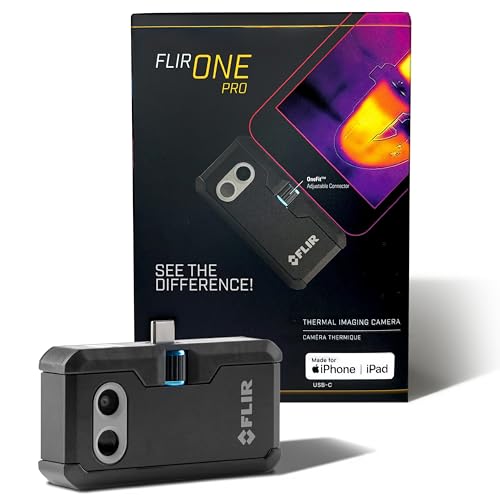 FLIR ONE Pro (phone) | Plugs into iPhone/Android; inspector favorite. | Amazon — $349.00 |
 Topdon TC001 | High-res phone module at a low price. | Amazon — $262.99 |
 FLIR C5 Compact | Standalone pocket camera with Wi-Fi. | Amazon — $649.00 |