Cheap FLIR Camera: 2026 Budget Tier Buyer Guide
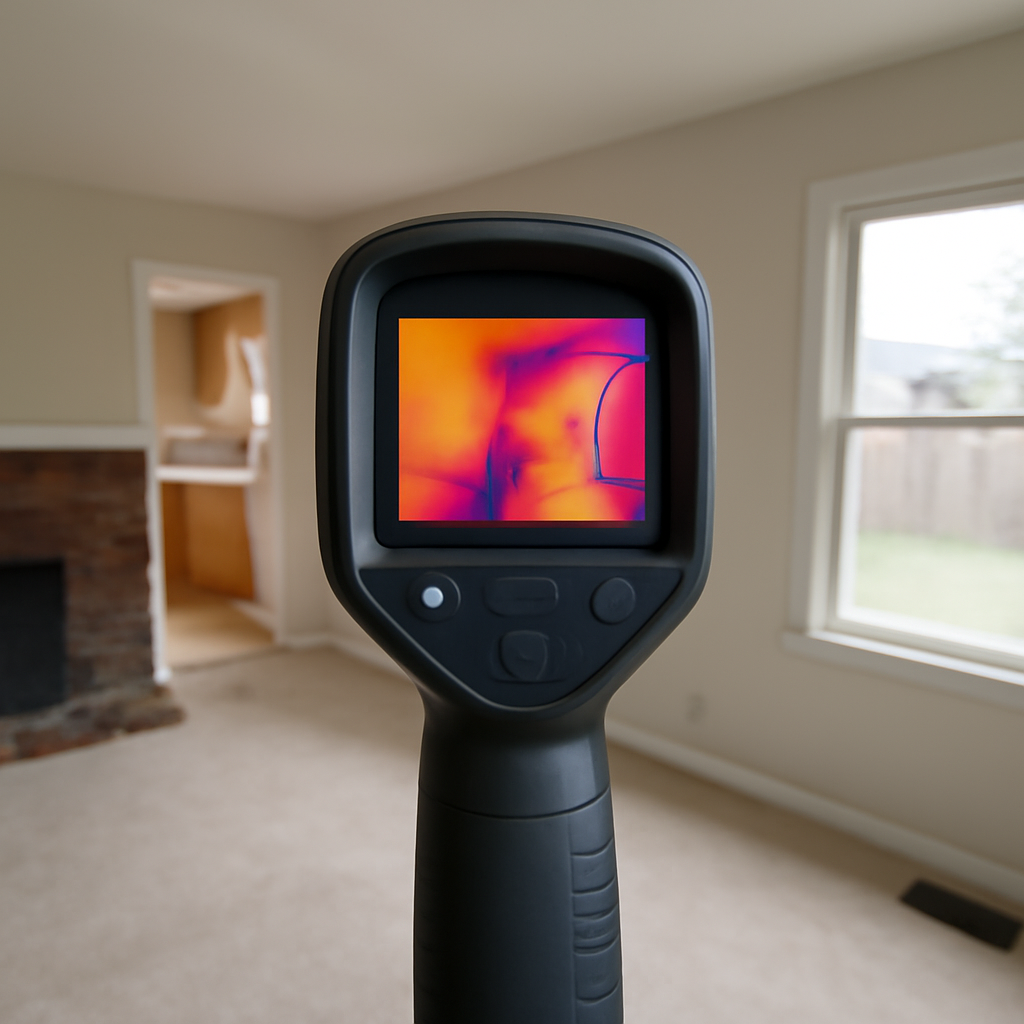
Budget shoppers searching for a cheap FLIR camera usually mean one of three things: a phone-attachment imager under $250, the discontinued C2 on the used market, or a manufacturer-refurbished unit at a 25 to 35 percent discount. All three paths reach a working thermal imager for under $500 if the buyer accepts the right trade-offs. This guide walks each option, lists what the budget tier can and cannot do, and helps homeowners decide between buying low or renting a higher-tier camera for a single project.
Part of our Thermal Imaging for Homes guide — start there for the full picture →
What Counts as a Cheap FLIR Camera in 2026?
For most buyers, “cheap” means under $500 street price. That range includes the FLIR One Gen 3 (around $200 to $250), the FLIR One Pro (around $400 to $450 new), used FLIR C2 units (typically $300 to $450 depending on condition), and manufacturer-refurbished C3-X or older E-series bodies when they appear in FLIR’s outlet listings. Anything below $200 carrying a FLIR badge should be inspected for authenticity: counterfeit and rebranded units circulate on third-party marketplaces.
The home inspection tools pillar guide covers where thermal cameras fit in a broader budget kit alongside moisture meters and borescopes.
The FLIR One Gen 3 ($200 to $250)
The FLIR One Gen 3 is the lowest-price authentic FLIR currently in production. It plugs into a USB-C or Lightning port and uses the host phone’s processor and screen. Native thermal resolution is 80×60, upscaled in software using FLIR’s MSX patent that overlays visible-light edge detail onto the infrared image. NETD is approximately 100 mK. Battery life on the camera itself is around 1 hour per charge.
Practical use cases: walking an attic to find missing insulation, mapping window air leaks during a blower-door depressurization, checking for hot breakers in a panel from a safe distance, and tracing radiant-floor heating runs. The image is detailed enough for homeowner decision-making. It is not detailed enough for a professional report deliverable.
The FLIR One Pro ($400 to $450)
One step up, the FLIR One Pro keeps the phone-attachment form factor but adds a 160×120 native sensor, sub-70 mK sensitivity, and a wider measurement range. The Pro tier is what working inspectors most often pick when they want a single screenshot for a report bundle without committing to a $1,500 handheld. Pro adds spot-meter accuracy and a higher temperature ceiling, both relevant for electrical-panel work.
The trade-off: the Pro is still tethered to a phone. Battery management, app crashes, and phone-OS updates can interrupt a field session in ways a standalone handheld does not.
The FLIR C2 ($300 to $450 Used)
FLIR discontinued the C2 in favor of the C3-X and C5 lines, but used C2 units remain widely available. A clean C2 with documented calibration history typically sells for $300 to $450. The C2 was the first pocket FLIR to popularize MSX fusion in a 320×240 display-resolution body with an 80×60 native sensor. NETD is approximately 100 mK.
Why consider a used C2 instead of a new One Gen 3? The standalone form factor. The C2 has its own screen, its own battery, and its own storage. For an inspector who does not want to occupy a phone for the entire walkthrough, that matters. Buyers should still request a recent calibration certificate and a bad-pixel map.
Refurbished and Outlet Pricing
FLIR’s direct outlet listings rotate, and the inventory there is small. When a refurbished C3-X or E-series body appears, expect a 20 to 35 percent discount versus new MSRP, a 12-month warranty instead of 24, and a fresh calibration. Authorized resellers (Grainger, Tequipment, others) occasionally list demo or open-box units at similar discounts. Avoid third-party marketplace listings with no warranty path; battery degradation and sensor drift are common on years-old field units.
What Cheap FLIR Cameras Can and Cannot Do
What They Do Well
Budget-tier FLIRs find air leaks, missing insulation, plumbing leaks under flooring, and overheating breakers. They support homeowner triage decisions: is this wall actually wet, or just discolored? They also serve well as a learning instrument for someone considering a future move into professional thermography.
What They Do Not Do Well
Cheap FLIRs do not produce radiometric reports that hold up under code-official review. They cannot resolve subtle temperature differences on commercial roof scans from ground level. They lack the lens flexibility that energy-audit firms expect. They produce screenshots, not deliverables. Professional home-energy assessments combine several instruments, so a thermal screenshot is one input, not a finished audit; ENERGY STAR’s seal-and-insulate guidance covers the fixes those audits usually point to.
Buying Safely on the Used Market
Counterfeit FLIRs do circulate. Authentic units have a visible serial sticker that registers in FLIR’s product database. Before purchasing used, ask the seller for the serial number and verify it through FLIR’s customer service. Request a recent calibration certificate (within 24 months) and a current bad-pixel map; both are routine for any working camera. A clean image with no dark pixels on a uniform thermal target is the simplest field check.
Inspectors comparing imager options across price tiers will also find context in the thermal camera imager device anatomy and specs guide.
Should Homeowners Rent Instead?
Tool-rental yards in Denver, Boulder, Colorado Springs, and the wider Front Range list prosumer-tier FLIR imagers at roughly $150 to $250 per day. A one-time pre-purchase inspection or a single seasonal envelope check can come in cheaper as a rental than as a new One Gen 3 purchase, and the rented camera resolves more detail. Renting also bypasses the calibration-history concern that haunts the used market.
Ownership wins past about five use-days per year, or when the buyer wants the camera available without scheduling friction. A homeowner who runs a yearly attic check and a yearly window-leak survey often finds the One Gen 3 worth the $200 even though the resolution is modest.
What About Non-FLIR Cheap Thermal Cameras?
InfiRay, Hti, and Topdon all market sub-$300 thermal imagers. Specifications often appear competitive on paper. The trade-offs are software ecosystem maturity, calibration consistency, and U.S. service availability. FLIR’s Thermal Studio and Ignite cloud workspace integrate with most professional report-generation workflows; competing software is improving but not yet at parity. Buyers who plan to use a budget imager for occasional homeowner tasks may not notice the difference; buyers who plan to grow into paid work usually find the FLIR ecosystem worth the modest premium.
How to Decide
The cheap-FLIR question reduces to three honest sub-questions. Will the camera live attached to a phone, or do you need standalone operation? Do you need a deliverable report, or only screenshots for your own decisions? Is this a tool you will use multiple times per year, or once? Answering those three picks the tier. InterNACHI thermography training assumes prosumer or better; ICC code-compliance work assumes similar.
FLIR One Gen 3 Hands-On Specifics
The FLIR One Gen 3 is the most-bought entry-tier authentic FLIR, and the hands-on specifics determine whether it actually fits a given buyer’s workflow. The native thermal sensor is 80×60 pixels, upscaled in software using MSX edge enhancement that overlays visible-light detail from a secondary microcamera onto the thermal image. Thermal sensitivity (NETD) hovers around 100 mK; thermal frame rate is approximately 8.7 Hz, sufficient for slow pans but visibly choppy when moving the phone quickly. The measurement range covers minus 4 degrees Fahrenheit to 248 degrees Fahrenheit, which suits residential building envelope and panel work but not high-temperature industrial applications.
Power draws from the host phone over the USB-C or Lightning connector that the user chooses at purchase. The two connector variants are physically incompatible, so buyers must pick correctly for their phone at order time. Internal battery on the camera itself supplements the phone power and runs about 60 minutes of continuous use per charge. The camera ships with a small charging cable and a fabric pouch. Total package weight is under 50 grams, light enough that the camera hangs off the phone connector without strain.
The FLIR One companion app on iOS and Android provides image capture, video recording, library management, and limited annotation tools. The free version supports JPG export with embedded temperature metadata. Cloud upload to FLIR Ignite is available as an optional sign-in feature, which makes captured images accessible across devices. App stability has improved across recent OS updates, but heavy-use sessions occasionally crash during long video recordings; saving frequently is sound practice.
Working in cold environments (unheated attics in winter, exterior building envelope scans below 32 degrees Fahrenheit) shortens the internal battery runtime substantially. Inspectors who plan extended cold-weather use sometimes keep the camera in a pocket between captures to maintain warmth. The unit is not rated for sustained outdoor temperature extremes; manufacturer guidance suggests operation between 32 degrees Fahrenheit and 95 degrees Fahrenheit. Within those operational bounds the camera performs reliably, but outside them users see image artifacts and accelerated battery drain.
When Cheap FLIR Is Adequate vs When to Step Up
A cheap FLIR camera covers a defined set of homeowner and entry-pro use cases competently. Air-leak hunting around windows, exterior doors, attic hatch perimeters, and recessed lighting penetrations is well within the 80×60 sensor’s capability. The temperature differential between conditioned and unconditioned air at typical winter setpoints is usually 30 degrees Fahrenheit or more, which the entry sensor resolves clearly. Water-leak detection on drywall and ceilings also fits the budget tier: active moisture creates evaporative cooling signatures that show up plainly even at modest sensitivity.
Other adequate use cases for the budget tier: spot-checking electrical panels for hotspot breakers from a safe distance, tracing radiant-floor heating runs in tile and concrete, finding missing insulation patterns in attics with a clear temperature differential, and verifying the operation of in-floor heating mats during a remodel. Homeowner triage decisions, learning-instrument use for someone exploring future thermography certification, and supplementary screenshots in a non-deliverable inspection notebook all fit comfortably in the cheap-FLIR space.
Cases that require stepping up to prosumer or professional tier: paid energy audits (see ENERGY STAR’s seal-and-insulate guidance), report deliverables presented to code officials or regulatory bodies, commercial roofing thermography where the camera must resolve subtle moisture patterns at distance, electrical work on three-phase commercial systems where measurement accuracy is documented in the report, and any thermography certification work covered by InterNACHI infrared training standards.
The boundary is real but not always obvious. A homeowner who buys a FLIR One Gen 3 to chase one air-leak issue often discovers a second and third use case within a year, which is fine; the camera handles them. The boundary is reached when the user wants to charge for the work or to present a report that survives third-party review. At that point the prosumer tier (the $1,500 to $3,000 band described in the thermal camera imager device anatomy guide) becomes the right investment, and the cheap-FLIR investment becomes a learning instrument rather than the working camera.
References
- ENERGY STAR: Seal and Insulate — U.S. Environmental Protection Agency (ENERGY STAR)
- InterNACHI Infrared Certification — InterNACHI
- ASHRAE Building Envelope Resources — ASHRAE
- ICC International Energy Conservation Code — ICC
Frequently asked questions
What is the absolute cheapest FLIR camera?
The FLIR One Gen 3 phone attachment at around $200 to $250 is the lowest-price authentic FLIR in current production. Anything significantly cheaper carrying a FLIR badge should be verified against FLIR's serial database before purchase.
Is a used FLIR C2 a good buy?
Yes, when sourced with a recent calibration certificate and a verifiable serial number. The standalone form factor is the main reason to choose a used C2 over a new One Gen 3 at similar pricing.
Can a cheap FLIR replace a professional audit?
No. Budget thermal cameras support homeowner triage and learning. Energy audits and code-compliance documentation need prosumer or professional tier hardware and a trained operator.
Should I buy or rent?
Rent for one-time pre-purchase inspections or single seasonal checks; ownership of a budget unit makes sense past about five use-days per year. Renting at $150 to $250 per day buys higher resolution than a $200 phone attachment offers.
Thermal imaging cameras
Infrared cameras reveal hidden moisture, missing insulation, and air leaks. Phone-attachment models are the budget entry point; standalone units have higher resolution.
| Product | Why | Buy |
|---|---|---|
 FLIR ONE Pro (phone) FLIR ONE Pro (phone) | Plugs into iPhone/Android; inspector favorite. | Amazon — $349.00 |
 Topdon TC001 Topdon TC001 | High-res phone module at a low price. | Amazon — $199.99 |
 FLIR C5 Compact FLIR C5 Compact | Standalone pocket camera with Wi-Fi. | Amazon — $611.50 |