Black Mold Examples: Real-World Cases Homeowners Find
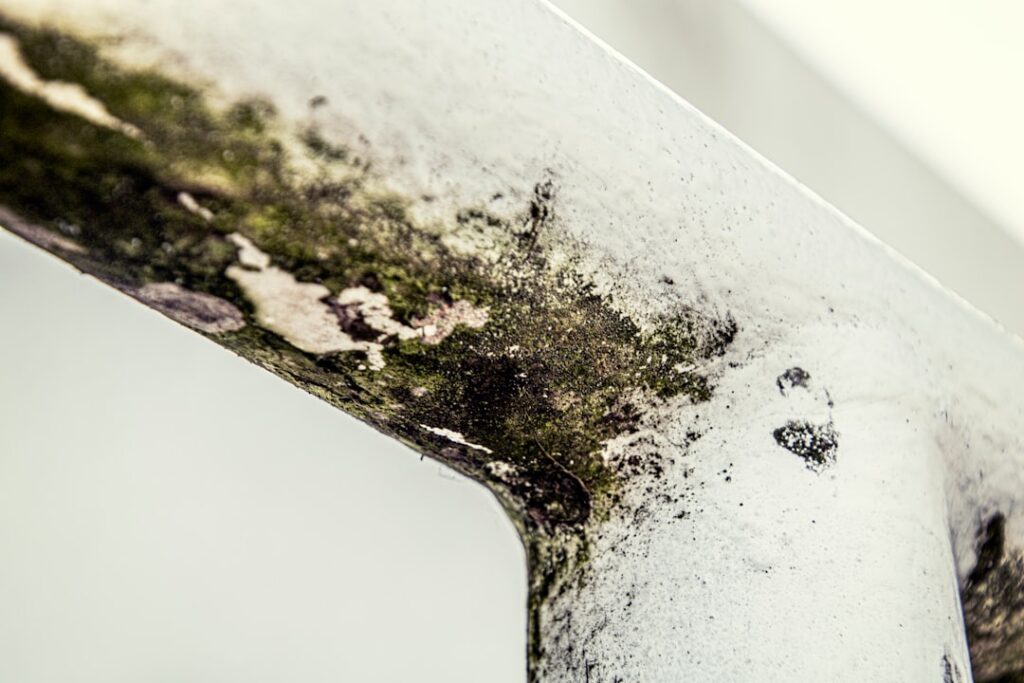
Most homeowners who type “black mold examples” into a search bar are trying to match a stain they just spotted against something a credible source has photographed or described. That comparison is harder than it sounds, because dark-colored mold growth can come from at least five different genera and dozens of species. This guide walks through the most common black mold examples found in Colorado Front Range homes, the moisture conditions that produced each one, and what visual differences separate hazardous Stachybotrys chartarum from the more ordinary dark molds it gets confused with. This article summarizes EPA, CDC, and NIEHS guidance current as of 2026 — consult a certified mold professional before remediation and your physician for any health symptoms.
Part of our How to Become a Home Inspector guide — start there for the full picture →
Is this mold, asbestos, or water damage? Get a free instant screen
Upload a clear photo of the suspect area. You'll get an instant AI screening opinion and what to do next. This is screening guidance, not a professional determination.
Screening guidance only. AI can be wrong. Confirm asbestos, mold type, or lead with lab testing or a licensed professional before acting.
What counts as a black mold example?
In casual conversation, “black mold” usually means Stachybotrys chartarum — the slow-growing, slime-producing species linked to chronically wet drywall and cellulose. In a stricter sense, any mold colony that appears dark green, charcoal gray, or true black on a visible surface qualifies as a black mold example. According to the U.S. Environmental Protection Agency, color alone never confirms species; lab analysis is the only reliable identifier. That distinction matters because each example below could be Stachybotrys, Cladosporium, Aspergillus niger, or even Alternaria depending on the substrate and moisture history.
The Centers for Disease Control and Prevention groups the practical homeowner response under one rule: visible mold of any color on a porous building material needs to be cleaned or removed, regardless of species. The examples here are organized by location rather than by genus, because the location usually predicts the moisture source and tells you whether the colony will keep coming back after cleaning.
Example one: black mold in a bathroom corner
The most common example homeowners photograph and ask about is the wedge of black speckling where two bathroom walls meet the ceiling above a shower. The visible pattern usually looks like fine black dots that connect into a darker smear over weeks or months. In a bathroom with a working exhaust fan, this is almost always Cladosporium or Aureobasidium pullulans feeding on soap film, body oils, and condensation — not Stachybotrys. The reason is that bathroom corners dry out between showers, and Stachybotrys requires sustained wetness for several days to weeks to fruit visibly.
The fix for this example is mechanical: wipe with a detergent solution, ventilate aggressively during and after showers, and check that the exhaust fan vents to outdoors rather than into an attic. The EPA’s “Mold Course” recommends replacing caulk that has discolored from the inside, because mold often colonizes the porous backside of failed silicone. If the same patch returns within weeks of cleaning, that points to a hidden moisture source behind the wall.
Best At Home Mold Test Kit: our top 3 picks
| Product | Best for | Key features | Price | Buy |
|---|---|---|---|---|
| Varify 6-Pack | All-round DIY plate kit |
| $13.39as of Nov 26, 2026 3:47 pm GMT+0000 | Buy now →Check current price |
| KAYENQO 12-Test | Testing many rooms |
| $21.65as of Nov 26, 2026 3:43 pm GMT+0000 | Buy now →Check current price |
| Detekt Indoor Air Quality Kit | HVAC vents |
| $36.99as of Nov 26, 2026 3:46 pm GMT+0000 | Buy now →Check current price |


Prices are Amazon’s listed prices as of the time shown and change often; check Amazon for today’s price. As an Amazon Associate we earn from qualifying purchases.
Example two: black mold on water-damaged drywall
This is the textbook Stachybotrys case. A roof leak, a supply-line burst, or a slow drip from a poorly sealed window saturates the paper face of a drywall sheet for several days. After cleanup, the visible surface dries but the gypsum core stays damp, and within two to three weeks a dark olive-to-black colony appears, often with a faintly slimy or wet appearance. The classic example is a rectangular discoloration that mirrors the shape of the drywall sheet behind a finished wall, sometimes visible only after removing baseboard or after the next humid season.
According to the CDC, porous materials like drywall that have stayed wet for more than 48 hours should be assumed contaminated and removed rather than cleaned in place. Sanding or scrubbing a Stachybotrys colony on drywall risks aerosolizing spores without solving the underlying problem. The replacement cut should extend at least 12 inches beyond the visible edge of growth.
Example three: black mold in a basement window well
Colorado homes with poured concrete foundations often show another classic example: a black band on the inside of the foundation wall directly below a basement window. Snowmelt drains into the window well, the well’s drain backs up, and water wicks through the concrete into the conditioned space. The mold that appears here can be Cladosporium, Aspergillus, or Stachybotrys depending on what organic material is present — bare concrete supports limited growth, but painted concrete or any wood framing adjacent to the wall provides a feast.
The visual signature is a horizontal stripe rather than a patch, sometimes with vertical drip-shaped tails extending downward. Black mold from water damage behaves differently than condensation mold because it tends to persist after surface cleaning. Repairing the window well drainage and adding a gutter extension that moves roof runoff away from that side of the foundation usually solves the problem at its source.
Example four: black mold in attic insulation
Attic mold examples often surprise homeowners because the attic looks clean from a distance, but a flashlight reveals dark patches on the underside of roof sheathing above bathroom or kitchen exhaust ducts that terminate inside the attic instead of through the roof. The species here is usually Cladosporium or Aspergillus growing on plywood OSB and on the paper backing of fiberglass insulation. Spores from this colony rarely enter the living space directly, but they can be drawn into the home through ceiling penetrations during stack-effect pressure differentials in winter.
A 2020 review in the journal Indoor Air, indexed at PubMed, confirms that attic-level mold contamination correlates strongly with improperly terminated exhaust fans and disconnected dryer vents. Replacement of contaminated insulation and rerouting of vents to terminate outside the building envelope are the standard remediation steps.
Example five: black mold behind a kitchen sink
The under-sink cabinet is one of the highest-frequency mold examples reported in residential inspection databases. A slow drip from a P-trap, dishwasher supply line, or garbage disposal fitting wets the cabinet floor over months. The bottom of the cabinet — often particleboard with a thin laminate veneer — swells, and a dark colony forms on the back of the cabinet against the wall. This is frequently Aspergillus or Penicillium with occasional Stachybotrys if the leak is particularly slow and chronic.
Cabinet-floor replacement is usually less expensive than the homeowner expects, but the leak must be repaired first and the wall behind the cabinet inspected before reinstallation. Many mold inspection findings in our hub trace the visible cabinet damage back to a fitting failure that started years before the homeowner noticed any odor.
Example six: black mold around HVAC vents and registers
Dark streaks fanning out from the louvers of a ceiling supply register usually represent dust accumulation on a cold surface, not mold. The streaks form because cold supply air condenses room humidity onto warmer ceiling paint adjacent to the register, and airborne dust binds to the moist film. However, the inside of the register boot and the few inches of flex duct visible behind it can host genuine mold growth when the system runs in dehumidify mode for short cycles and never dries the duct interior between runs.
The American Society of Heating, Refrigerating and Air-Conditioning Engineers (ASHRAE) recommends keeping indoor relative humidity below 60 percent year-round to limit duct-surface microbial growth. A return-side filter at MERV 11 or above also slows the deposition of organic dust that feeds opportunistic mold inside ductwork.
Example seven: black mold in the washer’s rubber gasket
Front-loading washing machines created a new mold example that hadn’t existed in homes before about 2005. The flexible door gasket traps a thin film of water after each cycle, and the warm humid pocket inside the closed door becomes an ideal incubator for Cladosporium and Aspergillus species. The visible signature is a black ring or polka-dot pattern on the gray rubber lip.
Manufacturer guidance is to leave the door cracked open between loads, wipe the gasket dry, and run a monthly hot-water service cycle. This example rarely poses a structural threat but can contribute to background spore counts that complicate air-sample testing elsewhere in the house.
Example eight: black mold on basement framing after flooding
Basement floods that drain but leave wood framing damp for more than a few days regularly produce significant mold growth on subfloor joists, sill plates, and lower wall framing. The species mix here depends on how long the wood stayed wet and what other organic material was present. Quick-drying floods (within 48 hours) often produce no significant growth; floods where wood stays wet for a week or more reliably produce mixed Cladosporium, Penicillium, and sometimes Stachybotrys growth on the framing surface.
The visible signature varies by location on the framing. Top surfaces of joists often show light powdery growth that brushes off easily. Sides and undersides that stayed wetter longer can develop heavier slimy growth, especially in low ventilation conditions. Remediation involves sanding or brushing visible growth, treating the wood with an EPA-registered antimicrobial wood treatment, and addressing whatever drainage or moisture-management failure caused the flood in the first place.
How to distinguish hazardous black mold examples from cosmetic ones
None of these examples can be confirmed as Stachybotrys without lab analysis, and the EPA explicitly advises against species testing for routine residential cases. The practical decision tree is: if visible growth covers less than ten contiguous square feet on a hard surface and the moisture source is known and fixable, homeowners can clean it themselves with detergent and water. If it covers more area, sits on porous material like drywall or insulation, returns after cleaning, or coincides with documented indoor health symptoms, the EPA recommends professional remediation.
InterNACHI’s mold inspection standard of practice notes that visual identification alone misclassifies species in roughly half of homeowner-submitted photos when compared against laboratory follow-up. That uncertainty is why color, location, and texture should drive the response rather than the homeowner’s species guess.
When to bring in a professional
Any of the examples above can warrant a professional assessment, but two specific patterns almost always do: dark growth on drywall after a documented water event, and any visible mold that the occupants associate with respiratory symptoms in a household member. The Colorado Department of Public Health and Environment notes that no state license is required for residential mold remediation in Colorado, so verifying a contractor’s IICRC certification matters more than checking for a state credential.
A pre-purchase mold inspection during a real estate transaction typically includes a visual assessment, moisture-meter survey, and one or two air or surface samples sent to an accredited lab. Most Front Range inspectors offer this as an add-on to the standard home inspection.
More Questions About Black Mold Examples
What does black mold look like on a window sill?
Black mold on a window sill usually appears as small black or dark green spots clustered in corners and along the glass edge where condensation collects.
Window mold is common in cold weather when warm indoor air hits cold glass and frames. On vinyl and aluminum it usually wipes off with detergent, but on painted wood it can stain and soften the finish. Wiping away condensation, running bathroom and kitchen fans, and keeping indoor humidity below about 50 percent in winter help prevent it from returning.
What does black mold look like on carpet?
Black mold on carpet often appears as dark spots or patches, sometimes with a fuzzy texture, and almost always comes with a musty smell.
Growth often starts on the carpet pad or backing before showing on the surface, so the visible area may be smaller than the actual damage. Carpet that stayed wet for more than 24 to 48 hours after a flood or leak is at high risk. The EPA generally recommends removing and discarding moldy carpet and pad rather than trying to clean it.
What does black mold look like on a mattress?
Black mold on a mattress usually shows as dark spots or speckles on the underside or edges, often where the mattress sat against a damp floor, wall, or solid platform.
A musty smell is often the first clue. Mattresses absorb moisture from sweat and humid air, especially on bases with poor airflow. Because the foam and fabric are porous, a mattress with visible mold growth is usually best replaced. Using a slatted frame and keeping bedroom humidity in check reduce the chance of it happening again.
What does black mold look like on a refrigerator seal?
Black mold on a refrigerator door gasket appears as dark spots or lines in the folds of the rubber seal, where moisture and food residue collect.
Gasket mold is usually a surface problem. Wipe the folds with warm, soapy water or a mild vinegar solution, using an old toothbrush to reach the creases, then dry thoroughly. Checking the drip pan under the fridge is also worthwhile, since standing water there can grow mold and produce odors. A cracked or stiff gasket should be replaced.
References
- Mold Course Introduction — U.S. Environmental Protection Agency
- Basic Facts about Mold and Dampness — Centers for Disease Control and Prevention
- Mold Health Topic — National Institute of Environmental Health Sciences
- Mold Inspection Standards of Practice — InterNACHI
- Mold and Moisture Guidance — Colorado Department of Public Health and Environment
Frequently asked questions
Are all black mold examples toxic?
No. Most dark-colored mold colonies in homes are Cladosporium or Aspergillus species, which are common allergens but not the toxin-producing Stachybotrys chartarum often labeled 'toxic black mold.' Lab analysis is the only way to confirm species, and the EPA recommends responding to all visible mold the same way regardless of species.
How quickly does black mold appear after water damage?
Most mold genera begin visible colonization within 24 to 72 hours of sustained moisture on a porous surface. Stachybotrys specifically tends to appear two to three weeks after a leak because it grows more slowly than competing species. Drying water-damaged materials within 48 hours is the EPA's primary prevention rule.
Should I test the mold in my house to confirm it is black mold?
The EPA generally discourages species testing in routine residential cases because the response is the same regardless of species: remove the moisture source and clean or replace contaminated materials. Testing makes sense when a real estate transaction, insurance claim, or persistent health complaint requires documentation.
Can I clean black mold myself?
Visible mold under roughly 10 contiguous square feet on hard non-porous surfaces can usually be cleaned with detergent and water by a healthy homeowner wearing an N95 respirator and gloves. Larger areas, porous materials, or any case involving respiratory symptoms should be handled by an IICRC-certified remediation contractor.
What does black mold look like on clothes?
Black mold on clothes shows up as small dark spots or speckles, often with a musty odor, usually on items stored damp or left in a washer. Washable items often clean up with a hot wash and full drying, though stains may remain.
What does black mold look like on a shower curtain?
Black mold on a shower curtain appears as dark spots along the bottom hem and folds where water collects. Most plastic liners and fabric curtains can be machine-washed with detergent, but heavily stained liners are inexpensive to replace.
What does black mold look like in a toilet tank?
Black mold in a toilet tank shows up as dark rings or slimy patches at the waterline and on the inside walls. It is usually harmless to the toilet's function and cleans up with a brush and a cleaner safe for tank parts.
Front Range homeowners who have spotted one of these black mold examples and want a second opinion before cleaning or remediation can connect with a vetted local inspector through our contact page.