Asbestos Testing in Lakewood, CO | InspectandTest
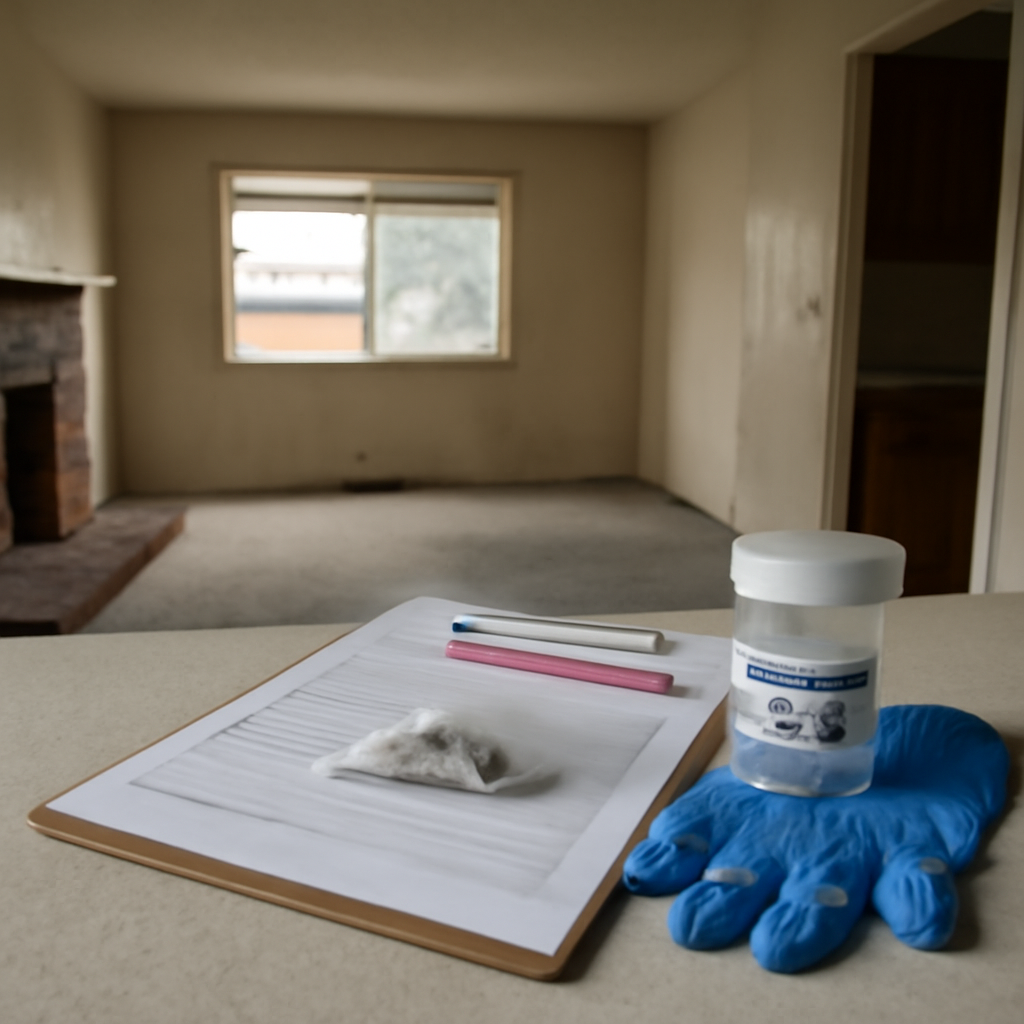
Lakewood’s housing stock skews heavily toward postwar and mid-century construction, and that 1950s-to-1970s era is exactly when asbestos was widely used in building materials. For homeowners planning renovations or buyers evaluating an older Jefferson County property, asbestos testing in Lakewood is a practical safeguard. Asbestos is dangerous only when fibers become airborne, so identifying it before disturbance is the goal. This guide summarizes EPA, CDC, and CDPHE guidance current as of 2026. Consult a certified inspector before any work and your physician about exposure concerns.
Part of our Asbestos in the Home guide — start there for the full picture →
Is this mold, asbestos, or water damage? Get a free instant screen
Upload a clear photo of the suspect area. You'll get an instant AI screening opinion and what to do next. This is screening guidance, not a professional determination.
Screening guidance only. AI can be wrong. Confirm asbestos, mold type, or lead with lab testing or a licensed professional before acting.
Asbestos testing in Lakewood: what to know
Asbestos testing identifies whether a building material contains asbestos fibers before you disturb it through renovation or demolition. A certified inspector collects small samples and sends them to an accredited lab for analysis under polarized light microscopy. In Lakewood’s mid-century homes, the materials of concern are common: popcorn ceilings, vermiculite attic insulation, floor tile and mastic, pipe wrap, and certain drywall joint compounds.
The key principle from the EPA and CDC is that intact, undisturbed asbestos generally poses low risk; the hazard comes from sanding, cutting, or demolishing it. That is why testing belongs before a remodel, not after. Lakewood’s heavy stock of pre-1978 homes makes this a frequent need across the city.
It helps to understand why asbestos was so widely used in the era that built Lakewood. The mineral resists heat, fire, and corrosion, and it was cheap, so manufacturers added it to dozens of building products from the 1940s through the late 1970s. That is precisely the window in which most of Lakewood’s housing went up, which is why a single mid-century home can contain asbestos in several unrelated materials at once, from the ceiling texture to the floor tile to the furnace duct insulation.
The distinction between friable and non-friable materials guides testing and handling. Friable materials, such as crumbling pipe insulation or deteriorated popcorn ceiling, can release fibers with light contact and are the higher concern. Non-friable materials, such as intact vinyl floor tile, bind the fibers in a matrix and release them only when cut or ground. A certified inspector assesses both the material type and its condition, because a stable, non-friable material in good shape may safely be left in place.
Why Lakewood homes need asbestos testing
The timing of Lakewood’s growth is the reason. The city filled in with postwar housing through the 1950s, 1960s, and 1970s, placing a large share of homes squarely in the asbestos era. Popcorn (acoustic) ceilings, common in homes of that period, frequently contained asbestos until manufacturers phased it out. Vermiculite attic insulation, much of it from the Libby, Montana source, is another well-documented concern in older homes.
Neighborhoods like Glennon Heights, Green Mountain, and the blocks surrounding Belmar contain plenty of homes from this window. Before scraping a ceiling or pulling up old tile, testing tells you whether you can proceed safely. Our guide to asbestos in the attic covers the vermiculite issue in detail, and the broader pre-1978 housing hazard guide sets the full context for Jefferson County’s older stock.
The vermiculite concern in Lakewood attics
Vermiculite insulation deserves particular attention in Lakewood’s older homes. Much of the loose-fill vermiculite sold in the United States came from a mine in Libby, Montana, that was contaminated with asbestos, and it was poured into attics as insulation through the decades that built much of the city. It looks like small, lightweight, gray-brown or gold pebbles. Because it is loose and easily disturbed, the EPA advises homeowners not to handle it and to have it tested before any attic work, including running new wiring or adding insulation.
Popcorn ceilings and floor tile
Acoustic popcorn ceilings are among the most common asbestos materials in Lakewood’s mid-century homes, and they are tempting targets for renovation because the look has fallen out of fashion. Scraping one without testing first can release fibers throughout the room. Likewise, the 9-inch vinyl floor tiles common in homes of this era, along with the black mastic adhesive beneath them, frequently contained asbestos. Testing these materials before removal lets you choose between safe abatement and leaving them intact under new flooring.
What a Lakewood asbestos test covers
A professional inspection surveys suspect materials throughout the home and collects representative samples. Common targets include ceiling texture, joint compound, vinyl floor tile and the mastic beneath it, pipe and duct insulation, and attic vermiculite. The inspector seals samples and submits them to an accredited lab, which reports the percentage and type of asbestos present.
Sampling must be done carefully to avoid releasing fibers, which is why DIY sampling is discouraged for friable materials. For renovation-scope projects, a full pre-demolition survey documents every material that will be disturbed. If your suspicion centers on ceilings or drywall, our explainer on what asbestos drywall looks like helps you understand what the inspector is checking. The lab report becomes the basis for safe handling or abatement decisions.
The lab method matters for accuracy. Polarized light microscopy is the standard for bulk building materials and identifies the asbestos type and rough percentage. For certain materials where fibers are very fine or present in low amounts, a lab may use transmission electron microscopy, which is more sensitive. A homeowner does not need to master these methods, but it is worth confirming the inspector uses an accredited lab, since the entire decision to disturb or abate a material rests on the reliability of that result.
Once results come back, you have options short of removal. If a material tests positive but is intact and will not be disturbed, encapsulation or simply leaving it in place is often the safest and cheapest path. If the material must be removed for a renovation, that triggers abatement by a certified contractor. The lab report, combined with the inspector’s notes on each material’s condition, lets a Lakewood homeowner choose the right approach for each specific material rather than treating the whole house as a hazard.
Asbestos testing cost in Lakewood
A single-sample asbestos test in the Lakewood area typically costs $50 to $150 per sample including lab analysis. A focused inspection of a few suspect materials often runs $250 to $500, while a comprehensive pre-renovation or pre-demolition survey of a whole home can reach $400 to $800 depending on size and the number of samples.
Testing is inexpensive compared with the cost of an exposure incident or an emergency abatement after material is disturbed. Vermiculite attic testing may cost more because of access and handling. Given Lakewood’s pre-1978 housing density, budgeting for testing before any older-home remodel is sound practice.
The number of samples drives most of the price. Because asbestos content can vary even within a single material, labs often analyze multiple samples of the same ceiling or floor to be confident. A homeowner planning to disturb just one material pays far less than one gutting a whole mid-century house, where ceilings, floors, walls, and mechanical insulation may all need sampling. Discussing the renovation scope with the inspector up front produces an accurate quote rather than a surprise.
Consider the cost of skipping testing. If a contractor unknowingly disturbs asbestos during a remodel, the result can be a contaminated home requiring professional decontamination, far more expensive than the test would have been. Many reputable Lakewood contractors will not begin work on a pre-1978 home without a clearance from asbestos testing, both to protect their crews and to stay compliant with state rules. Testing first keeps the project on schedule and within budget.
Lakewood regulations and disclosure
Colorado regulates asbestos through CDPHE Regulation 8, which requires an asbestos inspection before most renovation or demolition work that disturbs regulated materials above certain thresholds. This applies to Lakewood homeowners and contractors alike, and abatement above the regulatory trigger amounts must be done by a state-certified abatement contractor.
Federally, pre-1978 homes fall under the Lead-Based Paint Disclosure rule for lead, and asbestos disclosure follows Colorado’s material-defect framework. Colorado does not license home inspectors, so for asbestos work verify the inspector holds AHERA certification and uses an accredited lab. For the lead side of the same older-home risk, see our Lakewood lead testing guide. Keep all lab reports, since they document compliance with Reg 8.
Regulation 8 sets specific thresholds that determine when its requirements kick in. For single-family homes, the rule defines trigger levels measured in square or linear feet of regulated asbestos-containing material; below those amounts, a homeowner has more latitude, while at or above them, a certified abatement contractor and proper notification are required. Because most homeowners cannot easily judge whether a project crosses the threshold, a certified inspector’s survey provides the documentation that keeps a Lakewood renovation on the right side of the rule.
The consequences of ignoring Reg 8 are real. Improper disturbance or disposal of asbestos can bring CDPHE enforcement, fines, and a contaminated property, and contractors who knowingly skip the inspection step expose themselves to liability. For a homeowner, the practical takeaway is simple: get the survey before the work, keep the paperwork, and use certified professionals for any abatement. That sequence protects your health, your wallet, and your ability to sell the home later without disclosure problems.
Neighborhoods and areas served
Asbestos testing in Lakewood covers Glennon Heights, Green Mountain, Belmar, and the older neighborhoods near Bear Creek Lake. Because so much of the city was built in the asbestos era, demand is consistent across these areas. Inspectors typically serve adjacent Golden, Wheat Ridge, Morrison, and western Denver too.
An inspector familiar with Jefferson County’s mid-century construction knows where these materials hide in local floor plans. Buyers and renovators comparing across the metro may also review nearby cities; our Boulder asbestos testing guide covers a county with even older historic housing and significant pre-1978 rental stock.
How to choose a Lakewood asbestos testing provider
Look for AHERA-certified building inspectors who use an accredited (NVLAP) laboratory. Ask how they sample friable materials safely, whether they provide a written survey suitable for a Reg 8 project, and how quickly the lab returns results. A credible provider explains which materials need testing and which can be left undisturbed.
Avoid combining testing with abatement under one roof unless the firm clearly separates the roles, since that can create a conflict of interest. Confirm the inspector carries appropriate insurance and has local experience with Lakewood’s postwar housing.
Turnaround time is a practical consideration, especially during a renovation or a real-estate deadline. Standard lab analysis often returns in a few business days, while rush service costs more but can deliver results within 24 hours. If your project or contract is on a tight schedule, ask the inspector about rush options up front so the testing does not become the bottleneck that holds up the entire job. A provider who works the Lakewood market regularly will know which labs offer reliable rush service.
Finally, match the inspector to the scope of your project. A homeowner who only wants to check a popcorn ceiling before scraping it needs a simple, focused service. A buyer renovating an entire mid-century home, or a contractor facing a Regulation 8 demolition, needs a full pre-demolition survey from an inspector experienced with comprehensive documentation. Being clear about your goal when you call lets the provider quote the right level of service rather than over- or under-scoping the work.
References
- Protect Your Family From Exposures to Asbestos — U.S. Environmental Protection Agency
- Asbestos Regulation 8 Program — Colorado Department of Public Health and Environment
- About Asbestos — Centers for Disease Control and Prevention
- Asbestos Safety Standards — Occupational Safety and Health Administration
Frequently asked questions
Which Lakewood homes are most likely to contain asbestos?
Homes built from the 1950s through the late 1970s, which make up much of Lakewood's stock. Common asbestos materials from that era include popcorn ceilings, vermiculite attic insulation, vinyl floor tile, pipe wrap, and some joint compounds.
Do I need an asbestos test before remodeling in Lakewood?
In most cases, yes. Colorado's CDPHE Regulation 8 requires an asbestos inspection before renovation or demolition that disturbs regulated materials above set thresholds. Testing pre-1978 materials before disturbing them is both legally prudent and safer.
How much does asbestos testing cost in Lakewood?
A single sample with lab analysis typically costs $50 to $150. A focused inspection runs $250 to $500, and a full pre-renovation survey can reach $400 to $800 depending on home size and sample count.
Is asbestos dangerous if I leave it alone?
Intact, undisturbed asbestos generally poses low risk. The hazard arises when materials are sanded, cut, or demolished, releasing fibers into the air. Testing before any disturbance lets you plan safe handling or abatement.
Planning a remodel in a mid-century Lakewood home, or buying an older Jefferson County property? Connect with a vetted asbestos inspector through our contact page before any work begins.