Asbestos Testing in Lafayette, CO | InspectandTest
Lafayette grew up as a coal-mining town, and its Old Town and East Simpson core is full of pre-1900-to-pre-1978 miners’ cottages and brick homes, exactly the stock most likely to contain asbestos in its building materials. Asbestos testing lafayette owners arrange identifies whether materials in those older homes, from popcorn ceilings to floor tile and pipe insulation, actually contain asbestos before a renovation disturbs them. This page explains what gets tested, how the lab process works, what it costs, and why this Boulder County town’s housing history makes it relevant. This summary reflects EPA, CDC, and OSHA guidance current as of 2026; consult a certified professional before disturbing any suspect material.
Part of our Asbestos in the Home guide — start there for the full picture →
Is this mold, asbestos, or water damage? Get a free instant screen
Upload a clear photo of the suspect area. You'll get an instant AI screening opinion and what to do next. This is screening guidance, not a professional determination.
Screening guidance only. AI can be wrong. Confirm asbestos, mold type, or lead with lab testing or a licensed professional before acting.
Asbestos testing in Lafayette: what to know
Asbestos testing is the laboratory analysis of a small sample of a suspect building material to determine whether it contains asbestos fibers and at what percentage. Intact, undisturbed asbestos generally is not a hazard; the danger comes when renovation, demolition, or damage releases fibers into the air. Testing tells you which materials need care before any work begins.
Lafayette’s old coal-era housing makes this especially relevant. Materials from before 1978, common in Old Town cottages, frequently contain asbestos. For the broader context on why the 1978 cutoff matters, our guide to asbestos and lead in pre-1978 housing explains the hazard and the history.
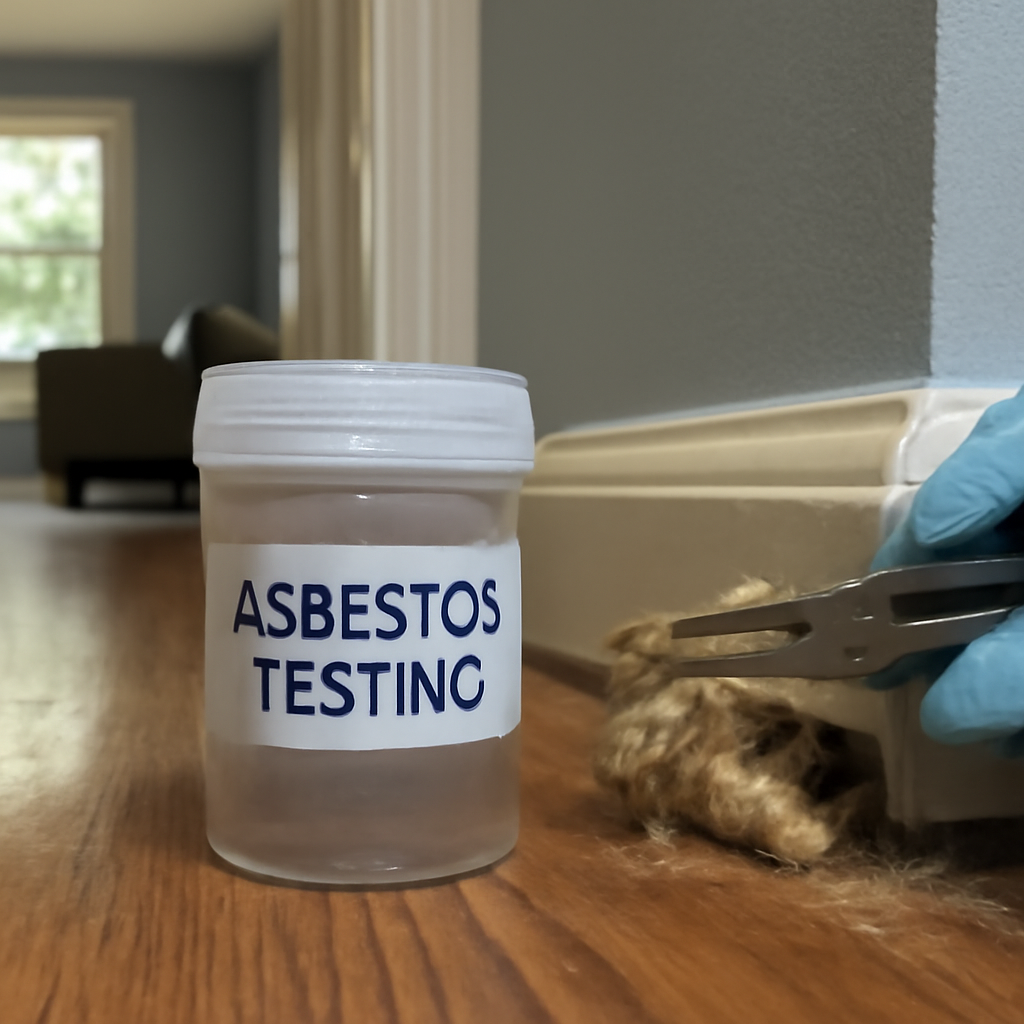
Testing is not a DIY job. The EPA and OSHA both warn that collecting a sample improperly can release the very fibers you are trying to avoid. A trained inspector wets the material, takes a small piece using proper precautions, seals it, and sends it to an accredited lab, which is the safe and defensible way to get an answer.
The reason undisturbed asbestos is generally left alone is worth understanding. A popcorn ceiling or floor tile that contains asbestos but is intact and painted poses little risk while it stays put; the hazard begins when someone sands, scrapes, drills, or demolishes it. That is why testing is tied to renovation: the question is rarely whether an old Lafayette cottage contains asbestos in the abstract, but whether the planned project will disturb a material that does. Knowing the answer in advance lets an owner either proceed normally or budget for proper abatement before the work begins.
Why Lafayette homes need asbestos testing
The coal-town housing is the whole reason. Lafayette’s Old Town and East Simpson hold pre-1900 and early-1900s miners’ cottages and brick homes, plus mid-century stock, all predating the 1978 restrictions, so asbestos-containing materials are common. The CDC notes asbestos was used in dozens of building products through the 1970s, from textured ceilings to vinyl flooring to old pipe wrap.
The materials are where families remodel. In an Old Town cottage, suspect materials include popcorn or textured ceilings, vinyl floor tile and its mastic, sheet flooring, pipe and duct insulation often added during mid-century updates, joint compound, and exterior siding. An owner restoring a historic cottage can disturb asbestos without knowing it.
The layered history of these cottages is what makes them tricky. A pre-1900 home in Old Town may have been re-floored, re-roofed, re-insulated, and re-plumbed several times across the twentieth century, leaving a stack of materials from different eras. Asbestos can hide in any of those layers, beneath a newer floor, inside a wall opened during a mid-century update, or wrapped around a furnace duct added decades after the house was built. A survey that accounts for this layering, rather than judging by the home’s original date alone, is what a restoration in Lafayette actually needs.
The renovation pressure is real in Lafayette. As a desirable Boulder-adjacent town, Old Town cottages are frequently bought to renovate, exactly the work that disturbs old materials. OSHA sets strict rules for asbestos work because airborne fibers, once inhaled, are linked to serious lung disease decades later. Testing first means a homeowner knows whether a project needs licensed abatement or can proceed normally.
The delay between exposure and illness is what makes asbestos easy to underestimate. The diseases linked to it, including asbestosis and mesothelioma, typically appear decades after the fibers are inhaled, so a weekend of scraping an old ceiling produces no immediate symptom to warn anyone that something went wrong. That long latency is precisely why the precaution matters before the work, not after. An owner restoring an Old Town Lafayette cottage who tests a popcorn ceiling before removing it removes the guesswork at the only point where it can still protect the household.
What Lafayette asbestos testing covers
An asbestos inspection surveys the home for suspect materials, then samples the ones a planned project will disturb. The inspector documents each sample’s location so the lab result maps clearly to the material.
Sampling and lab analysis
The inspector takes small samples of suspect materials using wet methods and sealed containers, then sends them to an accredited lab. The lab analyzes them, typically by polarized light microscopy for bulk materials, and reports the percentage of asbestos by type. A result above the regulatory threshold means the material is asbestos-containing and must be handled accordingly.
Common Lafayette materials tested
For an Old Town cottage, the usual suspects are textured ceilings, 9-inch and 12-inch floor tile, the black mastic beneath it, pipe and furnace-duct insulation often retrofitted decades ago, drywall joint compound, and cement siding or shingles. A renovation-driven survey focuses on whatever the project will cut, scrape, or remove rather than testing every surface.
What the result tells you
A lab report does more than say yes or no. It identifies the asbestos type and the percentage, which informs how the material must be handled and whether it falls under regulatory thresholds. A material confirmed positive is treated as asbestos-containing and, for any disturbing work, calls for a CDPHE-certified abatement contractor and proper containment. A negative result clears the project to proceed with normal renovation. For an owner restoring a Lafayette cottage, that clear distinction converts a vague worry about a century of layered materials into a specific, documented decision.
Asbestos testing cost in Lafayette
A single asbestos sample analyzed by an accredited lab typically costs about $30 to $75, while a professional inspection with multiple samples for a renovation often runs $300 to $600 depending on how many materials are involved. A pre-demolition or whole-home survey of an old cottage costs more because it covers many materials.
The cost scales with the number of samples and the turnaround speed. A homeowner scraping one popcorn ceiling needs only a sample or two; a full Old Town cottage restoration touching flooring, ceilings, and insulation needs several. A whole-home or pre-demolition survey of a layered historic cottage naturally costs more than a focused renovation survey, because there is simply more material to evaluate.
Rush turnaround is available when a project timeline is tight, usually at a premium over standard lab service. For most Lafayette restorations, planning the test a week or two ahead avoids that surcharge and still keeps the work on schedule. The bigger cost driver is the abatement that follows a positive result, not the test itself, which is why testing first is the budget-friendly move: it tells an owner exactly which materials trigger the expensive handling so the rest of the cottage project can proceed normally.
Set that against the alternative. Disturbing asbestos without testing can contaminate a home and trigger an expensive cleanup, and abating material that was never asbestos wastes money. A modest testing fee tells a Lafayette homeowner exactly which materials need licensed handling, so a historic-cottage budget goes where the risk actually is rather than guessing.
Colorado regulations and disclosure
Colorado regulates asbestos through CDPHE’s Air Pollution Control Division, which requires that suspect materials be tested before renovation or demolition in many cases and that abatement above set thresholds be done by state-certified professionals. The Seller’s Property Disclosure asks about known asbestos, so a documented test result is useful in a Lafayette transaction.
For homeowners, the practical rule is that any project disturbing suspect material in a pre-1978 home should start with testing. CDPHE certification is required for the abatement contractors who remove confirmed asbestos, and using a certified lab for analysis keeps the result defensible. The EPA’s guidance is consistent: test first, then decide whether a project needs professional abatement.
The rules apply to demolition as much as renovation, which matters in a town where old cottages are sometimes taken down to the studs or replaced. Gutting a historic Lafayette home can disturb large quantities of suspect material at once, and CDPHE requires a survey before many demolition projects. Skipping that step risks both a health hazard and a regulatory problem, since improper handling during demolition can trigger enforcement. A pre-demolition survey identifies what must be removed by a certified contractor before the building comes down.
Neighborhoods and areas served
Pre-1978 materials are common across Lafayette’s older housing: the coal-era cottages and brick homes of Old Town Lafayette and East Simpson are prime candidates, along with mid-century stock in Centaur Village. Any home from before 1978 planning a remodel is a reasonable testing candidate, while the 1990s-and-newer Indian Peaks and Coal Creek homes generally are not.
Knowing which Lafayette homes warrant testing keeps spending sensible. The pre-1978 stock that dominates Old Town and East Simpson is where testing genuinely pays off, particularly ahead of any project that scrapes ceilings, lifts flooring, or opens insulated mechanical spaces. A 1990s-or-newer home in Indian Peaks or Coal Creek was built after asbestos use ended in most products, so testing there is generally unnecessary unless an older detached structure or a past addition is involved. Matching the survey to the home’s era is part of getting good value.
Service typically extends to adjacent Louisville, Erie, Boulder, Broomfield, and Superior, which share Boulder County’s older-town housing. Owners comparing the wider picture can read our overview of asbestos testing across Boulder County, or look at the related lead testing in Lafayette page, since the same pre-1978 cottages often carry both hazards.
How to choose a Lafayette asbestos testing provider
Ask whether the inspector uses an accredited lab, follows proper wet-sampling methods, and is independent of any abatement company so there is no incentive to over-report. A credible provider documents each sample location, explains which materials your project will disturb, and gives a clear written result.
For a renovation, confirm the inspector samples only what the work will touch rather than padding the count, and ask how they would handle a confirmed positive, including whether they can refer a CDPHE-certified abatement contractor. For a historic Old Town cottage, an inspector experienced with layered materials added over a century is especially valuable. A provider who separates testing from abatement and explains the regulatory next steps plainly is the kind worth hiring.
Independence is the safeguard against over-testing and over-abating. A company that profits from removal has an incentive to find and remove as much as possible, while an inspector who only tests and reports has no stake in the result. For a Lafayette owner restoring an old cottage, that separation means the sample count matches the project and the abatement recommendation reflects genuine risk rather than a sales target. Asking whether the testing firm is independent of the abatement work is a fair and useful question before you hire.
References
- Asbestos in the home — U.S. Environmental Protection Agency
- Asbestos and health — Centers for Disease Control and Prevention
- Asbestos work standards — Occupational Safety and Health Administration
Frequently asked questions
Do Old Town Lafayette homes commonly contain asbestos?
Many do. Lafayette's coal-era Old Town cottages predate the 1978 restrictions and may contain asbestos in ceilings, flooring, and retrofitted insulation. Testing confirms whether a specific material does.
How much does asbestos testing cost in Lafayette?
A single lab-analyzed sample typically costs $30 to $75, while a multi-sample renovation inspection runs $300 to $600. The total depends on how many materials a project will disturb.
Can I take my own asbestos sample?
It is not recommended. Improper sampling can release fibers. A trained inspector wets the material, takes it safely, and sends it to an accredited lab, which is the safe and defensible approach.
Which Lafayette materials usually need testing?
Common suspects are popcorn and textured ceilings, vinyl floor tile and mastic, retrofitted pipe and duct insulation, joint compound, and cement siding. A survey focuses on what a renovation will remove.
Are newer Lafayette homes likely to have asbestos?
Generally no. The 1990s-and-newer Indian Peaks and Coal Creek homes were built after asbestos use ended in most products, so testing is mainly relevant to Old Town and mid-century stock.
Before restoring or remodeling a coal-era cottage in Old Town Lafayette, asbestos testing tells you exactly which materials need licensed care. To connect with a vetted local inspector, get in touch through our contact page.