Mold Inspection in Lafayette, Colorado | InspectandTest
Lafayette spans two very different worlds: the pre-1900 miners’ cottages and brick homes of Old Town and the East Simpson core, and the 1990s-to-2010s growth of Indian Peaks and Coal Creek. A mold inspection lafayette buyers and owners arrange has to account for both, because a century-old coal-town cottage and a modern subdivision home hide moisture in different ways. This page explains what a Lafayette mold inspection covers, why the local climate and housing mix raise the odds of a problem, and what the service costs. This summary reflects EPA and CDPHE guidance current as of 2026; consult a certified professional for inspection decisions and your physician for any health symptoms.
Is this mold, asbestos, or water damage? Get a free instant screen
Upload a clear photo of the suspect area. You'll get an instant AI screening opinion and what to do next. This is screening guidance, not a professional determination.
Screening guidance only. AI can be wrong. Confirm asbestos, mold type, or lead with lab testing or a licensed professional before acting.
Mold inspection in Lafayette: what to know
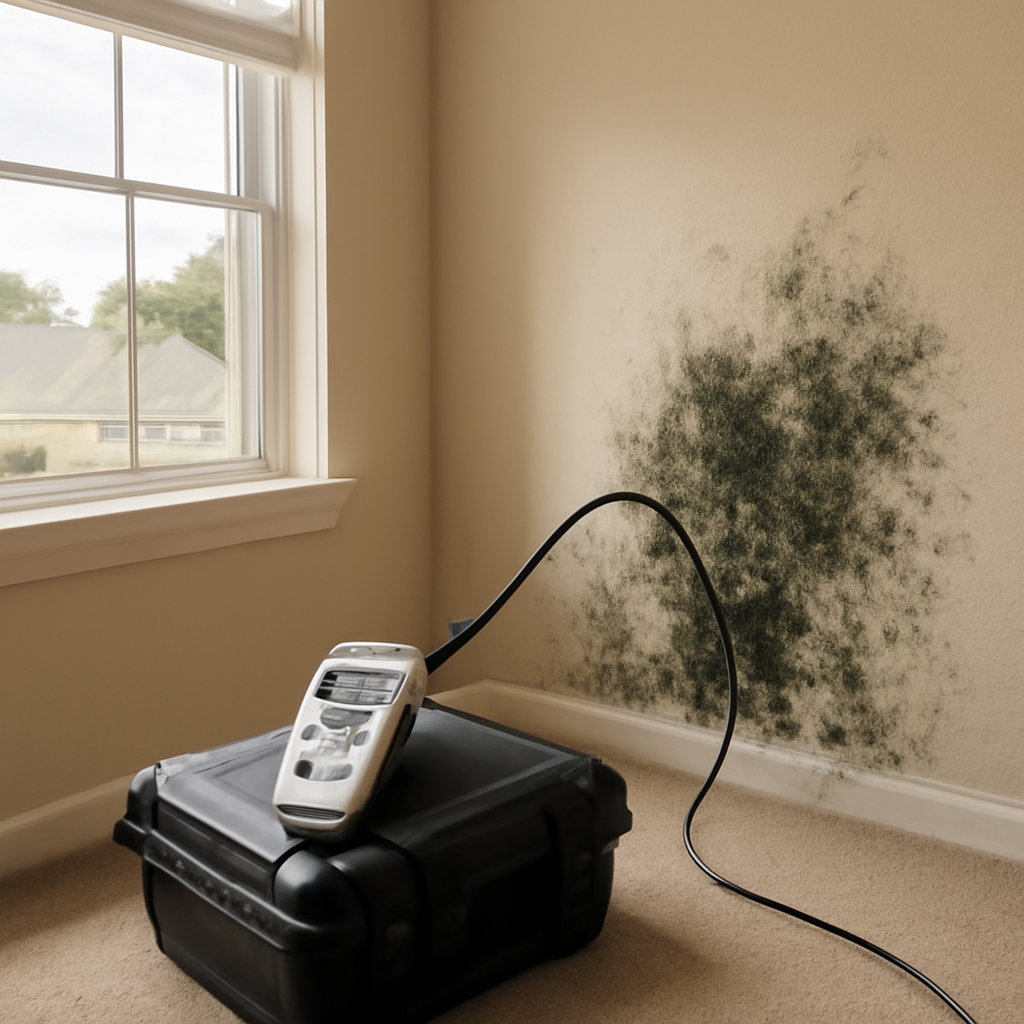
A mold inspection is a visual and moisture-driven assessment of where water has entered a home and whether conditions support fungal growth. The inspector reads humidity, uses a moisture meter on suspect surfaces, checks the building envelope, and may pull samples for a lab. The aim is to find the moisture source, not just the visible stain, because mold is almost always a symptom of a water problem.
Colorado’s dry reputation hides the fact that Lafayette homes get moisture from real sources: foundation seepage, plumbing leaks, ice-dam meltwater, and humid finished basements. For the broader science and a homeowner’s overview, our plain-language mold inspection and testing hub covers the fundamentals that apply across housing eras.
An inspection differs from testing. The inspection finds the moisture and the visible or hidden growth; testing quantifies what is in the air or on a surface. Many Lafayette homes need the inspection first, and only some go on to sampling. A good inspector tells you which path your home actually calls for rather than selling a sample on every visit.
The order of operations matters because mold is downstream of water. Cleaning a visible patch or running a dehumidifier may make a stain disappear for a while, but if the underlying seepage or condensation continues, the growth returns. An inspection that traces the problem to its source, a leaking roof, a cracked cellar wall, an under-graded lot, gives a Lafayette homeowner a repair to make rather than a symptom to keep treating. That is why the inspection, not a quick clean-up, is the right first move in a home with a recurring musty smell, whether it is a century-old cottage or a modern subdivision house.
Why Lafayette homes need mold inspection
The housing mix is the first driver. Old Town Lafayette and the East Simpson area hold pre-1900 and early-1900s miners’ cottages and brick homes, where original stone or brick foundations, hand-dug cellars, and a century of settling create many paths for moisture. These old basements and crawlspaces are classic spots for hidden growth.
The newer stock has its own pattern. The 1990s-to-2010s homes in Indian Peaks and Coal Creek are built tighter, so when a roof, window, or plumbing leak occurs, the moisture has less chance to dry and more chance to feed mold inside finished walls. Tight construction is energy-efficient but unforgiving of trapped water.
Geography and climate tie it together. The Coal Creek corridor runs through Lafayette, keeping groundwater near foundations, and Boulder County’s foothills setting brings Chinook winds and hard freeze-thaw cycles that crack foundations and lift shingles. Ice dams form on cold roofs and drive meltwater into walls. The CDC notes indoor mold follows moisture, and Lafayette’s mix of old and new homes offers plenty of it.
Ice dams deserve a closer look because they are a uniquely Front Range driver. When snow on a roof melts from heat escaping the attic, then refreezes at the cold eaves, the resulting ice barrier backs water up under the shingles and into the wall and ceiling below. A Lafayette home with poor attic insulation, common in older cottages, is especially prone, and the water often appears as a stain far from where it entered. An inspection traces that stain back to the roofline rather than treating only the visible mark, which is how the cycle gets broken.
What a Lafayette mold inspection covers
A thorough inspection follows the water. The inspector checks the roof, gutters, and lot grading outside, then moves to the basement or cellar, crawlspace, under sinks, behind appliances, around windows, and through the HVAC system inside.
Moisture mapping
Using a moisture meter and often a thermal camera, the inspector maps where surfaces read wet behind the visible finish. A cold, damp band along an Old Town stone-foundation cellar wall, or behind drywall in a Coal Creek finished basement, can reveal seepage no one would spot by eye. Thermal imaging flags the temperature differences that mark hidden moisture.
When sampling makes sense
If there is visible growth, a musty smell with no obvious source, or a health concern, the inspector may take air or surface samples for a lab. The EPA cautions that sampling is most useful when guided by a clear question, such as comparing indoor and outdoor spore counts, rather than collected at random. A defensible result documents where, when, and how each sample was taken.
Reading an old cellar
An Old Town cottage cellar asks for a different eye than a modern basement. Stone or brick foundations breathe and wick moisture from the surrounding soil, hand-dug spaces may have dirt floors or shallow footings, and a century of patches can hide where water actually enters. An inspector experienced with this construction looks at the masonry’s moisture, the grade outside, and any sump or drainage that previous owners added, rather than assuming the home behaves like newer stock. Reading the cellar correctly is often the whole job in Old Town Lafayette.
Mold inspection cost in Lafayette
A visual mold inspection in the Lafayette market typically runs about $300 to $500 for a standard single-family home. Adding laboratory air or surface samples raises the total, often $100 to $200 for the first sample and less for each additional one, depending on the lab and turnaround.
An older Old Town home with a stone foundation and a damp cellar can take longer to assess than a modern Indian Peaks house, which can push the figure up. Bundled with a full home inspection during a purchase, a moisture and mold walkthrough sometimes adds less than a standalone visit.
The DIY route has limits worth understanding. A hardware-store moisture meter and a visual look can confirm an obvious problem, but they will not trace a hidden seep behind an Old Town cellar wall or distinguish ice-dam meltwater in a ceiling from a plumbing leak. A homeowner who suspects a problem can do a first pass themselves, but a professional moisture map and thermal scan are what locate the source precisely enough to repair it once rather than chasing it through Lafayette’s freeze-thaw seasons for years.
Weigh that against the cost of missing a problem. Hidden seepage behind an Old Town cellar wall or a Coal Creek finished basement can rot framing and spread before anyone sees a stain, and remediating an advanced problem runs into the thousands. A few hundred dollars spent finding the moisture source early is cheap insurance across both of Lafayette’s housing eras.
Colorado regulations and disclosure
Worth noting up front: Colorado’s dry climate does not make a home immune, it just changes where the moisture comes from. Lafayette homes get water from snowmelt, ice dams, the Coal Creek corridor, and plumbing, and any of those can feed growth a homeowner never expected in a state known for low humidity. Treating mold as a moisture problem rather than a humidity problem is the right frame here.
Colorado does not license mold inspectors or assessors, and the state sets no numerical mold action level, so credentials and method matter more than a license. The Seller’s Property Disclosure asks sellers to report known water damage, past flooding, and mold, which makes a documented inspection valuable evidence in a Lafayette transaction either way.
Because there is no license requirement, ask any provider what standard they follow and whether their samples go to an accredited lab. CDPHE and the EPA both emphasize fixing the moisture source over chasing a spore count, so a credible inspector frames the report around the water problem and its repair, not a number alone.
Disclosure cuts both ways in a sale. A seller who has had a Lafayette home inspected and any moisture issue repaired can hand a buyer documentation that closes the question, which is reassuring in Old Town stock where buyers reasonably worry about old cellars. A seller who has never looked leaves the buyer to discover a damp cellar during the inspection contingency, usually resulting in a repair request or a credit. For buyers, an independent inspection during the contingency is the safeguard, since the disclosure only covers what the seller actually knows.
Neighborhoods and areas served
Moisture issues show up across Lafayette’s range: the pre-1900 cottages of Old Town Lafayette and East Simpson, the modern homes of Indian Peaks and Coal Creek, and the Centaur Village area. Homes along the Coal Creek corridor or with poor lot grading tend to see more basement and cellar seepage after snowmelt.
Within Lafayette, the home’s era shapes what an inspection prioritizes. An Old Town cottage warrants close attention to the cellar, the roof, and the grading, where a century of weather has had time to find every weakness, while a Coal Creek home is more about checking the building envelope around windows, the roof valleys, and any plumbing runs that could leak into a finished space. Matching the inspection’s focus to the home’s age and construction is how a Lafayette provider earns the fee, rather than running the same checklist on every property.
Service typically extends to adjacent Louisville, Erie, Boulder, Broomfield, and Superior, all sharing Boulder County’s foothills climate. Owners comparing options can read our county-level overview of mold inspection across Boulder County, or look at a neighboring city such as mold inspection in Longmont for a sense of the regional pattern.
How to choose a Lafayette mold inspection provider
Ask whether the inspector uses a moisture meter and thermal camera and whether they prioritize finding the moisture source over selling remediation. The strongest providers separate inspection from remediation so there is no incentive to inflate a problem. A clear written report with photos, moisture readings, and a repair recommendation is the deliverable to expect.
For a purchase, confirm the inspector documents conditions well enough to support a negotiation, and ask how they handle an Old Town stone-foundation cellar versus a modern tight-built home, since the moisture paths differ. If sampling is recommended, the lab should be accredited and the rationale clear. A provider who explains why a sample is or is not warranted is the kind worth hiring in Lafayette.
It also helps to ask what happens after the report. A good inspector explains which findings are urgent, which are routine maintenance, and what a reasonable repair sequence looks like, fixing the roof, grading, or cellar drainage first, then drying and cleaning, then verifying. For a homeowner that turns a worrying smell into a clear plan, and for a buyer it turns a vague concern into specific items to raise with the seller. That practical, repair-focused guidance is what separates a useful Lafayette mold inspection from a generic checklist.
References
- Mold and moisture guidance — U.S. Environmental Protection Agency
- Mold and your health — Centers for Disease Control and Prevention
- Mold and indoor air quality — Colorado Department of Public Health and Environment
From Old Town cottages to Coal Creek subdivisions, hidden moisture takes different forms in Lafayette, and a documented mold inspection finds the source either way. To connect with a vetted local inspector, get in touch through our contact page.