Asbestos Shed Removal Cost: UK, AU, and US Pricing
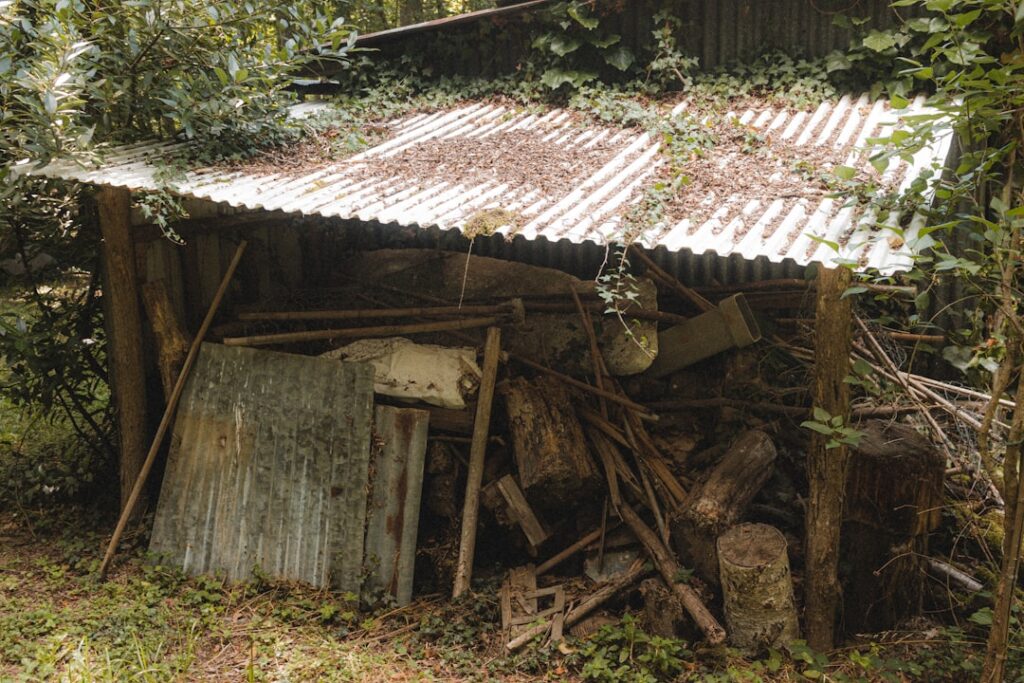
This guide summarizes EPA, OSHA, CDPHE, and parallel UK and Australian guidance on asbestos removal current as of 2026; engage a licensed asbestos removal contractor for any actual shed removal work in your jurisdiction. The “asbestos shed” search term is more common in UK and Australian English than in US English — many pre-1980 garden sheds and outbuildings in those countries were built with asbestos-cement panels. Similar transite-cement-panel sheds exist in the US but get described under different terminology (typically transite sheds, asbestos cement outbuildings, or detached asbestos structures). This guide covers the UK and Australian context briefly and then walks through US Front Range pricing for typical detached shed removal: $1,500-5,000 for a standalone shed in the metro area.
Part of our Asbestos in the Home guide — start there for the full picture →
Is this mold, asbestos, or water damage? Get a free instant screen
Upload a clear photo of the suspect area. You'll get an instant AI screening opinion and what to do next. This is screening guidance, not a professional determination.
Screening guidance only. AI can be wrong. Confirm asbestos, mold type, or lead with lab testing or a licensed professional before acting.
UK and Australian context for asbestos sheds
UK garden sheds built before the 1999 UK asbestos ban frequently used asbestos-cement panels for walls and roofs. The material was popular through the 1960s-1980s because it was cheap, weather-resistant, and easy to cut on site. Removal in the UK is governed by the Health and Safety Executive (HSE), and any shed containing more than a small amount of asbestos requires a licensed asbestos removal contractor.
Australian residential and outbuilding asbestos use peaked during the 1950s-1970s, with corrugated asbestos-cement sheeting widely used for shed walls and roofs. Australian state and territory regulations (which vary by jurisdiction) generally require licensed asbestos removal for any work exceeding small homeowner thresholds. Western Australia’s Mr Fluffy contamination cases historically focused attention on asbestos in residential settings, and the regulatory regime is now relatively strict.
UK shed removal pricing typically runs £600-2,500 for a standalone garden shed depending on size and access. Australian pricing typically runs AUD $800-3,500 for an equivalent shed. Both currencies reflect comparable contractor labor rates and disposal complexity to US pricing once exchange rates are normalized.
US Front Range shed removal context
In the US Front Range market, transite cement panels were commonly used on detached sheds, garages, and small outbuildings from the 1940s through the late 1970s. The product was sold as Eternit, Transite, or under generic “asbestos cement” naming. Pre-1980 detached sheds with the characteristic flat or corrugated cement-board appearance often contain asbestos cement panels.
CDPHE regulations apply to shed removal in Colorado just as they apply to interior abatement work. Projects disturbing more than 32 square feet of ACM require a CDPHE asbestos abatement permit and licensed contractor. A typical 8×10 ft asbestos cement shed has roughly 200-300 square feet of panel surface area and is clearly above the permit threshold.
The Colorado homeowner-occupied detached single-family exemption that sometimes applies to interior work generally does not extend to outbuilding removal in practical terms — even when nominally exempt under federal NESHAP, the disposal pathway still requires CDPHE-permitted landfill access that homeowners do not have. The practical result is the same: shed removal is contractor work.
Typical US Front Range pricing
Standalone garden shed (8×10 ft to 10×12 ft) with asbestos cement panels: $1,500-3,500 for the all-in removal including labor, disposal, permits, and clearance testing. Pricing is at the lower end for slab-on-grade sheds with simple geometry and at the higher end for sheds on raised piers or with attached structures.
Larger outbuildings (12×16 ft to 20×20 ft detached garage or workshop): $3,000-6,500. Multi-bay barns or larger agricultural outbuildings with transite siding or roofing: $5,000-15,000 depending on size and condition.
The pricing assumes the shed is empty or essentially empty before the contractor arrives. Sheds full of stored items add cost because the contractor must handle the contents under controlled conditions (potentially contaminated by asbestos dust from years of weathering), or the homeowner must clear the shed beforehand (typically the cheaper option).
For broader context on asbestos abatement costs across project types, see our cost of asbestos removal guide and our how much does it cost to get rid of asbestos guide for the Front Range pricing landscape.
Why DIY removal is not the right answer
Online forums and YouTube tutorials frequently suggest DIY asbestos shed removal as a cost-saving move. The math does not work. CDPHE permit requirements, OSHA worker safety standards, and the absence of consumer-accessible disposal options all conspire against DIY removal in the Front Range market.
Health risk is the larger issue. Asbestos cement panels become more friable as they weather over decades. A pre-1980 shed in Colorado has had 40-80 years of UV exposure, freeze-thaw cycling, and physical abuse that turns the cement matrix progressively more fragile. Breaking, cutting, or impact-fracturing weathered transite releases respirable asbestos fibers at much higher rates than freshly-manufactured material would have.
OSHA permissible exposure limits for asbestos are 0.1 fibers per cubic centimeter for an 8-hour time-weighted average. A homeowner cutting transite panels with a circular saw to break them down for disposal commonly generates fiber concentrations 100-1000 times the OSHA limit. Without supplied-air respirators and engineering controls (wet methods, HEPA-filtered ventilation), the exposure is unacceptable.
What a licensed contractor actually does
Licensed asbestos removal contractors approach shed removal with documented procedures. The work area gets isolated with poly sheeting and signage. Workers wear disposable Tyvek suits, P100 or supplied-air respirators, gloves, and boot covers. Wet methods (amended water with surfactant) keep the panels damp throughout removal to suppress fiber release.
Panels come off the shed structure as whole units when possible. Workers carefully unfasten the panels from the wood or metal framing, lower them by hand or with a crane (on larger structures), and wrap each panel in two layers of 6-mil poly sheeting with tape closures. The wrapped panels go directly into a permitted disposal container — typically a covered roll-off dumpster designated for asbestos waste.
After all panels are removed, the contractor cleans the work area with HEPA vacuums and amended water wash-down. Air samples are collected by a third-party industrial hygienist for clearance testing. The clearance certificate documents that the area is below the 0.01 f/cc threshold for re-occupancy.
Cost line items for a typical shed removal
For a 10×12 ft asbestos cement shed in the Front Range market, a representative bid breakdown looks like: labor for 2-3 workers over 1-2 days at $200-400 per shed, materials and equipment including PPE, poly sheeting, and amended water at $150-300, disposal of approximately 1-2 cubic yards of waste at $200-400, transportation to CDPHE-permitted landfill at $300-500, CDPHE permit at $200-400, clearance testing at $300-600, and contractor O&P markup baked into the unit pricing.
All-in pricing for this representative project commonly lands $2,000-3,500. Smaller sheds (8×8 ft) drop toward $1,500; larger sheds (12×16 ft) climb toward $4,500-5,500. The fixed costs (permit, mobilization, clearance) are similar across small projects, which is why per-square-foot rates on tiny sheds are higher than on larger ones.
What to do with the shed slab or floor
Some asbestos sheds had asbestos-containing floor finishes (vinyl asbestos tile, asbestos-impregnated linoleum) in addition to the wall and roof panels. The flooring becomes a separate scope of work and a separate disposal stream. Property owners should ask the inspector to test any floor finishes before scoping the removal contract.
Concrete slabs under asbestos sheds are usually safe to leave in place. Slabs do not typically contain asbestos themselves; the concern is asbestos dust that may have settled on or migrated into the slab surface during decades of shed use. A surface wash-down and clearance test on the slab provides assurance before the area is repurposed.
Wood framing under asbestos cement siding is sometimes contaminated by accumulated asbestos dust from panel weathering. The contractor should either dispose of the framing as asbestos waste or HEPA-clean and wet-wipe it as a separate decontamination scope.
Identifying an asbestos cement shed
Asbestos cement shed panels look like flat or corrugated cement boards, typically gray and weathered to a darker gray or brown over time. The corrugated profile common on roof panels is similar in spacing and depth to modern fiber-cement corrugated panels, which can make visual identification difficult. Flat wall panels are typically 4-6 mm thick and have a slightly textured surface from the original casting process.
Pre-1980 shed construction date is the strongest indicator. Sheds installed before 1980 in the US, before 1985 in Australia, and before 1999 in the UK have a meaningful probability of containing asbestos cement. Sheds installed after those dates in their respective markets are unlikely to contain asbestos because manufacturers phased out the material in response to regulatory and liability pressure.
Definitive identification requires laboratory testing. A licensed inspector collects a small sample (typically a corner break or scoring sample on a less-visible panel area) and submits it to an EPA-accredited lab for polarized-light-microscopy analysis. Test cost runs $25-75 per sample with 3-7 business day turnaround. Property owners scoping shed removal should always confirm the asbestos status by lab test before signing an abatement contract.
Disposal options and constraints
Asbestos cement panel disposal requires CDPHE-permitted landfills in Colorado. The Front Range has a limited number of permitted disposal sites — primarily large regional landfills that accept asbestos waste under specific protocols. Contractors maintain relationships with these sites and handle disposal logistics as part of the project.
Disposal cost varies by site and waste characterization. Non-friable asbestos cement (intact panels wrapped in poly sheeting) typically runs $50-150 per cubic yard. Friable material (broken panels, weathered debris, contaminated PPE and poly sheeting) runs $200-500 per cubic yard. A typical shed removal generates 1-2 cubic yards of waste.
Transportation to the permitted disposal site adds $300-500 per trip in the Front Range market. Round-trip distances to the nearest accepting landfill can exceed 50-100 miles for some service areas. The disposal and transportation line items together commonly represent 25-40% of the total project cost on small shed projects, which is part of why per-square-foot pricing is higher on small projects than on large ones where the fixed disposal costs are amortized over more material.
Permitting and scheduling
CDPHE permits for shed removal typically issue within 10-14 days of complete application. Property owners should plan for the permit lead time in scheduling. Most contractors handle the permit application as part of the project setup; the all-in pricing typically includes the permit fee.
Local permits for the new construction or site work that follows the shed removal vary by county and project scope. A simple shed removal that leaves the slab and frame in place often does not require a local building permit. A shed removal that includes slab demolition and site grading does require a county permit.
Contractor selection for shed work
Not every CDPHE-permitted asbestos contractor pursues small-shed projects. Many specialize in larger commercial or whole-house abatement and treat small sheds as low-margin work. Property owners with shed-only projects should expect to call 4-6 contractors to find 2-3 willing to bid; the smaller specialty firms are often the best fit because their cost structure scales down more efficiently.
Bid comparison on small shed work follows the same component-pricing approach used on larger projects. Request itemized labor, materials, disposal, permits, and clearance testing line items. Bids with large lump-sum amounts and no itemization often hide padding; bids with detailed itemization are easier to compare and provide a baseline for any change orders that surface during the work.
References
- EPA Asbestos Laws and Regulations — US Environmental Protection Agency
- OSHA asbestos exposure limits and worker safety standards — Occupational Safety and Health Administration
- Colorado CDPHE asbestos permit and contractor licensing requirements — Colorado Department of Public Health and Environment
- Asbestos.com reference on asbestos cement products — Asbestos.com
Frequently asked questions
How much does asbestos shed removal cost?
Front Range US pricing for a standalone garden or storage shed with asbestos cement panels runs $1,500-3,500 for a typical 8x10 to 10x12 ft structure, with larger outbuildings $3,000-6,500. UK pricing runs £600-2,500 and Australian pricing runs AUD $800-3,500 for comparable structures.
Can I remove an asbestos shed myself in the US?
In Colorado, no. CDPHE regulations require licensed contractors for any project disturbing more than 32 square feet of ACM, and a typical shed has 200-300+ square feet of asbestos cement paneling. The disposal pathway also requires CDPHE-permitted landfills that homeowners cannot easily access.
How long does it take to remove an asbestos shed?
On-site removal of a typical garden shed takes 1-2 days. Including permit lead time (10-14 days), the full project from initial contractor engagement to final clearance certificate typically takes 3-4 weeks.
Is the concrete slab under an asbestos shed contaminated?
Usually not the slab itself, but the slab surface may carry settled asbestos dust from decades of shed use. A surface wash-down and clearance test on the slab provides verification before the area is repurposed for new construction or other use.
Front Range homeowners with a pre-1980 outbuilding they suspect contains asbestos can connect through our contact page for a referral to a CDPHE-permitted abatement contractor.
Asbestos test kits
Asbestos can only be confirmed by a lab. A mail-in kit gets you a sealed sample container and accredited analysis — never sand or disturb suspect material first.
| Product | Why | Buy |
|---|---|---|
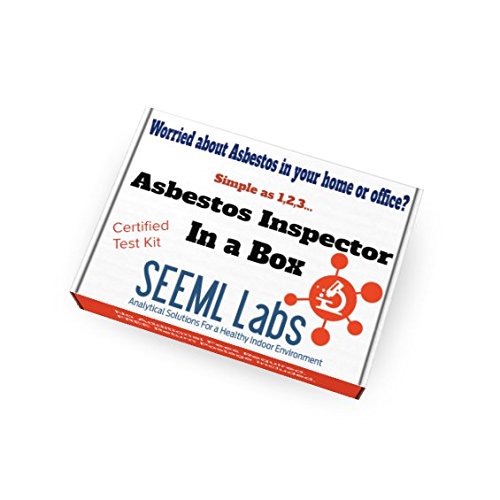 Asbestos Test Kit (mail-in lab) | Includes PPE + sealed mailer. | Amazon — $22.00 |
 Pro-Lab Asbestos Test Kit | Widely available; lab fee separate. | Amazon — $79.99 |