Asbestos Duct Wrap Removal Cost: 2026 HVAC Pricing Guide
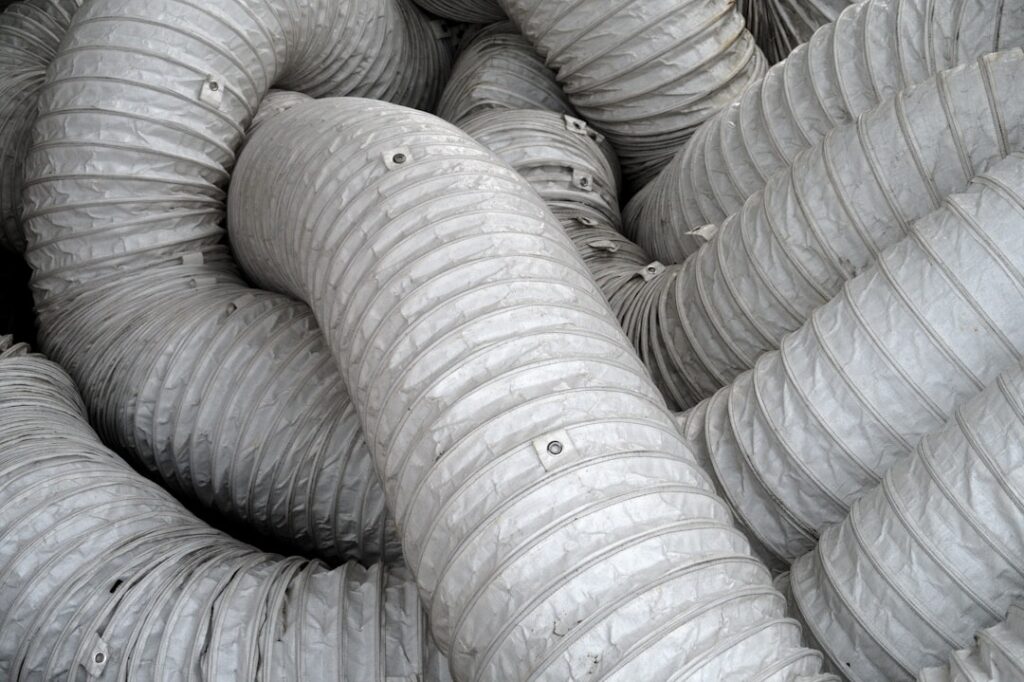
Asbestos duct wrap removal cost is one of the most variable line items in residential abatement because the work happens inside basements, crawlspaces, and mechanical rooms where the duct geometry, the surrounding finishes, and the accessibility differ from house to house. Typical residential projects in 2026 cost between 3,000 and 10,000 dollars. Larger systems, finished basements that require partial demolition for access, and multi-floor homes with risers running through walls push the cost higher. This guide summarizes EPA, OSHA, and CDPHE guidance current as of 2026 — consult a licensed abatement contractor for an actual project quote.
Part of our Asbestos in the Home guide — start there for the full picture →
Duct wrap is a friable material category in most cases, which sets a higher floor on the cost than non-friable categories like vinyl floor tile or cement siding.
Is this mold, asbestos, or water damage? Get a free instant screen
Upload a clear photo of the suspect area. You'll get an instant AI screening opinion and what to do next. This is screening guidance, not a professional determination.
Screening guidance only. AI can be wrong. Confirm asbestos, mold type, or lead with lab testing or a licensed professional before acting.
The plain answer: 12 to 25 dollars per linear foot of wrapped duct
The working per-linear-foot range for asbestos duct wrap removal in residential settings is 12 to 25 dollars. Below that range, the contractor is likely skipping required line items or working in unusually favorable access conditions. Above that range, the project involves restricted access, multi-floor systems, or unusual disposal logistics.
Typical residential furnace duct systems have 60 to 150 linear feet of wrapped duct, which produces total project costs between 720 and 3,750 dollars on the per-linear-foot calculation. Adding the fixed setup cost, the actual project totals run 3,000 to 8,000 dollars for typical homes.
Why duct wrap is one of the harder categories
Duct wrap was applied to heating and cooling ducts in homes built between roughly 1940 and 1980 to provide thermal insulation and condensation control. The wrap is typically a corrugated paper or fabric layer with white or gray plaster-like material containing chrysotile or amosite asbestos. Once damaged, torn, or aged, it becomes friable and releases fibers.
The removal challenge is twofold. The ducts often run through finished or semi-finished basements where furniture, drywall, and storage block access. The wrap itself is fragile, and even careful removal techniques can release fibers, requiring full containment and HEPA-filtered air machines during the work.
What goes into the per-linear-foot calculation
The 12 to 25 dollar per-linear-foot rate covers crew labor, plastic sheeting consumed in the containment, HEPA-filtered vacuum work, disposable PPE for the workers, and proportional disposal weight. The fixed setup component for the project — state notification, negative-air machine deployment, decontamination chamber assembly, and supervisory overhead — runs separately and adds roughly 1,500 to 2,500 dollars.
Contractors structure quotes in different ways. Some present a single all-in number. Others break out the setup, the per-linear-foot removal, the disposal, and the clearance. The detailed breakdown is easier to compare across bids and easier to challenge if one component looks out of line.
Access conditions that drive cost
Three access conditions move the per-linear-foot rate within the working range. Each contractor evaluates them during the pre-bid walkthrough and adjusts pricing.
Unfinished basement with open ducts
The lowest-cost scenario is a fully unfinished basement with all ductwork visible and accessible. The crew can install containment quickly, work around the ducts in any direction, and dispose of materials in a straightforward path to the truck. Per-linear-foot pricing in this scenario tends toward the 12 to 15 dollar end of the range.
Partially finished basement
The middle scenario is a basement with finished ceilings, partial drywall enclosures, or built-in storage that covers some of the duct runs. The crew may need to remove or open finishes for access, which adds labor and creates restoration scope for after the abatement. Per-linear-foot pricing in this scenario tends toward 16 to 20 dollars.
Finished basement with concealed ducts
The highest-cost scenario is a finished basement where ducts are inside soffits, behind drywall, or routed through tight chases. Selective demolition is required to expose the ducts, the abatement itself is slower because of working room, and post-abatement restoration is significant. Per-linear-foot pricing in this scenario reaches 20 to 25 dollars or more.
What is included and what is not
The abatement quote typically includes: state regulatory notification, containment setup with plastic sheeting and negative-air machines, certified crew labor for removal, HEPA-filtered cleanup, double-bagged disposal of the wrap and any contaminated materials, transport to a permitted facility with manifest documentation, and post-abatement clearance air sampling.
The quote typically does not include: pre-abatement testing of suspect materials, demolition of finished surfaces to expose ducts, new duct insulation after the asbestos wrap is removed, and any HVAC system repairs or upgrades. Each of those is a separate scope handled by either the same contractor on a separate line item or by a different trade.
Pre-abatement testing for duct wrap
Wrap materials must be tested before abatement to confirm asbestos content. A certified inspector collects samples from each apparent type of wrap and submits them to an accredited lab. Lab analysis runs 25 to 50 dollars per sample, with three to six samples typical for residential duct systems. Inspector fees for sample collection and reporting run 250 to 500 dollars.
Total pre-abatement testing cost on a typical duct project is usually 350 to 800 dollars. This expense is separate from the abatement quote and is paid to the testing inspector directly. For the broader pre-1978 housing context, see this asbestos and lead pillar guide and the in-batch residential asbestos removal cost guide.
Replacement duct insulation
After the asbestos wrap is removed, the ducts need new insulation to function efficiently and to control condensation. Modern duct insulation is fiberglass or mineral wool with foil or vinyl facing, typically rated R-6 to R-8 for interior applications. Installed cost runs 5 to 12 dollars per linear foot depending on duct size and insulation R-value.
For 100 linear feet of duct, replacement insulation runs 500 to 1,200 dollars. Some homeowners choose to upgrade insulation R-value at this stage because the ductwork is exposed and accessible. The incremental cost of higher R-value insulation is small compared to the abatement work.
Combined HVAC upgrades
Many homeowners use the duct wrap abatement as an opportunity to upgrade other HVAC components. The exposed ductwork allows easy access for resealing joints with mastic, replacing leaky sections, upgrading dampers, and adding zone controls. The incremental cost of these upgrades during abatement is much lower than retrofitting them later.
For homes with aging furnaces or air conditioners, scheduling equipment replacement during the abatement also reduces total project disruption. The HVAC contractor and the abatement contractor coordinate on a single timeline.
Post-abatement clearance
Clearance air sampling after the abatement confirms the work area is safe. The clearance is performed by an independent third party, typically an industrial hygienist or certified inspector. Sample analysis uses phase contrast microscopy or transmission electron microscopy depending on the project requirements. Clearance fees run 200 to 500 dollars depending on the number of samples.
The clearance result is the documentation that allows reoccupation of the space. The homeowner retains the clearance report as part of the property file for future sale disclosure.
Disposal logistics
Asbestos duct wrap waste is double-bagged in heavy-duty plastic, labeled with the required asbestos warning markings, and transported to a permitted facility. Front Range homeowners are within reasonable distance of multiple permitted disposal facilities in the metro Denver area. Disposal fees vary by facility and waste weight, typically 200 to 800 dollars for a residential project.
The disposal manifest is the contractor’s documentation that the waste arrived at the permitted facility. Homeowners should receive a copy of the manifest for their records.
Notification and timing
Colorado requires 10-day advance notification to CDPHE for projects above the regulatory thresholds. Duct wrap projects in residential homes typically exceed those thresholds. The notification waiting period sometimes dominates the project timeline, with the actual abatement work taking only two to four days.
Homeowners planning to sell a property with asbestos duct wrap should start the abatement process at least three weeks before the planned listing date. The 10-day notification, the abatement itself, and the clearance take roughly two weeks under typical conditions.
Comparing bids
Compare bids on identical scope. Confirm each bid includes the same linear footage, the same containment plan, the same disposal documentation, and the same clearance scope. Ask each contractor to break the quote into setup, per-linear-foot removal, disposal, and clearance. The line-item breakdown is the easiest way to identify variation.
A bid 30 percent below the others may indicate the contractor is skipping a required line item. A bid 30 percent above may reflect higher overhead, slower scheduling, or a more conservative containment plan. Both deserve a follow-up conversation.
What happens during the work week
During the abatement window, the work area is sealed with plastic sheeting, negative-air machines run continuously, and the crew enters and exits through a decontamination chamber. The HVAC system is shut down for the duration so fibers do not circulate. Households can usually stay in upper floors but should plan to be out of the basement entirely.
Pets and children should not be in the work zone at any time. Homeowners with respiratory conditions should consider temporary relocation. Most projects finish the actual removal in two to four days, with one additional day for cleanup and air sampling, so the disruption is short relative to the long-term benefit.
References
- EPA guidance on protecting families from asbestos exposure — U.S. Environmental Protection Agency
- OSHA asbestos construction standard 1926.1101 — Occupational Safety and Health Administration
- Colorado asbestos notification requirements — Colorado Department of Public Health and Environment
- CDC NIOSH information on asbestos-related diseases — Centers for Disease Control and Prevention
Frequently asked questions
How is duct wrap removal priced?
Most residential bids are structured around a per-linear-foot rate of 12 to 25 dollars for the wrapped duct, plus a fixed setup and overhead component of 1,500 to 2,500 dollars. The total typical project cost lands between 3,000 and 10,000 dollars.
Does removing duct wrap require shutting off the HVAC?
Yes. The system is taken offline during the abatement to avoid drawing fibers through the rest of the home. Scheduling during mild weather minimizes the comfort impact, and abatement contractors coordinate timing with homeowners.
Can the ducts be reused after the wrap is removed?
In most cases yes. The metal ducts themselves are not the asbestos material; the wrap is. Once the wrap is removed and the ducts are cleaned, they can be re-insulated with modern materials. Older ducts in poor condition may warrant replacement at the same time.
Is duct wrap always friable?
Most older duct wrap becomes friable over time as the binders degrade. Even wrap that appears intact may release fibers when disturbed. Treating it as friable is the conservative and standard practice.
How long does the abatement take?
Most residential duct wrap projects complete the actual removal work in two to four days. Adding the 10-day state notification waiting period and the clearance sampling extends the full project timeline to two to three weeks.
Front Range homeowners planning asbestos duct wrap abatement can connect with us through the contact page for a referral to a licensed contractor with HVAC abatement experience.
Asbestos test kits
Asbestos can only be confirmed by a lab. A mail-in kit gets you a sealed sample container and accredited analysis — never sand or disturb suspect material first.
| Product | Why | Buy |
|---|---|---|
 Asbestos Test Kit (mail-in lab) Asbestos Test Kit (mail-in lab) | Includes PPE + sealed mailer. | Amazon — $34.99 |
| Pro-Lab Asbestos Test Kit | Widely available; lab fee separate. | Amazon — $34.99 |