Best House Wrap (2026): 6 Picks Compared for Siding Projects
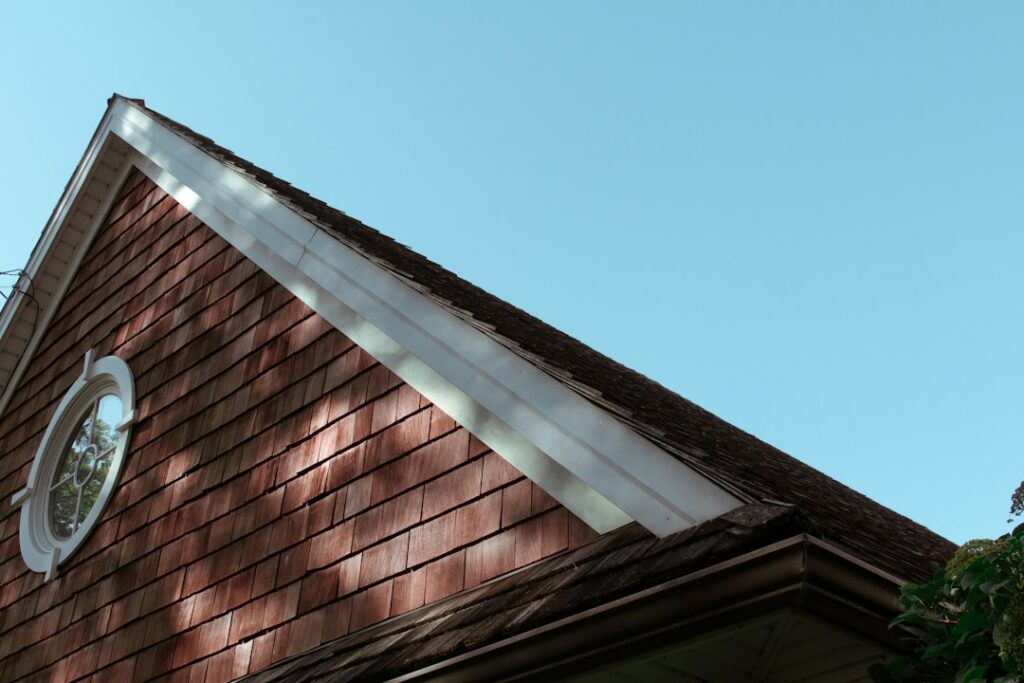
The best house wrap is a true water-resistive barrier (WRB): a sheet that sheds liquid water that gets behind siding while still letting water vapor escape from the wall. That second half is where shoppers go wrong. A search for house wrap on Amazon returns real WRBs alongside polyethylene plastic sheeting sold under the same name, and plastic sheeting behaves very differently in a wall. Below are six picks that are genuine house wraps, from full-height 9-foot rolls to a pre-cut patch sheet, followed by a buying guide that explains perm ratings as listings state them, why plastic sheeting is a poor substitute, and how wrap fits with flashing and siding on a Front Range home.
Part of our Structure & Exterior guide — start there for the full picture →
As an Amazon Associate we earn from qualifying purchases.
How we compared: we compared 12 current Amazon listings sold as house wrap on what each listing states: material, whether it is woven, non-woven or plastic film, stated perm rating, UV exposure limit, roll size and code or standard claims. Three more listings on the same search, a reflective bubble insulation and two rolls of gift wrap, were set aside. Of the 12, six are polyethylene sheeting described as a “vapor barrier,” which we did not pick for reasons explained below. We did not lab-test any product or install it hands-on. Prices and availability change, so check the current listing before buying.
Quick picks: the best house wraps by job
| Product | Best for | Key features | Price | Buy |
|---|---|---|---|---|
| Grip-Rite Woven House Wrap LWE | Re-siding and small additions |
| $41.38as of Oct 20, 2026 4:59 pm GMT+0000 | Buy now →Check current price |
| DuPont Tyvek HomeWrap 3 x 100 | Name-brand WRB for small jobs |
| $68.99as of Oct 20, 2026 4:59 pm GMT+0000 | Buy now →Check current price |
| APX House Wrap 9 x 150 | Whole walls, stated perm rating |
| $130.39as of Oct 20, 2026 4:59 pm GMT+0000 | Buy now →Check current price |
| Prime Wrap PR-4575 | Full-height translucent roll |
| $59.95as of Oct 20, 2026 11:36 pm GMT+0000 | Buy now →Check current price |
| REX Wrap 3 x 100 | Small patch and repair rolls |
| $32.77as of Oct 20, 2026 11:36 pm GMT+0000 | Buy now →Check current price |
| Tyvek HomeWrap Pre-Cut Sheet | Patching a torn section |
| $19.15as of Oct 20, 2026 11:36 pm GMT+0000 | Buy now →Check current price |
Prices are Amazon’s listed prices as of the time shown and change often; check Amazon for today’s price. As an Amazon Associate we earn from qualifying purchases.
The 6 picks, compared listing by listing
1. Grip-Rite Woven House Wrap LWE (HW3100LWE) — Best for Re-Siding and Small Additions

Woven polyethylene WRB that blocks bulk water, stays vapor permeable and resists UV for up to 6 months; 3 x 100 ft.
Check price on Amazon$41.38 as of Oct 20, 2026 4:59 pm GMT+0000 — prices change; see Amazon for current price.Why we like it
- Clearly described as a weather barrier, not a vapor barrier
- Blocks bulk water while staying breathable
- UV exposure limit stated at 6 months
- Woven substrate resists wind tears
| Specification | Details |
|---|---|
| Material | High-tensile woven polyethylene substrate |
| Function stated | Blocks bulk water; maintains high vapor permeability; reduces air infiltration |
| Perm rating | Not stated as a number |
| UV exposure | Up to 6 months before siding |
| Roll size | 3 ft x 100 ft (300 sq ft) |
| Model | HW3100LWE |
Grip-Rite HW3100LWE — woven PE WRB, 3 x 100 ft, vapor permeable, 6-month UV, wall and roof use named
One of Two Listings That State a UV Exposure Limit
Only two of the 12 house wrap listings say how long the wrap can sit exposed to sun before siding goes on: this Grip-Rite roll and the APX roll in pick 3, both at six months. That number matters on real jobs. Siding deliveries slip, and high-altitude sun on the Front Range is intense. A wrap left bare past its UV limit can degrade before it is ever covered.
The listing also uses the right vocabulary. It describes the product as a weather barrier that blocks bulk water while maintaining high vapor permeability. That is the definition of a WRB, and it contrasts with six listings on the shelf that call themselves vapor barriers. The woven substrate is described as resisting rips from high winds, which suits windy Front Range job sites.
What the listing does not give is a perm number, a named test standard or code evaluation, or tape recommendations. For permitted work, ask the building department what documentation it wants for a WRB.
Pros
- Correct WRB function described
- Stated 6-month UV limit
- Woven, wind-tear resistant
Cons
- No numeric perm rating
- No named standard or code report
- 3 ft roll means more horizontal seams
Check Grip-Rite Woven House Wrap price on Amazon
2. DuPont Tyvek HomeWrap, 3 x 100 ft — Best Name-Brand WRB for Small Jobs

3 x 100 ft roll of DuPont Tyvek HomeWrap, made in the United States; the listing itself states very few specifications.
Check price on Amazon$68.99 as of Oct 20, 2026 4:59 pm GMT+0000 — prices change; see Amazon for current price.Why we like it
- The best-known house wrap product name
- Small roll suits patching and bump-outs
- Country of origin stated as United States
- Easy to find matching brand tape locally
| Specification | Details |
|---|---|
| Product | DuPont Tyvek HomeWrap |
| Roll size | 3 ft x 100 ft |
| Origin | United States |
| Weight | Item weight listed as about 19.8 lb in one field and 4 lb in another |
| Perm / UV / standards | Not stated in listing |
| Model | 3060B |
DuPont Tyvek HomeWrap 3060B — 3 x 100 ft roll, made in USA; perm, UV and standards not stated in listing
The Most Recognized Product With the Thinnest Listing
Tyvek HomeWrap is the product many builders mean when they say “house wrap,” and this is the brand’s small 3-by-100-foot roll. Its Amazon listing, though, is nearly empty. The bullets give an item weight, country of origin, brand and dimensions, and nothing about perm rating, UV exposure, water resistance or standards. The weight fields even disagree with each other.
We pick it because the product name is specific and well documented elsewhere, so a buyer can look up the manufacturer’s data sheet before ordering. Do that. Our comparison here can only report what the listing says, and the listing does not support any performance claim on its own.
The 3-foot width suits patching around a new window, a small bump-out or a section of re-siding, not wrapping a whole house. Seller listings for brand-name rolls are also where look-alikes and old stock can hide, so confirm the seller and the printed branding on arrival.
Pros
- Specific, well-known product name
- Handy small roll
- Brand tape and flashing widely available
Cons
- Listing states almost no specifications
- Conflicting weight figures
- Too narrow for whole-house jobs
Check DuPont Tyvek HomeWrap price on Amazon
3. APX House Wrap 9 x 150 ft — Best for Whole Walls, With a Stated Perm Rating

Woven, micro-perforated polypropylene WRB stated at 8 perms, shipped unfolded in a 9 ft tube with fastening guides.
Check price on Amazon$130.39 as of Oct 20, 2026 4:59 pm GMT+0000 — prices change; see Amazon for current price.Why we like it
- Only listing that states a numeric perm rating
- 9 ft height covers a wall in one course
- Printed fixing points and flashing area
- UV resistance stated at 6 months
| Specification | Details |
|---|---|
| Material | Woven, micro-perforated polypropylene with drainage plane |
| Perm rating | 8 perms (title also says “low perm”) |
| UV exposure | 6 months aging and UV resistance |
| Fire claim | Class A fire rating stated; test standard not named |
| Roll size | 9 ft x 150 ft, ships unfolded in a 9 ft tube |
| Install aids | Printed fixing points and flashing tape area |
APX House Wrap 9×150 — woven micro-perforated PP, 8 perms stated, 6-month UV, 9 x 150 ft
The Only Listing That Puts a Number on Vapor Permeance
None of the other 11 house wrap listings gives a perm rating. APX states 8 perms, which describes how much water vapor the sheet lets through. For a WRB, higher is generally more vapor-open, and a figure in the single digits or above is in the range usually described as breathable. We report the figure as stated. The listing does not name the test method (perm values depend on the test), and its title confusingly calls the product “low perm” while the bullets say 8.
The roll is also the largest genuine WRB on the shelf at 9 by 150 feet, and it ships unfolded in a 9-foot tube, so there is no fold line to crack. Nine-foot height covers a typical first-floor wall in one course, which means fewer horizontal laps for water to get behind.
The listing makes broad claims, including a “15 Class A fire rating” and compliance with “ASTM codes,” without naming a standard. Treat those as unverified. Micro-perforated woven wraps are a recognized type, but perforations also let some liquid water through under pressure compared with non-perforated sheets.
Pros
- Stated 8-perm rating
- Large, full-height roll
- Printed install guides
Cons
- Title and bullets contradict on perm
- Fire and ASTM claims name no standard
- Perforations trade some water resistance
Check APX House Wrap 9 x 150 price on Amazon
4. Prime Wrap PR-4575 9 x 75 ft — Best Full-Height Translucent Roll

9 x 75 ft house wrap that blocks air through framed walls, lets vapor escape and is translucent for easier fastening.
Check price on Amazon$59.95 as of Oct 20, 2026 11:36 pm GMT+0000 — prices change; see Amazon for current price.Why we like it
- Translucent: see studs while cutting and fastening
- 9 ft height for one-course walls
- Describes letting vapor escape the wall
- Mid-size roll for a garage or addition
| Specification | Details |
|---|---|
| Function stated | Blocks air transfer through framed walls; lets moisture vapor escape |
| Visibility | Translucent |
| Roll size | 9 ft x 75 ft; ships folded in a 4.5 ft tube |
| Code claim | “Meets all national building codes” (no code or report named) |
| Perm / UV | Not stated in listing |
| Model | PR-4575 |
Prime Wrap PR-4575 — 9 x 75 ft, translucent, air-blocking and vapor-open wording, ships folded
The Only Translucent Wrap on the Shelf
Prime Wrap is the only listing that describes its wrap as translucent. That helps installers see studs and window openings through the sheet while cutting and fastening, which reduces missed staples and misplaced cuts. Paired with the 9-foot height, it suits one person wrapping a garage, shed or small addition.
The listing’s function language is sound: it says the wrap blocks air moving through the framed wall and lets airborne moisture vapor escape without condensing in the cavity. Those are the two jobs a WRB is supposed to do alongside shedding water.
The weak spot is documentation. “Meets all national building codes” names no code section or evaluation report, and there is no perm number or UV limit. It also ships folded in half in a 4.5-foot tube, so you unfold it to its 9-foot height on site, and the fold line should be handled carefully.
Pros
- Translucent for accurate fastening
- Full 9 ft height
- Air and vapor function described
Cons
- Vague code claim
- No perm or UV figures
- Ships folded with a crease
Check Prime Wrap PR-4575 price on Amazon
5. REX Wrap 3 x 100 ft — Best Small Roll for Patches and Repairs

3 x 100 ft roll of REX Wrap house wrap, made in the United States; the listing gives almost no performance detail.
Check price on Amazon$32.77 as of Oct 20, 2026 11:36 pm GMT+0000 — prices change; see Amazon for current price.Why we like it
- Named house wrap product, not generic sheeting
- Made in the United States, per listing
- 3 ft roll fits window and door patches
- Easy to handle alone on a ladder
| Specification | Details |
|---|---|
| Product | REX Wrap house wrap |
| Roll size | 3 ft x 100 ft |
| Origin | Made in United States |
| Weight | About 5 lb |
| Perm / UV / standards | Not stated in listing |
| Seller brand field | Listed under a reseller name |
REX Wrap 3 x 100 ft — made in USA, small repair roll; performance specs not stated in listing
One of Three Listings Stating U.S. Manufacture
Three listings on the shelf state U.S. origin: the Tyvek roll, this REX Wrap roll and the pre-cut Tyvek sheet. REX Wrap’s listing says almost nothing else. Its single bullet is “Made in United States,” and the brand field shows a reseller name rather than the manufacturer.
We include it as a small-roll alternative because it is a named house wrap product, not polyethylene sheeting relabeled as wrap. As with Tyvek, look up the manufacturer’s data sheet before you rely on it.
A 3-by-100-foot roll is the right size for patching where siding was removed around a new window or door, or for a short run of re-siding.
Pros
- Named house wrap, not plastic sheeting
- U.S.-made per listing
- Manageable size for repairs
Cons
- Listing gives almost no specs
- Sold through a reseller
- Narrow roll
Check REX Wrap 3 x 100 price on Amazon
6. Tyvek HomeWrap Pre-Cut Sheet (3 x 5 ft) — Best for Patching a Torn Section
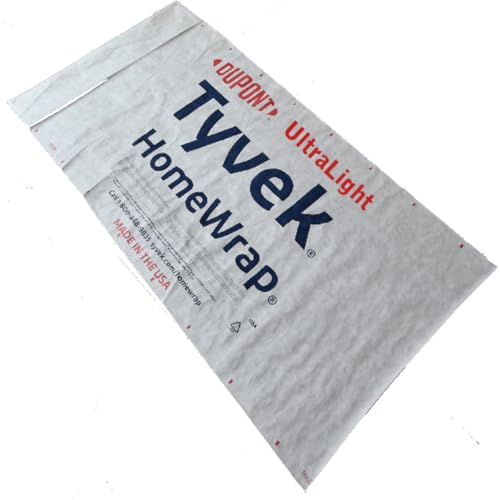
A 3 x 5 ft pre-cut sheet described as genuine DuPont Tyvek HomeWrap, sold for patching torn wrap and sheathing repairs.
Check price on Amazon$19.15 as of Oct 20, 2026 11:36 pm GMT+0000 — prices change; see Amazon for current price.Why we like it
- Listing names it as real Tyvek HomeWrap
- Sized for patching, no full roll needed
- Made in USA, per listing
- Tear and puncture resistant claim
| Specification | Details |
|---|---|
| Product | Pre-cut sheet described as DuPont Tyvek HomeWrap |
| Size | 3 ft x 5 ft, no grommets |
| Intended uses | Patching torn house wrap, sheathing repair, dust barrier; also sold as tent footprint |
| Weight | About 3.8 oz |
| Origin | Made in USA |
| Perm / UV | Not stated in listing |
Modern Grizzly Tyvek sheet — 3 x 5 ft pre-cut HomeWrap, for patching tears; made in USA
The Only Listing Sized for a Single Patch
Every other genuine wrap on the shelf comes in at least a 300-square-foot roll. This listing is a 3-by-5-foot sheet that the seller describes as genuine DuPont Tyvek HomeWrap, explicitly offered for patching torn house wrap and small sheathing repairs. It is mostly marketed as a camping ground sheet, but one bullet speaks directly to the home repair use.
That is useful when a siding repair reveals a ripped section of wrap, or after a satellite dish or light fixture is removed. Patching with the same type of material, lapped correctly and taped, is better than leaving the tear open.
Because it is a resold, cut product, confirm the printed branding on arrival, and lap the patch shingle-style under the wrap above it.
Pros
- Right size for small patches
- Described as genuine HomeWrap
- No leftover roll to store
Cons
- Primarily marketed as camping gear
- Resold cut product; verify branding
- Tape not included
Check Tyvek Pre-Cut Sheet price on Amazon
Plastic sheeting sold as house wrap: why we skipped six listings
Half of the 12 house wrap listings are polyethylene (PE) sheeting from BOUTICOL, HFYZZ, VEVOR and Maasechs. Their titles say house wrap, but their copy calls them “vapor barrier,” “plastic sheeting” and “drop cloth,” and several pitch basement paving and ground moisture-proofing. Some also claim the sheet lets vapor escape from the wall. Those two descriptions do not fit together. Solid polyethylene sheet is widely used as a vapor retarder precisely because it lets very little water vapor through.
That distinction matters in a wall. The EPA’s mold course notes that vapor barriers must be located and installed properly or a building may have moisture problems, and that vapor barriers can prevent damp or wet building materials from drying quickly enough to prevent mold growth. Wrapping the outside of a wall in plastic can trap moisture that enters from inside or from a siding leak. In Colorado’s climate, where interior air is warmer and moister than outdoor air for much of the year, the outside face of the wall needs to let vapor out.
A true WRB is vapor-open. If a listing calls itself a vapor barrier, uses “drop cloth” in the title, or suggests putting it under a slab, it is not the product to wrap a house with.
How to read perm ratings as listings state them
Perm (permeance) is a measure of how much water vapor passes through a material. Higher numbers mean more vapor-open. A few points help when reading a listing:
- Only one listing here states a number. APX gives 8 perms. Every other wrap on the shelf either uses words like “breathable” or says nothing. Words are not a rating.
- Test methods differ. Perm values vary depending on how they were measured, so a number with no named method is a rough indication.
- Look at the manufacturer’s data sheet. Name-brand wraps publish perm ratings, water-resistance results and code evaluation reports. If a listing does not, the product page should not be your only source.
- Check what your code official accepts. The residential code adopted by Front Range jurisdictions generally requires a water-resistive barrier behind exterior cladding, and inspectors may want documentation that a product qualifies. Ask before you buy a no-name roll for permitted work.
House wrap and the rest of the wall
House wrap is only one layer of a wall’s water management, and it fails most often at the edges.
Lap shingle-style
Upper courses lap over lower ones so water runs down and out, never behind. Vertical seams overlap as the manufacturer directs. Reverse laps, where a lower piece sits over an upper one, funnel water into the wall.
Integrate with window and door flashing
Most wall leaks start at windows and doors. Flashing tape and sill pans must lap correctly with the wrap: sill flashing under the wrap at the bottom, head flashing over it at the top. The printed flashing guides on the APX roll are a reminder that this detail matters.
Tape and fasten
Use the tape the wrap maker recommends and cap nails or cap staples, not bare staples, which tear out in wind. Repair any tears before siding goes on.
Air sealing benefits
A taped, well-detailed wrap also reduces air leakage. ENERGY STAR estimates homeowners can save an average of 15% on heating and cooling costs by air sealing and adding insulation, though wrap is only one part of air sealing, and most of the gain usually comes from sealing attic and basement leaks.
Front Range considerations
Three local conditions shape house wrap choices along the Front Range.
- Sun and altitude. UV is stronger at elevation. Respect the wrap’s stated UV exposure limit, and schedule siding soon after wrapping. Only two listings here state that limit.
- Wind. Chinook and downslope winds can shred loosely fastened wrap. Use cap fasteners at close spacing and tape seams promptly. Woven wraps resist tearing better than light films.
- Snow and wind-driven rain. Snow piled against walls and blown moisture find any reverse lap or open seam. Detailing at the bottom of walls, decks and roof-wall intersections matters as much as the wrap itself.
The EPA’s moisture control guidance for building design, construction and maintenance covers walls, roofs and foundations in detail and is a good reference for anyone planning a re-siding project. Its basic message matches the EPA’s mold guidance: control water at the source, and dry wet materials within 24 to 48 hours.
When to bring in a professional
Replacing siding on a whole house usually requires a permit in Front Range jurisdictions, and the WRB and flashing are often inspected before cladding goes on. If you see stained sheathing, soft OSB, rot at window corners or mold on the back of old siding during a tear-off, stop and assess the damage before wrapping over it. Wrap does not fix wet sheathing.
Our house wrap guide covers the basics in more depth, and our structure and exterior hub covers related siding and envelope topics. For help choosing and working with inspectors, see our guide to hiring a home inspector. If you are on the Front Range and want a vetted inspector to evaluate water damage found during a siding job or before a purchase, reach out through our contact page.
Frequently asked questions
What is the difference between house wrap and a vapor barrier?
House wrap is a water-resistive barrier that sheds liquid water but lets water vapor pass so the wall can dry. A vapor barrier, such as polyethylene sheet, blocks vapor. Using plastic sheeting as exterior house wrap can trap moisture in the wall, which the EPA notes can keep materials from drying fast enough to prevent mold.
What perm rating should house wrap have?
House wraps are designed to be vapor-open, and higher perm numbers mean more vapor passes through. Among the listings we compared, only one stated a figure, 8 perms, and it did not name a test method. Check the manufacturer's data sheet and what your local building department accepts.
Is Tyvek better than other house wraps?
Tyvek HomeWrap is a widely used, well-documented product, but its Amazon listing states almost no specifications, so we could not compare it on paper. Woven and non-woven wraps from other makers can also meet code. Compare published data sheets and installation instructions rather than brand alone.
How long can house wrap be left exposed?
Follow the stated UV exposure limit. Two listings we compared state six months; most give no figure. At Front Range altitudes, sun exposure is intense, so install siding as soon as practical and do not leave any wrap bare longer than its maker allows.
Do you need house wrap under siding?
The residential code adopted by most Front Range jurisdictions generally requires a water-resistive barrier behind exterior cladding. House wrap is one common way to meet that requirement. Check with your local building department, since some products and siding systems have their own approved assemblies.
References
- Mold Course, Chapter 2 — U.S. Environmental Protection Agency
- Moisture Control Guidance for Building Design, Construction and Maintenance — U.S. Environmental Protection Agency
- A Brief Guide to Mold, Moisture and Your Home — U.S. Environmental Protection Agency
- Why Seal and Insulate? — ENERGY STAR