AC Maintenance: Tune-Up Checklist, Costs and Timing
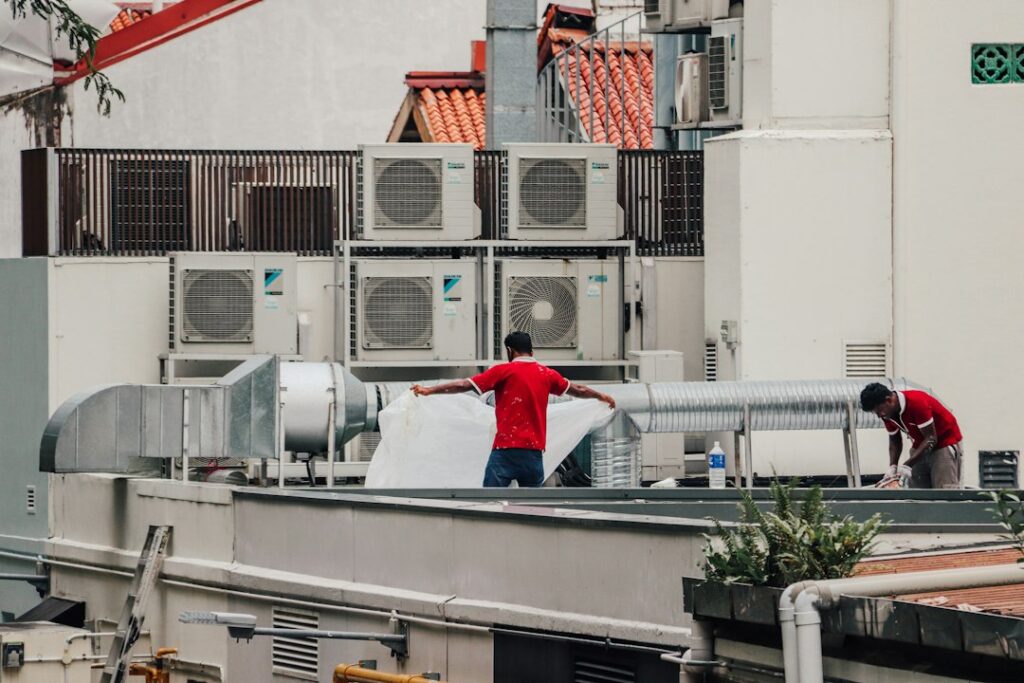
A central air conditioner on the Colorado Front Range has a short, intense job. It may sit idle from October to May, then run hard through a string of 90-degree afternoons in July. That pattern makes regular AC maintenance more useful, not less: dust, cottonwood fluff and winter debris collect on the outdoor unit while it rests, and small electrical or drainage problems tend to surface on the first hot day, when contractors are busiest. This guide lays out what a yearly tune-up should cover, which tasks homeowners can handle safely and which belong to a licensed technician, when to schedule service, what it typically costs, and how evaporative coolers differ. Costs below are general 2026 ranges that vary by contractor, equipment and location, so treat them as a starting point for quotes rather than a price list.
Part of our Heating, Cooling & Ventilation guide — start there for the full picture →
Heating or cooling trouble? Talk to a local HVAC technician.
📞 Call (833) 491-1876What AC Maintenance Includes: The Annual Tune-Up Checklist
Good AC maintenance is a combination of simple homeowner habits and a yearly professional check-up. ENERGY STAR recommends a pre-season contractor visit for the cooling system in spring, and its published checklist is a useful benchmark for comparing what different companies promise. A thorough tune-up usually covers the following items.
Air Filter
The filter is the single most important homeowner task. A clogged filter starves the indoor coil of airflow, which can make the coil run too cold, ice over and drive up run time. ENERGY STAR suggests inspecting filters monthly and changing them when dirty; many households in dusty or pet-heavy homes end up changing standard 1-inch filters every one to three months during cooling season. Thicker media filters (4 or 5 inches) usually last longer. Use the size and type the equipment manufacturer specifies, since an overly restrictive filter can create its own airflow problem.
Outdoor Condenser Coil
The outdoor unit rejects heat from the house through a finned coil. When those fins are matted with dust, grass clippings or cottonwood seed, the system cannot shed heat efficiently, pressures rise and the compressor works harder. A technician typically inspects the coil, straightens badly bent fins and cleans the coil with water and, when needed, a coil cleaner. Front Range homes near open space, gravel roads or cottonwood-lined creeks often see heavier buildup than average.
Indoor Evaporator Coil, Condensate Drain and Pan
The indoor coil sits above the furnace in most Colorado homes. As it cools air, it pulls moisture out, and that water drains through a condensate pan and line to a floor drain, sump or condensate pump. A partially clogged line can overflow into a finished basement, and the damp pan and coil surfaces are a common spot for biological growth. The tune-up should include flushing or clearing the drain line, confirming the pan is intact and draining, and checking any float or overflow safety switch. If a technician finds slime or visible growth, the guide on how to clean mold from an AC unit explains what homeowners can safely address and what calls for a professional cleaning.
Refrigerant Check (Certified Technicians Only)
A technician measures system pressures and temperatures to judge whether the refrigerant charge is correct. Too much or too little refrigerant reduces efficiency and can shorten equipment life. A low charge almost always means a leak somewhere, because a sealed system does not consume refrigerant. Handling refrigerant is regulated: under the EPA’s Section 608 program, technicians who service or dispose of equipment that could release refrigerant must be certified, and intentionally venting refrigerant is prohibited. Homeowners should not attempt to add refrigerant themselves, and a contractor who “tops off” a system every year without looking for the leak is treating the symptom rather than the problem.
Electrical Connections, Capacitor and Contactor
The outdoor unit contains a contactor (a heavy-duty relay) and one or more run capacitors that help the compressor and fan motor start and run. Capacitors weaken over time, and heat accelerates that decline. A technician tightens connections, measures voltage and current on motors, tests capacitor values against their rated microfarads, and inspects the contactor for pitted or burned contacts. Loose or corroded connections can cause unsafe operation and shorten component life. These checks involve live high-voltage circuits and should be left to the technician.
Thermostat and Controls
The checklist should confirm the thermostat is calibrated, programmed sensibly and actually calling for cooling, and that the system starts, runs and shuts off properly through a full cycle.
Airflow and Blower
The indoor blower moves air across the coil and through the ducts. A tune-up often includes inspecting and cleaning the blower wheel, checking the motor, and measuring temperature drop across the coil. ENERGY STAR notes that airflow problems can reduce a system’s efficiency by up to 15 percent, which is why blocked returns, closed registers and crushed flex duct matter. Duct cleaning is a separate service; the guide to HVAC cleaning covers when it is worth paying for and when it is not.
DIY vs Professional AC Maintenance Tasks
Plenty of useful AC maintenance requires nothing more than a few minutes and common sense. The line is simple: anything involving refrigerant, the inside of the electrical panel in the outdoor unit, or disassembly of the indoor coil belongs to a pro.
Tasks Homeowners Can Usually Handle
- Change or clean the filter on schedule, and write the date on the frame.
- Clear around the condenser. Keep about two feet of open space around the outdoor unit. Trim shrubs, pull weeds and rake out leaves and cottonwood fluff.
- Gently rinse the outdoor coil. With power off at the outdoor disconnect and the breaker, a garden hose at normal pressure can rinse loose debris from the fins. Spray from the inside out where the design allows. Never use a pressure washer, which can flatten the fins.
- Check the condensate line. Look for water in the secondary pan or at the floor near the furnace. Many lines have an access tee where a cup of water, or a small amount of the vinegar solution recommended by the equipment manufacturer, can be poured to keep the line flowing.
- Open supply registers and clear returns. Furniture over returns is a common cause of weak airflow.
- Watch and listen. New buzzing, clicking without starting, or ice on the copper lines are reasons to call for service rather than keep running the unit.
Tasks for a Licensed HVAC Technician
- Measuring and adjusting refrigerant charge, and finding leaks
- Testing capacitors, contactors and motor amperage
- Deep-cleaning the indoor evaporator coil or blower assembly
- Inspecting the furnace side of a shared system, including the heat exchanger and gas connections
- Checking static pressure and duct issues
Homeowners who want an independent opinion on the overall system, especially before buying a house, can hire an HVAC inspector who evaluates the equipment without the incentive to sell repairs or replacements.
When to Schedule AC Maintenance on the Front Range
Spring is the practical window. ENERGY STAR advises checking cooling equipment in spring and heating equipment in fall, partly because contractors get busy once the seasons turn. Along the Front Range, that generally means April through early June, before the first sustained heat. A unit that fails on a June weekend can mean a multi-day wait and after-hours rates.
Several local factors are worth planning around:
- Cottonwood season. Cottonwood trees release seed fluff in late spring and early summer, and it mats onto condenser coils. Some homeowners find it worth rinsing the coil again in late June or July after the fluff settles.
- Dry, dusty conditions. Low humidity and wind carry fine dust that collects on coils and filters faster than in many humid regions. Homes near construction, open fields or dirt roads may need more frequent filter changes.
- Hail. Spring and summer hail can flatten condenser fins. After a hailstorm, look at the outdoor unit; fin straightening or coil replacement may be an insurance item in severe cases.
- Shoulder-season testing. Most manufacturers caution against running an air conditioner when outdoor temperatures are cool (often below about 60 to 65°F), because readings are unreliable and low ambient operation can stress the compressor. A spring tune-up on a cool morning may include a limited check rather than a full refrigerant evaluation. Ask the contractor how they handle that.
Heat pumps, which are becoming more common in Colorado, run year-round and generally benefit from both a spring and a fall visit. The fall visit for gas furnaces is also when a technician should look at combustion and the heat exchanger; the furnace inspection guide covers that side of the system.
AC Maintenance Costs and Service Plans
Pricing for a residential tune-up varies widely by company and what is included. As a general 2026 range, a standalone cooling tune-up from a residential HVAC company often falls somewhere around $90 to $200 for a typical single-system home, with promotional “check-up” specials sometimes advertised for less. Be aware that very low-priced visits are often designed to generate repair sales.
What Changes the Price
- Scope. A quick visual check is not the same as a full cleaning with electrical testing, coil rinse and drain flushing. Ask for the checklist in writing.
- Number of systems. Larger homes with two or more units cost more.
- Parts and refrigerant. Filters, capacitors, contactors and refrigerant are usually billed separately. Refrigerant pricing varies a lot by type and has risen for older refrigerants.
- Coil cleaning. A deep chemical cleaning of a heavily fouled indoor coil can add meaningfully to the bill, especially if the coil must be accessed through ductwork.
- Timing. Off-season appointments are easier to book and sometimes discounted.
Maintenance Plans
Many HVAC companies sell annual maintenance agreements, commonly priced somewhere around $150 to $300 per year for one system, that bundle a spring cooling visit and a fall heating visit with perks such as priority scheduling, waived diagnostic fees or a percentage off repairs. Whether a plan pays off depends on whether the household would actually schedule two visits a year without it, and on how the fine print treats parts and refrigerant. Before signing, compare:
- Exactly which tasks each visit includes
- Whether filters are included and what size
- Repair discounts and whether diagnostic fees are waived
- Auto-renewal and cancellation terms
- Whether the plan transfers if the home is sold
A maintenance plan is different from a home warranty. A home warranty is a service contract that may cover certain repairs or replacements subject to exclusions, and many warranties reference “proper maintenance” as a condition. The overview of home warranty plans explains how those contracts typically work.
How Maintenance Affects Efficiency, Lifespan and Warranty
Routine maintenance does not make an old system new, but it helps a system perform closer to its design. According to ENERGY STAR’s checklist, dirty coils make a system run longer and reduce equipment life, incorrect refrigerant charge lowers efficiency, and a dirty filter can increase energy costs and lead to early failure. Those are the three most common maintenance-related problems, and each is relatively inexpensive to address before it becomes a breakdown.
Exact savings depend on the starting condition of the equipment, so be cautious of contractors quoting precise percentages for a specific home. A system with a badly clogged filter and matted coil may see a noticeable change after service; a well-kept system may see little.
Manufacturer Warranties
Most residential equipment carries a manufacturer parts warranty, often with a longer term for the compressor and a requirement to register the product within a set period after installation. Many manufacturer warranties state that damage caused by lack of maintenance, improper installation or neglect is excluded, and some ask owners to keep records of professional service. Requirements vary by brand and model, so read the warranty document that came with the unit. Practical steps:
- Keep receipts or invoices from each tune-up in a single folder or email label.
- Photograph the outdoor and indoor nameplates (model and serial numbers) for quick reference.
- Confirm whether the unit was registered; if a home was purchased, ask whether registration transfers.
Comfort and Air Quality
Clean filters and a free-draining condensate system also matter for indoor air. Standing water in a pan or a clogged drain line can create musty odors and support microbial growth on the coil. Persistent musty smells when the AC runs are worth having checked rather than masked with fragrances.
Evaporative (Swamp) Coolers: Separate Maintenance Needs
Evaporative coolers, often called swamp coolers, are common in older Front Range homes because the dry climate suits them. They work by pulling outdoor air through wet pads, which cools it through evaporation, then pushing it into the house. They use far less electricity than refrigerated air conditioning but add humidity and work best on dry days. Their maintenance has little in common with a central AC tune-up:
- Spring start-up. Remove the winter cover, reconnect the water line, check the float valve and water level, and inspect the pump and pads.
- Pads. Pads clog with mineral scale over time, especially with hard water, and are often replaced every season or two depending on use and pad type.
- Mineral buildup and water quality. Many units use a bleed-off line or purge pump to limit scale. Standing water in the pan should be drained and the pan cleaned periodically.
- Belt and motor. Belt-driven units need belt tension checks and periodic replacement.
- Fall shutdown. Drain the unit and water line before the first freeze, close the damper or install the cover, and disconnect power.
Roof-mounted coolers also involve ladder and roof safety. Many homeowners hire a cooler service company for start-up and shutdown. Buyers of homes with a swamp cooler should ask when it was last serviced and whether the roof penetration has been inspected for leaks.
When to Call a Professional or Get an Inspection
Some symptoms mean the AC maintenance window has passed and the unit needs diagnosis now. Call a licensed HVAC contractor if the system runs but blows warm air, the outdoor fan or compressor does not start, ice forms on the indoor coil or refrigerant lines, the breaker trips repeatedly, or water appears around the furnace. Shut the system off when ice is present and let it thaw; continuing to run a frozen coil can damage the compressor. The companion guide on air conditioner repair covers common faults and typical repair costs.
For buyers, a general home inspection includes the cooling system within limits. ASHI’s Standard of Practice calls for inspecting central and permanently installed cooling equipment and opening readily openable access panels, but it does not require the inspector to determine cooling adequacy or distribution balance. Inspectors may also decline to run an AC in cold weather. When a home’s HVAC is older or the inspection shows concerns, a dedicated HVAC evaluation is a reasonable add-on. The guide to hiring a home inspector explains what a standard inspection covers, and the overview of specialty inspections outlines optional add-ons.
More Questions About AC Maintenance
How long does an AC tune-up take?
An AC tune-up typically takes about 45 minutes to 90 minutes for a single residential system, though a thorough visit can run up to two hours. Time depends on how dirty the coils are, whether the condensate line needs to be cleared, and how hard the air handler is to reach in an attic or crawlspace. Systems that need a coil cleaning with chemical cleaner, a capacitor replacement or a refrigerant leak search take longer. Very short visits of 20 minutes or less may indicate a quick check rather than a full tune-up. Asking for the written checklist before the visit clarifies what is included.
What happens if you never service your air conditioner?
An air conditioner that is never serviced usually loses efficiency, cools less evenly and is more likely to break down during the hottest weeks of summer. Dirty filters and coils reduce airflow, which raises energy use and can freeze the evaporator coil. Clogged condensate drains can overflow and cause water damage or mold growth near the air handler. Weak capacitors and worn contactors often fail without warning, and small refrigerant leaks go unnoticed until the compressor is under strain. Skipping maintenance can also complicate warranty claims if the manufacturer requires proof of regular service.
How often should you change an AC filter?
An AC filter typically needs changing every 1 to 3 months for standard 1 inch filters, and every 6 to 12 months for thicker 4 to 5 inch media filters. Homes with pets, allergies, ongoing construction dust or heavy summer run times often need the shorter interval. Checking the filter monthly during cooling season is the simplest habit, replacing it when it looks gray or dust-coated. A clogged filter restricts airflow, raises energy use and can lead to a frozen coil. High-MERV filters capture more particles but can restrict airflow in some systems, so the filter rating should suit the equipment.
What are signs an air conditioner needs service?
An air conditioner needs service when it blows warm or weak air, runs constantly, short cycles, or makes new grinding, buzzing or squealing noises. Other warning signs include ice on the refrigerant lines or indoor coil, water pooling near the furnace or air handler, a musty smell from the vents, and humidity that feels higher than usual. A sudden jump in the electric bill without a change in weather can point to a dirty coil, low refrigerant or a failing component. Tripping breakers or an outdoor fan that will not spin also call for a licensed HVAC technician.
References
- Heating and Cooling Maintenance Checklist — ENERGY STAR
- Section 608: Stationary Refrigeration and Air Conditioning — U.S. Environmental Protection Agency
- ASHI Standard of Practice for Home Inspections — American Society of Home Inspectors
Frequently asked questions
How often should an air conditioner be serviced?
Most guidance, including ENERGY STAR's checklist, recommends a professional check-up once a year, ideally in spring before cooling season. Heat pumps that also heat the home often benefit from a second visit in fall. Filters should be checked monthly in between.
How much does AC maintenance cost?
A standalone residential tune-up commonly runs somewhere around $90 to $200 in 2026, depending on the company and what is included. Parts, refrigerant and deep coil cleaning are usually extra. Annual plans covering a spring and fall visit often cost roughly $150 to $300 per year.
Can I add refrigerant to my AC myself?
No. Under the EPA Section 608 program, technicians who service equipment that could release refrigerant must be certified, and venting refrigerant is prohibited. A low charge also usually means a leak, which needs to be found and repaired by a professional.
Can I hose off my outdoor AC unit?
Yes, with care. Turn off power at the outdoor disconnect and breaker, then rinse the fins gently with a garden hose at normal pressure. Avoid pressure washers, which bend the fins and reduce airflow.
Does a swamp cooler need different maintenance than central AC?
Yes. Evaporative coolers need spring start-up, pad replacement, pan cleaning, float and pump checks, belt adjustment and a fall drain-down before freezing weather. They do not use refrigerant, so there is no refrigerant check.
Is an AC maintenance plan worth it?
An AC maintenance plan is often worth it for homeowners who would otherwise skip annual service, because it bundles visits and may include repair discounts and priority scheduling. The value depends on what the plan actually includes. Comparing the annual fee with the cost of separate tune-ups shows whether the extras justify the price.
Should you cover your outdoor AC unit in winter?
Covering an outdoor AC unit in winter is usually unnecessary, since condensers are built to sit outdoors year-round. A full wrap can trap moisture and attract rodents. If anything, a breathable top cover that keeps falling debris or ice off the fan is a reasonable option. Heat pumps should never be covered while in use.
Does AC maintenance lower the electric bill?
AC maintenance can lower the electric bill when it fixes problems that hurt efficiency, such as a dirty condenser coil, a clogged filter, poor airflow or incorrect refrigerant charge. The savings vary widely by system condition. A unit that is already clean and properly charged may see little change, but it is less likely to fail.
Buying a Front Range home with an aging air conditioner or a rooftop swamp cooler? Contact us and we can help connect you with a local inspector who can evaluate the cooling system before closing.