Plug-in Natural Gas Alarm
Natural gas & propane leak detectors
The Kidde COPDLG is a plug-in wall alarm that watches for natural gas and propane while also monitoring carbon monoxide.
The Kidde COPDLG is a plug-in wall alarm that watches for natural gas and propane while also monitoring carbon monoxide, so one unit covers the two invisible hazards a gas furnace, water heater, range or fireplace can create. It suits homeowners and renters who want continuous monitoring near gas appliances rather than a handheld tool used only when something smells wrong. What sets it apart is the combination of a backlit display that reads “GAS” for combustible gas, an early low-level CO alert, and AA battery backup for power outages.
Specifications
| Specification | Details |
|---|---|
| Model | COPDLG; the listing says it replaces Kidde models 900-0113 and KN-COEG-3 |
| Hazards detected | Explosive gas (natural gas, propane) plus carbon monoxide |
| Power | Plugs into a standard 120V outlet; two included AA batteries keep it running during an outage; the plug rotates for vertical or horizontal outlets |
| Display and alarm | Backlit digital readout shows the CO level or the word “GAS”; 85 dB horn |
| CO alert levels | Low-level warning pattern from roughly 30 to 70 ppm; a separate alarm pattern at 70 ppm |
| Certification | Listing cites UL 2034 (5th Edition) for CO and an ETL listing; no standard named for the gas sensor |
| Size and weight | About 5.5 x 2.9 x 1.9 inches; 0.6 lb |
| Warranty | Inconsistent: the bullets say 7-year limited, the manufacturer field says 10-year limited |
Kidde COPDLG — plug-in natural gas, propane and CO alarm with “GAS” readout, low-level CO alerts and AA backup.
How It Compares
The only listing on this shelf that pairs gas and CO detection with UL 2034 and ETL claims
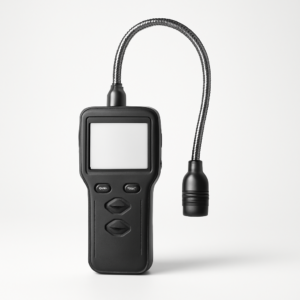
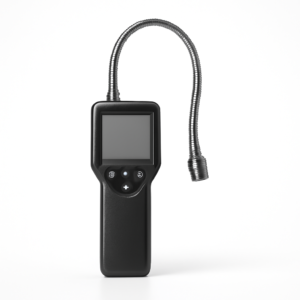
The comparison shelf holds 14 similar Amazon listings, and they fall into two groups. Eight are handheld gas sniffers from TIDOOS, TOPTES and EG, with probes or goosenecks for tracing a leak to a particular fitting. They are good for pinpointing a source, but they only work while someone holds them, and none claims to detect carbon monoxide. The COPDLG is a different tool: it sits in an outlet and watches the room around the clock.
The other six are plug-in units. Four of them, from Wurapl, BIXTEK and Adorelf, are gas-only detectors with numeric displays and no CO sensing; BIXTEK and Adorelf both describe running with no batteries, so they go dark in a power cut. The remaining two are listings for the older Kidde KN-COEG-3, the model the COPDLG names itself as replacing. Those two, plus the COPDLG, are the only listings on the shelf that mention any battery backup, and no other listing names a UL or ETL certification.
Against the KN-COEG-3 directly, the COPDLG swaps a 9-volt backup for two AAs, adds the separate low-level CO warning and a backlit display, and states its UL 2034 edition, which the older listings do not. The KN-COEG-3 listings mention a peak-level memory that the COPDLG listing does not, and one KN-COEG-3 listing states a 5-year limited warranty versus the 7 or 10 years claimed here. Neither Kidde listing gives a gas alarm threshold, sensor life or end-of-life replacement date, so check the packaging and manual for those.
Who It’s For — and Who Should Skip It
It fits a household with natural gas or propane appliances that wants a single always-on alarm near them, especially where a combined unit saves an outlet or replaces an aging KN-COEG-3. Families with infants, older relatives or pets may value the earlier low-level CO warning the listing describes.
Skip it if the goal is finding the exact fitting that leaks; a handheld sniffer does that job better. It also does not replace hardwired or ceiling-mounted smoke alarms, and one unit does not cover every sleeping area for CO. Homes with no gas appliances, no attached garage and no fuel-burning heat gain little from the gas side.
Using It at Home
- Placement: Natural gas is lighter than air and tends to rise, while propane is heavier and settles low. Many Front Range homes run natural gas furnaces and water heaters in basements, and mountain and rural properties often run on propane, so follow the Kidde manual’s placement guidance for your fuel. Keep the unit away from the immediate area of the range, out of bathrooms and away from vents or drafts that dilute a reading.
- Coverage: Put it within range of the furnace room, water heater or kitchen, and add CO alarms outside sleeping areas and on each level.
- Upkeep: Test it on the schedule in the manual, swap the AA batteries when prompted, and note the install date so you know when the sensor is due for replacement.
If the display reads “GAS,” do not flip switches or light anything; leave the house and call the gas utility or 911 from outside. A CO alarm at 70 ppm also means getting everyone out and calling for help. Repeated low-level CO readings, a persistent gas smell, or a furnace or water heater that has not been checked in years call for a professional look at venting and gas lines. Contact us to schedule an inspection.
Pros
- One unit covers natural gas, propane and carbon monoxide
- AA battery backup during outages, unlike several gas-only plug-ins on the shelf
- Separate low-level and dangerous-level CO alarm patterns
- Listing cites UL 2034 (5th Edition) and ETL for the CO side
Cons
- Warranty length conflicts within the listing (7 vs 10 years)
- No gas alarm threshold, sensor life or gas-side standard stated
- Outlet height may not suit natural gas placement in every room
- Cannot pinpoint a leak the way a handheld sniffer can
Related Guides
- Best natural gas detector
- Natural gas detector for home
- What a gas leak smell means
- Best CO detector for home
- More gas detectors in the shop
As an Amazon Associate we earn from qualifying purchases. Product details come from the current Amazon listing; we have not lab-tested this unit, and prices and availability change.
$61.97 as of Oct 18, 2026 3:15 am GMT+0000
Prices change often — check the live price on Amazon. As an Amazon Associate we earn from qualifying purchases.