Forensics Propane Gas Detector
Natural gas & propane leak detectors
The Forensics Detectors FD-91 is a handheld combustible gas leak detector aimed at inspectors, technicians and engineers.
The Forensics Detectors FD-91 is a handheld combustible gas leak detector aimed at inspectors, technicians and engineers. It covers natural gas and propane plus a long list of vapors, from LPG and LNG to gasoline, diesel, acetone, ethanol, isopropyl alcohol and toluene. Its distinguishing points are durability and lifespan: an ABS housing the maker says survives a 10-foot drop, a Japanese-made sensor rated for seven years, and a large color LCD that also shows temperature. The sensor is calibrated to methane, the main component of natural gas.
Specifications
| Specification | Details |
|---|---|
| Detects | Natural gas, methane, propane, butane, LPG, LNG, gasoline, diesel, alcohols, acetone, toluene and other combustibles |
| Sensor | Made in Japan; methane calibrated; 7-year stated sensor life |
| Display | Large color LCD that includes a temperature readout |
| Durability | ABS housing rated for a 10-foot drop |
| Probe / alarm type / range | Not stated in listing |
| Power | Not stated in listing |
| Size / weight | About 6 x 2.4 x 1.2 in; 0.7 lb |
| Model / warranty | FD-91 (red); 1-year limited warranty |
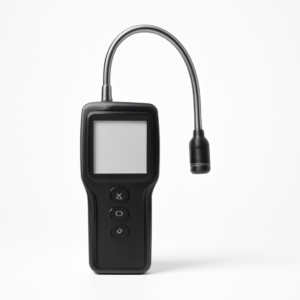
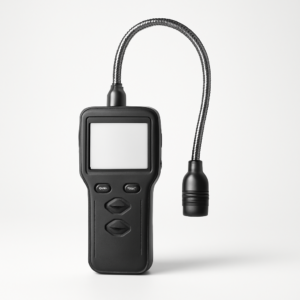
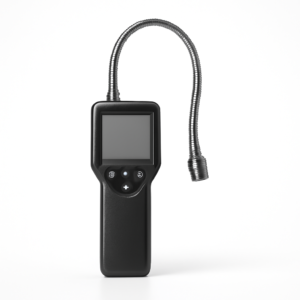
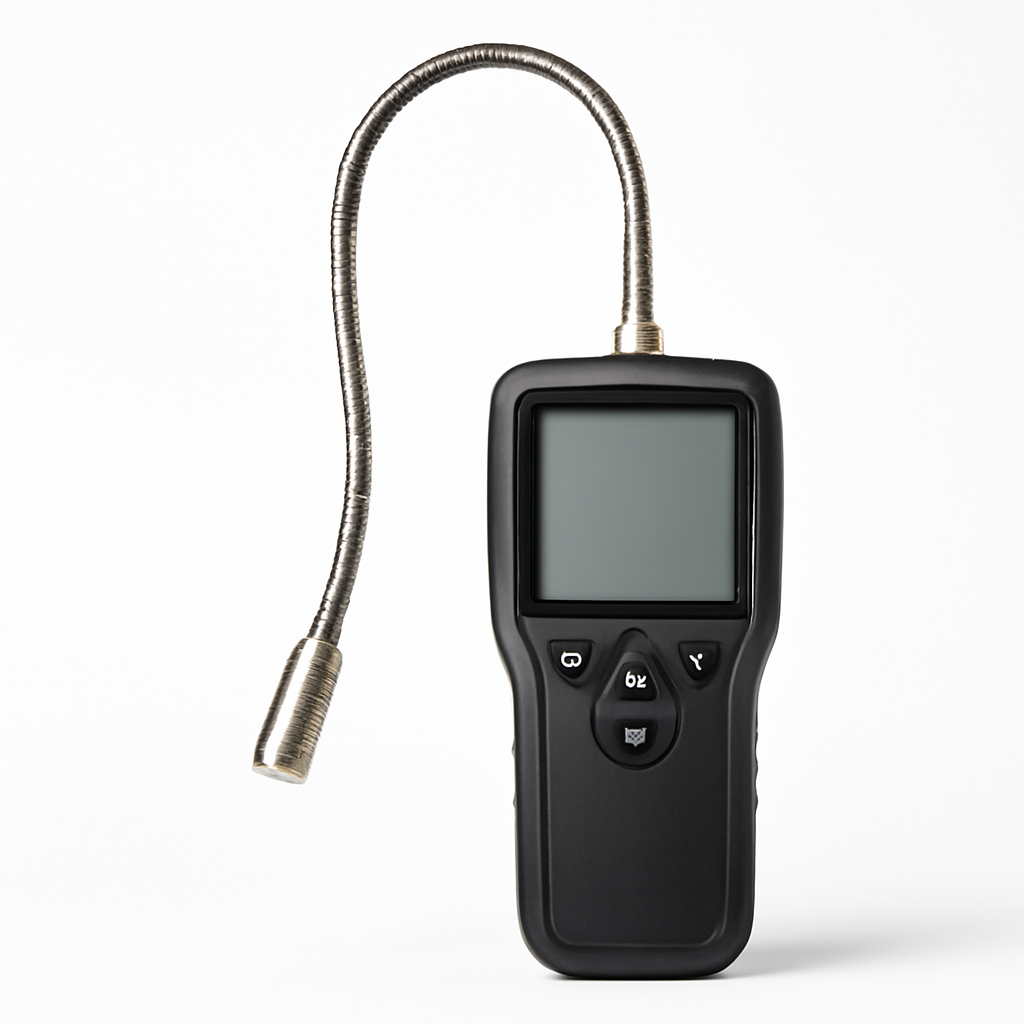
Forensics Detectors FD-91 — handheld combustible gas detector, methane-calibrated Japanese sensor, color LCD, 10-ft drop rating
How It Compares
The Only Listing Here With a Stated Drop Rating and Sensor Lifespan
Of the 14 similar listings, five are fixed alarms rather than handheld tools: three Kidde plug-ins that sense explosive gas, a plug-in BIXTEK gas alarm and a 12-volt RV propane alarm. The other nine are handheld sniffers from TopTes, TIDOOS (listed twice in two colors), Klein and an unbranded EG model. None of those nine states a drop rating or a sensor life in years, so the FD-91 is the only one that documents how long the core component should last and how much abuse the housing can take.
Its color screen and temperature readout are less common too. Only the TopTes PT-990 also describes a color display, and no other handheld listing mentions temperature. The PT-990 also names its sensor maker (Figaro), while the FD-91 says only that its sensor is made in Japan.
The listing is thin elsewhere. It does not state a detection range, a probe or gooseneck length, whether it sounds an audible alarm, its battery type or any sensitivity setting. Competitors spell these out: the Klein ET120 lists a 50–10,000 ppm range with high and low sensitivity, and the TopTes PT520A describes a 17-inch gooseneck. Check the manual before assuming the FD-91 matches them.
Who It’s For — and Who Should Skip It
The FD-91 suits inspectors and technicians who carry tools in vehicles and crawlspaces, drop them, and want a sensor that will not need replacing soon. Its wide list of target vapors also helps when checking garages, workshops and fuel storage, not just gas lines.
Skip it if you need a long flexible probe to get behind appliances, or if you want documented ppm readings and alarm behavior before buying. Those who just want an always-on safety device should choose a plug-in explosive gas alarm instead.
Using It at Home
Many mountain and rural Colorado homes run on propane, and Front Range homes use natural gas for furnaces, water heaters, ranges and fireplaces. Because the sensor is methane calibrated, readings on propane or other vapors are best treated as a locator signal rather than an exact concentration.
- Power it on in clean outdoor air and let it settle before going inside.
- Move slowly along fittings, valves, flex connectors and regulator connections; for propane, check low, since it is heavier than air.
- Note a spot that responds consistently, then step away and recheck to rule out cleaning products or fuel vapors nearby.
A strong response or a rotten-egg smell means leave without using switches and call your gas utility or propane supplier from outside. For repeat small leaks at appliance connections, bring in a licensed gas fitter; contact us to include gas appliances and a propane tank check in an inspection.
Pros
- 10-foot drop rating stated in listing
- 7-year sensor life, Japanese-made sensor
- Color LCD with temperature readout
- Wide range of detectable gases and vapors
Cons
- No detection range or alarm type stated
- No probe or gooseneck described
- Methane calibration; propane readings are relative
Related Guides
- Propane leak detectors
- Best gas leak detectors
- Propane tank inspection
- What to do about a gas leak smell
- More gas leak detectors in the shop
As an Amazon Associate we earn from qualifying purchases. Product details come from the current Amazon listing; we have not lab-tested this unit, and prices and availability change.
Prices change often — check the live price on Amazon. As an Amazon Associate we earn from qualifying purchases.