Where Does Radon Come From? A Clear Guide
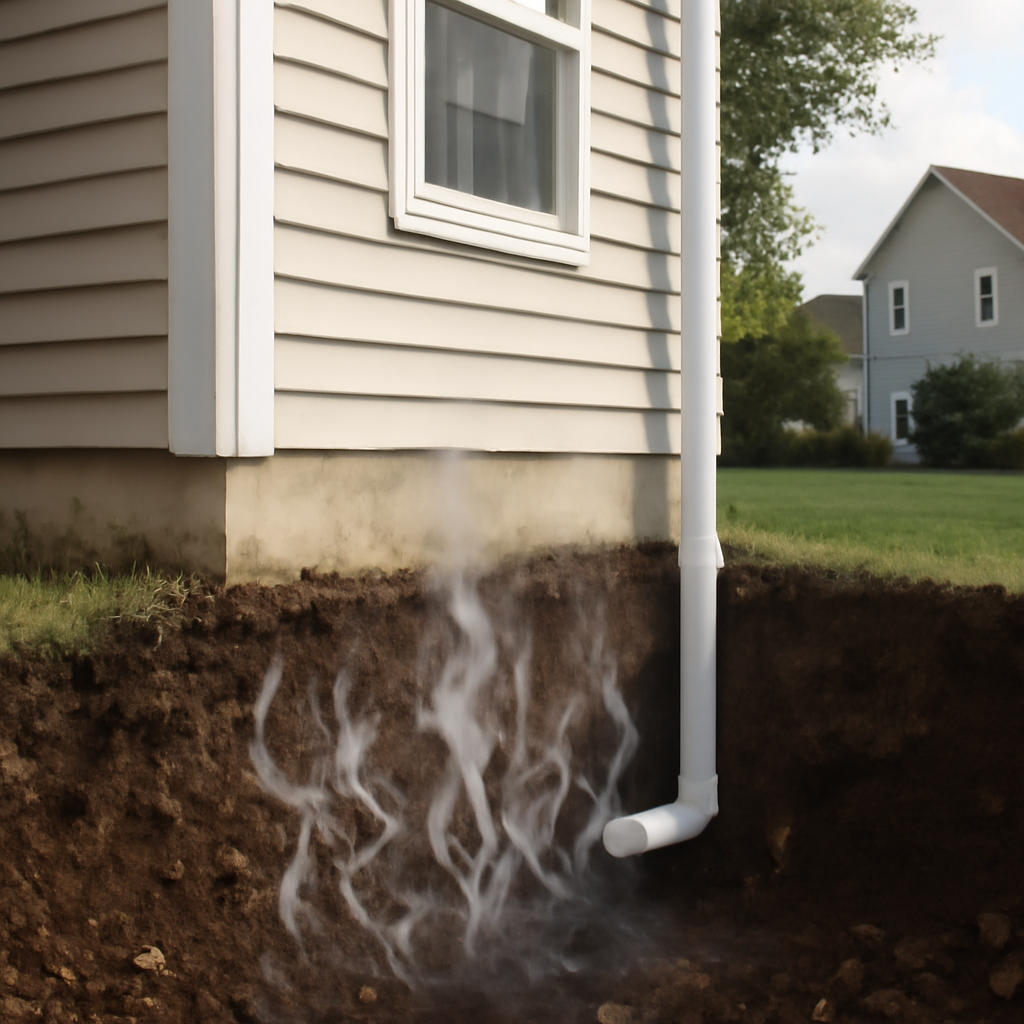
Understanding where does radon come from clarifies why this invisible gas turns up in homes that look perfectly healthy. Radon is not a manufacturing byproduct or a sign of neglect; it forms naturally underground and rises into buildings through ordinary gaps in their foundations. This guide summarizes EPA and CDC guidance current as of 2026 and is informational only — consult a certified professional for testing decisions and a physician for any health concerns. Knowing the source helps homeowners grasp why testing, not inspection, is the only way to find it.
Part of our Radon Levels guide — start there for the full picture →
Where radon comes from
Radon is a radioactive gas produced by the natural decay of uranium found in soil, rock, and water throughout the earth’s crust. Uranium breaks down into radium, which in turn decays into radon gas. Because uranium is present in trace amounts almost everywhere, radon is generated beneath nearly every home.
The gas then migrates upward through pore spaces in soil. When it reaches the surface outdoors, it dilutes harmlessly into the atmosphere. The problem begins when that upward migration meets a building sitting on top of the soil.
Outdoors, radon is essentially a non-issue because the open air disperses it almost instantly. It is only when the gas is funneled into the confined, lower-pressure space of a home that it can build to concentrations that matter for health. The same gas, in other words, is harmless in the yard and a concern in the basement.
This natural origin is why radon is not anyone’s fault. A spotless, well-maintained home over uranium-bearing soil can have high radon, while a neglected home over different geology may have very little. The source is the ground itself, not the condition or care of the house.
How radon enters a home
Homes act like chimneys. Warm indoor air rises and escapes through upper levels, creating a slight negative pressure at the base that draws soil gas inward. Radon follows the path of least resistance through the foundation.
Common entry points include cracks in concrete slabs and foundation walls, gaps around pipe penetrations, sump pits, floor drains, crawl space soil, and the joint where the wall meets the floor. None of these are visible defects; they are normal features of ordinary construction.
This stack effect intensifies in winter, when the temperature difference between warm indoor air and cold outdoor air strengthens the upward draft. That is part of why radon readings tend to run higher in the heating season, when homes are also sealed tightly against the cold.
Why levels vary house to house
Two neighboring homes can have very different radon levels because soil composition, foundation type, construction details, and air-pressure dynamics all differ. This is why the EPA recommends testing every home individually, as explained in the guide to a radon test, rather than relying on a neighbor’s result.
Even small differences matter. A slightly more permeable patch of soil, a different foundation design, or a sump pit in one basement but not the next can produce markedly different readings between otherwise identical homes. The only reliable way to know a specific home’s level is to measure it.
Soil and geology as the source
The amount of radon generated depends on the uranium and radium content of the local geology. Areas with granite, shale, phosphate, or certain sedimentary deposits tend to produce more radon. Soil permeability also matters, since loose, porous soil lets gas migrate more freely than dense clay.
This geological dependence is why radon maps highlight high-potential zones. The EPA classifies regions by predicted indoor radon, but those maps indicate likelihood, not certainty, for any individual home.
A high-zone map should be read as a prompt to test, not a verdict. A home in a high-potential zone may test low, and a home in a lower-zone area may test high, because the map describes regional geology while the actual level depends on the specific soil and construction beneath one house.
Less common sources
While soil is the dominant source, two others deserve mention. Well water drawn from radon-bearing aquifers can release the gas indoors when water is agitated during showering or dishwashing, though this is usually a minor contributor compared with soil gas.
Certain building materials made from radium-bearing stone can emit small amounts of radon, but in most homes this is negligible. The overwhelming majority of indoor radon enters from the soil beneath and around the foundation.
Homes on private wells in high-radon areas may warrant separate water testing, since the waterborne contribution, while usually small, can add to the indoor air level. For most households on municipal water, though, the soil-gas pathway remains the concern that matters.
Why the action level matters
Because radon comes from the ground, indoor levels build up where soil gas accumulates: basements and ground-floor rooms. The EPA sets an action level of 4 pCi/L, recommending that homes at or above it be fixed, and notes that risk persists below that figure.
Radon is the second leading cause of lung cancer after smoking, according to the EPA, which is why the source and the action level matter to homeowners. The parent guide to radon testing in Colorado connects the geology to the practical decision to test and mitigate.
The action level is a practical threshold, not a sharp safety cliff. Risk rises gradually with concentration and exposure time, which is why the EPA encourages considering action even between 2 and 4 pCi/L. The number gives homeowners a clear point at which the case for fixing the home becomes compelling.
Seasonal and weather influences
Because radon entry depends on pressure differences, weather plays a role in how much enters on any given day. Cold weather strengthens the stack effect, drawing more soil gas indoors, while wind and barometric pressure swings can push readings up or down over short periods.
Frozen or snow-covered ground can also trap soil gas, increasing the pressure that drives it into a home rather than letting it escape outdoors. This is one reason winter readings often run higher and why short-term tests are typically advised during the heating season for a conservative snapshot.
These fluctuations explain why a single short-term test can mislead and why a longer measurement gives a truer average. The underlying source, soil gas, is constant, but the rate at which it enters varies with the weather, which is exactly the variation a long-term test smooths out.
The Front Range connection
Colorado’s Front Range sits over geology rich in the minerals that produce radon, and the EPA places many of its counties in the highest-potential zone. The region’s soils, combined with tight modern construction that limits air exchange, push indoor readings up.
That geological reality is why radon testing is treated as a baseline along the Front Range rather than an optional add-on. Homes from Boulder to El Paso County frequently test above the action level, regardless of age or upkeep.
The lesson for local homeowners is not to assume. A newer home, a well-sealed home, or a home that feels perfectly comfortable can still draw radon from the soil beneath it, and only a test reveals the actual level given the region’s elevated geological potential.
How radon behaves once inside
After entering, radon disperses through the air but tends to concentrate where it enters and where ventilation is poorest. Basements and ground-floor rooms typically show the highest readings because they are closest to the soil-gas source and often less ventilated than upper floors.
Concentration also rises when a home is sealed. Closing windows and doors against winter cold, or simply living in a tightly built modern home, reduces the air exchange that would otherwise dilute the gas. The same construction that saves energy can allow radon to accumulate.
Because radon is radioactive and decays over time, its level reflects a balance between how fast it enters and how fast it disperses or decays. Anything that increases entry, like stronger negative pressure, or decreases dispersal, like sealing the home, tips that balance toward higher indoor concentrations.
Why radon is a health concern
The reason the source matters is the health risk at the end of the chain. As radon decays, it produces radioactive particles that can lodge in lung tissue when inhaled, delivering localized radiation over time. The EPA identifies radon as the second leading cause of lung cancer after smoking.
The risk is cumulative and long-term rather than acute. Radon causes no immediate symptoms, which is exactly what makes it dangerous: a household can breathe elevated levels for years without any warning sign, accumulating exposure that only testing could have revealed and mitigation could have prevented.
Smoking and radon together raise the risk far more than either alone, which is why agencies stress testing in any home with smokers. For everyone, though, the absence of symptoms is the reason the EPA frames radon as a hazard to measure proactively rather than wait to feel.
From source to solution
Knowing where radon comes from points directly to the fix. Because the gas enters from the soil, mitigation works by intercepting it: an active soil depressurization system draws soil gas from beneath the slab and vents it above the roofline before it can enter living space.
Sealing cracks alone is insufficient because the negative-pressure dynamic keeps pulling gas through any remaining gap. Addressing the source, the soil-to-home pathway, is what makes mitigation reliable, and why understanding the origin matters.
Health context and next steps
Understanding the source explains the risk but does not diagnose exposure. Homeowners concerned about radon’s health effects should consult a physician rather than infer harm from a reading. The controllable variable is the home’s level, which testing reveals and mitigation reduces.
The practical sequence flows from the source: since radon comes from the soil and varies by house, every home should be tested, and any home above the action level should be mitigated by a certified professional.
Understanding the origin removes the mystery and, with it, the false comfort of assuming a clean, modern, or well-kept home is safe. Radon comes from the ground, enters through ordinary gaps, and concentrates indoors regardless of how the house looks. That clarity is what turns an invisible gas into a manageable, testable, and fixable concern.
The chain from source to solution is short once it is understood: uranium in soil produces radon, pressure differences draw it indoors through foundation gaps, it accumulates in lower levels, and an active depressurization system intercepts it at the source. Each link points to the same conclusion, test the home and, if levels are high, mitigate at the soil-to-home boundary where the gas enters.
References
- What Is Radon Gas — EPA
- Health Risk of Radon — EPA
- Colorado Radon Information — CDPHE
- Radon Sources and Health — CDC
Frequently asked questions
Where does radon come from?
Radon forms naturally from the decay of uranium in soil, rock, and water. Uranium breaks down into radium, which decays into radon gas. The gas migrates upward through soil and enters homes through foundation gaps, making soil the dominant source.
How does radon get into a house?
Homes create slight negative pressure at their base that draws soil gas inward through cracks, pipe penetrations, sump pits, and floor-wall joints. These are normal construction features, not defects. The gas accumulates in basements and ground-floor rooms.
Why do neighboring homes have different radon levels?
Soil composition, foundation type, construction details, and air-pressure dynamics all differ between homes. That is why the EPA recommends testing every home individually rather than relying on a neighbor's result. Levels can vary widely on the same street.
Can radon come from water?
Yes, well water from radon-bearing aquifers can release the gas indoors during showering or dishwashing, but it is usually a minor contributor. The overwhelming majority of indoor radon enters from the soil beneath the foundation.
Front Range homeowners who want to confirm whether soil radon is entering their home can get in touch through our contact page for a referral to a certified local tester.
Test your home for radon
Radon is invisible and odorless, so a test is the only way to know your level. A short-term kit gives a first reading in days; a digital monitor tracks it over time.
| Product | Why | Buy |
|---|---|---|
 AirChek Charcoal Radon Test Kit AirChek Charcoal Radon Test Kit | Lab fee usually included; EPA short-term protocol. | Amazon — $21.95 |
 First Alert RD1 Radon Test Kit First Alert RD1 Radon Test Kit | Widely stocked; 48-hour charcoal test. | Amazon — $16.98 |
 Airthings Corentium Home Airthings Corentium Home | Digital monitor with a long-term average. | Amazon — $142.99 |