What Does Black Mold Come From: A Plain-Language Guide
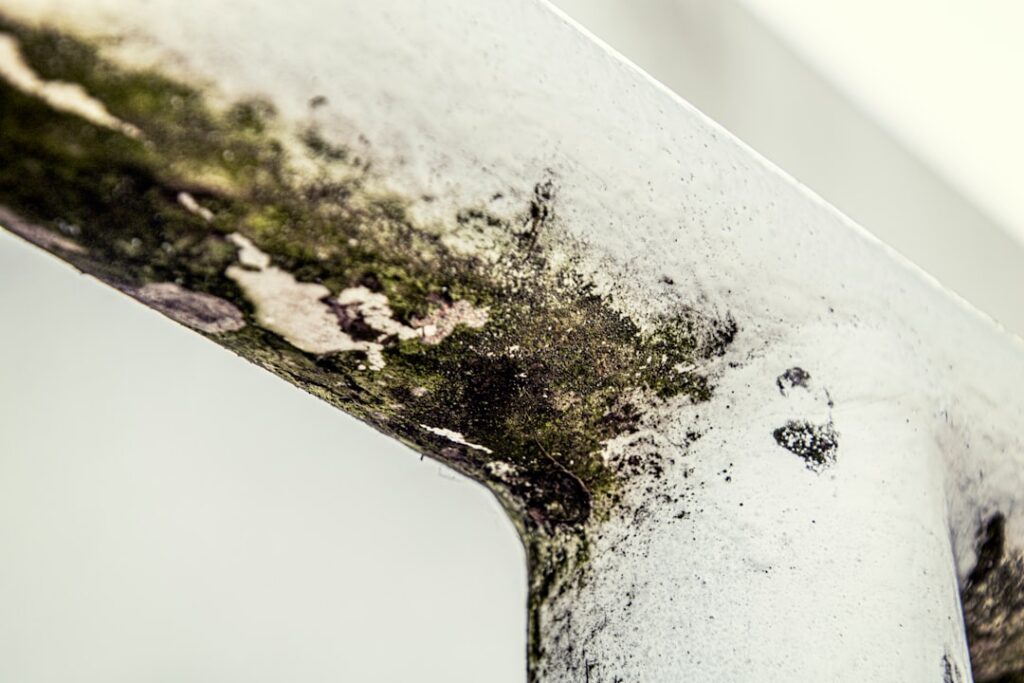
Homeowners discovering a black patch on a basement wall or behind a baseboard reasonably want to know where it came from. The technical answer is three-part: spores from outdoors, an organic surface to grow on, and indoor moisture. This guide summarizes EPA, CDC, and NIEHS guidance on residential mold for homeowners current as of 2026 and is not medical advice. Anyone with respiratory symptoms or other health concerns potentially related to mold exposure should consult a physician. What follows is the home-side origin story — useful because once a homeowner understands the chain, they understand which link to break and why simply wiping the surface keeps failing.
Part of our Black Mold & Your Health guide — start there for the full picture →
Is this mold, asbestos, or water damage? Get a free instant screen
Upload a clear photo of the suspect area. You'll get an instant AI screening opinion and what to do next. This is screening guidance, not a professional determination.
Screening guidance only. AI can be wrong. Confirm asbestos, mold type, or lead with lab testing or a licensed professional before acting.
Where black mold actually comes from
Mold spores are everywhere outdoors. They are part of normal air. Soil, decaying leaves, mulch, compost, lawn thatch, and the bark of healthy trees all release spores year-round. Outdoor spore counts vary by season and weather, but mold spores enter every home through open doors and windows, on shoes and clothing, on pets, and through HVAC intakes that draw outside air. The presence of some mold spores inside a house is normal and unavoidable. The problem starts when spores find a wet organic surface and begin to multiply.
“Black mold” is informal language for several dark-pigmented mold species, most famously Stachybotrys chartarum. The CDC and EPA both note that color is not a reliable identifier of species or hazard, and that all indoor mold growth deserves cleanup regardless of color. The relevant point for origin: Stachybotrys spores and the spores of many other dark molds are normal outdoor contaminants. They do not appear in a home through any mystery — they ride in on air, on people, and on items.
The three conditions that turn outdoor spores into indoor growth
The chain has three links. Removing any one prevents a colony. The links are spore introduction, organic substrate, and moisture. Spore introduction is essentially uncontrollable in a house people live in. Organic substrate is partly controllable. Moisture is the link homeowners actually have leverage over.
Spore introduction: the link homeowners can’t fully control
Spores enter every time the front door opens, every time the HVAC pulls outside air through a fresh-air intake, every time a basement window is cracked, and every time someone walks in with shoes that crossed a damp lawn. HEPA filtration on the HVAC return reduces airborne spore counts in conditioned air but does not eliminate them. The realistic objective is to deny the spores a place to grow, not to eliminate the spores themselves.
Organic substrate: the food
Mold metabolizes organic carbon. Cellulose is the most common indoor food source: paper-faced drywall, untreated wood framing, paper backing on insulation, cardboard storage boxes, dust, fabric upholstery, carpet, wallpaper paste, and the paper face on many ceiling tiles. Mineral surfaces like glass, ceramic tile, sealed concrete, and stainless steel do not feed mold directly, though dust and soap residue accumulating on those surfaces can.
Mold-resistant drywall (often paperless or fiberglass-faced) reduces substrate availability in bathrooms and basements. Pressure-treated framing in below-grade and exterior wall plates is standard. These choices reduce the home’s chemistry of vulnerability without eliminating it — dust, paint binders, and any cellulose object stored against a wall still provides food.
Moisture: the actionable link
Without water, the colony does not establish. EPA guidance and ASHRAE indoor air quality literature consistently identify moisture control as the single intervention that prevents indoor mold growth. The thresholds are well-documented: relative humidity above approximately 60 percent at a surface, or any visible liquid water on an organic material for more than 24-48 hours, supports mold germination.
Moisture comes from three categories. The first is bulk water — a plumbing leak, a roof leak, a foundation crack with seepage, a flooded basement, a backed-up drain. The second is condensation — humid indoor air contacting a cold surface like a single-pane window, a poorly insulated rim joist, or a cold-water pipe. The third is high indoor humidity — typically driven by inadequate ventilation in bathrooms and laundry rooms, by humidifier overuse in winter, or by below-grade rooms in humid summer climates. Mold inspection’s parent pillar on the mold inspection and testing topic walks through how an assessment locates each category.
Where black mold most often originates inside a house
Specific rooms repeat across remediation reports. Knowing these locations helps homeowners check the suspicious-but-not-obvious places before damage spreads.
Bathrooms
Showers, tub surrounds, caulk joints, grout lines, behind toilets, and ceiling drywall above the shower head are the high-frequency origin points. Inadequate exhaust ventilation lets shower steam settle and stay. Black streaks at grout-to-tile interfaces are usually mildew (a surface mold), which is cosmetic and cleanable; growth inside the wall cavity behind tile is a structural problem and is the more serious form covered in our black mildew vs black mold guide.
Basements
Below-grade walls in contact with cool soil, particularly in humid summer climates, condense moisture out of indoor air. Carpet-on-slab installations trap moisture against concrete. Stored cardboard boxes against finished walls become substrate. Foundation cracks admit liquid water during heavy rain or snowmelt. Front Range homes with finished basements and limited ventilation are vulnerable in spring when snowmelt meets warmer indoor air.
Kitchens
Under-sink cabinets with slow plumbing leaks; refrigerator condensate pans; dishwasher seals; cabinet bases adjacent to humid sink areas. The early sign is a musty smell with no visible source. Opening cabinets and feeling along the back walls reveals damp spots before mold becomes visible.
Attics
Roof leaks at flashings, plumbing vent boots, and chimney joints; bathroom exhaust fans that vent into the attic instead of outside; insufficient attic ventilation that traps humid air. The colony often appears on the underside of roof sheathing before homeowners notice anything from the living space below.
Window areas and exterior wall cavities
Failed window seals, leaky flashing, and inadequately insulated rim joists create cold surfaces where indoor humidity condenses. Mold growth on window sills and inside wall cavities at exterior walls is the result.
What about “toxic” black mold specifically?
The popular narrative is that Stachybotrys chartarum appears in homes that are otherwise unusual. The reality is that Stachybotrys grows on cellulose-rich materials that stay wet for several days or longer. Drywall, paper-faced gypsum board, wood, ceiling tile, and cardboard are its typical substrates. CDC notes that in studies of damp buildings, Stachybotrys is recovered from a subset of homes with chronic water damage. It is not a mystery species — it is a moisture-loving mold that establishes on cellulose after a sustained wet event.
This matters for “where does it come from.” Homeowners sometimes assume that finding Stachybotrys means something unusual is happening. The honest framing is that it means the house had several days to a few weeks of moisture on a paper or wood surface, which is enough for Stachybotrys to establish. The cause is upstream — a roof leak, a slab leak, a flooded basement, a poorly ventilated bathroom.
Breaking the chain: where homeowners actually intervene
Because spore introduction is uncontrollable and substrate is only partly controllable, moisture is where the realistic prevention plan lives. The four leverage points below all reduce the conditions that turn outdoor spores into indoor colonies.
Keep relative humidity at 40-50 percent
A consumer hygrometer costs under twenty dollars. Indoor relative humidity above 60 percent supports mold growth on cool surfaces. In humid summer climates, a properly sized dehumidifier in below-grade rooms is standard. In dry Front Range winters, the opposite problem appears — humidifier overuse driving humidity above 50 percent causes condensation on cold windows and rim joists.
Fix water intrusion within 24-48 hours
EPA guidance is explicit: dry wet materials within 24-48 hours of a water event to prevent mold. Saturated drywall, carpet pad, and upholstery are usually beyond reasonable drying after that window and should be removed.
Ventilate moisture-generating activities
Bathroom and kitchen exhaust fans vented to the outside, run for 15-30 minutes after showers or cooking, remove the moisture before it settles. Dryers vented outside (not into the laundry room) prevent the same problem in another location. Several articles in our cluster, including the upcoming how does black mold happen guide, walk through this from a slightly different angle.
Maintain the building envelope
Annual gutter cleaning, roof inspection after major weather, foundation crack sealing, and proper exterior grading away from the house all reduce bulk water intrusion. The single most cost-effective preventive item for many homes is making sure downspouts discharge several feet away from the foundation.
When the origin is not obvious
Sometimes visible growth appears with no obvious moisture history — no recent leak, no high humidity reading, no plumbing issue. In those cases the source is often hidden: an in-wall pipe with a slow drip, a slab leak under a finished floor, condensation inside a wall cavity at a cold spot, or an exhaust fan venting into a wall cavity instead of outside. Moisture-meter surveys, infrared thermography, and in some cases small inspection holes for borescope investigation are the standard tools. A professional inspector follows the moisture trail rather than chasing the visible mold.
References
- A brief guide to mold, moisture, and your home — U.S. Environmental Protection Agency
- Basic facts about mold and dampness — Centers for Disease Control and Prevention
- Mold and indoor air quality — National Institute of Environmental Health Sciences
Frequently asked questions
Does black mold come from outside the house?
Yes. Mold spores are normal outdoor contaminants and enter every home through doors, windows, HVAC intakes, and on shoes and pets. Indoor growth begins when those spores find a wet organic surface — moisture is the controllable factor.
Can black mold appear without any visible leak?
Yes. Hidden moisture sources include slab leaks, in-wall pipe drips, condensation inside wall cavities at cold spots, and exhaust fans venting into walls instead of outside. A moisture-meter or infrared survey often locates these before visible growth spreads.
Is finding black mold a sign of an unusual problem?
Not necessarily. Black mold including Stachybotrys grows on cellulose surfaces that stay wet for several days. The presence indicates sustained moisture exposure on a paper, wood, or drywall surface, which is more common than homeowners often assume.
Front Range homeowners who have found suspected black mold and want to identify the moisture source before cleanup can connect with a vetted Denver-area inspector through our contact page.