What Prevents Mold From Growing: A Plain-Language Guide
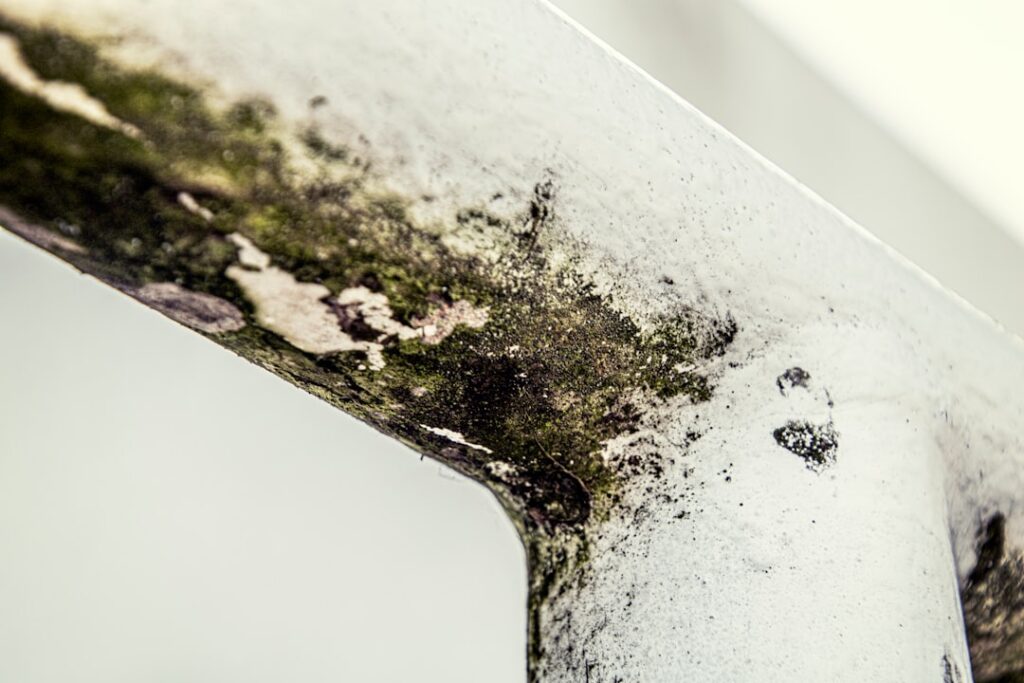
Mold cannot grow without moisture. That single fact drives every prevention strategy that actually works. Spores are present everywhere in normal indoor air — they enter through doors, windows, ventilation, on clothing, and on pets — so eliminating spores is not the goal. Eliminating the conditions that let spores germinate into colonies is the goal. This guide summarizes EPA and CDC guidance current as of 2026 alongside InterNACHI building-science practice — consult a certified mold professional for confirmed growth larger than ten square feet and your physician for respiratory symptoms.
Part of our Types of Mold guide — start there for the full picture →
Is this mold, asbestos, or water damage? Get a free instant screen
Upload a clear photo of the suspect area. You'll get an instant AI screening opinion and what to do next. This is screening guidance, not a professional determination.
Screening guidance only. AI can be wrong. Confirm asbestos, mold type, or lead with lab testing or a licensed professional before acting.
The Core Principle: Moisture Is the Lever
Mold germinates and grows when relative humidity at a surface exceeds approximately 60% for sustained periods, when liquid water contacts the surface, or when condensation forms repeatedly. Below those thresholds, even airborne spores cannot establish colonies. The EPA’s published guidance on mold prevention is consistent across decades: control the moisture and you control the mold.
This reframes prevention as a building-systems problem rather than a chemistry problem. Sprays, paints, and antimicrobials are downstream interventions. Moisture control is the upstream lever, and the cost-benefit usually favors fixing the moisture rather than buying more cleaner.
Keep Indoor Humidity Below 50%
The most powerful single intervention is maintaining indoor relative humidity at 30% to 50%. Above 60%, surface moisture allows mold growth on cool wall sections, behind furniture against exterior walls, and in basements. Below 30%, occupants experience dry skin and respiratory irritation. The 30-to-50 window protects both the building and the occupants.
A $15 hygrometer placed in each major space measures the actual humidity. Common Front Range monitoring points: basement (often the wettest), bathrooms (highest peaks), bedrooms (sleeping occupants), and laundry rooms. Document the readings across seasons. Winter readings in Colorado are usually too low (15% to 25%); summer readings are often too high (55% to 70%) in basements without dehumidification.
Tools for managing humidity:
- Dehumidifier sized to the space (50-pint for most basements, 70-pint for larger areas)
- Whole-house humidifier in winter to push winter readings above 30%
- HVAC system with humidity-control capability (whole-house dehumidification on premium air handlers)
- Exhaust fans in bathrooms, kitchens, and laundry rooms — used and timed correctly
Ventilate Wet Spaces Properly
Bathrooms, kitchens, and laundry rooms generate spikes of high humidity that need active removal. Bathroom exhaust fans should run during every shower and for at least 20 to 30 minutes afterward. A timer switch ensures this happens reliably; bare on/off switches usually result in fans shut off too early.
Kitchen exhaust hoods should vent outside, not recirculate. Recirculating range hoods (typical in older townhomes) move humidity from the cooktop into the rest of the house rather than expelling it. Upgrading to a ducted exhaust hood is among the higher-cost prevention items but among the highest-return for homes where cooking generates significant steam.
Laundry room dryers must vent outside through a clean, unobstructed duct. Dryer vents that backflow or restricted ducts push humid exhaust back into the home — and lint accumulation inside the duct is a fire hazard independent of mold concerns. Annual duct cleaning addresses both issues.
Fix Leaks Promptly
Plumbing leaks, roof leaks, window leaks, and foundation seepage are the most common moisture sources behind real-world mold growth. A slow drip under a kitchen sink can soak the cabinet floor and wall framing for months before anyone notices. The InterNACHI inspection standard treats moisture intrusion as a top-priority finding because of how reliably it leads to mold growth.
Common pathways to check regularly:
- Under all sinks (kitchen, bathroom, utility) — look for staining on cabinet floors or wall backs
- Around toilets — flange leaks soak the subfloor
- Behind washing machines — supply line connections and drain hose
- Around dishwashers — door gaskets and supply connections
- Under refrigerators with ice makers — supply lines
- Around bathtubs and showers — grout, caulk, and surround integrity
- Roof penetrations — vents, chimneys, skylights
- Window flashing — older windows often have failed seals
- Basement walls — staining indicates current or past seepage
Annual inspection of these points catches issues early. Our piece on how to check for mold in the walls covers the detection side when a leak is suspected.
Install Vapor Barriers Where Needed
Crawlspaces with exposed earth release substantial moisture vapor into the home. Encapsulation — a 10-mil polyethylene vapor barrier covering the floor and extending up the walls, sealed at seams — typically reduces ground-source moisture by 70% to 90%. Cost runs $3 to $7 per square foot installed on the Front Range, depending on whether the encapsulation includes wall liners and a dedicated dehumidifier.
Basement walls in older Colorado homes (pre-1970) often lack interior vapor barriers between the concrete and any finishing materials. Retrofitting a vapor barrier behind drywall during a basement-finish project is significantly cheaper than addressing mold growth after the finish is complete.
Improve Drainage Around the Foundation
Water that pools against the foundation eventually finds its way inside. Three improvements address most cases:
- Grade soil away from the foundation at minimum 6 inches drop over the first 10 feet
- Extend gutter downspouts so they discharge at least 6 feet from the foundation
- Install a French drain or sump system in homes with chronic seepage
These are sequential — grading first because it is cheapest and addresses the most water; downspout extensions next; foundation drainage upgrades last because they are most disruptive and expensive.
Use Mold-Resistant Materials Where It Counts
Several construction products resist mold growth better than standard alternatives. Paperless drywall (sometimes called “mold-resistant” or “Greenboard’s successor”) replaces the paper face with fiberglass mesh, eliminating the food source that supports growth in damp conditions. Costs about 20% more than standard drywall and is worth the premium in bathrooms, laundry rooms, and below-grade walls.
Closed-cell spray foam insulation does not absorb water, unlike fiberglass batt insulation. In humid climates or below-grade applications, closed-cell foam reduces the condensation potential that supports growth in wall cavities. The cost premium is significant ($1.50 to $2.50 per square foot versus $0.50 to $1.00 for fiberglass), but the lifetime moisture-control benefit can offset it.
Cement backer board behind tile in showers, paperless drywall in below-grade rooms, and treated lumber in crawlspaces are similarly worth the premium in their respective applications.
Maintain HVAC Systems
HVAC systems can spread mold throughout a home if condensate pans, drain lines, or coils develop biological growth. Annual maintenance — typically $100 to $200 for a residential system — addresses the most common causes: clogged condensate drain, dirty evaporator coil, neglected filter, undersized return air pathway.
Filter changes matter more than most homeowners realize. A MERV 11 to 13 filter captures more spores than the cheap fiberglass alternatives, and changing it on the manufacturer’s schedule (typically every 90 days for residential systems) keeps airflow at design levels. Skipping filter changes leads to coil contamination, which in turn leads to humidity control problems.
Insulate Cold Surfaces
Condensation forms when warm humid indoor air contacts cold surfaces. Common condensation points in Front Range homes:
- Cold-water supply pipes during summer (insulate with foam sleeves)
- Toilet tanks during summer (insulating kits or anti-sweat valves)
- HVAC ductwork in attics and crawlspaces (wrap with foil-faced insulation)
- Exterior walls in poorly insulated 1950s-1970s homes (blown-in retrofit insulation)
- Window frames during winter (storm windows or upgraded sash assemblies)
Eliminating condensation removes a moisture source that the building’s owner may not have noticed. Insulating a single cold-water pipe under a sink can stop the recurring puddle that feeds cabinet-floor mold.
Front Range Climate Considerations
Colorado’s semi-arid climate is generally less mold-prone than humid coastal regions, but specific scenarios still produce growth. Winter humidification creates condensation on cold exterior walls when occupants over-humidify against the dry outdoor air. Summer monsoon storms saturate the ground around foundations of homes with poor drainage. Basement moisture climbs during snowmelt when frozen ground releases water against foundation walls. Wildfire smoke recovery often involves wet cleaning that, if not dried aggressively, leads to mold.
Front Range homeowners benefit from seasonal humidity monitoring: target 30% to 40% in winter (to prevent both occupant dryness and wall condensation) and below 50% in summer. Our hub on mold inspection and testing covers when local conditions warrant professional assessment.
Seasonal Prevention Calendar
Mold prevention is a year-round effort with seasonal peaks. A practical Front Range calendar:
Spring (March-May) — Inspect roof and gutters after winter. Check exterior caulking and flashing for freeze-damage. Confirm basement sump pump operates. Test crawlspace vapor barrier integrity. Schedule annual HVAC service. Begin monitoring basement humidity as snowmelt saturates surrounding ground.
Summer (June-August) — Run basement dehumidifier continuously during monsoon weeks. Watch for condensation on cold-water pipes. Confirm exhaust fans run during showers. Inspect attic ventilation under peak heat conditions. Watch for AC condensate drain backups during humid weeks.
Fall (September-November) — Clean gutters before winter. Confirm downspout extensions are positioned correctly for snow runoff. Service furnace before heating season. Switch dehumidifier off if appropriate. Watch for indoor humidity drops below 30% requiring humidification.
Winter (December-February) — Monitor for condensation on cold exterior wall surfaces. Adjust humidifier output to maintain 30-40% indoor RH without wall condensation. Check ice dam formation on roof edges. Inspect attic for frost or condensation. Watch for plumbing freeze risk in unheated spaces.
A calendar approach catches issues at the season they typically appear. Reactive responses to visible growth are always more expensive than seasonal prevention.
Cost-Benefit of Major Prevention Investments
Several larger prevention investments have clear payback timelines:
Whole-house dehumidifier ($1,200 to $2,500 installed) — Pays back through reduced AC runtime in humid conditions and eliminated portable dehumidifier purchases. Five-to-seven year breakeven for most Front Range homes with finished basements.
Crawlspace encapsulation ($2,000 to $6,000 for typical Colorado home) — Eliminates ground-source moisture, reduces wood-rot and termite pressure, improves heating efficiency. Payback through avoided mold remediation alone often within five to ten years for homes with chronic crawlspace issues.
Foundation drainage upgrade ($3,000 to $12,000) — Sump pump, French drain, exterior waterproofing. Most expensive prevention investment. Justified for homes with documented basement seepage history, expansive clay soil concerns, or finished basement spaces at risk.
Window replacement ($500 to $1,500 per window) — Eliminates condensation at frame seal failures, improves energy efficiency. Long payback period from energy savings alone; mold prevention is a secondary benefit.
None of these investments are required for typical homes. They become rational when documented moisture or growth issues have made the lower-cost prevention measures insufficient.
The Working Prevention Checklist
For most Front Range homes, the practical prevention list is:
- Hygrometer in each major space, target 30% to 50% RH
- Basement dehumidifier during summer
- Bathroom exhaust fans on timers, 20+ minutes per use
- Kitchen and dryer exhaust ducted outside
- Annual under-sink and around-toilet leak check
- Roof and gutter inspection each spring and fall
- Foundation grading and downspout extension confirmed at purchase
- HVAC service annually, filter changes on schedule
- Insulate cold pipes and ducts in unconditioned spaces
This list costs less collectively than a single mold remediation invoice and prevents most growth before it starts.
References
- EPA Mold and Health — U.S. Environmental Protection Agency
- CDC Dampness and Mold Fact Sheet — Centers for Disease Control and Prevention
- InterNACHI Mold Inspection Standards — International Association of Certified Home Inspectors
- EPA Brief Guide to Mold, Moisture, and Your Home — U.S. Environmental Protection Agency
Frequently asked questions
What humidity level prevents mold?
Indoor relative humidity below 50% prevents most mold growth. Above 60% sustained, mold germinates on cool wall surfaces and in poorly ventilated corners. Below 30% creates occupant discomfort and respiratory issues. The 30% to 50% range protects both the building and the people living in it.
Does running a dehumidifier prevent mold?
Yes, in spaces where humidity reliably stays elevated. A 50-pint dehumidifier in a Front Range basement during summer typically holds RH below 50% and prevents the wall and stored-item mold that develops without one. Sizing the unit to the space matters more than the brand.
Can paint prevent mold from growing?
Mold-resistant paint additives (typically zinc pyrithione based) suppress growth on the painted surface for several years. They do not address the moisture source feeding the growth, so they buy time rather than fix the underlying problem. Apply over a clean, dry surface after correcting the moisture issue.
What is the cheapest way to prevent basement mold?
A $15 hygrometer plus a $200 to $300 dehumidifier covers most Front Range basements. Add a sump pump if seepage is present, extend downspouts to discharge water away from the foundation, and confirm exterior grading slopes away from the house. Total upfront cost is usually under $500.
If a Front Range basement, crawlspace, or finished lower level has resisted DIY prevention efforts — repeated growth despite a dehumidifier, recurring musty smells, visible staining — reach out through our contact page to talk to a vetted local inspector about what is actually driving the moisture.