What Is the Acceptable Radon Level in Homes?
What is the acceptable radon level in homes is one of the most common questions homeowners ask after a test result lands in their inbox, and the answer hinges on a distinction many people miss: acceptable and ideal are not the same thing. The EPA sets a practical action threshold, but the level that is genuinely best for your health is lower still. Understanding the gap between what is officially acceptable and what is ideal helps you decide what to do with your numbers. This guide summarizes EPA and CDC guidance current as of 2026; it is informational only, so consult a radon professional for testing and mitigation decisions and your physician for health concerns.
Part of our Radon Levels guide — start there for the full picture →
What Is the Acceptable Radon Level in Homes?
The EPA’s action level of 4 picocuries per liter (pCi/L) is the threshold most people mean when they ask about an acceptable radon level. At or above 4 pCi/L, the EPA recommends taking action to reduce radon in the home. Below that figure, a home is generally considered acceptable in the sense that mitigation is not formally recommended, though the EPA notes that risk continues below the action level.
It helps to read “acceptable” as a regulatory and practical benchmark rather than a declaration of safety. The 4 pCi/L action level reflects a balance between health risk and what mitigation can realistically achieve. A home below 4 pCi/L is acceptable by that standard, but “acceptable” and “as low as possible” are different goals, which is the heart of this topic.
Acceptable Versus Ideal
Here is the distinction that matters. Acceptable, in EPA terms, means below the 4 pCi/L action level. Ideal means as low as reasonably achievable, because radon risk has no true safety floor. The EPA explicitly suggests that homeowners consider taking action even between 2 and 4 pCi/L, which signals that a level under the action threshold is not automatically the goal you should settle for.
For context, the EPA notes that the average indoor radon level is around 1.3 pCi/L, and the average outdoor level is roughly 0.4 pCi/L. Those figures represent the realistic low end of what homes typically reach. So while a home at 3.5 pCi/L is acceptable under the action level, it is well above the typical indoor average, and some homeowners reasonably choose to reduce it further. Our overview of radon testing in Colorado explains how to weigh these choices.
Why the Gap Exists
The action level is not the same as a health-based ideal because reducing radon to zero is impossible and reducing it to outdoor levels is rarely practical indoors. The EPA set 4 pCi/L as the point where action is strongly recommended given current mitigation technology, which can typically bring levels well below 4 pCi/L. The gap between “acceptable” and “ideal” reflects this practical reality rather than a claim that anything under 4 pCi/L is harmless.
Is There a Legal Limit for Homes?
One source of confusion is whether the acceptable level is a law. For existing private homes, the 4 pCi/L action level is a federal recommendation rather than an enforceable limit; no agency will compel a homeowner to mitigate their own residence. The figure carries weight in practice, though, because it is the standard radon professionals work to and the benchmark most real estate transactions reference. A buyer’s inspection that returns a result at or above 4 pCi/L commonly leads to a negotiated mitigation before closing.
Some contexts apply firmer expectations. Certain rental, multifamily, school, and federally involved housing programs have their own radon requirements, and some states or localities impose disclosure or testing rules. For a typical homeowner, however, “acceptable” is best understood as a health-based recommendation you choose to follow, not a code you are forced to meet. That distinction is why the acceptable-versus-ideal framing matters: you have latitude to decide how low you want your home to be.
The 4 pCi/L Action Level Explained
When a home tests at or above 4 pCi/L, the EPA recommends installing a radon mitigation system. This threshold is the standard radon professionals work to and the figure that drives decisions in real estate transactions. Most professionally installed systems can reduce radon to around 2 pCi/L or lower, which moves a home from above the action level to comfortably below it.
The action level is a recommendation for private homes rather than an enforceable limit, but it functions as the practical line for action. A reading at or above it should prompt confirmation testing if the first test was short-term, followed by mitigation. A companion guide on how radon levels are measured and what the numbers mean covers the testing side in detail.
The 2 to 4 pCi/L Middle Ground
The range between 2 and 4 pCi/L is where the acceptable-versus-ideal distinction becomes practical. The EPA suggests considering action in this range because measurable risk remains. Whether to mitigate is a judgment call that depends on how long you will live in the home, whether children or non-smokers who are especially sensitive live there, and your own tolerance for risk.
A homeowner planning to stay for decades might choose to mitigate at 3 pCi/L, while someone selling soon might leave a 3 pCi/L home as is, since it falls below the action level. Neither choice is wrong; both are informed by the same numbers. The point is that “acceptable” at 4 pCi/L does not mean you cannot or should not aim lower if your circumstances warrant it.
Why the Average Matters as a Benchmark
The roughly 1.3 pCi/L indoor average is more than a trivia figure; it is a useful benchmark for judging your own result. Because it represents what a typical home contains, it shows that reaching a low level is realistic and common, not an unattainable ideal. A home at 1 pCi/L is doing better than average, while a home at 3 pCi/L, though acceptable under the action level, carries roughly twice the typical indoor concentration. Seeing your number against the average gives it meaning that the action level alone does not.
This benchmark also tempers two opposite errors. It guards against complacency, by showing that a sub-action-level home can still be above what most homes experience, and against panic, by showing that the action level is several times the typical concentration rather than a hair-trigger. Used alongside the EPA thresholds, the indoor average helps a homeowner calibrate expectations and decide how aggressively to pursue a lower level, which is exactly the judgment the acceptable-versus-ideal distinction asks you to make.
How to Confirm Your Level
Radon is measured in picocuries per liter, and an accurate reading depends on proper testing. Short-term tests, lasting a few days to a week, give a fast snapshot suited to initial screening and transactions. Long-term tests, running more than 90 days, capture seasonal swings and better represent year-round exposure. Continuous monitors track levels over time and reveal how weather and household activity affect readings.
Follow EPA testing protocols for a trustworthy result: place the device on the lowest livable level, keep windows and doors closed during short-term testing, and avoid disturbing the device. Because radon fluctuates, a single short-term result near the action level is often confirmed with a second test. If both tests agree your home is below 4 pCi/L, it is acceptable; if they land at or above it, plan to mitigate.
Acceptable for Buying or Selling a Home
In a real estate context, “acceptable” takes on a practical meaning shaped by negotiation. Buyers commonly include radon testing in their inspection, and a result at or above 4 pCi/L often prompts a request that the seller install or pay for mitigation before closing. A result below 4 pCi/L is generally treated as acceptable for the transaction, even if a cautious buyer might still prefer a lower number. Knowing this helps both sides set expectations.
Sellers benefit from understanding the threshold too. A home that has been tested and, if needed, mitigated to below the action level removes a common point of friction from a sale. Documentation of a mitigation system and a confirming post-mitigation test reassures buyers and can keep a deal on track. Whether buying or selling, the 4 pCi/L action level functions as the shared reference for what counts as acceptable, which is why it dominates these conversations even though it is a recommendation rather than a mandate.
Colorado and Front Range Context
Colorado homeowners should pay particular attention to radon, because much of the state, including the Front Range, sits in the EPA’s highest radon-potential zone. The Colorado Department of Public Health and Environment encourages testing for every home, since elevated levels are common across the region. Radon is driven by the geology beneath a home, so newer and older homes alike can exceed the action level.
For homeowners in Denver, Douglas, Arapahoe, Jefferson, El Paso, and surrounding counties, testing is the only way to know whether a home is acceptable or needs mitigation. Given the regional radon potential, many homes test at or above 4 pCi/L, and effective mitigation is routine. Testing costs little against the risk, and the result either confirms an acceptable level or points clearly to the fix.
Making the Decision
To decide what is acceptable for your household, start with the EPA’s framework: mitigate at or above 4 pCi/L, consider it between 2 and 4 pCi/L, and recognize that below 2 pCi/L your risk is lower. Then weigh your own situation, including how long you will live in the home and who lives there. Acceptable is the floor for action; ideal is as low as you can reasonably get.
When mitigation is warranted, a qualified radon professional installs a system, most often active sub-slab depressurization, and confirms its effectiveness with a follow-up test. The combination of accurate testing and, where needed, mitigation lets homeowners move from an uncertain number to a confidently acceptable, or even ideal, radon level.
Deciding What’s Acceptable for Your Family
Ultimately, “acceptable” is partly a personal decision layered on top of the EPA’s framework. The agency’s thresholds give you the structure: mitigate at or above 4 pCi/L, consider action between 2 and 4, and recognize that lower is always better. Within that structure, your own circumstances shape the choice. A household planning to stay for decades, with young children or a member who is especially sensitive, has more reason to aim well below the action level than a household preparing to move soon.
Cost and effort also factor in, though mitigation is generally affordable and effective enough that it rarely tips a clearly elevated home toward inaction. The point of the acceptable-versus-ideal distinction is to free you from treating 4 pCi/L as a finish line. A home at 3 pCi/L is acceptable by the action level yet above the indoor average, and reducing it further is a legitimate choice. Use the EPA thresholds as the floor for action and your family’s situation as the guide to how far below that floor you want to go.
More Questions About Acceptable Radon Levels
Is the acceptable radon level different in a basement?
No, the acceptable radon level is the same in a basement: the EPA action level of 4 pCi/L applies to any lived-in space, and basements are where testing starts. Basements usually read higher than upper floors because they sit directly against the soil. If a basement is a bedroom, office, playroom, or gym, its reading reflects real exposure and should guide decisions. If the basement is unfinished and rarely used, a test on the first floor can show what the household breathes most of the day.
Do acceptable radon levels vary by state?
Most states follow the EPA action level of 4 pCi/L as the benchmark for homes, so the acceptable level does not usually change by state. What varies is how states handle radon: some require disclosure of known test results in real-estate sales, some license radon testers and mitigators, and some set radon rules for schools or new construction. A few state programs encourage action at lower readings. Average radon levels also differ widely by region, which is why high-radon states push testing harder.
What radon level is acceptable for radon in water?
There is no final federal limit for radon in private well water. The EPA proposed a 300 pCi/L standard for public water systems, with an alternative of 4,000 pCi/L where states run indoor-air radon programs, but it was never finalized. A common rule of thumb is that about 10,000 pCi/L in water adds roughly 1 pCi/L to indoor air. Many state programs suggest treating well water above several thousand pCi/L, especially when indoor air levels are also high, using aeration or activated carbon treatment.
Is an acceptable radon level the same for a rental home?
Yes, the same 4 pCi/L action level applies to rental homes, but tenant rights and landlord duties depend on state and local law. Some states require landlords to disclose known radon results or provide radon information to tenants, and a few require testing in certain rental housing. Tenants can test their own unit with an inexpensive kit and share results with the landlord. If results are high, mitigation normally falls to the property owner because it involves the foundation and building systems.
References
- What is radon gas and the action level — U.S. Environmental Protection Agency
- Radon health effects and prevention — Centers for Disease Control and Prevention
- Colorado radon program and testing — Colorado Department of Public Health and Environment
Frequently asked questions
What is the acceptable radon level in homes?
The EPA's action level of 4 pCi/L is the practical benchmark. At or above it, the EPA recommends mitigation. Below it a home is generally considered acceptable, though the EPA notes risk continues below the action level.
What is the difference between acceptable and ideal radon levels?
Acceptable means below the 4 pCi/L action level. Ideal means as low as reasonably achievable, since radon risk has no true safety floor. The average indoor level is about 1.3 pCi/L, well below the action level.
Should I act between 2 and 4 pCi/L?
The EPA suggests considering action in this range because risk remains. Whether to mitigate depends on how long you will live in the home, who lives there, and your tolerance for risk. It is a reasonable judgment call.
How do I confirm my home's radon level?
Test using a short-term, long-term, or continuous device following EPA protocols on the lowest livable level. Because radon fluctuates, a short-term result near the action level is often confirmed with a second test.
Is 2.5 pCi/L an acceptable radon level?
A radon level of 2.5 pCi/L is below the EPA action level of 4 pCi/L, so it is generally considered acceptable, though it sits in the range where the EPA suggests considering mitigation. Many homeowners at 2.5 pCi/L retest with a long-term test before deciding.
Does an acceptable radon level stay the same over time?
No, a home's radon level can change over the years after settling, foundation cracks, new windows, basement finishing, or HVAC changes. A home that tested acceptable five years ago may now read higher. Retesting about every two years, and after major work, keeps the result current.
Who decides what radon level is acceptable when buying a home?
In a home purchase, the buyer and seller negotiate what radon level is acceptable, usually using the EPA action level of 4 pCi/L as the reference. Buyers often ask the seller to install a mitigation system or offer a credit when a test exceeds 4 pCi/L. Some buyers set a lower target in the purchase agreement.
If you are a Front Range homeowner unsure whether your radon level is acceptable, you can reach a vetted local professional through our contact page.
Test your home for radon
Radon is invisible and odorless, so a test is the only way to know your level. A short-term kit gives a first reading in days; a digital monitor tracks it over time.
| Product | Why | Buy |
|---|---|---|
 AirChek Charcoal Radon Test Kit | Lab fee usually included; EPA short-term protocol. | Amazon — $21.95 |
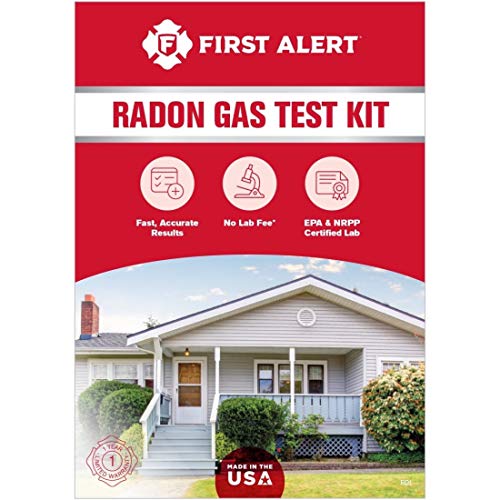 First Alert RD1 Radon Test Kit | Widely stocked; 48-hour charcoal test. | Amazon — $17.95 |
 Airthings Corentium Home | Digital monitor with a long-term average. | Amazon — $99.99 |