Remediation of Mold: A Plain-Language Homeowner Guide
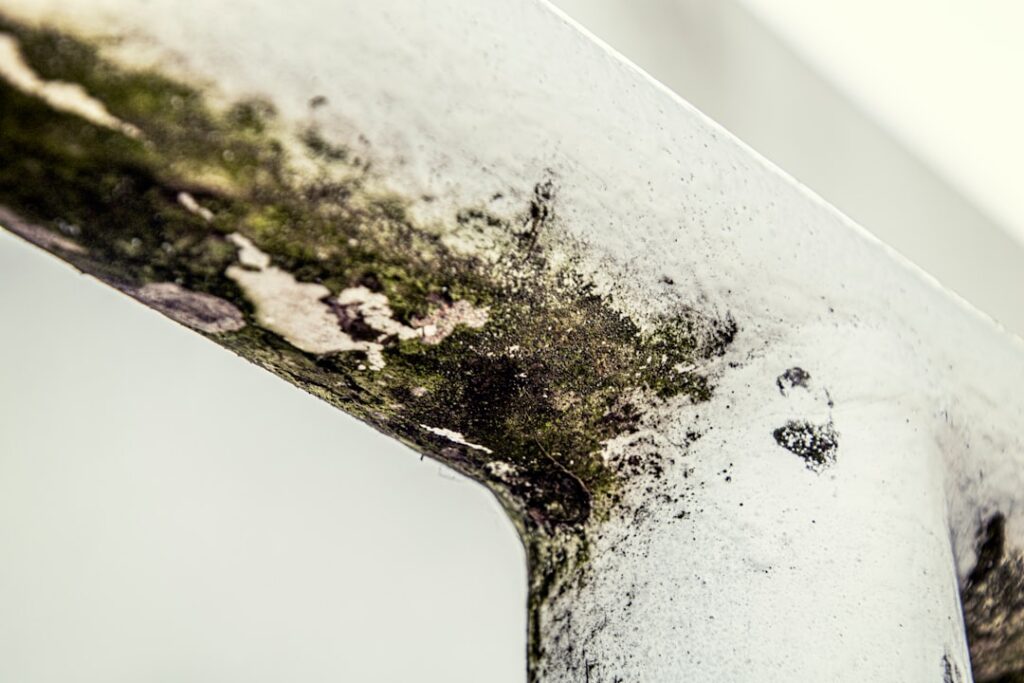
The remediation of mold is the structured work of returning a mold-affected space to a normal, healthy condition — not just wiping away a stain, but removing the growth, correcting the moisture that caused it, and verifying the result. The term sounds technical, yet the underlying logic is simple, and understanding it helps homeowners make sound decisions and judge whether a contractor is doing the job right. This guide summarizes EPA and CDC guidance current as of 2026 and is informational only; consult a qualified professional for larger jobs and your physician for any health symptoms.
Part of our Mold Removal & Remediation guide — start there for the full picture →
Is this mold, asbestos, or water damage? Get a free instant screen
Upload a clear photo of the suspect area. You'll get an instant AI screening opinion and what to do next. This is screening guidance, not a professional determination.
Screening guidance only. AI can be wrong. Confirm asbestos, mold type, or lead with lab testing or a licensed professional before acting.
What “Remediation of Mold” Actually Means
Remediation means addressing the entire mold situation — the visible growth, the contaminated materials, and the moisture source — to return indoor mold to normal background levels. It is broader than “removal,” which can imply just taking away what you can see. The EPA frames the objective in two parts: remove the mold and fix the water problem. Because mold spores naturally exist in all indoor air, the realistic goal is not a sterile, spore-free home but a dry one where mold has no foothold to grow.
This distinction matters when reading contractor proposals. A proposal that promises to “remove” mold but never mentions the moisture source is incomplete. Genuine remediation is moisture-first, the principle that anchors the entire mold inspection and testing hub.
Remediation Versus Removal Versus Restoration
These terms get used loosely, but they describe different things. Removal is the physical act of taking out mold and contaminated material. Remediation is the full corrective process — assessment, containment, removal, drying, source correction, and verification. Restoration is the rebuild that follows: replacing drywall, flooring, paint, and trim to return the space to its prior appearance. A complete project usually includes all three, but they may be priced separately and sometimes performed by different parties. Our guide on how remediation and restoration differ draws the line clearly.
The Remediation Process
Assessment
The affected area is inspected, the moisture source identified, and the extent of growth mapped with moisture meters and sometimes thermal imaging. For larger or disputed cases, an independent assessment adds objectivity.
Containment
The work area is sealed with plastic barriers and HEPA-filtered negative air is established so disturbed spores exhaust outdoors rather than spreading to clean rooms.
Removal and cleaning
Porous contaminated materials — wet drywall, insulation, carpet padding — are removed and discarded; hard surfaces are HEPA-vacuumed and cleaned with detergent. The EPA emphasizes physical removal over chemical treatment alone.
Drying and source correction
Dehumidifiers and air movers restore normal moisture, and the underlying water problem is repaired — the step that determines whether the remediation lasts.
Verification
A clearance check, ideally independent, confirms the area is clean and dry before reconstruction begins.
Common Materials and What Happens to Them
A large part of remediation is deciding what can be cleaned and what must be removed, and the answer turns on whether a material is porous. Drywall that has absorbed moisture and grown mold is porous and is generally cut out and discarded, since cleaning cannot reach growth rooted in the gypsum and paper. Insulation — fiberglass batts, cellulose — holds moisture and contamination and is typically removed. Carpet and carpet padding that have been wet and moldy usually cannot be salvaged. Ceiling tiles and other soft, absorbent materials follow the same rule.
Hard, non-porous materials are different. Framing lumber, while technically porous, can often be cleaned and dried if the growth is surface-level and the wood is structurally sound; heavily damaged framing may need replacement. Metal, glass, sealed concrete, and finished wood surfaces are HEPA-vacuumed and washed rather than discarded. Understanding this porous-versus-non-porous distinction explains why a remediation quote includes demolition and disposal of certain materials — it is not waste, it is the only reliable way to remove mold that has penetrated absorbent material. Our walkthrough on removing mold from drywall details where the cut lines go.
What Remediation Costs
Pricing scales with the size of the affected area, the materials, accessibility, and whether reconstruction follows. As industry-estimate ranges: a small contained job runs $500 to $1,500; a moderate job with drywall removal runs $2,000 to $6,000; and extensive multi-room or structural contamination can exceed $10,000. Reconstruction is often billed separately. An independent assessment adds a few hundred dollars and frequently prevents over-scoping. For a fuller breakdown, see our overview of how much it costs to remove mold.
DIY Remediation Versus Hiring a Professional
The EPA considers contained mold under about ten square feet on a hard, non-porous surface a reasonable DIY task with an N95 respirator, gloves, eye protection, and detergent. True remediation of larger or hidden growth — porous materials, wall cavities, HVAC involvement, sewage or floodwater, or homes with asthmatic or immunocompromised occupants — belongs to professionals who bring containment, HEPA filtration, moisture mapping, and documentation.
The defining advantage of professional remediation is the combination of finding the hidden moisture source and preventing spore spread during removal. A homeowner who repeatedly cleans a returning patch is treating the symptom; remediation treats the cause. If a patch keeps coming back, that recurrence is itself the signal to bring in help.
Why Source Correction Is the Heart of Remediation
Every other step can be executed flawlessly and the remediation will still fail if the moisture source remains. A leaking pipe, chronic condensation, foundation seepage, or high humidity will refeed mold within weeks. This is why the EPA pairs “remove the mold” with “fix the water problem” as inseparable goals. Source correction can be the most involved part of a project — repairing plumbing, adding ventilation, installing a dehumidifier, regrading soil, or sealing a basement — and it is what separates a one-time fix from a recurring expense, as our look at black mold in walls illustrates.
Containment: Why It Matters at Every Scale
Containment is the step homeowners most often underestimate, yet it is what keeps a localized problem from becoming a whole-house one. Removing mold disturbs it, sending spores and fragments airborne. Without isolation, those particles drift on normal air currents — and on HVAC airflow — into clean rooms, where they can settle and, given moisture, establish new growth. Professional containment uses sealed plastic barriers and a HEPA-filtered negative-air machine that keeps the work zone at lower pressure than surrounding spaces, so air flows in rather than out and exhausts through the filter to the outdoors.
At the DIY scale, the same principle applies in simpler form: close doors, cover vents, and run an exhaust fan to the outside while working on a small patch. Skipping containment to save time is a frequent and costly mistake, because the spores spread during an uncontained removal can seed problems that surface weeks later in rooms that were previously clean. Proper containment is not bureaucratic overhead; it is the difference between solving a problem and relocating it.
The Limits of Chemical Treatments
A persistent misconception is that the right spray, fogger, or biocide will solve a mold problem on its own. The EPA’s guidance pushes back firmly: the goal is physical removal of mold and contaminated material, not chemical treatment of growth left in place. Biocides and “mold bombs” may kill surface organisms and reduce odor temporarily, but dead mold can still cause allergic reactions, and chemicals do not address the porous material the mold has rooted into or the moisture feeding it.
Fogging has a narrow, legitimate role as a supplementary step in some professional protocols, but it is never a substitute for removing saturated drywall, insulation, and other porous material. A contractor who proposes to “treat” a significant mold problem with chemicals while leaving contaminated porous material in place is not following accepted practice. The reliable sequence stays the same: remove the growth and the materials it has colonized, dry the area, and fix the moisture. Chemicals, at most, support that process rather than replace it. Our overview of choosing professional mold removal covers what competent practice looks like.
Health Context
The CDC associates indoor mold exposure with nasal congestion, throat and eye irritation, coughing, and wheezing, with stronger effects for people who have asthma, allergies, or weakened immune systems. The containment and HEPA steps in remediation exist specifically to protect occupants from the temporary spike in airborne spores that removal causes. Understanding why each step matters makes it easier to insist a contractor follow the full process rather than rushing to a visible result that leaves the underlying problem in place.
How to Know the Remediation Worked
A finished remediation should leave a space that is visually clean, dry, and free of musty odor, with mold returned to normal background levels. The most reliable confirmation is a clearance verification performed by an independent party — not the crew that did the work — combining a visual inspection with moisture readings and, where appropriate, air or surface sampling compared to outdoor baseline levels. This independent check is what turns “it looks done” into documented assurance.
In the weeks after, watch for warning signs that the moisture source was not fully corrected: a returning musty smell, new staining, or visible regrowth. Recurrence almost always traces to an unresolved water problem rather than a failure of the cleaning itself, which is why the source-correction step carries so much weight. Keeping the clearance documentation also serves you later, providing records for resale disclosure and any insurance matter. A remediation you can verify, and document, is one you can trust.
What Remediation Cannot Promise
It is worth setting an honest expectation: no remediation makes a home permanently mold-free. Mold spores exist in all normal indoor and outdoor air, so the realistic goal is a dry home where mold has no foothold to grow, with spore levels returned to normal background. Any contractor guaranteeing a permanently spore-free house is overpromising. What a good remediation delivers is the removal of active growth, the correction of the moisture that caused it, and conditions that keep new growth from starting. Maintaining those dry conditions afterward — humidity control, prompt leak repair, good ventilation — is the homeowner’s ongoing role, and it is what makes a remediation last rather than become the first of several.
Choosing Who Does the Remediation
For anything beyond a small DIY patch, the choice of who performs the work largely determines the outcome. Because Colorado and many states do not license mold professionals, the verifiable signals carry the weight: IICRC certification and adherence to the S520 standard, current liability insurance, recent references, and a written scope that names the moisture source and how it will be corrected. The strongest protection against inflated scope is separating the party that diagnoses from the party that profits from the cleanup — an independent inspector writing the protocol, a separate company executing it, and the inspector verifying the result.
Be cautious of free inspections tied to remediation sales, lowball quotes that hint at skipped containment, pressure to sign immediately, and any guarantee of a permanently mold-free home. A remediator who explains how they will stop the water intrusion, contain the work, and verify the result is demonstrating the competence that makes the difference between a one-time fix and a recurring expense. Our guide to choosing professional mold removal near you covers the vetting questions in detail.
References
- Mold Cleanup in Your Home — U.S. Environmental Protection Agency
- A Brief Guide to Mold, Moisture and Your Home — U.S. Environmental Protection Agency
- About Mold and Your Health — Centers for Disease Control and Prevention
Frequently asked questions
What does remediation of mold mean?
Remediation is the full corrective process of returning a mold-affected space to normal: assessing the problem, containing the area, removing growth and contaminated material, drying, correcting the moisture source, and verifying the result. It is broader than simply removing visible mold.
What is the difference between mold remediation and removal?
Removal is the physical act of taking out mold and contaminated material. Remediation is the complete process that includes removal plus source correction and verification. Restoration is the separate rebuild that follows, replacing drywall, flooring, and finishes.
How much does mold remediation cost?
A small contained job typically runs $500 to $1,500, a moderate job with drywall removal $2,000 to $6,000, and extensive or structural contamination can exceed $10,000. Reconstruction is often billed separately from the remediation work.
Why is fixing the moisture source so important?
Without correcting the leak, condensation, seepage, or humidity that caused the mold, growth returns within weeks regardless of how thoroughly the visible mold was removed. The EPA pairs removing mold and fixing the water problem as inseparable goals.
Front Range homeowners who want a professional to confirm the moisture source before remediation can get in touch through our contact page to connect with a vetted local inspector.