Radon Testing in Westminster, Colorado | InspectandTest

Westminster sits in EPA Radon Zone 1, the agency’s highest-risk category, where the predicted average indoor reading meets or exceeds the 4 pCi/L action threshold, and that designation holds across both counties the city spans, Jefferson and Adams. Radon is a colorless, odorless radioactive gas produced by the natural decay of uranium in soil, and it is the second-leading cause of lung cancer after smoking. Westminster’s many finished-basement tract homes are exactly where it can concentrate. This page explains how radon testing westminster homeowners should plan, why the local picture demands it, and what it costs. This summary reflects EPA and CDPHE guidance current as of 2026; consult a certified professional for testing decisions.
Part of our Radon Levels guide — start there for the full picture →
Radon testing in Westminster: what to know
Radon testing measures the gas accumulated inside a home in picocuries per liter (pCi/L). The EPA recommends action at or above 4 pCi/L, and because Westminster lies in Zone 1, a meaningful share of local homes test at or above that line. Two neighboring tract homes can read very differently depending on foundation cracks and soil contact, so the only way to know your number is to test your own home.
Short-term tests of 2 to 7 days fit real-estate timelines; long-term tests of 90 days or more average seasonal swings for a fuller exposure picture. For the underlying science and device types, our plain-language radon guide for Front Range homeowners covers both approaches, and the sibling radon mitigation in Westminster page explains what happens when a test comes back high.
Levels vary house to house for concrete reasons: the uranium content of the soil directly beneath a foundation, the number and size of slab cracks and openings, and how hard the heating system pulls air. Two similar homes a lot apart in Legacy Ridge can read 2 pCi/L and 8 pCi/L for exactly these reasons. That variability is why a neighbor’s clean test tells you nothing about your own home, and why radon testing is always an individual-home decision.
Why Westminster homes need radon testing
Geology is the driver. Radon comes from uranium decay in soil and rock, and the Front Range formations underlying both Jefferson and Adams counties release it readily, which is why Westminster’s entire footprint carries the Zone 1 designation. The risk does not stop at the county line that runs through the city.
Housing puts living space in the path. Westminster’s dominant stock, 1970s-to-2000s suburban tract homes with finished basements, plus older homes near historic Westminster, places occupied rooms in direct contact with soil. Radon enters through slab cracks, control joints, and sump openings, then collects in the lower-level family rooms and bedrooms of Legacy Ridge, The Ranch, and Bradburn where families spend hours.
Climate concentrates it. Colorado winters keep homes sealed for months, and furnaces create slight negative pressure that pulls soil gas indoors. Even the swamp coolers common in Westminster, which add ventilation in summer, do nothing for the winter months when radon accumulates in closed homes. A finished basement office or playroom is both the lowest, most soil-contacted space and a place of daily occupancy, the worst-case combination for exposure, which is why testing the lowest livable level is the priority in this Zone 1 city.
What a Westminster radon test covers
A professional test places a calibrated continuous radon monitor or passive device in the lowest livable level under closed-house conditions, then documents the setup so the result holds up if it feeds a real-estate negotiation.
Closed-house conditions
For at least 12 hours before and throughout a short-term test, windows and exterior doors stay closed except for normal entry. This keeps a breezy Colorado day from artificially lowering the reading. If a result comes back at or above 4 pCi/L, mitigation is the next step, an active soil depressurization system that vents soil gas above the roofline.
Continuous monitors versus passive kits
A continuous radon monitor logs hourly readings, so it can show whether a window was opened mid-test or whether levels spiked overnight, tamper evidence that protects a buyer. Passive devices like charcoal canisters average exposure and mail to a lab at lower cost. For a Westminster home sale, the continuous monitor’s documentation makes it the preferred tool, while a passive long-term kit gives a homeowner a more representative annual average for their own awareness.
Radon testing cost in Westminster
A professional short-term radon test in the Westminster market typically runs about $135 to $250. A do-it-yourself kit costs roughly $15 to $40 plus lab fees, and CDPHE periodically offers discounted kits to Colorado residents. Bundled into a pre-purchase home inspection, radon testing often adds just $100 to $175 rather than a separate trip charge.
Long-term kits sit at the low end on price but tie up months. For a transaction, the documented short-term professional test is standard because it fits inspection deadlines and produces a defensible closed-house result. The choice between DIY and professional usually comes down to purpose: a CDPHE-discounted kit suits a homeowner’s own awareness, while a sale calls for the professional continuous-monitor test whose tamper detection and documentation hold up under scrutiny.
Weigh cost against protection. The EPA links thousands of lung-cancer deaths a year to radon, and Westminster’s Zone 1 status puts local exposure among the highest in the state. A $200 test that catches a 7 pCi/L finished-basement reading lets a family install a roughly $1,500 mitigation system and cut exposure by 90 percent or more. Skipping the test leaves the risk invisible for as long as the family lives there, a poor trade given how cheaply the number can be known.
Re-testing matters as much as the first test, a point Westminster homeowners often miss. A clean result years ago does not guarantee a clean home today: foundation settling and freeze-thaw cracking open new soil-gas pathways, a finished-basement remodel changes airflow, and a new high-efficiency furnace alters the pressure that draws radon indoors. EPA guidance is to re-test every couple of years and after any major change to the home. For a Legacy Ridge or Bradburn household that finished a basement or replaced an HVAC system since the last measurement, a fresh test is the only way to know the current level rather than trusting an outdated number, and at the price of a kit or a short professional visit, that reassurance is cheap.
Colorado regulations and disclosure
Colorado requires radon disclosure in residential real-estate transactions, and the Seller’s Property Disclosure asks sellers to report known radon results and any existing mitigation system. CDPHE runs the state radon program, references the 4 pCi/L EPA action level, and offers discounted kits to residents. Colorado does not license home inspectors, so for any test tied to a sale, confirm the tester follows recognized national measurement protocols rather than assuming a license guarantees competence.
Disclosure shapes negotiations both ways. A seller who has tested and mitigated can offer a clean post-mitigation result as reassurance, while a seller who has never tested leaves the buyer to discover the number during the contingency, often producing a mitigation credit. Buyers in Zone 1 Westminster should not waive radon testing to sweeten an offer; the modest cost of the test and the fix is small against the long-term health stakes of an untreated finished basement.
Neighborhoods and areas served
Radon turns up across Westminster regardless of neighborhood. Finished-basement tract homes citywide, the newer developments of Legacy Ridge, The Ranch, and Bradburn, the transit-oriented Westminster Station area, and the older housing near historic Westminster all sit in the same Zone 1 footprint where elevated readings are common. Because the city spans Jefferson and Adams counties, both designated Zone 1, the underlying geology is consistent across the whole municipality.
Service typically extends to adjacent Arvada, Thornton, Broomfield, and Northglenn, all within the same high-risk zone. The sibling radon testing in Arvada page covers that neighboring market. Wherever a Westminster home sits, on either county side, treating radon as a default test rather than an optional add-on reflects the reality that the entire city falls in the EPA’s highest risk category.
How to choose a Westminster radon testing provider
Ask whether the provider uses a calibrated continuous radon monitor and follows EPA or AARST protocols. A good tester documents closed-house conditions, device placement, and test duration so the result stands up in a sale. Bundling radon with a full home inspection in Westminster is efficient and gives buyers one coordinated report on both the structure and the soil-gas risk.
Confirm the monitor’s calibration is current and, for a purchase, ask the provider to place and retrieve the device themselves rather than handing you a kit, since a tester-administered continuous monitor carries more weight in a negotiation. If a result comes back borderline, between 2 and 4 pCi/L, a competent provider explains the options, including a follow-up long-term test, rather than pushing an unnecessary mitigation sale.
For homeowners not in a transaction, a CDPHE-discounted long-term kit is a low-cost way to get a representative annual average and a reasonable first step before bringing in a professional. If that kit comes back at or near the action level, a professional follow-up confirms it with calibrated equipment before any commitment to mitigation. Either path beats not testing, since every Westminster home sits in Zone 1 and the only way to know your number is to measure it.
References
- Radon risk and EPA zone maps — U.S. Environmental Protection Agency
- Colorado radon program and kits — Colorado Department of Public Health and Environment
- Radon and lung cancer — Centers for Disease Control and Prevention
Frequently asked questions
Is Westminster in a high radon zone?
Yes. Westminster sits in EPA Radon Zone 1, the highest-risk category, across both Jefferson and Adams counties it spans. Every home, especially those with finished basements, should be tested.
What radon level requires action in Westminster?
The EPA action level is 4 pCi/L. At or above that reading, EPA and CDPHE recommend mitigation. Levels between 2 and 4 pCi/L are still worth considering for reduction.
How much does a radon test cost in Westminster?
A professional short-term test typically runs $135 to $250, while DIY kits cost about $15 to $40 plus lab fees. CDPHE periodically offers discounted kits to Colorado residents.
Do swamp coolers affect radon levels in Westminster homes?
Evaporative coolers add summer ventilation but do nothing during the sealed winter months when radon accumulates most. Radon is driven by soil gas and foundation contact, not cooling style, so testing remains essential year-round.
Every Westminster home sits in EPA Zone 1, so radon testing is basic due diligence, not optional. To connect with a vetted local tester before your purchase deadline or this heating season, get in touch through our contact page.
Test your home for radon
Radon is invisible and odorless, so a test is the only way to know your level. A short-term kit gives a first reading in days; a digital monitor tracks it over time.
| Product | Why | Buy |
|---|---|---|
 AirChek Charcoal Radon Test Kit | Lab fee usually included; EPA short-term protocol. | Amazon — $21.95 |
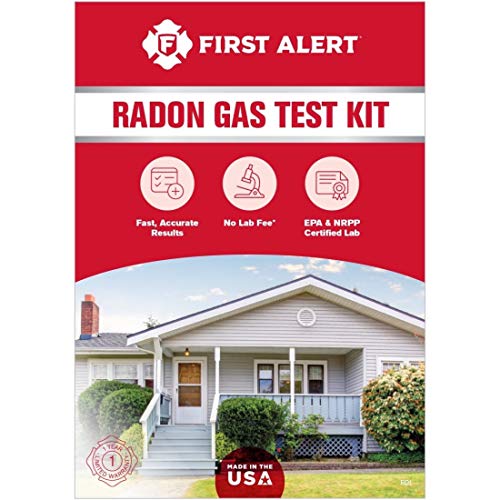 First Alert RD1 Radon Test Kit | Widely stocked; 48-hour charcoal test. | Amazon — $17.95 |
 Airthings Corentium Home | Digital monitor with a long-term average. | Amazon — $99.99 |